


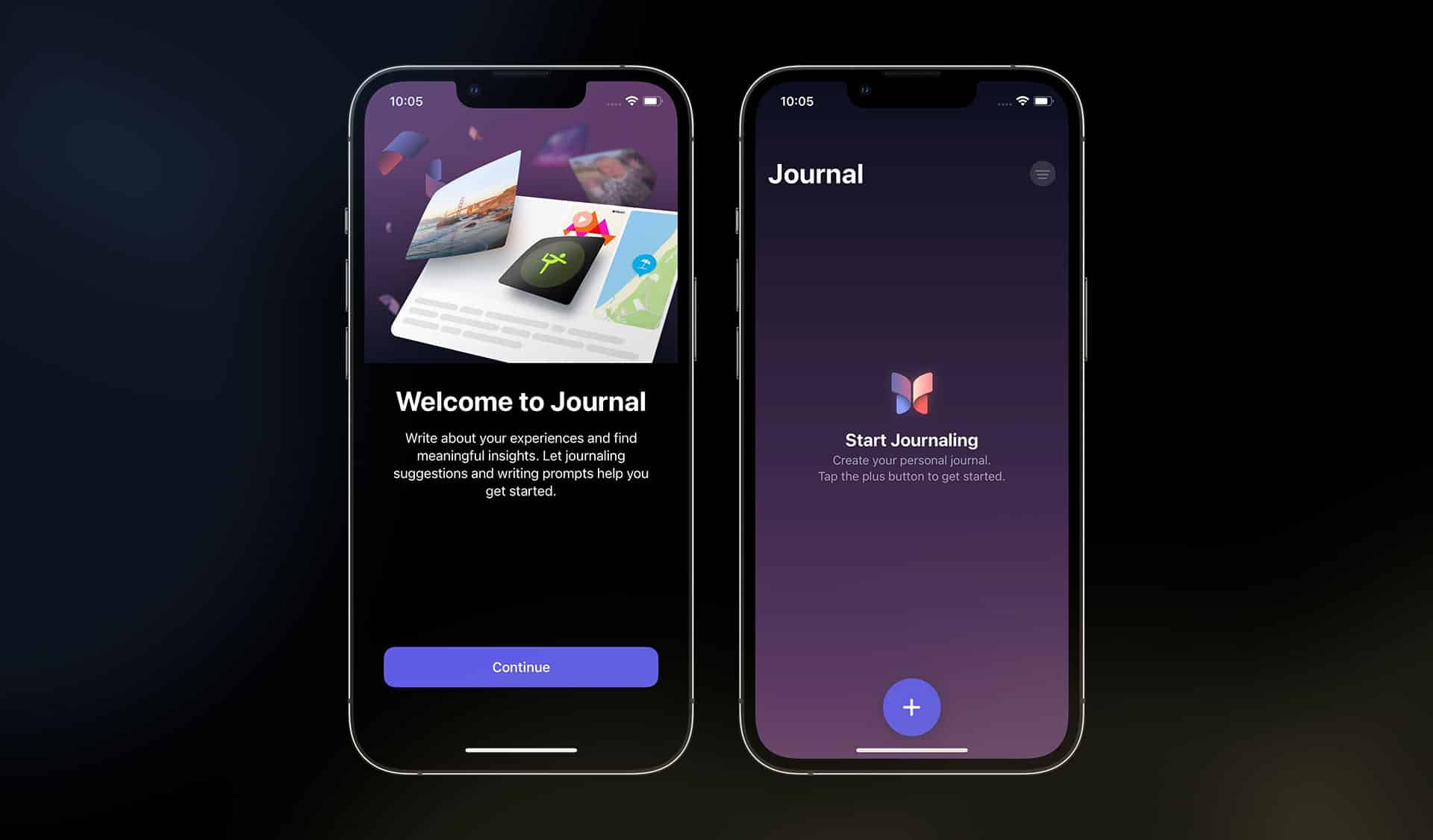
Apple Journal arrived as a wellness-focused app, but its long-term importance may reach further than gratitude prompts and daily reflection. When Apple introduced Journal in late 2023, the company framed it as an iPhone app designed to help people reflect on everyday moments, supported by on-device machine learning that creates personalized suggestions from photos, music, workouts, locations, and more. Apple also stressed that those suggestions are created on device and that users control what reaches the app.
That original framing already hinted at something larger. Journal was not built as a blank notebook alone. It was built as a structured memory layer, one that could pull together signals from daily life and arrange them into moments worth remembering. In Apple’s current software support pages, the app still revolves around entries, reflections, state of mind, media, and journaling suggestions, with options to sync those suggestions between iPhone and iPad under the same Apple Account.
At the same time, Apple Intelligence has been introduced as a personal intelligence system built around deep personal context, on-device processing, and, when necessary, Private Cloud Compute. Apple says the system is designed to understand personal context while protecting privacy, and later updates expanded that direction by opening Apple’s on-device foundation model to developers through the Foundation Models framework.
Put those two threads together, and Journal begins to look less like a side app and more like a possible foundation for a more context-aware Apple ecosystem. If Apple chooses to push the product further, Journal could become one of the most valuable personal data layers inside Apple Intelligence — not as an ad-driven profile engine, but as a private, user-controlled record of routines, places, moods, relationships, and memorable events.
Journal Already Collects the Right Kind of Context
Journal’s importance starts with the kind of information it is built to organize. Apple says users can include photos, videos, audio recordings, locations, and writing inside entries, while the app’s suggestion engine can surface moments from activity, media, contacts, and places. That gives the app a wider view of daily life than a standard notes app. It is less about isolated text and more about connected context.
That distinction matters because context is exactly where Apple is trying to make Apple Intelligence useful. In Apple’s introduction to Apple Intelligence, the company said the system relies on understanding deep personal context to help users communicate and get things done. Later Apple updates went further, saying Siri would become more capable by drawing on a user’s personal context and taking actions across apps.
Journal is unusually well placed inside that ambition. A calendar can show where someone was supposed to be. Photos can show what they saw. Messages can show what they said. Journal can connect those pieces into a human record: what happened, how it felt, why it mattered to the user, and what details stood out. Apple has already shown interest in that type of structured personal context through features like journaling suggestions and state-of-mind integration.
That creates a path for Journal to become more useful over time. A future version of Apple Intelligence could potentially use Journal entries, with clear permission controls, to help users remember events more naturally, surface meaningful patterns, suggest more relevant writing prompts, or build smarter summaries of personal routines. Apple has not announced that level of Journal integration, but the company has announced the broader building blocks: personal context, private on-device models, and developer access to foundation models that can create context-aware experiences inside apps.
Journal could also become stronger simply by becoming more consistent across devices. Apple’s support pages already show journaling suggestions syncing from iPhone to iPad. If Apple expands Journal further across the ecosystem, the app could become a more continuous personal archive rather than something used only on one device in short sessions. That would fit the broader Apple pattern of turning individual features into account-based, cross-device experiences.

How Journal Could Improve Apple Intelligence Without Breaking Privacy
The most obvious concern with a richer Journal future is privacy. Apple knows that, and the company has built both Journal and Apple Intelligence around strong privacy language from the beginning. Apple says journaling suggestions are generated on device. It also says Apple Intelligence is built with on-device processing as a cornerstone, with Private Cloud Compute extending that model for more complex requests while keeping user data protected.
That structure gives Apple a different angle from rivals that depend heavily on cloud profiling. If Journal ever becomes part of a deeper Apple Intelligence layer, Apple has already laid out the privacy architecture it would likely use: local processing first, explicit user control, and server-side handling only when necessary under a system Apple says is designed so user data is not stored or made accessible to Apple.
That could make Journal unusually valuable. A private journal contains the kind of context that would make any intelligence system more helpful: recurring places, important people, emotional shifts, travel moments, habits, unfinished thoughts, and daily routines. In a more conventional cloud AI model, that kind of personal material would raise obvious trust issues. Apple’s pitch is that its intelligence layer can work with private context without turning that context into a product.
There is already an early sign of how this might develop. Apple’s Foundation Models framework announcement in 2025 included an example of an app using Apple’s on-device model to transform journal entries into personal, context-aware affirmations. That was not Apple Journal itself, but it showed that Apple already sees journaling data as a useful source for more personal intelligence experiences.
If that direction expands inside Apple’s own apps, Journal could become a stronger engine for memory recall, writing assistance, personal summaries, travel recaps, mood tracking, habit reflection, and context-aware suggestions that feel grounded in a user’s life instead of generic prompt generation. The real advantage would not come from flashy AI output. It would come from relevance. Apple Intelligence becomes more useful when it knows which details actually belong to the person holding the device.

The Features That Would Make Journal More Valuable
For Journal to become central to Apple Intelligence, Apple would need to push the app beyond its current role. One likely direction would be stronger search and retrieval. Journal entries could become easier to find by person, place, mood, trip, activity, or topic, especially if Apple Intelligence begins helping users rediscover specific memories without scrolling through months of entries. Apple already has the on-device model story in place for this kind of natural-language interaction.
Another likely direction would be richer summarization. Instead of only storing entries, Journal could eventually generate private monthly, seasonal, or trip-based reflections using entries, photos, locations, and other linked signals. Apple has already made summarization and writing support part of the Apple Intelligence identity elsewhere, so applying that same language model capability to a personal archive would be a logical next step.
Deeper integration with Apple apps would help too. Journal already sits near Photos, Music, Workouts, and Locations in the way its suggestions are built. Apple could strengthen those links across Calendar, Health, Maps, and even travel-related moments without changing the app’s basic design. That would make Journal less dependent on manual effort and more reflective of how Apple devices already understand daily life. Apple’s original Journal introduction emphasized that the app draws from everyday moments and special events, which remains one of its strongest foundations.
A more mature Journal could also improve how Apple Intelligence handles personal memory. Instead of only answering immediate questions or rewriting text, future Apple features could help users revisit milestones, unfinished goals, repeated routines, or emotional trends over time. That would make Journal more than a wellness app. It would make it part of the memory system of the Apple ecosystem.
Apple does not need to turn Journal into a social product or a public platform to make it important. In fact, its value probably grows if it stays private, quiet, and deeply personal. The app already contains the right structure: media, writing, suggestions, mood, and context. Apple Intelligence already contains the right ambition: private personal intelligence built around what matters to the individual. Put together carefully, those two products could become much more significant than they look today.
If Apple follows that path, Journal may stop being seen as a niche app people try once and forget. It could become one of the most useful parts of the Apple account — a place where memory, context, and intelligence meet in a form that stays personal, portable, and available whenever a user needs it.