

The shift begins before the sun rises. The emergency department is already active. A nurse ties her hair back, checks her badge, and reaches for the iPad from the charging dock. It has been sanitized overnight, updated automatically, and is ready.
Patient lists are already loaded. Secure messaging channels are open. Overnight notes are synchronized. The iPad is not the focus of the room — but it is the thread connecting it.
In the first hour, three new admissions arrive. A patient with chest pain. A child with a high fever. An elderly man recovering from surgery who needs closer monitoring. The nurse moves between beds, and the iPad moves with her.
Vitals are reviewed. Lab updates appear as they are processed. A physician across the hall sends a secure message about a medication adjustment. The update is acknowledged in seconds.
No overhead paging. No searching for printed charts.
The device does not replace conversation. It shortens the distance between decision and action.
Real-Time Coordination During Clinical Rounds
Later in the morning, doctors begin rounds. The hallway is busy. Conversations overlap. The iPad becomes the portable reference point.
Lab results are displayed instantly. Imaging reports can be opened without leaving the bedside. A dosage is double-checked before being confirmed. The care team reviews the treatment plan together, standing in a semi-circle, the screen angled so everyone can see.
Secure messaging apps connect departments. Pharmacy confirms availability. Radiology schedules a scan. The update appears before the team leaves the room.
A nurse in another wing asks for clarification on discharge instructions. The message is answered without interrupting workflow.
The hospital environment is dynamic. Priorities shift quickly. The iPad travels from room to room, never raising its voice, never demanding attention. It presents information when needed and fades when not.
Midday Surge
By noon, the emergency department is full. A trauma case arrives. Multiple teams respond simultaneously.
The iPad displays incoming patient data pulled from emergency responders. Allergies. Known conditions. Initial vitals. Every second matters.
A respiratory therapist receives a secure message and arrives prepared. A cardiologist reviews preliminary data remotely and sends recommendations before physically reaching the department.
The coordination feels immediate. No one runs down corridors with paper files. No one waits for a fax to complete.
The nurse documents interventions as they occur. The device updates central records automatically.
Between procedures, she glances at the battery percentage. Still steady. The device has been running since dawn.
The Human Side of Monitoring
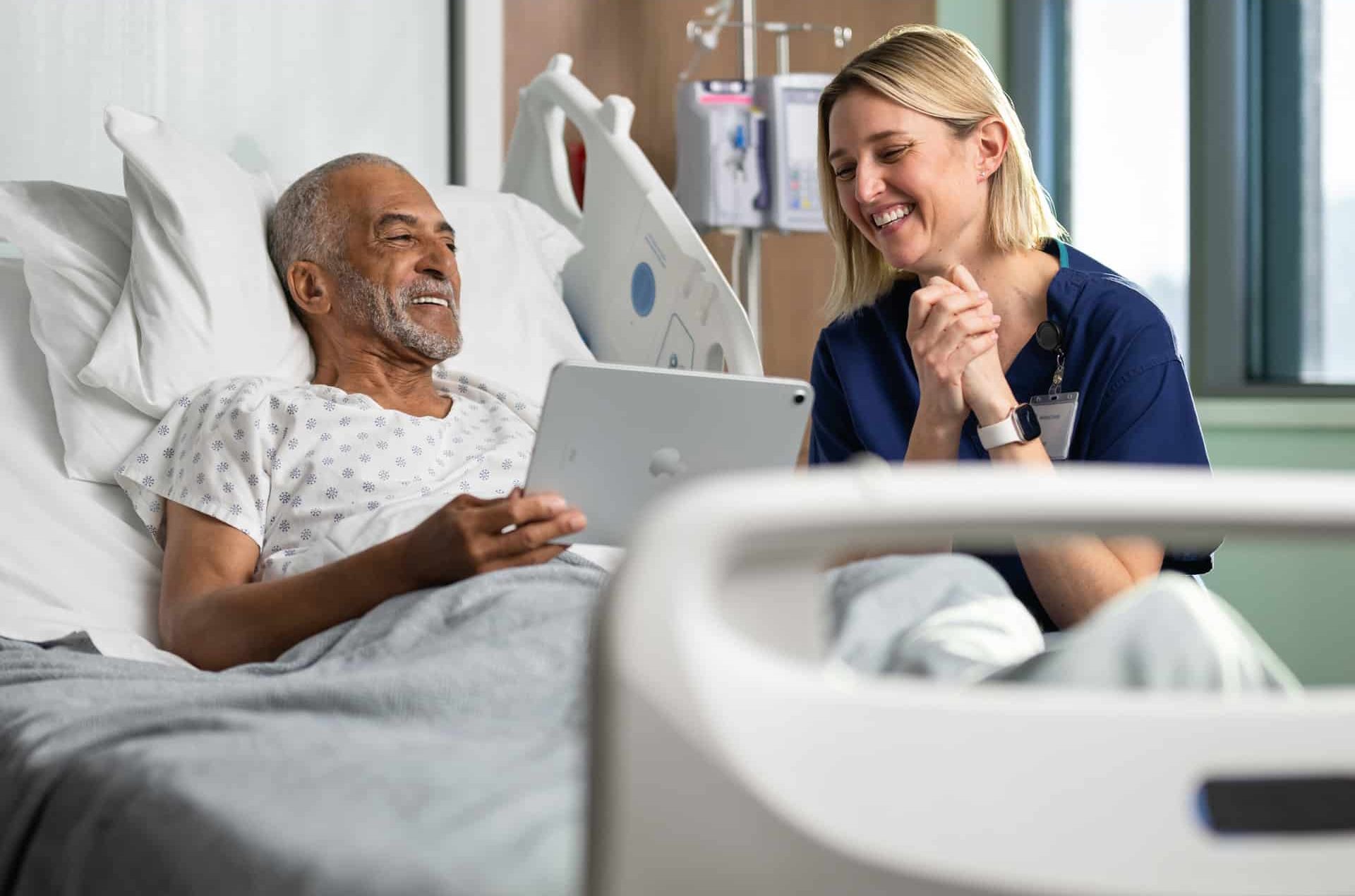
In quieter moments, the iPad serves a different purpose. A patient asks about test results. Instead of vague explanations, the nurse shows simplified summaries on the screen, explaining what numbers mean in context.
Families waiting in hallways receive updates through secure communication channels. A daughter who cannot be physically present receives reassurance through coordinated messages between departments.
Technology supports clarity.
But it does not dominate the room. When a patient becomes anxious, the iPad is set aside. Hands are held. Conversations happen face to face.
The device returns only when it is useful.

End of Shift
As evening approaches, the hospital does not slow. Another team prepares to take over.
The outgoing nurse reviews patient notes on the iPad one final time. All updates are synchronized. No paperwork needs to be handed over physically. The incoming nurse signs in and sees the same information, already structured and organized.
Continuity of care does not depend on memory alone. It is supported by documentation captured in real time.
The iPad is wiped down again, returned briefly to its dock, and prepared for the next rotation.
Technology as Silent Infrastructure
In the hospital, technology must not distract. It must not compete with clinical judgment. It must not introduce friction during critical moments.
The iPad’s role is quiet. It connects nurses, physicians, specialists, and support staff through secure systems that protect patient privacy while enabling speed.
It delivers data without drama. It records interventions without delay. It carries patient histories across rooms without a single sheet of paper.
During a 12-hour shift, it travels hundreds of steps. It supports dozens of decisions. It participates in moments that will never be repeated.
And when the shift ends, what remains is not the device itself, but the care delivered — coordinated, documented, and shared with precision.
Inside that fast-moving environment, iPad monitoring is not about screens. It is about continuity. It is about making sure that no detail slips through the cracks while lives depend on clarity.


