
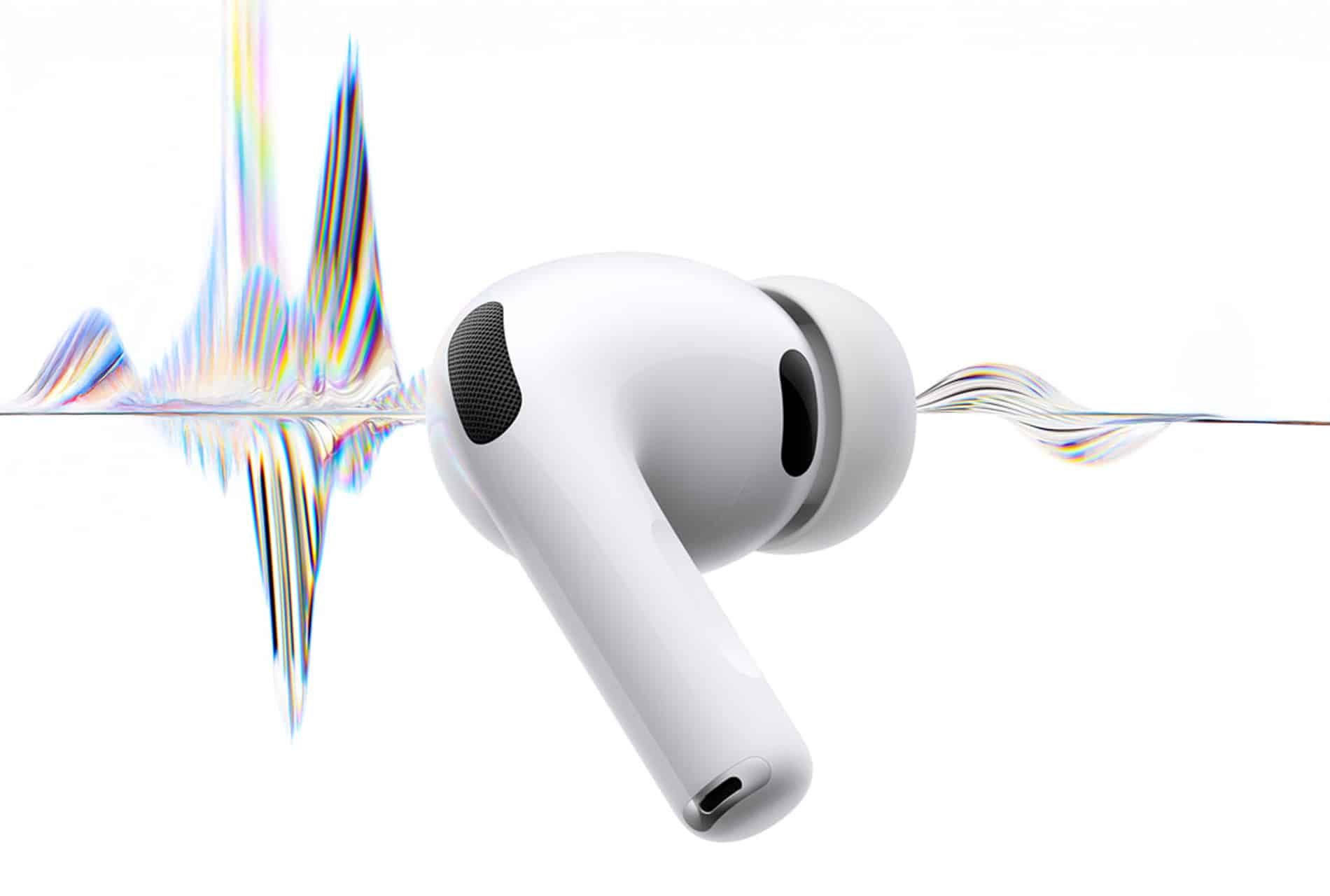
AirPods Pro gaming has become more realistic because the product line has changed far beyond its original role as premium wireless earbuds for music and calls. The first AirPods Pro made active noise cancellation feel compact and mainstream. AirPods Pro 2 turned the line into a much smarter audio device with the H2 chip, Adaptive Audio, better noise cancellation, Personalized Spatial Audio, and lower latency. The current generation pushes the category further with stronger acoustic design, longer battery life, improved fit, health sensing, and deeper integration with iPhone, iPad, Mac, and Apple Vision Pro.
That evolution matters for gaming because wireless earbuds have always had one obvious weakness: delay. A small amount of audio lag may not matter while listening to music or podcasts, but it can feel distracting in games. A footstep, explosion, tap, dialogue cue, or controller action needs to feel connected to what appears on screen. If the sound arrives late, the experience feels less precise.
Apple has been narrowing that gap through faster chips, tighter software integration, improved Bluetooth behavior, Game Mode on Apple devices, and Personalized Spatial Audio. AirPods Pro are still not the same as wired gaming headphones or dedicated low-latency gaming headsets built around proprietary wireless dongles. Bluetooth still has limits. But inside the Apple ecosystem, the latest AirPods Pro feel much closer to a casual and mobile gaming accessory than the original version ever did.
The more important point is that Apple is not treating gaming audio as a separate hardware category. It is turning AirPods Pro into a general-purpose immersive audio layer across iPhone, iPad, Mac, Apple Vision Pro, Apple Arcade, cloud games, console remote play, FaceTime, media, and everyday listening. That makes gaming part of a wider ecosystem story.

From Noise Cancellation to Adaptive Audio
AirPods Pro began with a simple promise: bring active noise cancellation, Transparency mode, and a sealed in-ear design to AirPods. The first generation made a huge difference for commuting, work, travel, and everyday listening because it gave users a small pair of earbuds that could block noise without feeling like large headphones.
AirPods Pro 2 changed the line more deeply. The H2 chip improved audio processing, noise cancellation, Transparency mode, battery life, and computational audio. Adaptive Audio blended noise cancellation and Transparency based on the environment, while Conversation Awareness and Personalized Volume made the earbuds more responsive to real-world use. Personalized Spatial Audio also made games and films feel more dimensional by using a profile tailored to the listener’s ears.
For gaming, those upgrades mattered because they made AirPods Pro more aware of context. A player could use noise cancellation to block distractions, Transparency when staying aware of the room, and Spatial Audio for a more immersive sound field. On iPhone, iPad, and Mac, the earbuds became part of a low-friction gaming setup: open a game, connect automatically, and keep the same earbuds used for calls, music, and movies.
AirPods Pro 3 continued the shift toward a more complete wearable audio device. Apple says the current model offers stronger active noise cancellation, a redesigned internal acoustic architecture, improved fit, IP57 dust, sweat, and water resistance, heart rate sensing for workouts, and up to eight hours of listening time with Active Noise Cancellation enabled. The result is a device built for more than sitting still.
That helps gaming indirectly. Better fit means more stable sound during handheld gaming, travel, or long sessions. Longer battery life means fewer breaks. Stronger noise cancellation helps in noisy rooms, airplanes, dorms, buses, and cafés. The gaming advantage is not one feature alone. It is the accumulation of improvements that make the earbuds more dependable.
Low Latency Is the Hardest Gaming Problem
AirPods Pro gaming performance still depends on latency. Wired headphones remain the safest choice when timing is critical. Competitive players, rhythm-game fans, and audio-sensitive users may still notice Bluetooth delay, especially outside Apple’s most optimized environments. But the gap has narrowed enough that many mobile, casual, and story-driven games now feel natural with AirPods Pro.
Apple has also improved gaming latency across its broader ecosystem. Game Mode on iPhone, iPad, and Mac can reduce background activity and improve responsiveness for wireless accessories such as game controllers and AirPods. That means the earbuds benefit not only from their own chip, but from the system around them.
The current “ultra low latency” conversation is clearest around Apple’s newest audio work across devices. AirPods Max with USB-C gained lossless and ultra-low latency audio over a wired USB-C connection, with Apple describing latency comparable to built-in speakers on Mac, iPad, and iPhone for musicians and gamers. AirPods Pro remain Bluetooth earbuds, so they do not offer the same wired ultra-low-latency path. The practical benefit for AirPods Pro is different: Apple keeps reducing the delay inside the wireless ecosystem, especially when paired with newer Apple devices and optimized software.
This distinction is important. AirPods Pro are excellent for Apple Arcade, casual iPhone games, iPad games, Mac games, handheld travel sessions, and remote-play scenarios where convenience matters. They are less ideal for professional esports or rhythm titles where every millisecond matters. Users who need the lowest possible delay should still use wired audio or dedicated gaming hardware.
For most Apple users, the tradeoff is worth it. AirPods Pro connect instantly, switch between devices, support Spatial Audio, work for calls, and fit easily into a pocket. Gaming is one part of a daily audio workflow rather than a separate setup.

Spatial Audio Makes Games Feel Larger
AirPods Pro gaming is not only about latency. Spatial Audio may be the more noticeable upgrade for many players. When supported by the device, app, or game, Spatial Audio can create a wider sound field and make audio feel less trapped inside the ears. With head tracking, the sound space can feel anchored around the screen, creating a stronger sense of direction and presence.
This is especially useful in cinematic, adventure, racing, action, and exploration games. A wider soundstage can make environments feel more open. Dialogue can feel more centered. Background details can feel more placed in the scene. Even when a game does not deliver the precision of a dedicated surround headset, AirPods Pro can make mobile and Mac gaming feel more immersive than ordinary stereo earbuds.
Personalized Spatial Audio strengthens that effect by using the iPhone camera to create a profile based on the listener’s ear and head shape. The feature is not only for Apple Music or movies. It can improve the sense of space across supported entertainment and games.
To set up Personalized Spatial Audio:
Settings > AirPods > Personalized Spatial Audio > Set Up Personalized Spatial Audio
Noise control also affects immersion. Active Noise Cancellation can help a player focus on the game audio instead of room noise. Transparency mode can be better for shared spaces, parents, roommates, travel, or any moment when hearing the environment matters. Adaptive Audio can help balance both worlds.
To adjust listening modes:
Control Center > Touch and Hold Volume > Noise Control
That flexibility makes AirPods Pro more practical than many traditional gaming headsets. The same earbuds can go from a game to a call, then to a workout, then to a movie, without changing devices.
The Best Gaming Setup Uses the Whole Apple Ecosystem
AirPods Pro are strongest for gaming when paired with newer Apple hardware and updated software. iPhone, iPad, and Mac all contribute to the experience through faster chips, Game Mode, improved Bluetooth handling, Spatial Audio support, and automatic device switching.
To reduce distractions during gaming:
Settings > Focus > Gaming > Customize
Game Mode is especially helpful on supported devices because it can prioritize game performance and reduce latency for wireless accessories. It also helps make controller input and audio feel more responsive during longer sessions.
To check Game Mode on supported devices:
Open Game > Game Mode Turns On Automatically
For Apple Arcade players, AirPods Pro are a natural fit. The games are already designed for iPhone, iPad, Mac, and Apple TV, and many work well with controllers. AirPods Pro add private sound, cleaner voice chat, and immersive audio without requiring a separate gaming headset.
For Mac gaming, AirPods Pro are convenient but should be chosen based on the game. A story game, strategy game, adventure title, or Apple Arcade release will usually feel fine. A competitive shooter or rhythm game may still benefit from wired headphones. The same applies to cloud gaming, where network latency can add delay beyond the earbuds themselves.
Apple Vision Pro adds another angle. AirPods Pro can provide lower-latency wireless audio for spatial experiences when paired with Apple’s headset, making them more important to immersive gaming and entertainment than ordinary earbuds. As Apple continues building spatial computing, AirPods Pro become part of the sound layer for games that are not limited to a flat screen.

AirPods Pro Are Becoming Gaming Earbuds by Ecosystem, Not Branding
AirPods Pro are not marketed as traditional gaming earbuds, and that is part of what makes their evolution interesting. Apple is not chasing RGB lighting, boom microphones, or esports branding. It is improving the qualities that make gaming better inside its ecosystem: faster response, stronger noise control, better fit, longer battery life, Spatial Audio, automatic switching, and tighter OS integration.
That makes the current generation a better gaming accessory than the original AirPods Pro ever was. The difference is not only hardware. It is the way iOS, iPadOS, macOS, watchOS, Apple Vision Pro, Apple Arcade, and Apple silicon devices now work together around audio.
The limitations still matter. AirPods Pro remain Bluetooth earbuds. They cannot fully replace wired headphones for latency-sensitive competitive play. They do not offer the same microphone positioning as a dedicated gaming headset. They are best for users who want one premium pair of earbuds that can handle gaming alongside everything else.
For most iPhone, iPad, and Mac players, that is exactly the appeal. AirPods Pro have evolved into the kind of gaming audio device Apple would naturally make: not a headset built only for games, but a private, spatial, low-friction sound layer for the entire ecosystem. The current generation makes gaming sound more responsive, more immersive, and more comfortable, while still being the same earbuds users wear for music, calls, travel, workouts, and daily life.


