

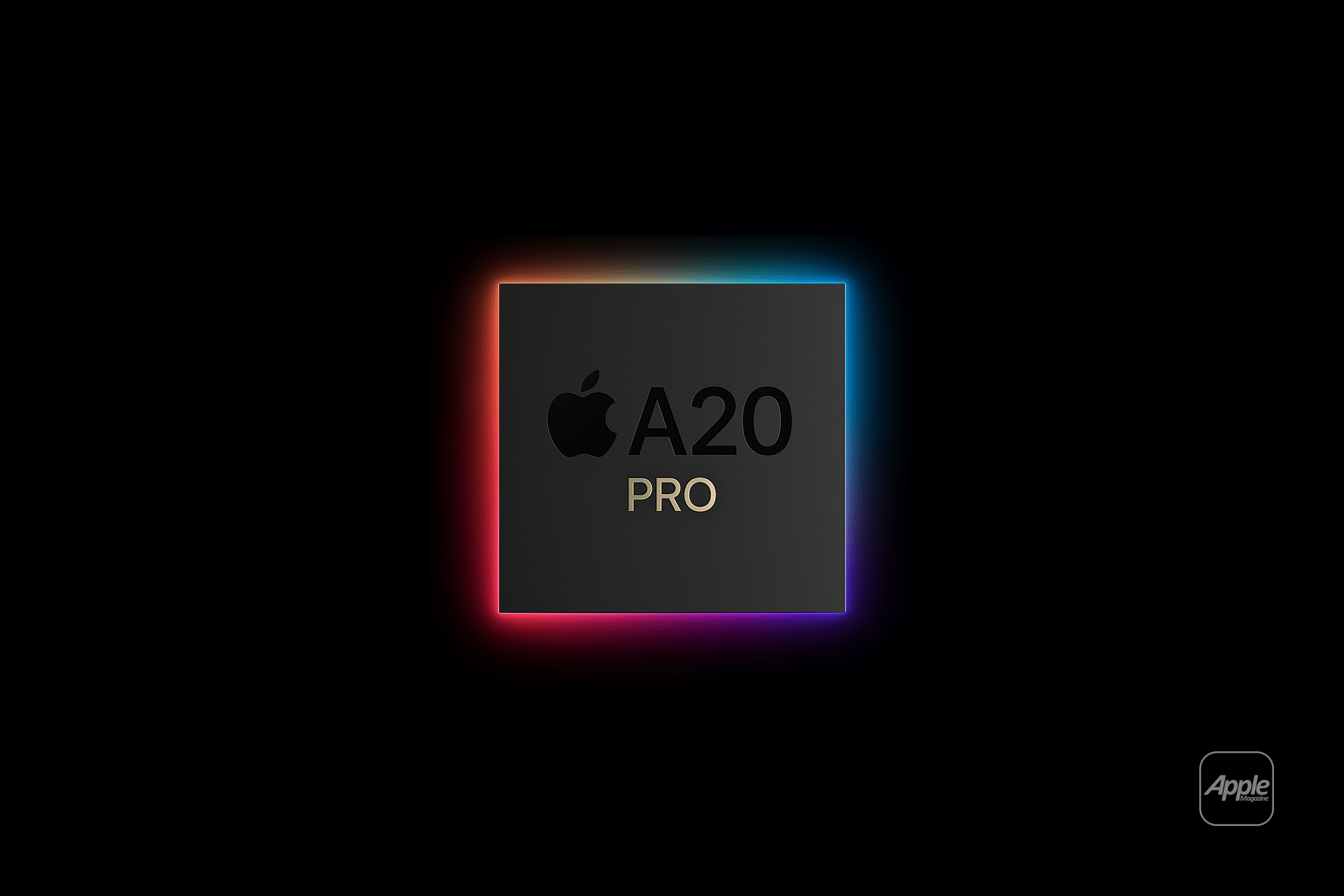
Apple’s A-series chips have consistently set the pace for mobile performance, but the A20 Pro chip represents a more decisive break from the competition. By becoming the first and only customer to ship a 2nm smartphone processor in 2026, Apple is moving the performance conversation into territory that Android rivals simply won’t reach in the same timeframe.
TSMC’s confirmation that its N2 process is reserved for Apple underscores how tightly integrated Apple’s silicon roadmap has become with the world’s most advanced semiconductor manufacturing.
Why 2nm Matters More Than Past Node Shrinks
Each generational shift in chip manufacturing delivers gains, but 2nm is different. This node brings a substantial increase in transistor density, lower power leakage, and higher sustained performance under load.
For the A20 Pro chip, this means Apple can push performance forward without sacrificing battery life. Smaller transistors switch faster and consume less energy, which directly benefits real-world tasks like photography, gaming, AI inference, and background system processes.
Unlike incremental refinements, the jump to 2nm widens the gap in areas users actually feel every day.

Exclusive Access Creates a Structural Advantage
Apple’s exclusive access to TSMC’s N2 process gives it something competitors can’t easily counter: time. Android chipmakers will remain on more mature nodes while Apple ships millions of devices powered by 2nm silicon.
This advantage isn’t just about peak benchmarks. It affects sustained performance, thermal behavior, and long-term efficiency. Devices running the A20 Pro chip will be able to maintain high performance without aggressive throttling, a key factor in camera processing, AI features, and advanced graphics workloads.
It also reinforces Apple’s control over its entire stack, from silicon design to software optimization.
Performance Gains Where It Counts
The A20 Pro chip is expected to deliver major improvements across CPU, GPU, and neural processing. Apple has increasingly optimized its chips for parallel workloads, making them well suited for modern iOS features that rely on machine learning and real-time analysis.
Tasks such as on-device AI, image processing, spatial video, and background intelligence services benefit directly from higher transistor density and improved efficiency. The result is faster response times without increased power draw.
For users, this translates into smoother interactions rather than just higher benchmark numbers.

A Growing Gap With Android Rivals
Android manufacturers rely on shared silicon roadmaps and foundry availability. Even the most advanced Android chips in 2026 are expected to lag behind Apple in manufacturing process.
That gap compounds quickly. Software teams optimize around available hardware, meaning Apple’s iOS features can assume higher baseline performance and efficiency. Over time, this leads to capabilities that competitors struggle to match or must disable on older hardware.
The A20 Pro chip doesn’t just raise Apple’s ceiling. It raises the floor.
Implications for Apple Intelligence
As Apple expands Apple Intelligence and on-device AI capabilities, silicon efficiency becomes critical. Running advanced models locally requires sustained compute power without draining the battery or overheating.
The A20 Pro chip’s 2nm architecture is well suited for this shift. More transistors allow Apple to scale its Neural Engine and memory subsystems while keeping energy use in check.
This positions Apple to move more intelligence onto the device, reinforcing its privacy-first approach while improving responsiveness.


Apple’s Silicon Future
Apple’s early lock on 2nm production suggests long-term planning rather than a one-off advantage. The company has repeatedly shown that when it gains a manufacturing lead, it compounds that lead through software, tools, and developer support.
The A20 Pro chip fits that pattern. It’s not just a faster processor, but a foundation for features and experiences that will define Apple devices for years.
By the time competitors catch up on process technology, Apple will already be moving forward.
Beyond Specs
The significance of the A20 Pro chip isn’t limited to performance charts. It represents Apple’s ability to align silicon design, manufacturing, and software under a single vision.
That alignment turns raw technology into usable progress. With exclusive access to 2nm manufacturing, Apple isn’t chasing the future of mobile computing. It’s setting the pace.

