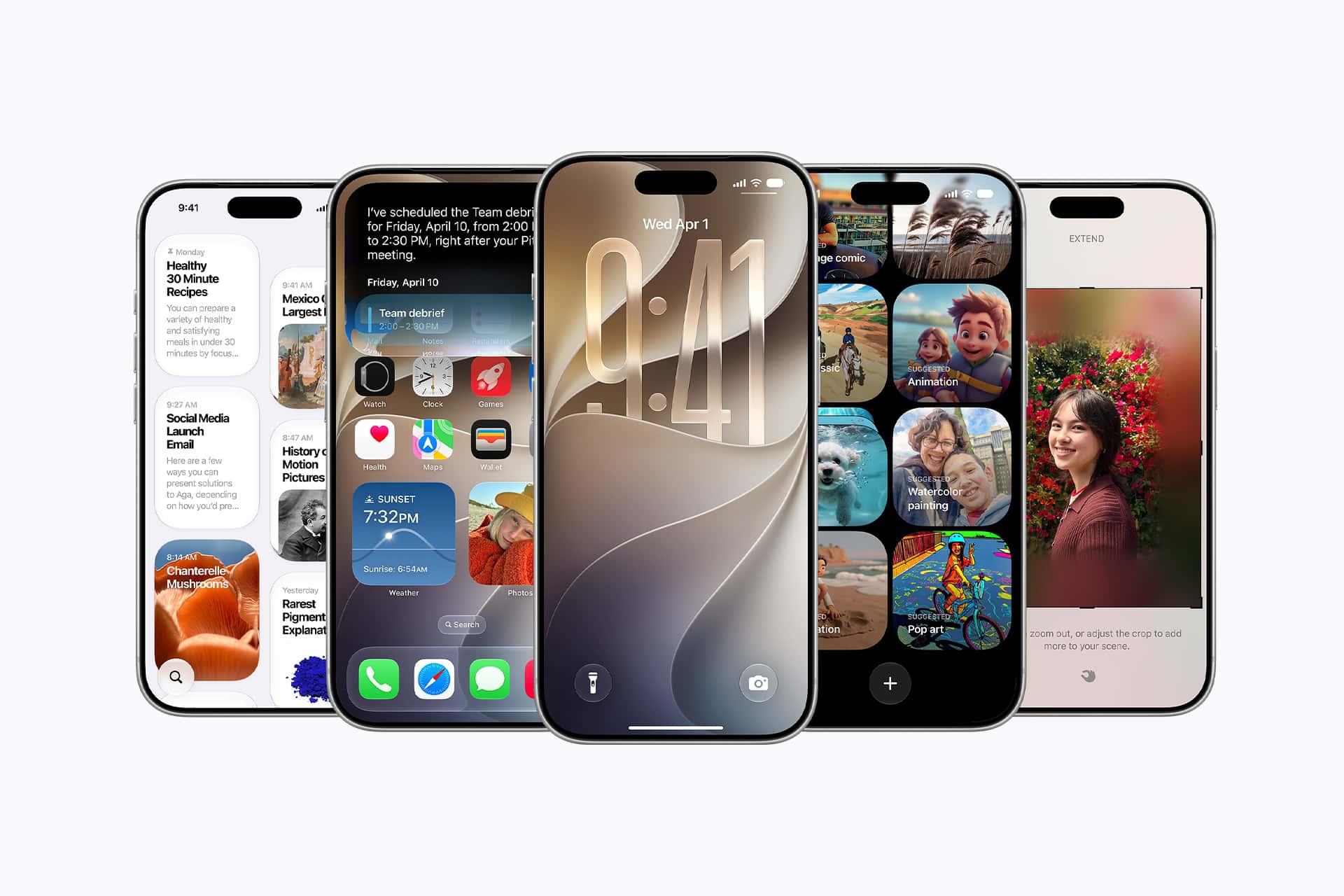
Apple AI strategy is moving in a direction that looks slower than the rest of the industry but may be much harder to copy. The statement “tools serve products, not the reverse” captures the difference. Apple is not trying to turn every device into a chatbot terminal. It is trying to make artificial intelligence disappear into the operating system, the hardware, the apps, the personal context, and the daily actions that already define how people use iPhone, Mac, iPad, Apple Watch, Apple Vision Pro, and Apple services.
That is the meaning behind the reported philosophy attached to John Ternus as Apple prepares for its next leadership era. Ternus comes from hardware engineering, not cloud software or social platforms. His instinct is product-first. The AI tool must make the product better. The product should not be redesigned merely to advertise that AI is present.
That line matters because many technology companies are doing the opposite. Microsoft has made Copilot a visible layer across Windows, Office, and enterprise software. Google has pushed Gemini across Search, Android, Workspace, and Pixel. Meta is embedding AI into social apps, glasses, and messaging. OpenAI has built the most recognized consumer AI service as a destination in itself. Apple’s path is less about making AI a standalone product and more about making AI part of the device experience.
That does not mean Apple is ahead in every AI benchmark. It is not. The company has spent years facing criticism for Siri’s limits, delayed Apple Intelligence features, and a cautious rollout compared with rivals. The more accurate point is that Apple may still hold one of the strongest positions for personal AI because it controls the platform where personal technology actually happens. Apple has the devices, chips, operating systems, app ecosystem, services, privacy architecture, developer tools, and user trust needed to turn AI into a system layer.
That is the strategic difference. AI as a service asks users to go somewhere. AI as a system layer meets users where they already are.
Apple AI Strategy Is About the Interface, Not the Demo
The AI industry has been shaped by demos. A model writes code, creates images, answers questions, summarizes documents, generates video, speaks naturally, or reasons through a task. Those demos are powerful, but they do not automatically become better everyday products. A chatbot can be impressive and still feel separate from the work a person is trying to do.
Apple’s advantage is the interface layer. iPhone is the camera, wallet, message hub, authentication device, health gateway, remote control, map, payment tool, notification center, and personal computer most people carry. Mac is where much of the work happens. Apple Watch sits on the wrist and understands movement, health signals, timers, workouts, and quick interactions. iPad handles reading, notes, creative work, education, and media. Vision Pro gives Apple a spatial computing surface. AirPods and HomePod add voice and audio presence.
A standalone AI service has to ask for context. Apple devices already contain context. That does not mean Apple should use everything by default. It means Apple has a foundation for personal intelligence that is different from a web chatbot. The most useful AI is not always the one that knows the most about the internet. It is often the one that knows what the user is trying to do right now.
That is why Apple AI strategy is tied to Siri AI, App Intents, personal context, onscreen awareness, Foundation Models, and Private Cloud Compute. Apple is not only building answers. It is building a path for AI to understand the current screen, work with apps, retrieve personal information with permission, and complete actions across the system.
This is where “tools serve products” becomes practical. AI should not interrupt the iPhone experience. It should shorten the path inside it. It should help find the file, rewrite the message, understand the receipt, summarize the thread, adjust the calendar, create the reminder, search the photo library, split the bill, start the workout, or complete the app action.
The product remains the center. AI becomes the layer that reduces friction.
Two Decades of Platform Advantage
Apple’s strongest AI advantage was not created in 2024 or 2026. It was built over nearly two decades of personal hardware, silicon, privacy, services, and ecosystem decisions. The iPhone is now 19 years old as a product platform, the iPad is only a little younger, and the Mac has a much longer history as Apple’s personal computing foundation. That is why the company can be late to visible chatbot excitement and still remain well positioned for personal AI.
Apple silicon is part of that foundation. The move from Intel to Apple-designed chips gave the Mac a unified architecture with strong performance per watt and Neural Engine support across product lines. iPhone and iPad have been built around Apple’s custom chips for years. That hardware control matters because on-device AI depends on memory, neural processing, battery efficiency, thermals, and operating-system integration.
The services layer also matters. iCloud, Apple Pay, Wallet, Maps, Photos, Messages, Mail, Calendar, Reminders, Notes, Safari, Health, Fitness, Apple Music, Apple TV, and the App Store are not random apps. They are daily-use systems. A personal AI layer becomes more useful when it can connect those systems without forcing users to copy personal data into a third-party service.
The developer ecosystem may matter even more. App Intents gives developers a way to expose actions to Siri and Apple Intelligence. That is how AI moves from answering to doing. A model can describe how to book a reservation, but an agentic system needs to take the right action inside the right app with the user’s permission. Apple controls the operating-system layer where that action can happen safely.
The installed base is the other advantage. Apple has more than 2 billion active devices globally, and many customers use several Apple products together. That gives Apple a personal technology platform with scale, trust, and continuity. The company does not need to convince users to adopt a new AI device from scratch. It can add intelligence to the devices people already own and upgrade over time.
This is the “two-decade advantage” argument in a more grounded form. Apple may not be two decades ahead in raw model capability, but it has close to two decades of integrated personal hardware, software, silicon, retail trust, services, app distribution, secure payments, and everyday device behavior around iPhone, with even deeper roots in Mac and a long mature cycle around iPad. Those layers are difficult for a chatbot company to recreate.
AI as a System Layer Changes the User Experience
The most important Apple AI strategy is not making Siri more talkative. It is making the operating system more aware of intent. A user should not always need to know which app to open, which menu to use, or which keyword to search. The system should understand enough context to help.
On iPhone, that can mean Visual Intelligence recognizing a receipt and connecting it to Apple Cash bill splitting. It can mean Siri AI finding a photo, address, message, or file based on natural language. It can mean Wallet understanding an order, Mail surfacing relevant delivery details, or Photos finding a memory without the user remembering a date.
On Mac, it can mean turning Apple Intelligence into a work layer. A user may ask for the latest document from a project, a summary of a client thread, action items from a meeting note, or a cleaner version of a presentation paragraph. The AI layer works best when it stays close to the document, app, or task instead of forcing the user into a separate chatbot window.
On Apple Watch, Siri AI can become more useful because the wrist is built for short, immediate actions. A person may ask for a quick workout adjustment, send a short message, start a timer, check a reminder, or get a contextual answer without reaching for iPhone. The watch does not need a long chatbot response. It needs fast, personal, useful action.
On iPad, AI can support reading, notes, research, handwriting, diagrams, creative work, and multitasking. On Vision Pro, it can eventually help organize spatial work, visual context, and immersive computing. Across devices, the point is the same: AI should not become a separate destination. It should become a system-level assistant that understands the current surface.
That is different from the AI-as-service model. A service waits for the user to open it. A system layer can appear through Siri, Spotlight, Share Sheet, Camera, Photos, Mail, Messages, Files, Wallet, or third-party apps. It becomes part of the interface.
Privacy Is the Business Model Difference
Apple’s AI strategy also depends on privacy because personal AI requires personal data. A useful assistant needs context from messages, files, photos, calendar events, contacts, health signals, location patterns, purchases, reminders, and app activity. That is powerful, but it can also become invasive if handled through a cloud-first profile.
Apple’s answer is a mix of on-device processing and Private Cloud Compute. The company says many Apple Intelligence tasks run on device, while more complex requests can use Private Cloud Compute in a way designed to avoid storing user data or exposing it broadly. Apple has also published security documentation for the system and positioned it as a way to extend device privacy into the cloud.
That architecture is not only a technical detail. It is the business model difference. Apple does not need to turn personal AI into an advertising profile. It sells devices, services, and platform experiences. Its incentive is to make the product more valuable, not to build a separate data economy around the user.
This supports the “tools serve products” idea. AI serves the iPhone by making it more capable. It serves the Mac by making work faster. It serves Apple Watch by making short interactions smarter. It serves Wallet by making transactions easier to manage. It serves Photos by making memories easier to find. The AI is not the product replacing everything else. It is the layer that makes the product more useful.
That is also why Apple has to be careful. If Siri AI begins using personal context, users need clear controls. They should know when personal data is being used, which apps are included, what can be excluded, and how memory can be managed. Apple’s trust advantage only holds if users feel in control.
Privacy is not a decoration in this model. It is what makes personal AI acceptable.
Image Credit: Apple Inc.
Agentic AI Needs Apple’s App Ecosystem
The next phase of AI is agentic: systems that can complete tasks, not only answer questions. This is where Apple’s platform may become more powerful than a standalone chatbot. An agent that cannot act inside apps remains limited. An agent that can act across apps with permission becomes useful.
Apple has the framework for that through App Intents and system-level integration. Developers can expose actions, content, and workflows so Siri AI and Apple Intelligence can interact with apps more directly. That turns AI from a text generator into a coordinator.
For example, a user should be able to ask Siri to move information from a message into a reminder, attach a file to an email draft, adjust a calendar event, retrieve a receipt, start a workout, open a note, log a task, or prepare a travel day. The assistant should know which apps can handle the request and ask for confirmation before sensitive actions.
This is where the Apple ecosystem becomes difficult to copy. OpenAI can build a powerful model. Google can integrate AI deeply into Android and Search. Microsoft can connect AI to Office and Windows. Meta can spread AI through social and messaging platforms. Apple’s unique position is the combination of trusted device access, app distribution, payments, biometrics, personal context, and user-facing hardware.
Agentic AI will not be judged only by how well it writes. It will be judged by how safely it acts. Apple’s system-level control gives it a path to make actions permissioned, reversible, and tied to app rules. That is less flashy than a viral model demo, but more relevant to everyday use.
The danger is execution. If Siri AI is slow, unreliable, or too restricted, the platform advantage will not matter. Apple has to make the assistant work at the exact moments users need help. A product-first philosophy only works if the product improves.
Why Apple Can Be Late and Still Be Early
Apple has been criticized for arriving late to generative AI. That criticism is fair in one sense. Siri fell behind. Apple Intelligence had delays. Rivals created stronger public momentum. Developers, investors, and consumers saw Google, OpenAI, Microsoft, Anthropic, and Meta move faster.
But being late to the first AI interface does not mean being late to the final AI layer. The first wave was chat. The next wave is integration. Apple is built for integration.
The company has done this before. Apple did not invent the MP3 player, smartphone, tablet, smartwatch, wireless earbuds, fingerprint authentication, mobile payments, or custom silicon. Its strength has often been turning existing technology into a product system that feels more coherent and more personal. AI may follow the same pattern if Apple can make it feel native.
That is the strongest interpretation of the Ternus line. Apple is not rejecting AI. It is rejecting AI as a product-shaped trend that must be bolted onto everything. The company is saying that AI earns its place only when it improves the product.
This stance may frustrate investors who want visible AI monetization quickly. It may frustrate users who expect Apple to match every rival feature immediately. It may frustrate developers who want broader model access. But it fits Apple’s historical rhythm: absorb a technology, redesign it around the product, then scale it across devices.
The difference is that AI is moving faster than earlier platform shifts. Apple cannot take too long. A two-decade platform advantage can erode if the assistant remains weak, if developers prefer rival AI platforms, or if users build habits around non-Apple AI services.
The opportunity is huge, but the clock is real.
How Personal Use and Work Will Change
If Apple executes, personal use changes because the device becomes less passive. iPhone can help manage small daily tasks across apps. Apple Watch can answer and act in quick moments. Wallet can organize transactions. Photos can search memories more naturally. Mail and Messages can become easier to process. Calendar and Reminders can become more connected to real conversations.
Work changes because Mac and iPad can become context-aware productivity tools. The assistant can prepare meeting notes, summarize threads, find documents, create drafts, organize files, and connect tasks across apps. The value is not replacing professional work. It is reducing the administrative drag around it.
The best version feels almost invisible. Users do not say, “I am using AI.” They say, “My iPhone found it,”“Siri handled it,” “Wallet organized it,” “Mail summarized it,” or “The Mac helped me finish it.” That is exactly the point. Apple does not need AI to become a separate brand users visit. It needs AI to improve the product experience they already trust.
That is also why Apple’s user base matters. The company has millions of people using iPhone, Mac, Apple Watch, iPad, AirPods, Apple Pay, iCloud, and Apple services every day. AI adoption does not require a new behavior from zero. It can arrive through software updates, device upgrades, and familiar system surfaces.
This gives Apple a different path from rivals. Google has search and Android. Microsoft has enterprise software and cloud. Meta has social networks and wearables. OpenAI has the AI destination. Apple has the personal device platform. In the agentic AI era, that platform may be the most valuable place to stand.
Image Credit: Apple Inc.
The Real Meaning of the Ternus Line
“Tools serve products, not the reverse” is a philosophy about restraint, but it is also a strategy. It says Apple will not chase AI visibility for its own sake. It will use AI when AI makes the product better, the action shorter, the interface simpler, the device more personal, or the workflow more private.
That does not prove Apple is ahead in every AI category. It proves Apple is playing a different game. The company’s strongest assets are not only models. They are the devices, operating systems, chips, services, privacy architecture, App Store, developer frameworks, and daily user habits that can turn AI into a system layer.
The risk is that Apple’s caution becomes too slow. The reward is that Apple’s integration becomes more useful than a chatbot pasted over existing software. If Siri AI becomes reliable, App Intents mature, Foundation Models improve, and Private Cloud Compute earns trust, Apple Intelligence can become the personal AI layer that rivals cannot easily replicate.
The next AI battle will not be won only by the model that answers best. It will be won by the system that understands the user’s context, respects their privacy, works across their devices, and acts inside the apps they already use.
That is where Apple’s two-decade platform work still matters.