


Apple AI is entering the next decade at a moment when artificial intelligence is being defined by size, power, and scale. OpenAI, xAI, Microsoft, and Google are racing to build enormous AI clusters that live in billion-dollar data centers, consuming vast amounts of energy to train and serve increasingly large models. Apple’s strategy moves in a different direction. Instead of building a single monolithic intelligence in the cloud, Apple AI spreads intelligence across billions of personal devices, supported by private cloud compute only when necessary.
This approach turns Apple’s biggest historical advantage — hardware control — into its most powerful AI weapon.
Apple AI and the Power of the Device
At the center of Apple AI is the idea that intelligence should live where the user lives. iPhones, iPads, Macs, Watches, and Vision Pro already contain powerful neural engines designed to process images, language, sound, and motion in real time. By placing models directly on the device, Apple AI avoids sending raw personal data to the cloud for most tasks.
This changes the economics of AI. Instead of paying for every query to run inside a remote data center, Apple offloads enormous volumes of computation to the silicon that customers already own. Apple Silicon becomes a distributed AI supercomputer with billions of nodes, each optimized for privacy, latency, and efficiency.
That is something OpenAI, Microsoft, and Google simply cannot replicate because their models are built for centralized infrastructure.

Private Cloud Compute as the Missing Layer
Apple AI still uses the cloud, but it uses it differently. Apple’s Private Cloud Compute allows models that are too large or too complex for a local device to run on Apple-controlled servers that behave like extended Apple Silicon. Data is processed, encrypted, and discarded without being stored or used for training.
This gives Apple AI access to large models without breaking its privacy promise. It also removes the business incentive to collect user data. Unlike ad-driven platforms, Apple does not need to monetize prompts, searches, or personal conversations.
In a world where AI models are trained on everything they can scrape, Apple AI becomes a rare environment where personal data stays personal.
How Apple Competes With Mega-Scale Models
OpenAI and xAI focus on training massive foundation models that attempt to know everything. These models live in giant clusters and require constant connection. Apple AI focuses on context. Your device already knows your calendar, your photos, your messages, your health, and your location — all stored locally.
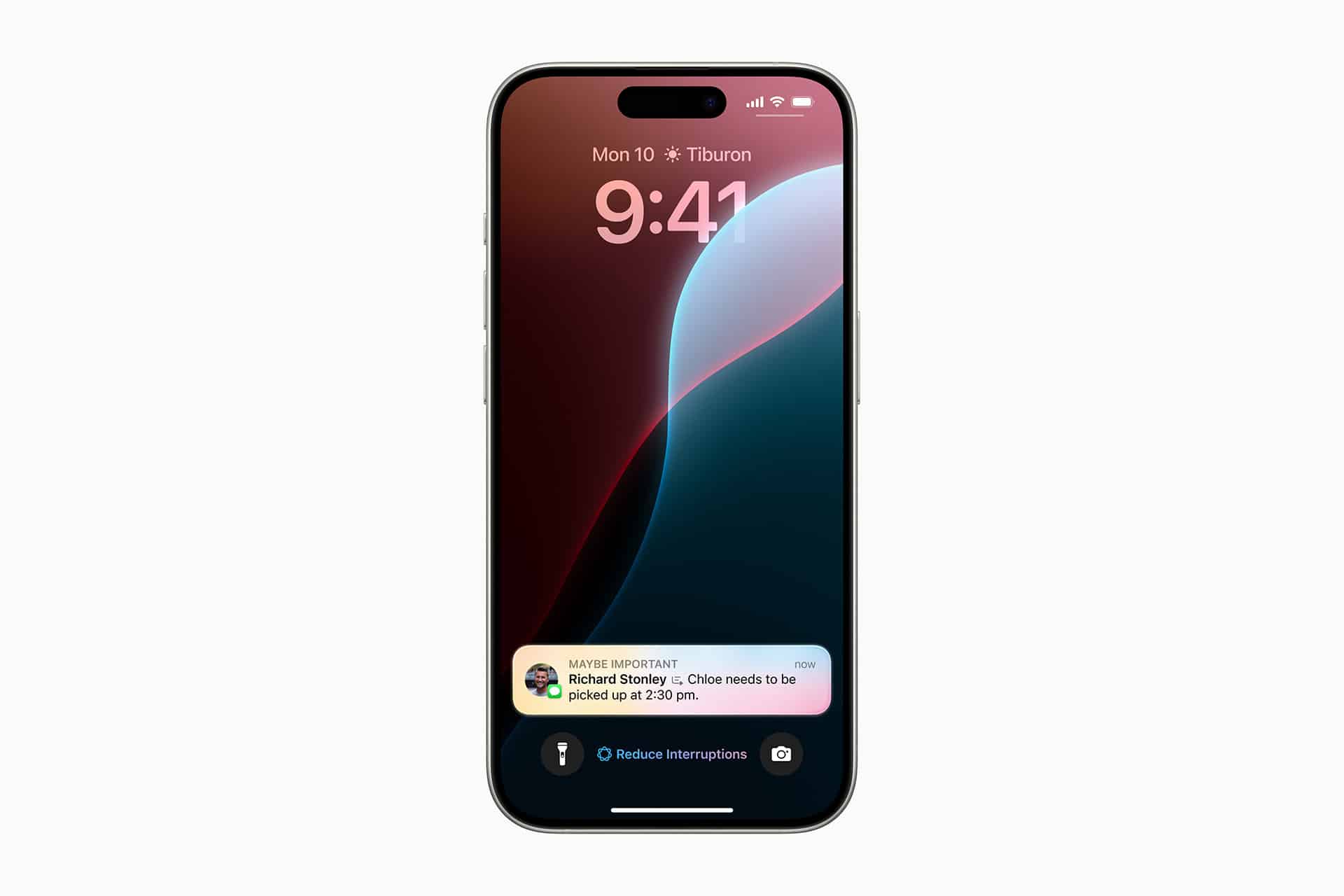
By using smaller, specialized models that understand personal data without exporting it, Apple AI can deliver results that feel more relevant than a general-purpose chatbot ever could. Asking Siri about your schedule, your family, or your habits becomes more powerful than asking a global AI trained on the internet.
This is where Apple AI gains its edge. It does not need to know everything. It only needs to know you.
The Economics of Apple AI
Mega-scale AI companies are locked into an expensive future. Each new model requires more GPUs, more energy, and more capital. Their costs grow with usage. Apple AI scales differently. Every new iPhone, Mac, or iPad adds more compute capacity to the system. The cost is distributed across hardware sales instead of cloud bills.
This means Apple AI can afford to be deeply embedded into everyday features without charging per query or limiting usage. Writing tools, photo editing, voice assistance, and automation can run all day without creating a financial burden on the platform.
That makes Apple AI sustainable at global scale.
Apple AI in the Competitive Landscape
Microsoft and OpenAI dominate enterprise AI. Google controls search-driven AI. xAI is chasing large-scale reasoning. Apple AI occupies a different layer: personal computing. It owns the interface, the sensors, the operating systems, and the hardware.
That allows Apple to build AI that understands not just text, but location, motion, vision, sound, and personal history. Over the next few years, Apple AI will quietly become the most used AI in the world, not because it is the loudest, but because it is everywhere inside daily life.
In a future where artificial intelligence becomes invisible infrastructure, Apple AI is positioning itself as the most trusted and most deeply integrated platform of them all.

