

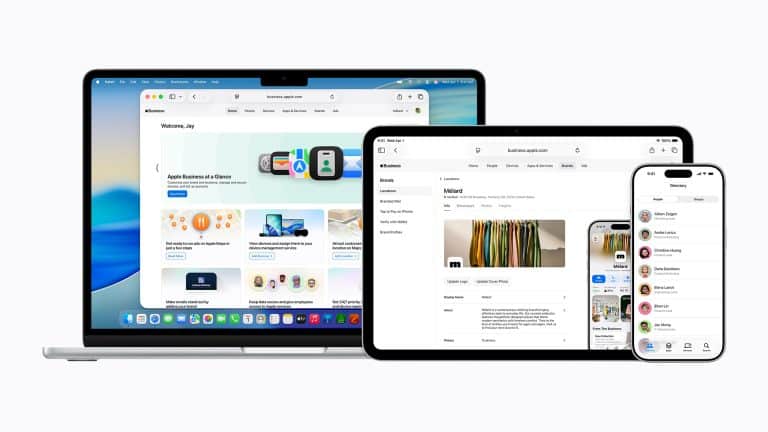
Apple Business marks a structural shift in how companies interact with Apple’s ecosystem. Instead of navigating separate services for device enrollment, location branding, identity management, and collaboration tools, organizations now access everything through a single consolidated platform. Apple Business unifies what previously lived under Apple Business Essentials, Apple Business Manager, and Apple Business Connect into one experience.
At its core, Apple Business is designed to simplify operations. Companies can manage devices, configure security settings, deploy apps, create professional email identities, and enhance visibility in Apple Maps — all from one interface. The platform becomes available April 14 in more than 200 countries and regions, signaling Apple’s global commitment to business infrastructure.
Susan Prescott, Apple’s vice president of Enterprise and Education Marketing, described the move as a long-term evolution of Apple’s business strategy. The goal is to allow organizations to spend less time on configuration and more time building, serving, and growing.

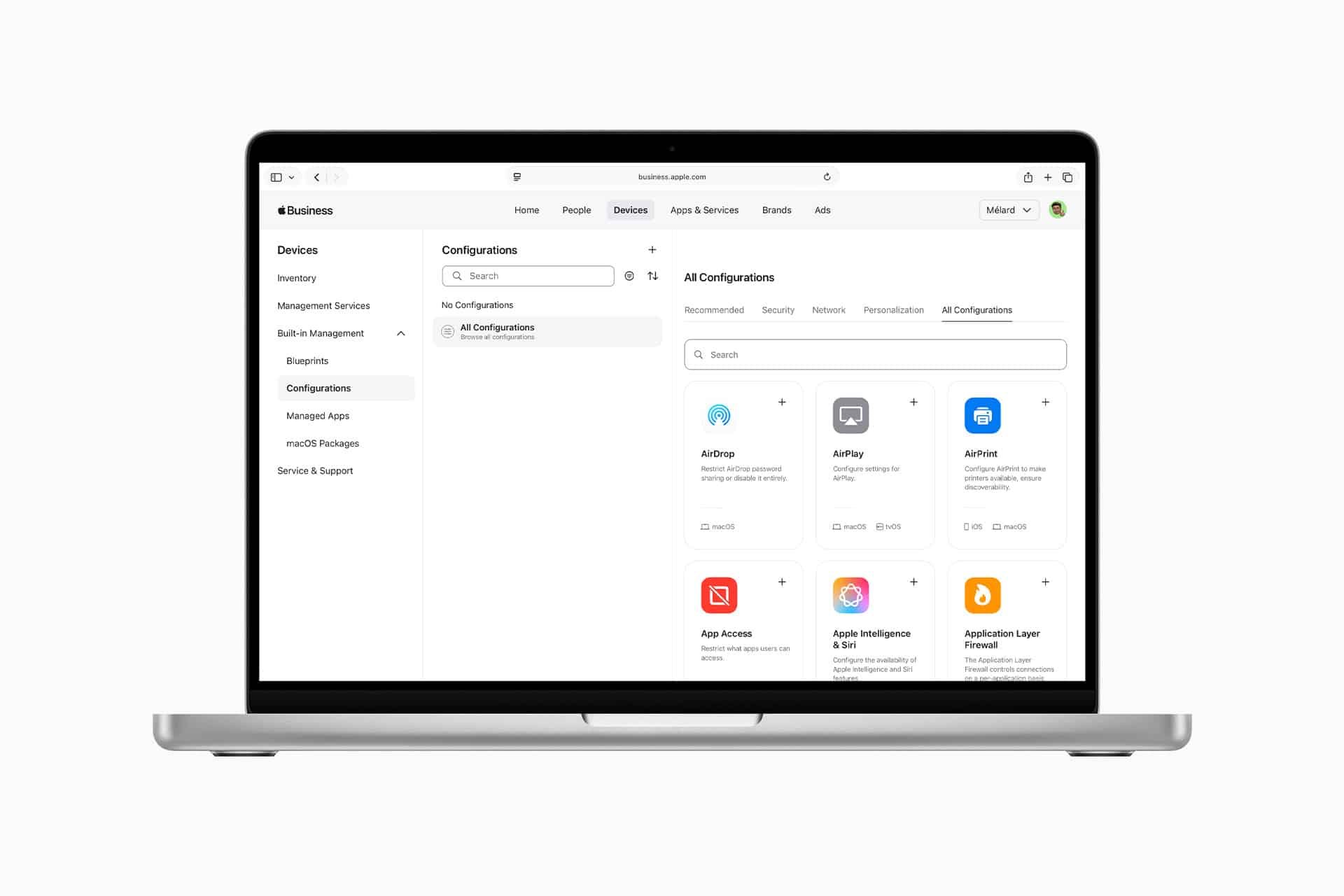
Built-In Mobile Device Management for Every Business
Apple Business integrates mobile device management directly into the platform. Organizations gain a centralized view of their Apple devices, users, and configurations without requiring third-party MDM solutions for basic operations.
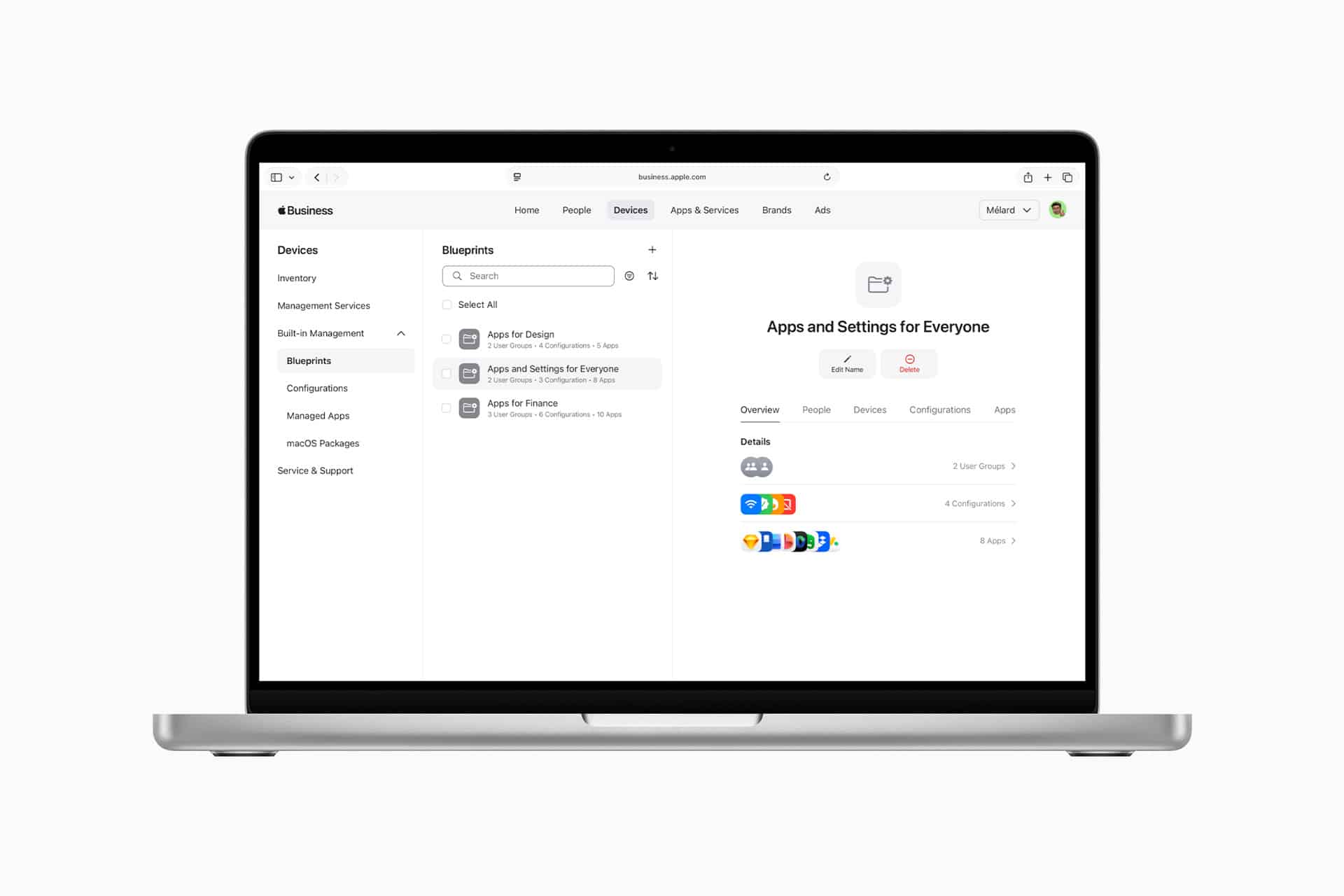
Blueprints allow administrators to define preconfigured settings, apps, and security rules. Devices can then be deployed with those configurations automatically, enabling zero-touch deployment when purchased through Apple or authorized resellers. New employees receive devices that are ready to use out of the box, already aligned with company standards.
Managed Apple Accounts create a cryptographic separation between personal and work data. Employee privacy remains protected while company information stays secure. Integration with identity providers such as Google Workspace and Microsoft Entra ID allows automatic account creation for new team members.
App distribution becomes streamlined through direct acquisition and assignment via the App Store. Administrators can create user groups by function, assign roles, and manage permissions with precision. For larger deployments, the Admin API provides structured access to device and audit data.

Business Email, Calendar, and Directory Services
Apple Business introduces integrated email, calendar, and directory services tied to custom domain names. Companies can bring their own domain or purchase one directly through the platform.
This allows startups and established enterprises alike to operate with a consistent professional identity from day one. Calendar delegation supports executive scheduling workflows. Built-in directory services help employees connect with colleagues quickly. Contact cards and group assignments improve internal communication without layering additional third-party tools.
These services require iOS 26, iPadOS 26, or macOS 26 and are designed to work seamlessly across devices already used in daily operations.
New Advertising Opportunities in Apple Maps
Beginning this summer in the U.S. and Canada, Apple Business introduces ads within Apple Maps. Businesses will be able to create location-based ads that appear when users search for relevant categories or browse nearby places.
Ads will appear at the top of search results or within a Suggested Places experience based on local relevance and user discovery patterns. Apple emphasizes that these placements will be clearly marked and aligned with its privacy standards. Location data and ad interactions are not tied to a user’s Apple Account, and personal data remains on device.
To participate, businesses must first claim their location through Apple Business. Ad creation will be automated within the platform, while agencies and existing Apple Ads advertisers can manage campaigns through their existing tools with additional customization options.
Unified Brand and Location Management
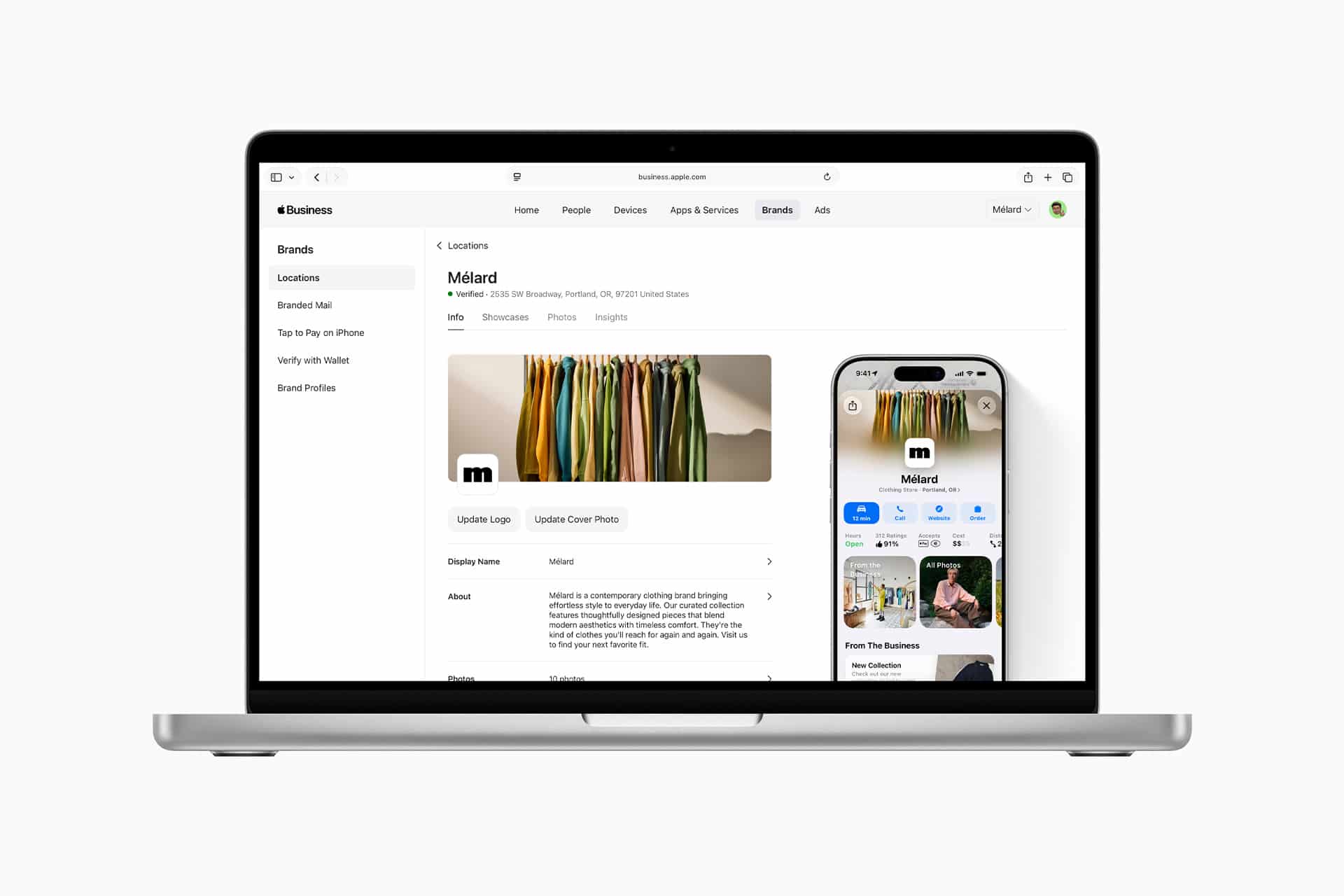
Apple Business consolidates brand management tools previously found in Apple Business Connect. Companies can manage logos, brand names, and key details that appear across Apple Maps, Wallet, Mail, Safari, Spotlight, and other Apple services.
Rich place cards allow businesses to upload photos, customize operating hours, highlight special offers, and add actions such as order or reserve. These features strengthen brand presence directly within Apple’s ecosystem without requiring separate platforms.
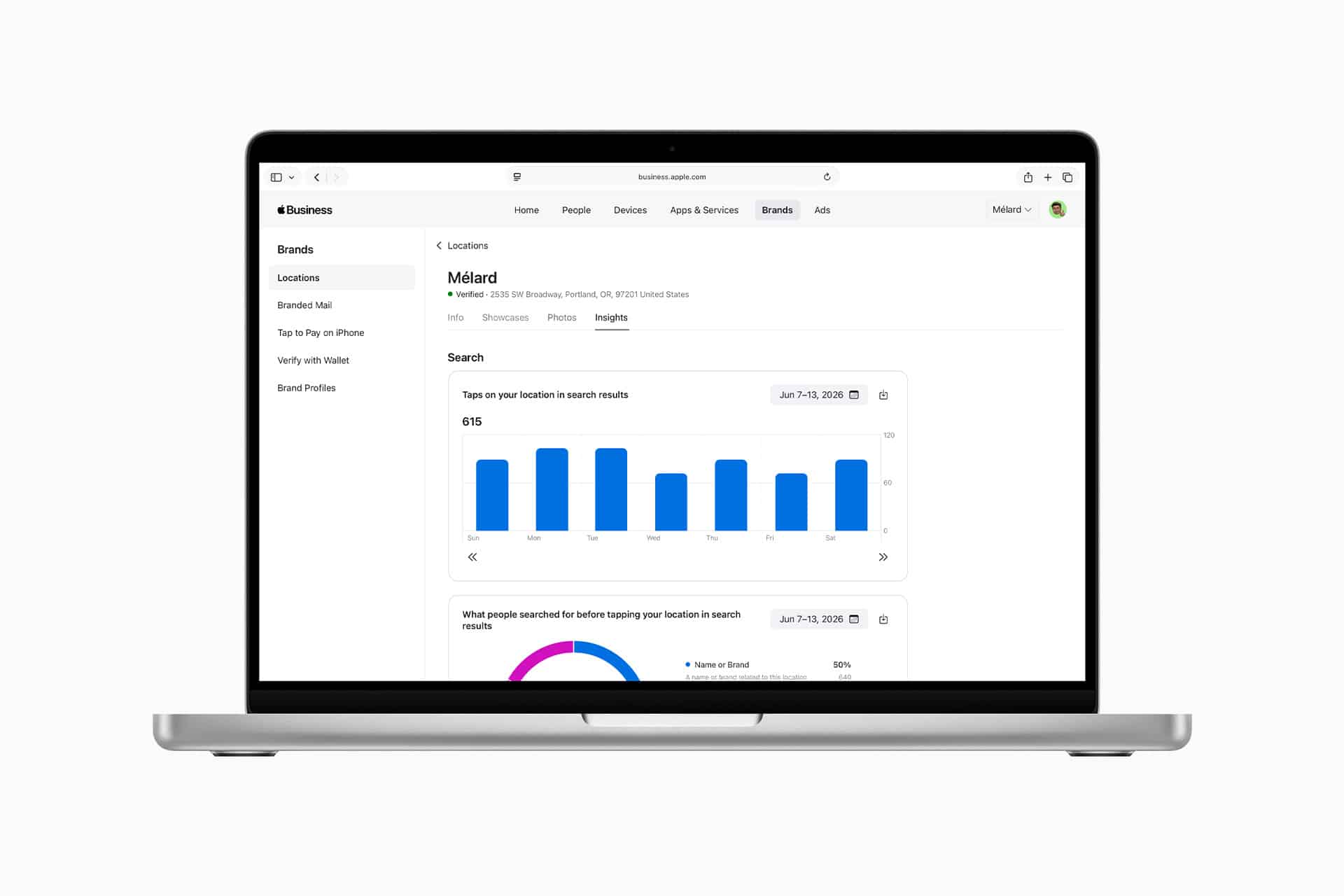
Location insights provide analytics on search visibility, views, and customer interactions. Businesses can evaluate how users discover them and refine their presence accordingly.
Branded communication features extend visibility into Mail and Wallet. For example, tracked orders in Wallet display company branding, reinforcing recognition during post-purchase experiences. Tap to Pay on iPhone also integrates branding on payment screens, reinforcing trust at the moment of transaction.
Pricing, Transition, and Availability
Apple Business launches as a free service beginning April 14 for both new and existing users of Apple Business Connect, Apple Business Essentials, and Apple Business Manager. Upon launch, those legacy services will be discontinued, with data migrating automatically into Apple Business.
Business Essentials customers will no longer be charged monthly device management fees after the transition date. Existing claimed locations, place cards, photos, and account details will transfer automatically.
Optional paid upgrades include additional iCloud storage up to 2TB per user starting at $0.99 per user per month in the U.S., as well as AppleCare+ for Business starting at $6.99 per device per month or $13.99 per user per month for up to three devices.
Apple Business represents a consolidation of infrastructure rather than the introduction of isolated features. By combining device management, communication tools, brand visibility, and advertising into a single platform, Apple positions itself as a foundational layer for modern companies operating within its ecosystem.