Apple’s next era may not be defined by a single new device. It may be defined by the moment the device itself becomes less visible.
For decades, Apple’s story was told through hardware categories. The Mac was the computer. iPod was the music player. iPhone was the phone. iPad was the tablet. Apple Watch was the wearable. AirPods were the audio layer. Vision Pro became the spatial computer. Each product had a place, a screen, a role, and an operating system.
That model still matters, but WWDC26 showed Apple moving toward something more unified. The company is beginning to present features less as iPhone updates, Mac updates, or iPad updates, and more as experiences that travel across the installed base. Siri AI, Apple Intelligence, App Intents, Shortcuts, Continuity, Passwords, Maps, Wallet, Health, Photos, iCloud, and Apple services are becoming the connective tissue.
This is Apple’s next-era opportunity: a personal computing system where the user no longer thinks first about which device they are using. The task comes first. The right screen, sensor, app, model, or service follows.

The Device Becomes a Surface
Apple is not abandoning devices. It is making them behave more like surfaces of the same experience.
The iPhone remains the pocket computer. The Mac remains the work machine. iPad remains the flexible canvas. Apple Watch remains the wrist sensor and quick-control point. AirPods remain the audio and voice layer. Apple TV remains the shared screen. Vision Pro remains the spatial workspace. Each device still has its own strengths.
The shift is that these devices increasingly matter most when they work together. Apple already built that expectation through Continuity. Users can copy on one device and paste on another, use iPhone as a Mac camera, answer calls from Mac, unlock with Apple Watch, AirDrop files, use AirPlay, and move tasks across screens. Apple’s own Continuity documentation describes Mac, iPhone, iPad, Apple Watch, Apple TV, and Vision Pro as devices that can move work and content between each other seamlessly.
AI gives that old idea a new role. Continuity used to move actions across devices. Apple Intelligence can begin to move intent across devices.
That difference is significant. The next step is not only starting an email on Mac and finishing it on iPad. It is asking for something once and letting Apple decide whether the answer belongs on iPhone, Mac, Watch, AirPods, Vision Pro, or inside an app the user does not need to open manually.
AI Turns Continuity Into Context
Apple’s advantage in AI is not only the model. It is context.
OpenAI, Google, Anthropic, and other AI platforms are building systems that can reason, write, search, code, plan, and act across tools. Their direction points away from the app-centered experience and toward agentic interfaces where the user describes a goal instead of choosing a software destination first.
Apple is moving toward that same future, but from a stronger personal-device position. It already has the user’s hardware, local data, app permissions, secure identity, services, payments, health signals, photos, messages, locations, routines, and developer ecosystem. If Siri AI and Apple Intelligence become reliable, Apple can connect that information with fewer handoffs than a standalone AI platform.
That is why WWDC26’s focus on Siri AI, App Intents, Shortcuts, and cross-device intelligence is more meaningful than another list of app updates. Apple is preparing the system layer that lets apps expose actions and content to intelligence. App Intents already allow developers to make app functions available to Siri, Spotlight, widgets, controls, and Shortcuts. WWDC26 pushes that deeper by making natural language and AI-driven actions a larger part of the developer story.
The app is no longer always the starting point. The user’s intent can be.

The App-Centered Model Is Being Rewritten
The iPhone era made apps the center of digital life. Open an app, do a task, switch to another app, copy something, paste it somewhere else, search, share, save, repeat. That model created the modern mobile economy, but it also created friction. Every app owns a slice of the task. The user does the coordination.
AI platforms are challenging that structure. A chatbot or agent can pull information, compare options, summarize text, draft a response, build a workflow, or act across tools. Instead of asking the user to know which app does what, the system can help decide the path.
Apple cannot ignore that shift because it threatens the logic of its own platforms. If users begin their digital lives inside third-party AI agents, Apple risks losing the front door to personal computing. The company’s answer is to make its own front door more powerful: Siri AI, systemwide Apple Intelligence, and app actions available through native frameworks.
This is where Apple’s strategy can become stronger than the AI-only approach. OpenAI can build a brilliant assistant, but it does not own the iPhone, Apple Watch, AirPods, Mac, Wallet, Health, Photos, Find My, Home, or Apple’s secure hardware architecture. Apple can make intelligence part of the device fabric itself.
That is the prosperous future of the ecosystem: not a bigger app grid, but fewer reasons to think about the grid at all.
Apple’s Installed Base Becomes the Platform
Apple’s installed base is more than a sales metric. It is the foundation for the next computing layer.
Hundreds of millions of people already own multiple Apple devices. Many have iPhone, Apple Watch, AirPods, Mac, iPad, Apple TV, and iCloud services working together every day. They may not think of that as a unified platform, but it already behaves like one in small ways.
A message arrives on iPhone and Mac. AirPods switch between devices. Apple Watch unlocks a Mac. Photos sync through iCloud. Passwords follow the user. Maps routes move between screens. Wallet holds payment, travel, keys, and passes. Find My connects people, devices, and items. Health collects signals over years. Apple TV and HomePod bring services into shared spaces.
AI can turn those separate conveniences into a more intelligent layer. It can help the system understand what the user is doing, which device is closest, which app has the right action, which screen makes sense, and which privacy boundary should apply.
This is hard for competitors to copy because it was not built in one product cycle. Apple spent decades assembling the pieces: hardware, silicon, operating systems, developer tools, services, retail, privacy architecture, accessibility, and user trust. The next era may be the moment that long investment becomes more visible.
Siri AI Has to Become the System Interface
Siri AI is the most direct test of this strategy. If Siri remains only a better question-answering tool, Apple’s ecosystem advantage will be underused. If Siri becomes a reliable system interface, the entire Apple experience changes.
The new Siri AI direction points toward richer context, natural conversation, app actions, personal awareness, visual intelligence, and a dedicated app-like interface. Apple’s own Apple Intelligence materials describe Siri as understanding personal context, taking action in more apps, and connecting with broader knowledge. The developer side adds App Intents, which can expose app content and actions through natural language.
That is the path from assistant to operating layer. Siri should not simply answer. It should help move a task across the system.
A user could ask for a travel plan, then see calendar options on Mac, boarding passes in Wallet, route suggestions in Maps, weather on iPhone, reminders on Watch, and entertainment on Apple TV. A student could ask for a project summary, then see Notes, Safari, Files, Messages, and Shortcuts participate. A parent could ask for a safer app setup, then Screen Time, App Store age ratings, contact approvals, and Ask to Browse could appear in one guided flow.
The promise is not that every task becomes automatic. The promise is that Apple can reduce the distance between intention and action.

The Next Device May Matter Less Than the Next Connection
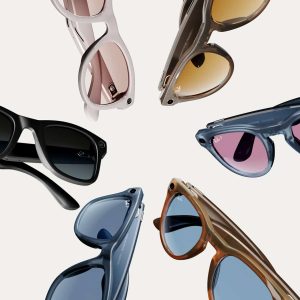
A future iPhone Fold, AR glasses, home robot, smart display, or satellite-connected iPhone may still be exciting. Apple needs new hardware moments. But the next era will not be won by hardware alone.
A foldable iPhone matters if it creates a better bridge between phone and tablet workflows. AR glasses matter if they become a lightweight visual layer for Apple Intelligence. Robotics matters if Siri AI can move from a voice in a speaker to a useful physical presence. Satellite connectivity matters if it makes iPhone more dependable beyond cellular coverage. A smarter Apple home device matters if it becomes the shared center for Home, FaceTime, media, security, and services.
Each possible product becomes stronger if it joins the unified experience rather than standing alone.
That is the difference between adding categories and evolving the platform. Apple’s best future devices should not feel like separate bets. They should feel like new access points to the same personal system.
This is where Apple has room to move boldly. A foldable device can use iPhone and iPad logic together. Glasses can extend Visual Intelligence and Siri AI into the user’s field of view. Apple Watch can keep adding health and context signals. AirPods can become the always-available voice layer. Apple TV and HomePod can anchor shared spaces. Vision Pro can handle spatial work. The Mac can remain the high-focus productivity machine.
The user should not have to manage all of that manually. AI should coordinate it.
Privacy Becomes a Product Feature
Apple’s unified experience depends on trust. A system that understands context across devices can become helpful, but it can also feel invasive if handled poorly.
This is why Apple continues to frame its AI approach around on-device processing, Private Cloud Compute, and user-controlled permissions. Apple’s advantage is not only having more personal data available across devices. It is the ability to process more of that data locally and design boundaries around what apps and models can access.
That privacy architecture may slow Apple down compared with AI companies that move faster in the cloud. But it also fits the kind of personal intelligence Apple wants to build. A system that helps with messages, photos, health, payments, location, home, and family settings needs stronger guardrails than a general chatbot.
The unified Apple experience can only work if users believe the system is acting for them, not extracting from them. That trust is part of Apple’s long-term product value.
The Developer Role Gets Larger
Developers will decide how far this next era goes. Apple can build Siri AI, Apple Intelligence, Shortcuts, and App Intents, but third-party apps need to expose useful actions and content for the system to feel complete.
That is why App Intents matter. They are the bridge between traditional apps and a more agentic Apple experience. When developers support them well, users can interact with app functions through Siri, Spotlight, widgets, controls, Shortcuts, and system intelligence. When developers ignore them, the app remains a closed island.
WWDC26 made this direction harder to dismiss. Apple is giving developers more reasons to make their apps readable and actionable by the system. That includes better automation, smarter workflows, and more ways for AI to participate in app behavior without forcing every developer to build a full AI interface from scratch.
For AppleMagazine’s audience, this is where the ecosystem’s prosperity becomes visible. The next wave of Apple app value may come from apps that behave less like isolated destinations and more like intelligent services available wherever the user needs them.

The Ecosystem’s Prosper Future
Apple’s next era will likely be quieter than the arrival of iPhone, but deeper. The change will not always look like a new device onstage. It will look like the same devices doing less in isolation and more together.
The Mac will not disappear. iPhone will not lose its role. iPad will not stop being its own category. Apple Watch, AirPods, Vision Pro, Apple TV, and HomePod will still have distinct identities. The evolution is that each becomes part of a more unified personal layer, integrated by AI, governed by privacy, and supported by decades of hardware and software control.
That is a powerful position in a rapidly accelerated world. AI-first companies are trying to build the next interface from the cloud down. Apple can build from the user’s real life up: the devices they already carry, wear, watch, and use at home.
The most prosperous version of Apple’s future is not an “all-in-one device.” It is an all-device experience.