


Apple’s environmental strategy has entered a more complicated phase. The company continues to report measurable progress in recycled materials, supplier clean energy, packaging, water stewardship, and carbon reduction. At the same time, its use of carbon-neutral product claims has drawn legal scrutiny, regulatory pressure, and a wider debate over how technology companies should describe climate progress to consumers.
The tension is not unique to Apple, but Apple is one of the most visible companies facing it. When the company says it is working toward Apple 2030, its plan to become carbon neutral across its global footprint by the end of the decade, the claim receives more attention than a similar target from a smaller hardware maker. Apple sells products at massive scale, controls a sprawling supply chain, and markets environmental progress as part of its product identity. That makes its best practices worth studying and its wording worth questioning.
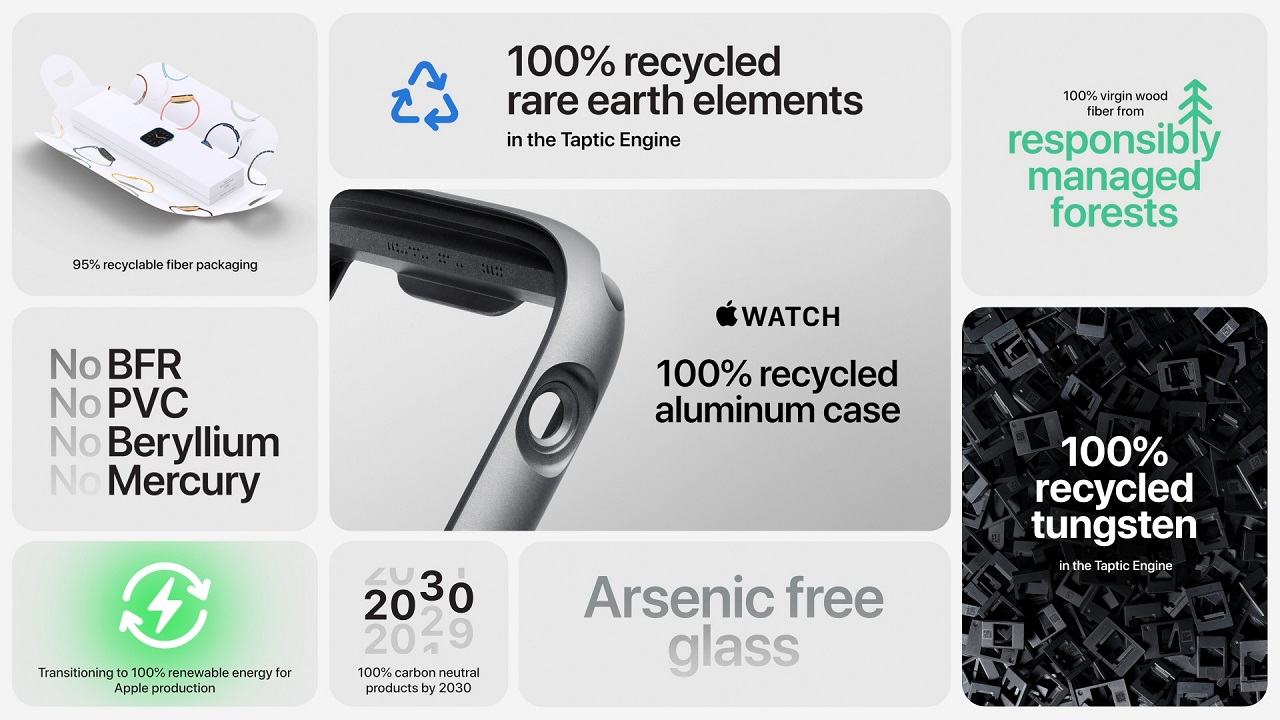
Apple’s latest environmental reporting shows a company moving in the right direction on several operational fronts. Apple says it has cut overall greenhouse gas emissions by more than 60% compared with its 2015 baseline and aims to reduce emissions by 75% before addressing remaining emissions with carbon credits. The company also reported that 30% of the materials in products shipped in 2025 came from recycled or renewable sources, its highest level so far. Supplier renewable energy continues to expand, and Apple has pushed recycled aluminum, rare earth elements, cobalt, gold, tin, and other materials deeper into its product lines.
Those are not small changes. Consumer electronics are difficult to decarbonize because they involve mining, refining, precision manufacturing, global transport, electricity use, batteries, displays, chips, metals, and end-of-life recovery. Apple’s scale means improvements can affect suppliers, component markets, recycling systems, and industry norms.
The scrutiny comes from a different problem: how much of that progress can fairly be summarized for consumers with simple labels such as “carbon neutral.” As regulators tighten rules and courts examine offset-backed marketing, Apple’s environmental evolution is becoming less about the ambition of Apple 2030 and more about the precision of every public claim.


Apple’s Strongest Progress Is in Design and Supply Chain
Apple’s environmental work is strongest when it focuses on changes inside the product and supply chain. Recycled materials, lower-carbon aluminum, plastic reduction, smaller packaging, supplier clean energy, energy-efficient devices, and repair or recycling programs are tangible levers. They reduce emissions or waste closer to the source rather than balancing them later through offsets.
That distinction matters. A Mac, iPhone, iPad, Apple Watch, or AirPods model has an environmental footprint before a customer turns it on. Raw materials are extracted. Components are manufactured. Factories use electricity and water. Products are assembled, packed, shipped, used, repaired, traded in, recycled, or discarded. Most of Apple’s product emissions come from manufacturing rather than direct corporate operations, which is why supplier clean energy and materials choices carry so much weight.
Apple’s 2026 Environmental Progress Report highlights a continued shift toward recycled and renewable materials. The company’s use of recycled cobalt in batteries, recycled rare earth elements in magnets, recycled aluminum in enclosures, and recycled tin in solder points to a strategy based on material substitution and recovery. Apple has also invested in disassembly and recycling technologies, including robotics designed to recover materials from devices.
Supplier energy is another major part of the story. Apple’s Supplier Clean Energy Program has pushed manufacturers to source renewable electricity for Apple production, and the company says supplier clean energy capacity has continued to grow. That has broader significance because Apple cannot reach its 2030 target only by cleaning up its offices and stores. The larger challenge is the manufacturing ecosystem that makes its devices.
Product energy efficiency also supports the target. Devices that use less electricity during their lifetime reduce use-phase emissions, especially in regions where the electrical grid still relies heavily on fossil fuels. Apple has long used efficiency as a design priority, not only for environmental reasons but also for battery life, thermals, and performance per watt.
These areas are where Apple’s environmental claims are easier to defend. They involve direct reductions, supplier commitments, documented material choices, and design decisions. The closer Apple’s claims stay to those changes, the stronger they are.
Carbon Neutral Is a Harder Claim
The phrase “carbon neutral” is more difficult because it compresses a complex calculation into a simple consumer-facing label. A product can still generate emissions across mining, manufacturing, shipping, use, and recycling while being described as carbon neutral if the remaining footprint is balanced through carbon credits or removals. That structure can be legitimate, but it is also easy to misunderstand.
Apple introduced its first carbon-neutral Apple Watch configurations in 2023, saying certain Apple Watch Series 9, Apple Watch Ultra 2, and Apple Watch SE combinations met the company’s criteria when paired with specific bands. Apple’s approach involved reducing emissions across materials, electricity, and transportation, then addressing the remaining footprint through carbon credits. The company said those products achieved at least a 75% reduction in emissions before the use of offsets.
That reduction-first framing is more rigorous than a claim built only on buying credits. Still, the offset portion created legal and reputational risk. Environmental groups and plaintiffs challenged whether the projects used to balance remaining emissions were durable, additional, and credible enough to support a consumer-facing carbon-neutral claim.
In Germany, a Frankfurt court ruled in August 2025 that Apple could no longer advertise the Apple Watch as a “CO2-neutral product” in the country. The case focused in part on a carbon offset project in Paraguay involving eucalyptus plantations. The court questioned whether the land arrangements were secure for the long term, noting that a large portion of the project area was not guaranteed beyond 2029. Environmental critics also challenged the ecological value of eucalyptus monocultures, arguing that they can harm biodiversity and provide only limited storage.
That ruling did not erase Apple’s emissions-reduction work. It challenged the way the result was marketed. That is the distinction Apple now has to manage.
The U.S. case moved differently. A proposed class action over Apple’s carbon-neutral Apple Watch claims was dismissed in 2026 after a federal judge ruled that the plaintiffs had not plausibly shown Apple’s statements were false or misleading. Environmental Defense Fund, which filed an amicus brief supporting Apple, said the ruling set useful guardrails for greenwashing litigation. The dismissal was a legal win for Apple, but it did not end the broader debate over product-level carbon-neutral claims.
The mixed outcomes show the problem. Apple can defend its methodology in one jurisdiction and still face restrictions in another. As climate marketing rules become stricter, the same environmental program may be judged less by intent and more by consumer interpretation, claim wording, substantiation, and the durability of offsets.

Offsets Are Under Pressure
Carbon credits are not automatically worthless, but they are under much greater scrutiny than they were a few years ago. The basic idea is that one party funds emissions reductions or removals elsewhere to balance emissions it cannot yet eliminate. In practice, credits vary widely in quality.
A credible credit needs to represent real, additional, measurable, durable, and verifiable climate benefit. That sounds straightforward but is difficult to prove. A forest project can be damaged by fire, disease, drought, illegal logging, land conflict, or weak long-term protections. A project may claim carbon savings that would have happened anyway. A credit may store carbon temporarily while the original product emissions stay in the atmosphere for much longer.
Nature-based projects can still be valuable, especially when they protect ecosystems, support biodiversity, and involve local communities. The risk is using them to create simple product labels that imply the emissions have effectively disappeared. Consumers may hear “carbon neutral” as “no climate impact,” while the underlying reality is a mix of reductions, assumptions, credits, time horizons, and verification systems.
Apple’s own Apple 2030 language has shifted toward explaining that the company aims to reduce emissions by 75% and balance the remaining emissions with high-quality carbon credits. That is a more transparent structure than relying only on a carbon-neutral badge. It shows the hierarchy: reduce first, balance later.
Regulators are moving in the same direction. The European Union has been tightening rules around environmental claims, with a focus on making claims reliable, comparable, and verifiable. The EU’s green claims work and consumer-protection updates are designed to restrict vague or misleading environmental marketing, including claims that rely heavily on offsetting without clear substantiation. This directly affects companies that use terms such as climate neutral, carbon neutral, eco, green, or sustainable in consumer marketing.
For Apple, the regulatory shift means product labels may become less valuable than detailed reporting. A company can still tell a strong environmental story, but it needs to be specific. “Made with 100% recycled aluminum in the enclosure” is easier to understand than “carbon neutral.” “Supplier electricity matched with renewable energy for manufacturing” is more concrete than “green.” “Emissions reduced by 75% compared with a baseline before carbon credits” gives more information than a logo.
The Next Upgrade Is Language
Apple’s environmental evolution now needs a communication upgrade. The company’s best environmental work will be more credible if its public language becomes less absolute and more specific.
That does not mean Apple should stop talking about climate goals. It means the company should separate direct reductions from offset-based balancing more visibly. A product page could explain manufacturing emissions, material changes, renewable energy use, transport choices, and remaining emissions without relying on one large claim to do all the work.
Apple has already moved in that direction in parts of its reporting. Product environmental reports break down life-cycle emissions by category. The Environmental Progress Report explains reduction targets, supplier energy, recycled content, and carbon removal strategy. The problem is that consumers rarely read a long PDF before buying a watch or phone. The marketing layer has to carry the same precision in fewer words.
A better approach would be to treat carbon neutrality as a corporate accounting milestone rather than a product marketing slogan. Product pages could lead with direct changes: recycled content, lower-carbon manufacturing, reduced packaging, renewable electricity in production, expected energy use, and repair or recycling options. Carbon credits could remain in the report, but not become the headline identity of the product.
That would also match the direction of public trust. Consumers are becoming more skeptical of broad climate language. They have seen too many companies use environmental terms as branding rather than disclosure. Apple’s advantage is that it has real operational progress to discuss. The risk is making that progress sound less credible by wrapping it in claims that regulators and courts are increasingly willing to challenge.
Apple also needs to be careful with visual labels. A green leaf, carbon-neutral logo, or simplified badge can make a complex claim look certified or absolute, even when the methodology is more nuanced. German reporting around the Apple Watch case noted that the court did not treat Apple’s carbon-neutral logo as an official certification seal, but visual design can still influence consumer perception. Apple is unusually skilled at simplifying messages. In environmental claims, that skill has to be used cautiously.
Best Practices Are Becoming Table Stakes
Apple’s environmental best practices now face a higher standard because several of them have become expected behavior for a company of its size. Renewable energy, recycled materials, lower packaging volume, supplier emissions reporting, and product energy efficiency are no longer optional leadership signals. They are increasingly the baseline for a major technology company.
That is not a criticism of the work. It is a sign that the market has moved. A decade ago, recycled aluminum enclosures and large supplier clean-energy programs felt more unusual. Today, investors, regulators, customers, and employees expect major companies to reduce emissions across their value chains. Apple remains ahead of many competitors in transparency and scale, but the conversation has shifted from whether the company has a climate plan to how credible each part of that plan is.
The hardest area remains product growth. Apple can reduce emissions per device and still face pressure if total product volume, service infrastructure, AI data-center demand, shipping, and replacement cycles increase. A more efficient iPhone is better than a less efficient one. A longer-lasting iPhone is better still. Repairability, software support, trade-in value, parts availability, battery replacement, and reuse all affect the environmental impact of Apple’s hardware business.
That is where the environmental story intersects with product strategy. A company that sells premium devices has an opportunity to push longevity as a climate advantage. Longer software support, durable materials, repair options, and strong resale markets can reduce the need for frequent replacement. Apple often benefits financially from upgrades, but its environmental credibility improves when products remain useful longer.
The company also has to address AI’s energy implications. As Apple Intelligence, Siri, Private Cloud Compute, and AI services expand, data-center electricity demand will become part of Apple’s climate narrative. Apple has emphasized renewable energy for its operations, but AI growth across the industry is making clean electricity claims more closely watched. A product company is now also a cloud infrastructure company, and environmental reporting has to cover both.

The Real Test Before 2030
Apple’s 2030 target is approaching quickly. The early part of a climate plan often includes easier gains: renewable electricity procurement, efficiency upgrades, packaging reductions, and better materials sourcing. The final stretch is harder because remaining emissions tend to be embedded in the most difficult parts of the supply chain.
That makes the next few years more important than past progress. Apple has to continue reducing emissions directly while proving that any remaining credits are high quality, durable, and transparently explained. It also has to adapt its marketing to a world where carbon-neutral labels are less accepted, especially when offsets are involved.
The company’s environmental evolution should not be judged only by lawsuits or slogans. Apple has made substantial progress in materials, energy, and reporting, and its scale can influence suppliers far beyond its own operations. But scrutiny around carbon neutrality is a warning that climate leadership now requires more than ambitious targets and polished product pages.
The better standard is specific, measurable disclosure. How much did emissions fall before credits? Which materials changed? How much renewable energy is tied to production? What is the expected life-cycle footprint? What remains unresolved? Which credits are used, for how long, and under what verification? What happens if a forest project fails? How does Apple avoid double counting? How does product longevity factor into the claim?
Those questions are not attacks on Apple’s progress. They are the next stage of environmental accountability for a company that has made climate part of its brand.
Apple’s strongest position is to keep reducing emissions first and make offsets a smaller, more carefully explained part of the story. The company does not need broad green language to look serious. It needs evidence that the next iPhone, iPad, Mac, Apple Watch, and cloud service are less carbon-intensive than the last, with fewer claims that ask consumers to trust a label before understanding what sits behind it.