


Apple films have become one of the clearest ways to understand Apple TV’s long-term content strategy. Apple is not only commissioning star-driven studio projects or using films as streaming inventory. It has also used film festivals as a discovery system, sending representatives into Sundance, Toronto, Tribeca, Cannes, and other industry events where smaller films, independent directors, new voices, and awards contenders can be identified before the wider market fully prices them.
That festival pipeline matters because Apple entered entertainment without the library advantage of Disney, Warner Bros., Paramount, or NBCUniversal. It did not begin with decades of film rights, legacy franchises, or a deep archive of recognizable titles. Apple had to build a film identity from the outside in: buy strong finished films, partner with established filmmakers, develop Apple Studios projects, and create a release strategy that gives movies a life in theaters before turning them into long-term Apple TV assets.
“CODA” remains the defining example. Apple acquired the worldwide rights to Siân Heder’s Sundance winner in 2021 for just over $25 million, a record-setting Sundance deal at the time. The film later became the first streaming title to win the Academy Award for Best Picture, giving Apple a credibility breakthrough that no marketing campaign could have created on its own. It showed exactly why festival acquisition can matter: the right independent film can become a brand-defining moment.
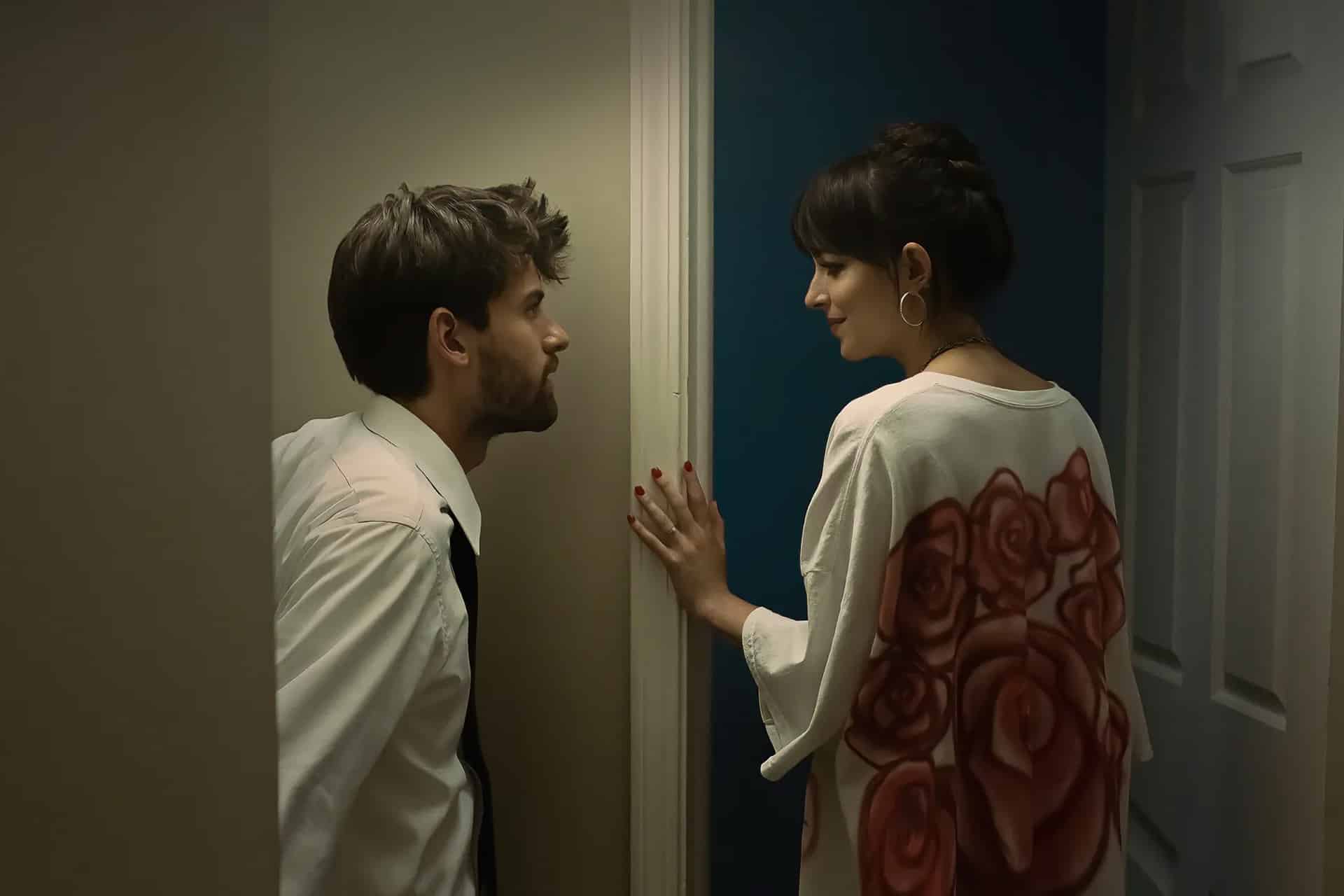
Apple repeated the model with “Cha Cha Real Smooth,” buying Cooper Raiff’s Sundance Audience Award winner in 2022 for a reported $15 million. In 2023, Apple acquired John Carney’s “Flora and Son” after its Sundance premiere in a deal reported around the $20 million range, with Deadline describing it as Apple’s biggest Sundance acquisition since “CODA.” Those were not random purchases. They were part of a pattern: find emotionally accessible films with clear audience appeal, festival heat, filmmaker identity, and awards or prestige potential, then give them theatrical visibility and a streaming home.
That is the story behind Apple’s festival presence. Apple TV needs originals that can last. Festivals give Apple access to finished work, emerging filmmakers, critical response, audience reaction, and competitive bidding before a film becomes fully absorbed by the wider studio system.
Festivals Give Apple a Talent Map
Apple films benefit from festivals because festivals are not only markets for movies. They are talent maps. A Sundance premiere can reveal a filmmaker with a distinct voice before that filmmaker becomes expensive. A Toronto launch can show whether a film can play for broader audiences. Cannes can position a director or project within the global prestige circuit. Tribeca, SXSW, Telluride, Venice, and other festivals each serve different parts of the discovery process.
For Apple, that matters because the company is still building its film identity. A theatrical studio can lean on franchises, remakes, sequels, and legacy relationships. Apple has to prove itself with filmmakers. That means being present where directors, producers, agents, sales companies, and actors are bringing projects to market.
The festival path also gives Apple a way to buy with evidence. A finished film at Sundance has already been seen by programmers, critics, buyers, and audiences. Apple can judge audience reaction, reviews, word of mouth, and awards potential before committing. That is different from building every project from a script, where the risk is longer and harder to measure.
“CODA” showed how powerful that process can be. Apple bought a film that already had festival response and emotional clarity, then turned it into an awards and platform event. “Cha Cha Real Smooth” gave Apple a younger, softer independent film with Cooper Raiff and Dakota Johnson. “Flora and Son” gave Apple another music-driven, emotionally warm film from John Carney, whose previous work already had a recognizable human-scale appeal.
Those acquisitions show what Apple tends to value from the festival circuit: films that can feel premium without being cold, accessible without being generic, and personal without becoming too small for a global streaming service.

Theatrical Releases Give Films More Weight
Apple films have also shown that the company understands the value of theatrical release, even when Apple TV is the long-term destination. A film that plays in theaters can gain reviews, awards eligibility, press coverage, filmmaker prestige, and cultural weight before it arrives on streaming. That matters for Apple because the company is not trying to fill a low-cost content shelf. It is trying to make Apple TV feel like a premium home for originals.
“Cha Cha Real Smooth” debuted in select theaters and on Apple TV after its Tribeca Festival premiere. “Flora and Son” also received a theatrical window before streaming. “The Greatest Beer Run Ever” premiered at the Toronto International Film Festival, opened in select theaters, and then moved to Apple TV. “Killers of the Flower Moon,” made with Martin Scorsese and distributed theatrically with Paramount, became an even larger example of Apple using cinemas to give a film stature before it became part of the Apple TV library.
Then came “F1 The Movie,” Apple’s clearest theatrical win. The Brad Pitt racing film delivered Apple Original Films its biggest box-office opening, with AP reporting a $55.6 million North American debut and $144 million globally during its opening weekend. That film was not a small festival acquisition. It was a studio-scale theatrical project tied to Apple’s broader Formula 1 strategy. But it showed the same principle: theatrical visibility can increase the value of the eventual Apple TV premiere.
This is why Apple’s film release strategy should not be seen as theaters versus streaming. The theatrical window can function as marketing, prestige building, awards positioning, and audience validation. Streaming then becomes the long-term monetization and ecosystem home. A movie can generate cultural attention in cinemas, then continue creating value inside Apple TV for years.
Apple’s Film Library Is Built to Compound
Apple films follow the same long-term logic as Apple TV series. Apple began without a large library, so every original matters more. Each acquired film, festival winner, studio partnership, and theatrical release becomes part of a catalog Apple can keep promoting over time. The service may not have the volume of Netflix or the legacy vault of Disney, but it can build a recognizable original-film shelf that grows year after year.
That compounding effect is important. “CODA” is no longer only a 2021 acquisition. It remains Apple’s Best Picture winner. “Cha Cha Real Smooth” remains a Sundance acquisition associated with Cooper Raiff’s early career. “Flora and Son” remains part of Apple’s music-driven original film identity. “Killers of the Flower Moon” remains Apple’s major Scorsese title. “F1 The Movie” remains the company’s proof that it can handle a global theatrical event.
A licensed movie can leave a platform when a contract ends. An Apple Original stays part of the service’s identity. That is why Apple’s film acquisitions are not only about release-week performance. They become permanent pieces of the Apple TV brand.
This also explains why Apple can afford patience. Apple TV is part of a Services business that includes Apple Music, iCloud, Apple One, Apple Arcade, Apple News, Apple Fitness, Apple Pay, and other recurring revenue streams. Apple does not need every film to behave like a conventional studio release. A film can support awards, brand prestige, subscriptions, bundles, filmmaker relationships, and long-term catalog value.
That does not mean spending can be careless. Apple still has to choose better, control budgets, and make sure theatrical releases are not only expensive marketing exercises. But the company’s film strategy works on a longer horizon than a normal opening-weekend calculation.


Festival Acquisitions Can Find What Algorithms Miss
Apple films also benefit from festival acquisitions because independent cinema can surface stories that a data-led streaming strategy might overlook. Algorithms can identify viewing habits, genre demand, completion rates, and subscriber behavior. Festivals reveal something different: audience emotion in a room, critic reaction, filmmaker voice, performances, originality, and a film’s ability to create conversation.
“CODA” is a perfect example. On paper, a family drama centered on a child of deaf adults from an independent filmmaker was not the obvious path for a technology company to win Hollywood’s biggest prize. In practice, it gave Apple a film with emotional accessibility, representation, festival momentum, and awards power. That is exactly the kind of discovery festivals can produce.
This is also why Apple representatives at festivals matter. A company can read scripts and track packages from Los Angeles, but festivals provide a compressed view of the independent market. Buyers can compare audience reaction across films, talk to producers, see which titles create heat, and move quickly when a film fits the platform.
The festival circuit also helps Apple find creative relationships. Buying one film can lead to future work with directors, actors, producers, composers, writers, editors, and production companies. A streaming service is not only buying titles. It is building a network of talent.
Apple’s strongest film strategy will combine both sides: festival discovery for human-scale stories and direct development for larger studio projects.
The Strategy Has Risks
Apple films still face real challenges. Festival acquisitions are expensive when bidding becomes competitive. “CODA” cost Apple more than $25 million, and “Flora and Son” was reported around the $20 million range. Those numbers can be justified when a film wins awards, draws subscribers, or strengthens the brand, but not every acquisition will become “CODA.”
Theatrical strategy also carries risk. Big theatrical releases can build credibility, but they require marketing spend, distribution partners, and box-office performance. Apple’s “F1” was a major win, but not every film can justify that scale. A prestige drama may need theatrical presence for awards, while a smaller comedy or family film may be better served by a limited release and fast streaming arrival.
Apple also has to define what kind of film brand it wants. Netflix has scale. Disney has franchises. Warner Bros. has legacy theatrical identity. A24 has indie taste. Apple is still forming its film personality. Its best lane may be a mix of polished adult films, filmmaker-led prestige projects, festival discoveries, music-driven or emotional indies, and selected event movies that can connect to Apple’s wider ecosystem.
The danger is inconsistency. If the slate feels too scattered, Apple TV may gain individual good films without a clear movie identity. If the slate becomes too prestige-heavy, it may win awards but not drive regular viewing. If Apple chases blockbusters too aggressively, costs can rise quickly. The right balance is difficult.

Apple TV Needs Movies With a Second Life
Apple films work best when they have a second life after release. That second life can come from awards, rewatchability, school and family viewing, filmmaker reputation, music, sports tie-ins, or platform promotion. “CODA” has a second life as an Oscar landmark. “F1” has a second life through Apple’s Formula 1 rights and sports strategy. “Flora and Son” has a second life through music and John Carney’s audience. “Killers of the Flower Moon” has a second life through Scorsese, awards, and historical conversation.
That is the type of film Apple should keep seeking at festivals. Not only movies that create a one-week sale, but movies that keep giving the service something to talk about. A good festival acquisition can become an awards push, a filmmaker relationship, a catalog title, a cultural proof point, and a reason for subscribers to see Apple TV as more than a TV-series service.
This is also why Apple’s festival scouts matter more than the public usually sees. The company needs people who can identify when a film is not only good, but useful to Apple’s ecosystem. A film can be beautiful and still not fit the service. Another film can be modest but perfectly aligned with Apple’s premium, human, accessible brand.
The Story Behind…
Apple’s film strategy is not built on one path. It is a mix of festival acquisition, original development, studio partnership, theatrical release, streaming premiere, awards positioning, and long-term catalog building. Festivals supply discovery. Theaters supply prestige and public attention. Apple TV supplies the permanent home.
That model fits Apple’s position. The company cannot compete with Disney’s inherited vault or Netflix’s content volume overnight. It can compete by choosing carefully, spending selectively, backing filmmakers, and turning each title into a long-term original asset.
The festival route has already given Apple some of its most meaningful film wins. “CODA” changed the company’s Hollywood standing. “Cha Cha Real Smooth” and “Flora and Son” showed Apple returning to Sundance for human-scale crowd-pleasers. TIFF and Tribeca have helped Apple position other films with cultural and press attention. Theatrical releases have given Apple a way to make its movies feel larger before they settle into the Apple TV library.
Apple’s next challenge is consistency. It needs enough films to keep the service active, enough theatrical ambition to stay credible, enough festival presence to find new voices, and enough discipline to avoid buying heat without long-term value.
The long game is clear. Apple is using festivals to find stories, theaters to give them weight, and Apple TV to keep them alive. For a company still building its entertainment library, that may be the smartest way to turn individual films into a lasting ecosystem.