


Apple Gen AI may become one of the clearest signs that the company wants a more organized public story around generative AI before WWDC26. A newly discovered genai.apple.com subdomain has appeared in Apple’s domain name records, according to MacRumors contributor Aaron Perris, though the page is not live and currently does not display a public website. Apple has not announced the page, confirmed its purpose, or said whether it will be shown during WWDC26.
That caution matters. A registered or prepared subdomain does not prove a product launch by itself. Apple creates, tests, redirects, and reserves web infrastructure for many reasons. But the timing makes the discovery notable. WWDC26 runs June 8–12, and Apple’s developer page says the conference will be held online and free, with a week of technology, creativity, and community. The company is expected to use the event to explain the next wave of Apple Intelligence across iOS 27, iPadOS 27, macOS 27, watchOS, tvOS, visionOS, and developer tools.
A dedicated Gen AI page would make sense because Apple’s AI story needs better structure. Apple Intelligence already has a consumer-facing identity, but generative AI spans several different areas: Siri, Writing Tools, Genmoji, Image Playground, Visual Intelligence, Private Cloud Compute, on-device models, developer APIs, App Intents, accessibility features, and possible model partnerships. Placing those pieces under a clearer web destination could help Apple make its AI roadmap easier to understand for developers, users, and the press.
The larger question is whether Apple wants “Gen AI” to become a developer and technical hub rather than a consumer brand. Apple has used “Apple Intelligence” as the product name for users. A genai.apple.com site could function more like a gateway for generative AI resources, documentation, sessions, examples, model information, developer tools, and WWDC announcements.
Apple Needs a Clearer AI Home
Apple Gen AI would arrive at a moment when Apple has to rebuild confidence around its AI execution. The first wave of Apple Intelligence gave users Writing Tools, notification summaries, image features, Genmoji, Visual Intelligence, and ChatGPT integration in supported regions and languages. But the most anticipated Siri improvements were delayed, creating months of scrutiny over whether Apple could ship the assistant it previewed.
Reuters reported that Apple named Amar Subramanya as vice president of AI in late 2025, replacing John Giannandrea, with Subramanya bringing experience from Google’s Gemini assistant and Microsoft’s AI work. The leadership change followed reports of Siri delays and internal concern about execution. That context makes WWDC26 more than a normal software event. Apple needs to show not only new features, but a stronger AI operating model.
A Gen AI site could help separate Apple’s AI work into clear tracks. Users need to know what Apple Intelligence does in daily life. Developers need to know what APIs, frameworks, and app integrations are available. Enterprises need to know what data protections apply. Creators need to know how image and language tools are handled. Accessibility users need to know which AI features improve VoiceOver, Voice Control, subtitles, Magnifier, and reading.
Right now, those topics are spread across Apple Intelligence pages, developer documentation, support pages, newsroom posts, accessibility pages, and WWDC sessions. A dedicated Gen AI destination could give Apple one place to organize the story.

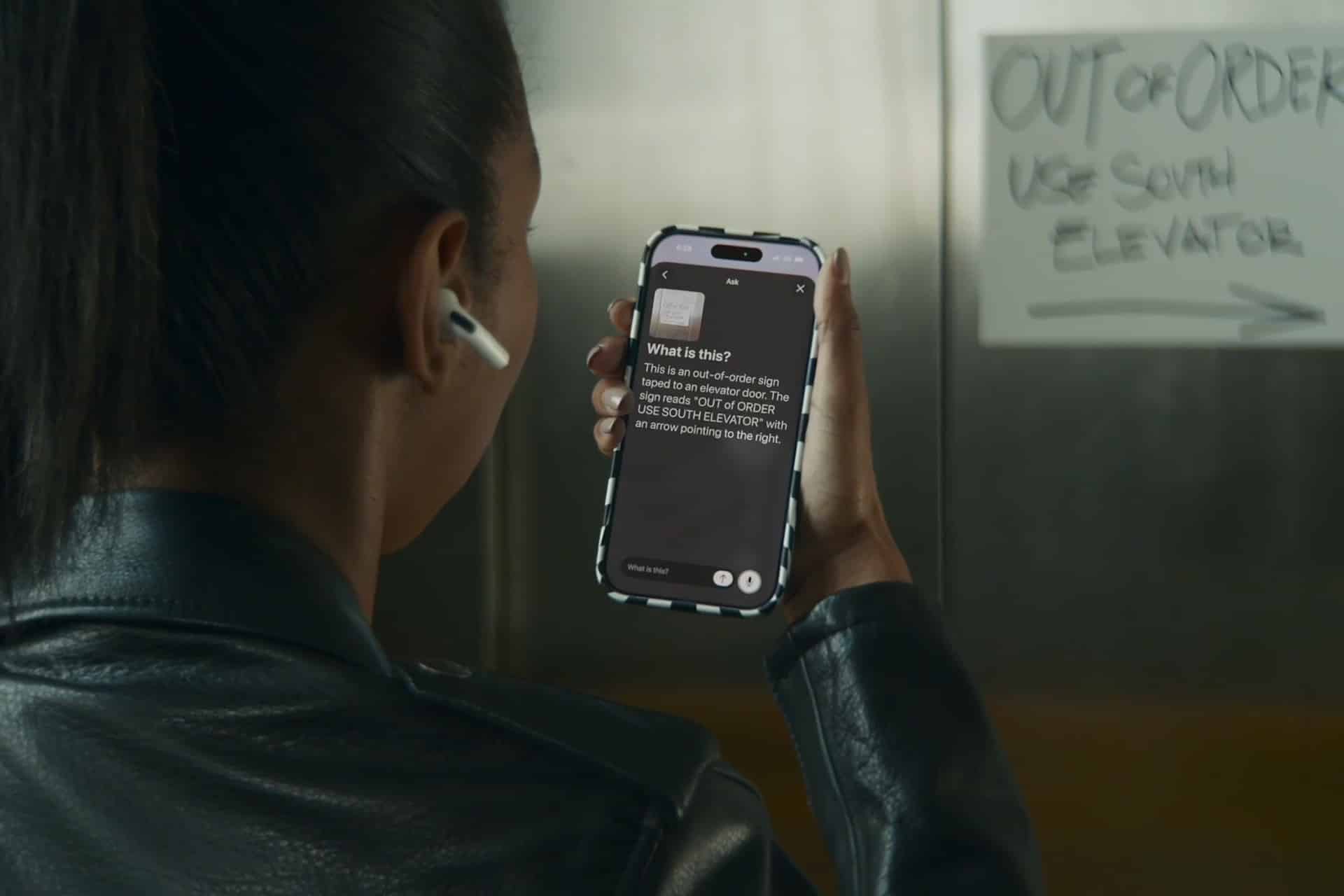
Siri Remains the Main Pressure Point
Apple Gen AI will be judged partly by what it signals for Siri. Apple’s biggest AI challenge is not whether it can add more image tools or writing features. It is whether Siri can become a more capable assistant that understands personal context, onscreen information, and in-app actions.
That is why the timing of the reported subdomain matters. Apple’s latest accessibility preview already showed one of the most concrete examples of where Siri may be heading: Voice Control powered by Apple Intelligence. Apple said users will be able to navigate iPhone and iPad by describing onscreen controls in natural language, such as tapping a visible guide in Maps or a folder in Files. Apple presented this as accessibility, not Siri, but the underlying direction is the same. The assistant layer must understand what is on screen and act on it.
A Gen AI page could become the place where Apple explains this more fully. Siri’s future depends on App Intents, developer adoption, personal context, language understanding, privacy, and user confirmation for sensitive actions. Developers will need guidance on how to expose app functions safely and clearly so Siri and Apple Intelligence can perform real tasks instead of only answering questions.
That is where WWDC26 could become important for app makers. If Apple wants Siri to control apps more effectively, it has to give developers better tools, examples, and reasons to integrate. A Gen AI site could collect those resources and make the roadmap easier to follow.
Developers Need AI That Fits Apple’s Rules
Apple Gen AI would also give Apple a way to explain generative AI under its own platform rules. Apple is not trying to position itself exactly like OpenAI, Google, Anthropic, or Microsoft. Its AI pitch is built around on-device processing, Private Cloud Compute, privacy, controlled integrations, and system-level usefulness rather than a single chatbot brand.
That creates a different developer challenge. Developers need to understand what can run locally, what can use Apple’s foundation models, what requires cloud processing, what user data can be accessed, how App Intents interact with personal context, and where outside models fit. Without clear documentation and examples, Apple Intelligence can remain impressive in theory but limited in apps.
A dedicated web destination could help by organizing sample code, design guidance, privacy rules, WWDC session videos, framework documentation, and model behavior explanations. Apple already has strong developer infrastructure through developer.apple.com, but generative AI cuts across too many frameworks to remain scattered.
The company also has to make a stronger case that developers should build around Apple Intelligence. Many developers are already integrating OpenAI, Gemini, Claude, Perplexity, and other APIs. Apple needs to show what is uniquely valuable about building AI features into the operating system: privacy, local context, device integration, Shortcuts, Siri, Spotlight, widgets, accessibility, and App Store reach.
If genai.apple.com becomes a developer hub, it should answer one question clearly: why should an app’s AI experience be built with Apple’s frameworks rather than only through an outside chatbot API?
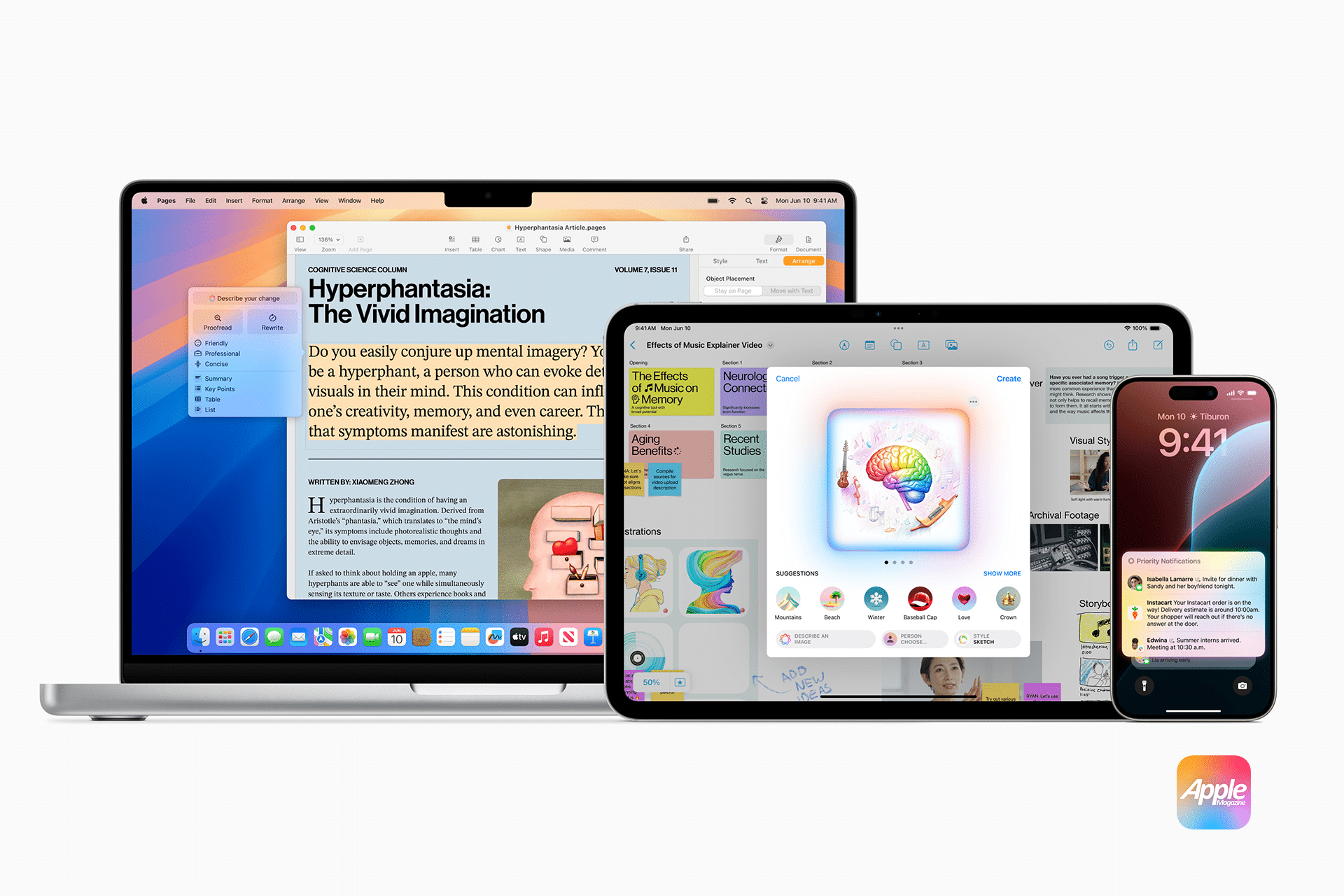
The Page Could Also Support Apple’s Consumer Messaging
Apple Gen AI may also help Apple explain AI to ordinary users. The term “Apple Intelligence” is elegant, but the feature set can be hard to summarize. Writing Tools, notification summaries, Genmoji, Image Playground, Visual Intelligence, Siri, ChatGPT integration, Private Cloud Compute, and accessibility AI do not always feel like one coherent story.
A new site could group generative features by use case rather than product name. Create images. Rewrite text. Ask Siri. Understand your screen. Describe images. Generate captions. Search personal context. Control apps. Protect privacy. Help with accessibility. Build with Apple Intelligence.
That would make Apple’s AI story more practical. Google and OpenAI often present AI as a destination: open the app, ask the model. Apple’s best argument is different: AI should appear where the user already is. Inside Mail, Messages, Photos, Notes, Safari, VoiceOver, Voice Control, Siri, Shortcuts, and apps.
The website could also help Apple avoid overpromising. The Siri delay showed the risk of previewing AI features before they are ready. A Gen AI page should be specific about availability, supported languages, supported devices, regional limits, privacy behavior, and developer requirements. Apple’s credibility now depends on clarity.
WWDC26 Could Turn AI Into Infrastructure
Apple Gen AI would fit WWDC26 because the conference is fundamentally about developers. Consumer AI features may receive keynote attention, but the long-term shift depends on APIs and platform infrastructure. Apple needs developers to build apps that Siri can understand, Apple Intelligence can help operate, and users can control through natural language.
That means App Intents, Shortcuts, Spotlight, Foundation Models, semantic search, privacy permissions, and accessibility APIs may be just as important as flashy demos. Apple’s challenge is to make AI feel like part of the operating system rather than an app bolted on top.
The reported Gen AI site could be a sign of that shift. Apple may be preparing a destination that sits beside its existing developer and Apple Intelligence pages, giving the company a way to organize the next generation of tools. If it launches during WWDC26, it could become the central resource for sessions, documentation, sample projects, and announcements tied to generative AI.
This would also help Apple communicate across platforms. iOS 27 will likely get the most attention, but AI features must also work across iPadOS, macOS, watchOS, tvOS, visionOS, and developer apps. A single Gen AI site could make that cross-platform message clearer.
A Small DNS Clue With Larger Timing
Apple Gen AI remains unconfirmed until Apple makes the page public or announces it. The subdomain may become a developer hub, a redirect, a marketing page, a temporary WWDC asset, or nothing visible at all. But the timing is hard to ignore because Apple is entering WWDC26 with more AI pressure than usual.
The company needs to show that Siri is moving forward, that Apple Intelligence is becoming more useful outside isolated features, that developers have a real AI path, and that privacy remains a competitive advantage rather than a limitation. A dedicated Gen AI destination would help Apple turn a scattered AI narrative into a structured platform story.
That structure may be exactly what Apple needs. The company does not lack AI pieces. It lacks a stronger public map of how those pieces connect. If genai.apple.com becomes that map, it could be one of the most important supporting announcements around WWDC26, even if the headline remains Siri, iOS 27, or Apple Intelligence.
For Apple, the AI race is no longer only about adding features. It is about making the entire ecosystem understand, act, generate, summarize, describe, and assist in ways that feel native to Apple devices. A Gen AI site would be a logical place to begin explaining that next phase.