Apple-Google AI strategy is entering a new phase. A recent report suggests that Apple’s collaboration with Google is deeper than previously understood, with Gemini models positioned to power advanced Siri capabilities ahead of WWDC 2026. The cooperation appears broader than a limited feature test, pointing instead to scaled model integration across Apple’s ecosystem.
For years, Apple emphasized on-device intelligence and tightly controlled platform integration. Partnering at scale with an external AI model provider represents a calculated shift. It signals that Apple is balancing its in-house development with strategic external infrastructure to accelerate performance, reasoning depth, and contextual awareness.
If accurate, the integration of Gemini into Siri marks one of the most significant expansions of Apple’s AI architecture in recent history.
Apple-Google AI Deal: A Strategic Shift in Apple’s AI Roadmap
Apple has traditionally built core intelligence layers internally — from the Neural Engine in Apple Silicon to on-device speech recognition and predictive systems. While cloud processing has always played a role, Apple positioned privacy and local processing as differentiators.
The reported Apple-Google AI collaboration suggests a hybrid approach. Instead of relying solely on proprietary models, Apple may leverage Gemini’s large-scale language infrastructure to enhance Siri’s reasoning and conversational capabilities while maintaining its own system controls and privacy layers.
This approach would allow Apple to scale advanced AI functionality quickly without waiting for fully internal models to mature at global scale.
Such a shift aligns with broader industry dynamics. Training frontier-scale AI models requires enormous computational resources and data pipelines. Even companies with substantial infrastructure face cost and speed constraints. Strategic partnerships can accelerate deployment.
If Gemini integration powers next-generation Siri features, the change would likely manifest in areas such as:
- Improved contextual conversation
- Multi-step task execution
- Cross-app coordination
- More accurate natural language understanding
- Deeper real-time information synthesis
Rather than isolated voice commands, Siri could evolve into a more fluid digital assistant capable of reasoning across apps, services, and cloud data.

What Gemini Brings to the Table
Google’s Gemini models are designed to operate across text, code, reasoning tasks, and multimodal inputs. Their architecture supports advanced context windows and dynamic knowledge synthesis.
For Apple, leveraging Gemini could enhance Siri’s responsiveness in complex scenarios where current assistant limitations are noticeable. Multi-layered queries — such as combining calendar planning, travel logistics, and real-time weather analysis — require more than simple command parsing.
If integrated carefully, Gemini could handle deeper reasoning while Apple’s ecosystem manages execution layers.
However, Apple’s implementation would likely remain tightly controlled.
The company historically prioritizes:
- Data minimization
- Device-based personalization
- System-level privacy safeguards
- Clear separation between cloud processing and personal data
Any scaled Gemini integration would likely operate within Apple-defined boundaries rather than unrestricted cross-platform data sharing.
Ahead of WWDC26
WWDC often serves as Apple’s stage for architectural transitions. Reports linking the Apple-Google AI deal to announcements ahead of WWDC 2026 suggest that Apple may formally unveil enhanced Siri capabilities built on this collaboration.
A next-generation Siri powered partially by Gemini could redefine how users interact with Apple devices. Instead of single-task voice triggers, Siri may become more conversational, capable of sustaining dialogue and managing layered instructions.
For developers, this shift could expand API opportunities. Enhanced assistant intelligence often requires deeper integration between apps and system frameworks.
For users, the visible difference would likely appear in conversational flow. Instead of restarting commands repeatedly, Siri might maintain context across requests.
Competitive Landscape
The AI landscape has intensified. Microsoft integrated OpenAI models across Windows and Office. Google embeds Gemini within Android and Workspace. Amazon continues expanding AI functionality within Alexa.
Apple’s measured pace in AI rollout has led to scrutiny. Partnering with Google to integrate Gemini may reflect pragmatic adaptation rather than dependency.
This cooperation also raises strategic questions. Apple and Google compete across multiple domains — mobile operating systems, services, and hardware. Yet collaboration in AI infrastructure underscores how competitive boundaries can blur in high-resource technology sectors.
Scale, not exclusivity, often determines feasibility in frontier AI deployment.
Privacy and Platform Control
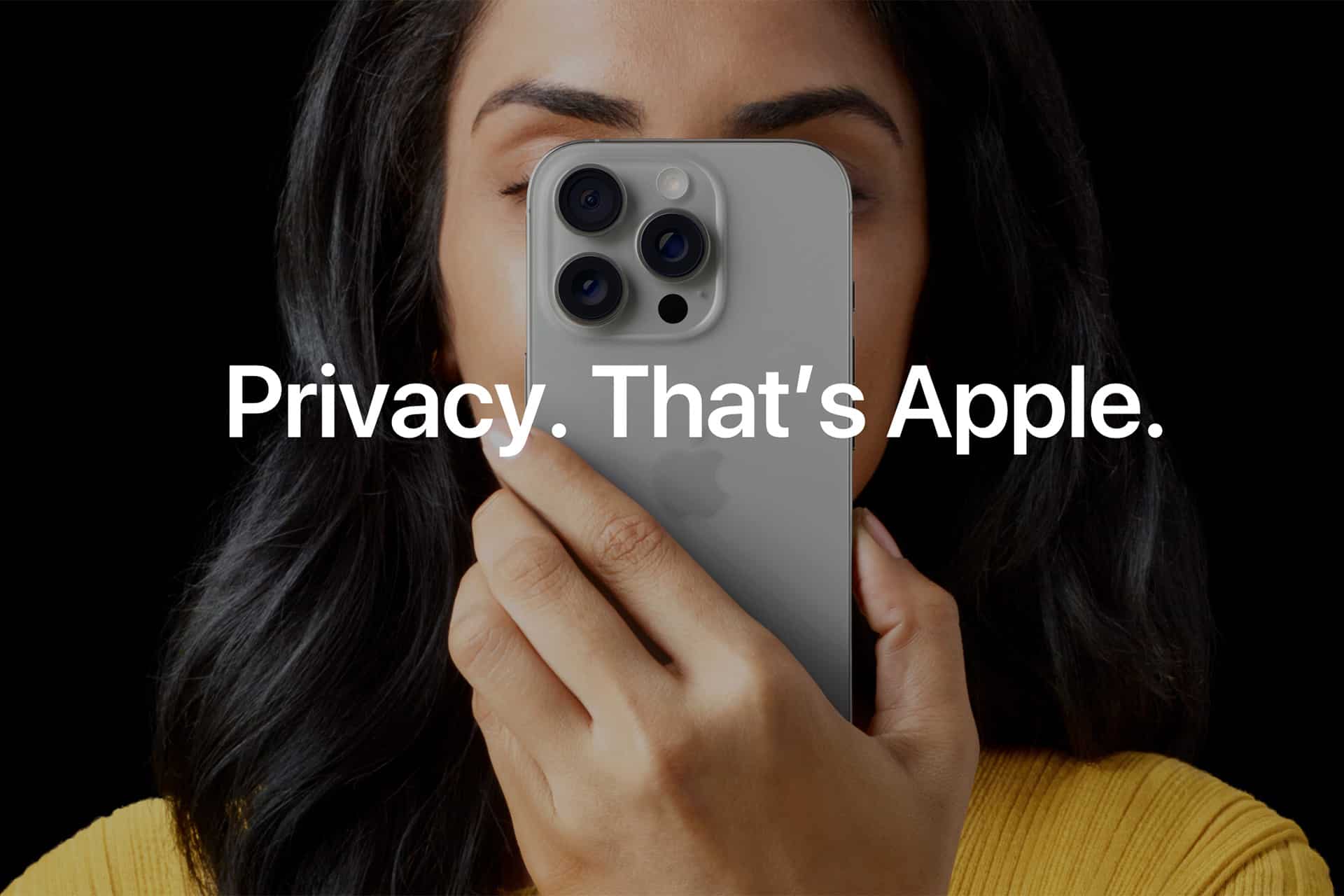
Any Apple-Google AI integration will be evaluated through the lens of privacy.
Apple has consistently positioned itself as a privacy-focused platform. The company may structure Gemini access in a way that:
- Processes sensitive queries on device when possible
- Routes advanced reasoning through anonymized cloud layers
- Separates Apple ID identity from AI inference requests
- Applies strict data handling policies
The balance between advanced AI performance and platform privacy commitments will shape user trust.
Unlike standalone AI apps, Siri is deeply integrated into personal devices — iPhone, iPad, Mac, Apple Watch, and HomePod. Its intelligence directly intersects with personal messages, calendars, reminders, and location data.
Any next-generation upgrade must preserve systemic safeguards.
Ecosystem-Wide Implications
If Gemini powers next-gen Siri, integration would likely extend across:
- iPhone voice commands
- Mac system queries
- Apple Watch contextual assistance
- CarPlay interactions
- Smart home coordination
Siri operates as an orchestration layer across devices. Improved reasoning could transform how users coordinate tasks between them.
For example, cross-device context — drafting a message on iPhone while referencing files on Mac and scheduling events through Apple Watch — requires sophisticated coordination.
A deeper AI layer strengthens that orchestration capability.
Strategic Timing
The timing ahead of WWDC 2026 suggests Apple intends to present AI not as an experimental feature but as a platform evolution.
Rather than positioning Gemini as a visible co-brand, Apple may abstract the underlying model, presenting improvements as Siri enhancements within its own framework.
This maintains brand consistency while leveraging external scale.
The Apple-Google AI partnership reflects a broader reality in advanced computing: collaboration at infrastructure level does not eliminate competitive differentiation at the product level.
Apple controls user interface, hardware integration, operating system architecture, and ecosystem execution. Gemini, if integrated, becomes a reasoning layer within that framework.