

Apple Intel chips would mark one of the most unusual turns in Apple’s hardware strategy: the company that left Intel processors behind may now use Intel factories to make some of its own custom silicon. The shift would not mean a return to Intel-designed chips. Apple would still design its processors. Intel would serve as a foundry, manufacturing selected Apple-designed components in the United States.
The idea carries obvious political and industrial appeal. Apple gets a possible second source beyond TSMC. Intel gets a credibility boost for its foundry business. Washington gets a headline customer for its push to rebuild advanced chip manufacturing on American soil.
But the gap between a strategic announcement and real Apple silicon at volume is large. Reuters reported that neither Apple nor Intel has formally announced the deal, even after President Donald Trump said the companies would work together on U.S. chip production. Analysts warned that advanced Intel-made Apple chips could take two to three years before volume output, and possibly longer if Intel’s process technology, design tools, yields, or packaging capacity fall short.
That makes the Apple Intel story both meaningful and easy to overread. It is a serious signal for American manufacturing. It is not yet proof that future iPhones, Macs, or iPads will soon rely on Intel fabs.
Apple Intel Is About Foundry, Not a Mac Reversal
The most important distinction is that Apple is not returning to Intel processors. The Mac’s transition to Apple silicon ended the old Intel era because Apple wanted tighter control over performance, battery life, thermals, graphics, Neural Engine capabilities, and product design. That logic has not changed.
A foundry deal is different. Apple designs chips, then hires a manufacturer to build them. TSMC has been Apple’s main partner for advanced processors, making the A-series and M-series chips that power iPhone, iPad, Mac, and other devices. Intel would be trying to win part of that manufacturing work, not replace Apple’s chip design teams.
That distinction makes the potential partnership more credible. Apple does not need Intel’s chip architecture. It may need more manufacturing options. TSMC remains the world’s most trusted advanced foundry, but its capacity is under pressure from AI demand, Nvidia, data-center accelerators, and advanced packaging needs. Apple cannot risk having its most important products tied too tightly to one supplier, one geography, and one capacity cycle.
Intel gives Apple a U.S.-based alternative if it can prove itself. The first Apple chips made by Intel would likely be less critical components or lower-volume products, not the most important iPhone processor on day one. Analysts cited by Reuters suggested Apple could test Intel with MacBook Air or iPad-related chips before trusting the foundry with higher-stakes silicon.
That would fit Apple’s usual risk control. Apple rarely shifts core technology abruptly when product reliability is on the line.

Why the U.S. Manufacturing Angle Matters
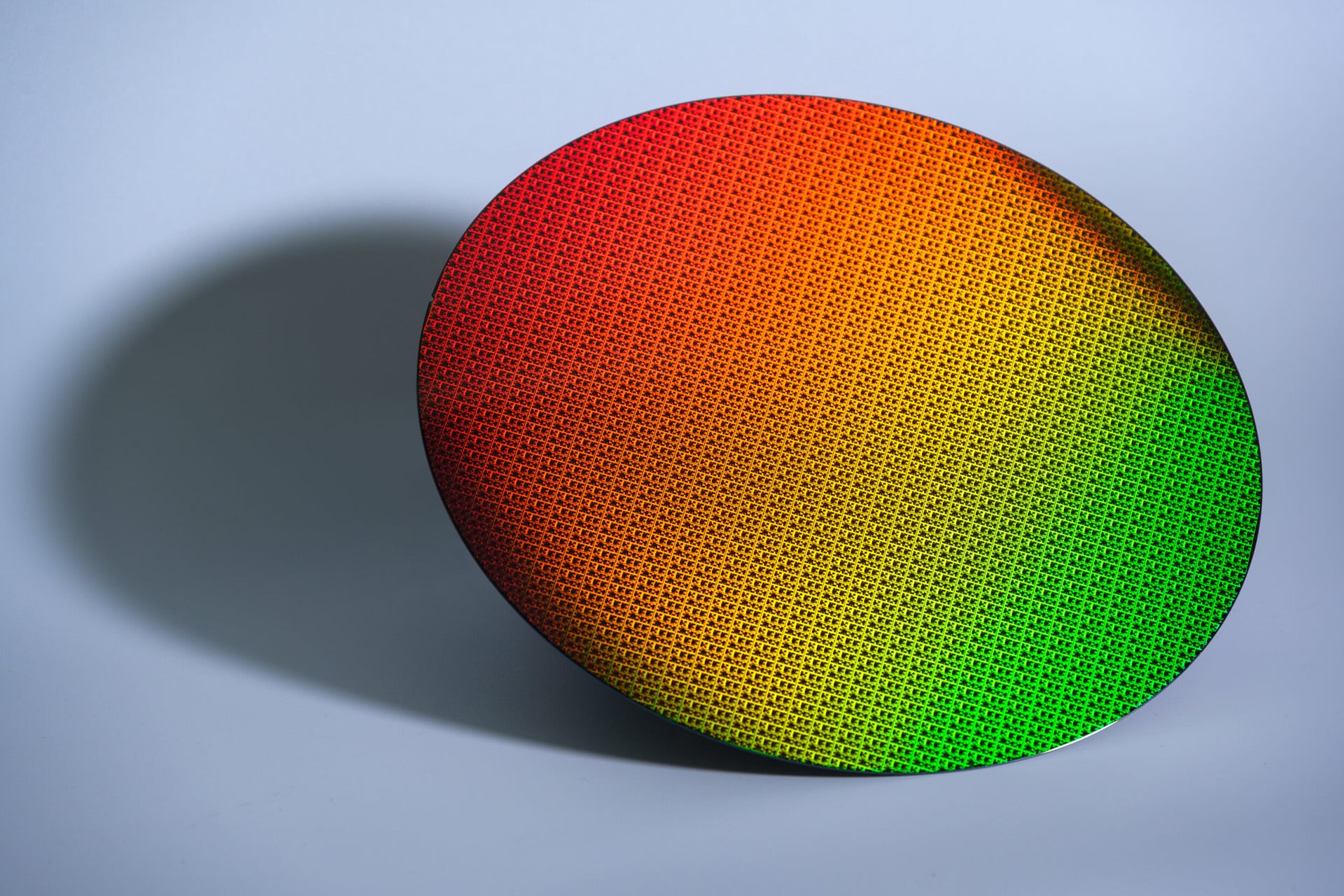
The possible Apple Intel deal fits directly into Washington’s semiconductor strategy. The U.S. has spent years trying to rebuild domestic chipmaking capacity through CHIPS Act funding, tariffs, incentives, and pressure on major technology companies to support American fabs.
Intel is central to that effort because it is the only U.S.-based company trying to compete at the leading edge as both a chip designer and contract manufacturer. The U.S. Department of Commerce awarded Intel up to $7.86 billion in CHIPS Act funding in 2024 for manufacturing and advanced packaging projects in Arizona, New Mexico, Ohio, and Oregon. In 2025, Intel and the Trump administration announced a separate $8.9 billion government investment in Intel common stock.
Those numbers show why Apple matters. Government funding can help build factories, but foundries need customers. A fab without major external customers is an expensive national project, not a competitive business. Apple would give Intel something more valuable than subsidies: demand from one of the world’s most demanding chip buyers.
If Intel can meet Apple’s standards, the deal would help prove that advanced U.S. manufacturing can serve consumer products at global scale. That would be a major step for American semiconductor policy. If Intel cannot meet those standards, the deal may remain mostly symbolic.
The Timeline Is the Hard Part
The biggest challenge is time. Advanced chips cannot move from agreement to volume production quickly. A system-on-chip must be designed for a specific manufacturing process, validated with design tools, tested through prototypes, manufactured through multiple cycles, packaged, qualified, and then ramped with acceptable yields.
Reuters cited analysts saying advanced Intel-made Apple chips could take two to three years before first output at scale. That assumes Intel’s technology is ready, its tools are reliable, and its factories can meet Apple’s standards. Those are not small assumptions.
Intel’s current roadmap includes Intel 18A and Intel 14A. Intel says 18A introduces RibbonFET gate-all-around transistors and PowerVia backside power delivery, while 14A is positioned as a later generational step with further performance and efficiency improvements. Analysts are divided on which process Apple might choose. Some expect Intel 18A-P or even Intel 3 for more reliable early work. Others see 14A as the more meaningful long-term target, though that would push volume production further out.
This is why the phrase “coming soon” does not fit the Apple Intel story. Even if an agreement exists, Apple products using Intel-made advanced custom chips would likely be a late-2027, 2028, or later reality. For flagship iPhone chips, the bar is even higher.
Apple’s standards are unforgiving. A chip must meet performance, power, thermal, yield, cost, and supply targets. If Intel misses one of those targets, Apple can stay with TSMC.
Intel Needs More Than One Customer Win
For Intel, Apple would be a prestige customer, but prestige is not enough. Intel Foundry must prove it can execute consistently. The company has struggled in recent years with delays, yield problems, and lost leadership in advanced manufacturing. TSMC became Apple’s trusted partner because it delivered generation after generation with discipline.
Intel is trying to rebuild that trust. The company has reorganized its foundry business, promoted advanced packaging, and recently appointed Seok-Hee Lee, former SK hynix CEO, to lead advanced packaging, system integration, back-end technology development, and back-end manufacturing at Intel Foundry. That appointment shows Intel understands that modern chipmaking is not only about transistor nodes. Packaging, integration, memory connection, and back-end execution are now central to high-performance chips.
That matters for Apple. Future Apple silicon will depend not only on smaller transistors but also on memory integration, chiplet possibilities, package efficiency, thermal control, and AI-related workloads. If Intel can offer credible advanced packaging alongside U.S. manufacturing, it becomes a more useful partner.
Still, Apple will not reward ambition alone. Intel must show stable yields, predictable timelines, strong design enablement, and manufacturing quality that can survive Apple’s product cycles.
A Strategic Hedge Against TSMC Dependence
Apple’s relationship with TSMC is one of the most successful partnerships in modern technology. It helped create the A-series and M-series performance lead, supported the Mac transition, and gave Apple access to some of the world’s most advanced process technology.
But relying too heavily on one partner creates risk. Taiwan remains geopolitically sensitive. AI demand is straining advanced capacity. TSMC’s most advanced production and packaging resources are increasingly contested by AI chipmakers. Apple is still a priority customer, but even priority customers need backup plans.
Intel could become part of that backup plan. Not a full replacement. Not a near-term substitute for the most advanced iPhone chips. But a strategic hedge that gives Apple optionality.
That optionality has value even before the first chip ships. It gives Apple more leverage in supplier discussions. It supports U.S. policy goals. It signals to investors and governments that Apple is not ignoring domestic manufacturing. It gives Intel a reason to align its roadmap with Apple’s requirements.
The risk is that optionality becomes expectation. If political leaders present the deal as a near-term manufacturing victory, Apple and Intel may face pressure before the technology is ready. Advanced chips do not obey political timelines.
A Win That Still Has to Be Built
Apple Intel chips could become a strategic win for American manufacturing, but only if Intel turns the opportunity into reliable output. The first stage is not an iPhone chip made in the U.S. at full scale. The first stage is trust: process maturity, design tools, packaging capability, yields, and proof that Intel can serve Apple without disrupting product schedules.
Apple has every reason to explore the partnership. It wants more supply-chain resilience, more geographic flexibility, and more protection from TSMC capacity pressure. Intel has every reason to pursue it. It needs external customers to prove its foundry strategy and justify years of public and private investment. The U.S. government has every reason to promote it. It wants advanced chip production tied to American factories and American industrial policy.
The unanswered question is execution. Apple’s chip strategy is built on control, but manufacturing remains the one part of the silicon stack Apple does not own. Intel could give Apple more control over geography and supply, but only if it can meet the quality bar TSMC has set.
For now, the Apple Intel partnership is best understood as a long-term manufacturing bet. It is politically useful, strategically logical, and technically uncertain. The next proof point will not be a headline. It will be a real Apple-designed chip leaving an Intel fab at scale, with yields high enough for Apple to trust it inside products millions of people buy.