


Apple Search Ads has become one of the most direct ways to buy visibility inside the App Store, but the cost of that visibility now depends heavily on category, country, keyword intent, conversion rate, and how aggressively rivals are bidding for the same users.
The appeal is obvious. Search ads appear when someone is already looking for an app, often with a specific need in mind. A user searching for a budget planner, fitness tracker, VPN, photo editor, flight app, calendar, language tool, or game is already closer to installing than someone scrolling through a social feed. That intent is why Apple Search Ads can be one of the most efficient paid channels for iOS developers.
The trade-off is that the channel is no longer cheap by default. Real-world benchmark reports from AppTweak, SplitMetrics, Business of Apps, Adapty, and other app marketing firms show a market where Apple Search Ads can deliver strong conversion rates, but costs vary sharply by niche and region. In competitive categories, the price of appearing at the top of App Store search results can climb quickly.
For developers, the question is no longer whether Apple Search Ads works. It is whether the install is worth what the auction demands.

The Cost Starts With the Tap
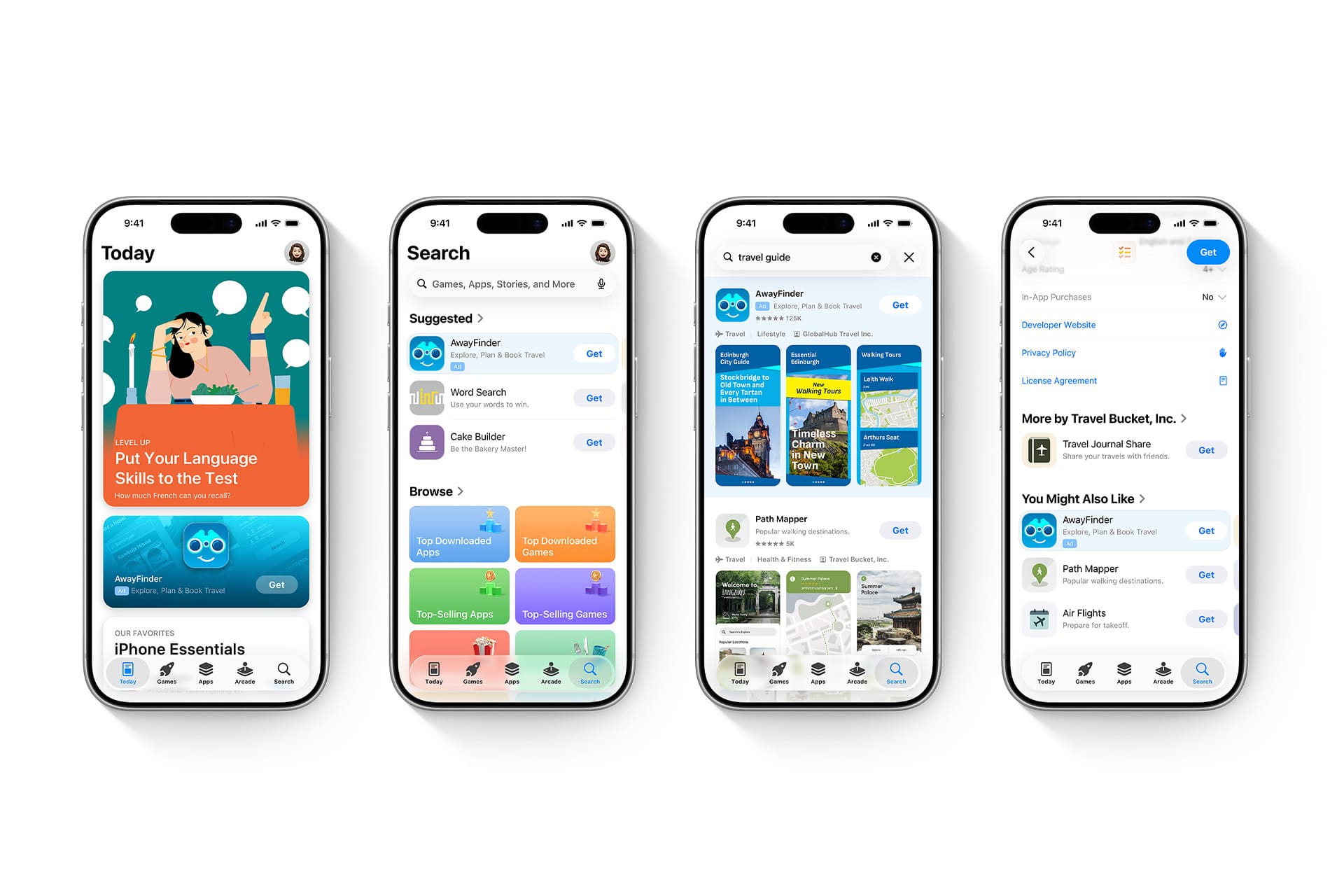
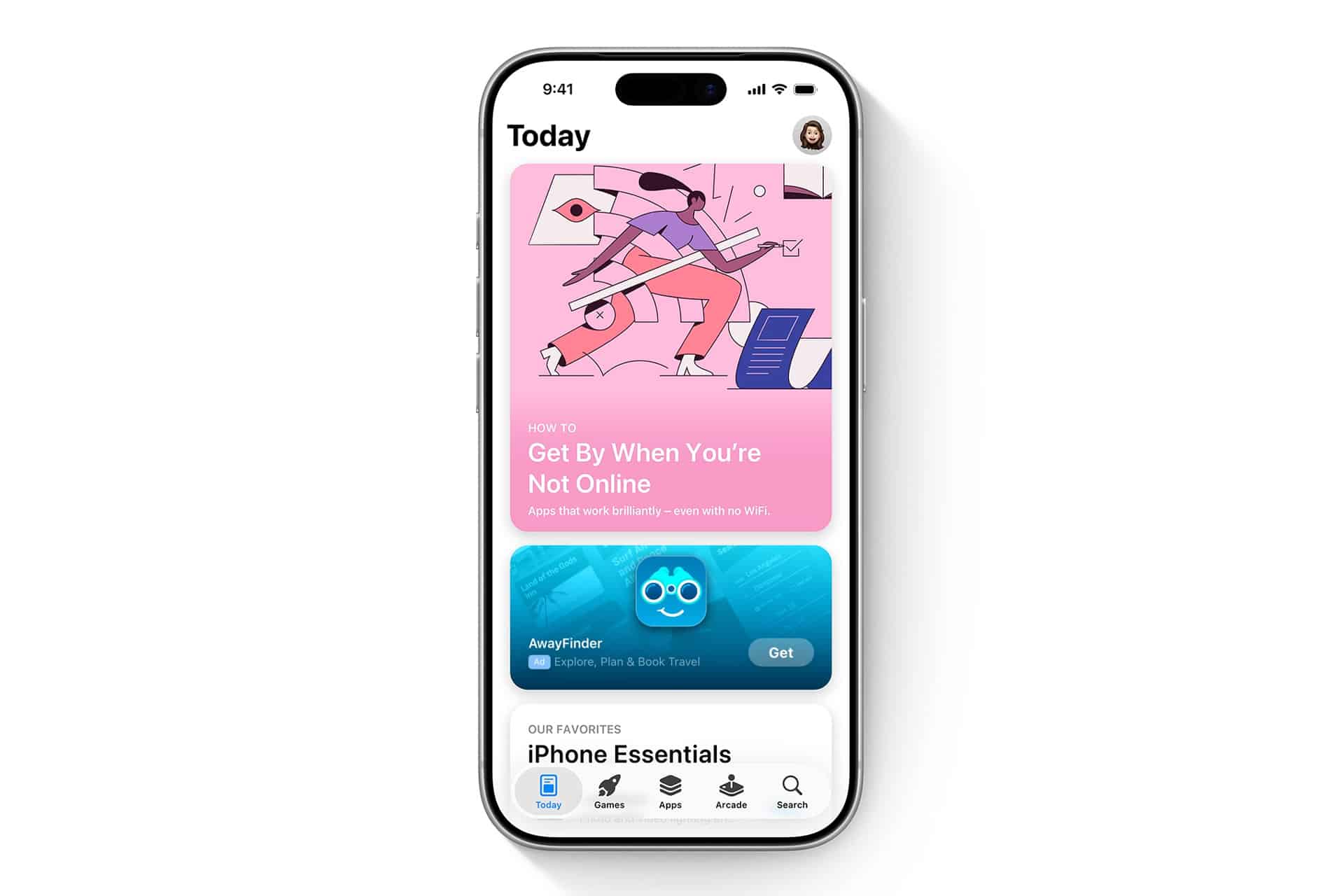
Apple Search Ads works through an auction model. Developers bid for placement, users see ads in App Store locations such as search results, and advertisers measure performance through metrics such as tap-through rate, conversion rate, cost per tap, and cost per acquisition.
Apple defines tap-through average CPA as total campaign spend divided by installs that came from taps on an ad during the reporting period. That metric is useful because a cheap tap can still be expensive if users do not install. A higher tap price can still be profitable if the app’s page converts well and the user becomes valuable after install.
AppTweak’s 2026 Apple Ads benchmark data places the median cost per install for search results campaigns across countries and categories at about $1.80. That number is useful as a broad reference, but it can be misleading if treated as a universal target. Finance, productivity, health, sports, subscriptions, and utility categories can behave very differently from casual games or low-competition niches.
Adapty’s 2026 Apple Ads benchmark analysis shows how geography changes the equation. In some markets, conversion rates can be strong while download costs remain low because the auction is less crowded. In others, the same funnel performance produces a much higher cost because more advertisers are competing for the same search traffic.
That is the central tension of App Store visibility. The user intent is strong, but every app in the category wants to capture it at the same moment.
High Conversion Rates Make Search Ads Attractive
The strongest argument for Apple Search Ads is conversion. SplitMetrics’ 2025 Apple Ads Search Results Benchmarks Report said search results campaigns reached an average conversion rate of 67.2% in 2024 across top categories, up from 65.37% in 2023. Its broader report page describes benchmark data drawn from 4.5 million keywords, 1.2 billion impressions, 109 million taps, and 71.7 million downloads.
Those figures explain why developers keep spending on the channel. A user who searches inside the App Store is often comparing options with installation already in mind. Search ads put an app directly into that decision path.
That does not mean every campaign performs well. A high average conversion rate can hide poor results on generic keywords, weak product pages, bad screenshots, unclear subscriptions, low ratings, or irrelevant creative. Apple Search Ads can expose an app to users, but it cannot fix a poor App Store listing.
This is where the cost of visibility becomes more than the bid. Developers also pay through creative work, metadata testing, ratings management, pricing experiments, subscription onboarding, and custom product pages. The ad auction gets the user to the page. The page has to close the install.
When a campaign performs badly, the problem is often not only the keyword price. It is the mismatch between the promise in the search term and the app’s actual storefront.
Custom Product Pages Can Lower Waste
Apple’s Custom Product Pages are one of the most useful tools for improving paid visibility economics. They let developers create alternate App Store product pages with different screenshots, preview videos, and promotional text for specific campaigns or audiences.
Apple says developers see a 2.5 percentage point increase on average when referring people to a custom product page, compared with a 1.6% average conversion rate on default product pages in the measured context. That kind of lift matters because Apple Search Ads costs are shaped by the entire funnel.
A meditation app bidding on “sleep sounds” should not send every user to the same page used for “anxiety relief” or “daily meditation.” A travel app bidding on “flight tracker” should not use the same creative as a campaign for “hotel deals.” A finance app bidding on “expense tracker” may need a different page from one targeting “family budget.”
Better matching can reduce wasted taps. It can also help developers understand which features users actually care about. Search Ads data becomes a research tool, not only a paid acquisition channel.
That is one reason Apple Search Ads and App Store Optimization now work together. Search campaigns reveal which keywords attract users and convert. ASO turns that learning into metadata, screenshots, page structure, and product positioning. The best teams do not treat paid and organic discovery as separate departments.
Visibility Can Become Defensive Spending
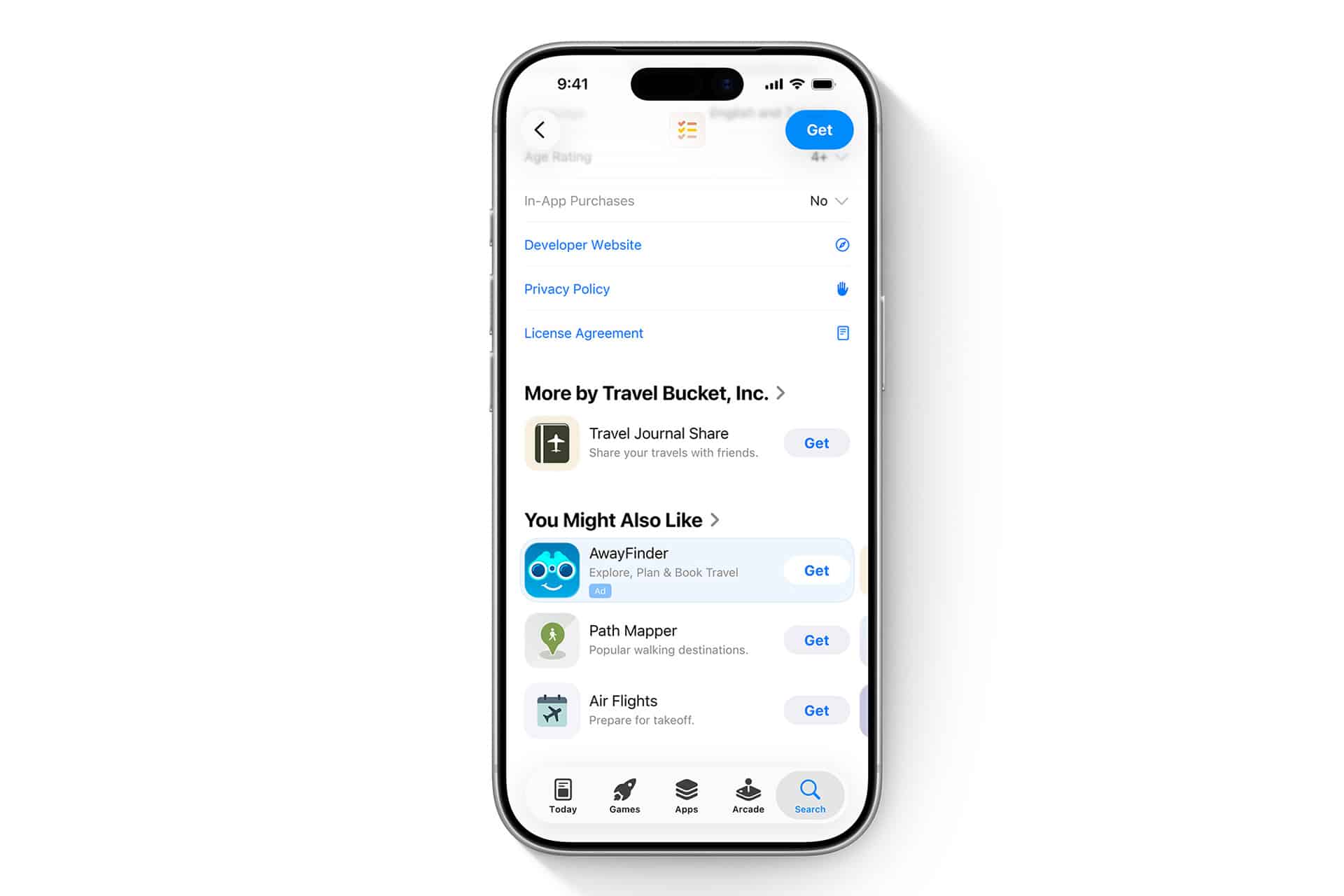
One of the more uncomfortable parts of Apple Search Ads is defensive bidding. Apps often bid on their own brand names because competitors can appear above them in search results.
For a popular app, this creates a strange cost. A user searches for the app by name, already intending to install it, and the developer may still pay to protect the top result from a rival. That can be efficient if it prevents lost installs, but it also means some App Store visibility becomes a defensive expense rather than pure growth spending.
The issue is sharper in competitive categories. Fitness apps bid against fitness apps. Budget apps bid against finance apps. VPNs bid against VPNs. Games bid against similar games. Dating, streaming, shopping, sports, travel, and subscription apps can all face the same pressure.
Apple benefits from that competition because more bidders raise auction intensity. Developers benefit only if the acquired users produce enough value after install.
This is where lifetime value becomes the real benchmark. A $4 install may be expensive for a free utility with weak monetization. It may be profitable for a subscription app with strong retention. A $12 acquisition may look high until it brings in a user who subscribes for a year.
Apple Search Ads is not a visibility tool by itself. It is a unit-economics tool.
Reviews and Ratings Still Shape the Auction Outcome
Real-world campaign performance is also tied to the app’s public quality signals. A paid ad can place an app in front of users, but ratings, review count, screenshots, update history, privacy labels, subscription language, and competitor comparison still influence whether the tap becomes an install.
This is why small developers can struggle even when the ad platform is technically accessible. A large app with thousands of reviews, strong screenshots, known branding, and refined onboarding can afford higher bids because it converts better after the tap. A new app may pay for the same traffic but lose users on the product page.
The auction does not only reward who bids more. It rewards who can turn paid attention into installs efficiently.
Apple’s own success stories show the appeal for established brands. The Very Group used Apple Search Ads to improve discovery among shoppers already showing purchase intent. That is the ideal use case: high-intent users, clear product fit, and a monetization path beyond the install.
For smaller teams, the lesson is different. Spending before the product page is ready can turn Apple Search Ads into an expensive diagnostic. The campaign may reveal demand, but it may also reveal that the app’s store page, reviews, pricing, or first-run experience is not ready to scale.
The Cost of Visibility Is Also Strategic
Apple Search Ads now affects how developers plan launches. A new app can use ads to test keyword demand before committing to a larger brand campaign. An established app can use ads to defend its name, promote a seasonal feature, enter a new country, or measure whether a new category term has value.
The platform also gives developers cleaner intent data than many outside ad networks. Search terms show what users asked for. Conversion data shows what they installed. Custom pages show which positioning works. That feedback can shape the app itself.
A photo app may discover that users respond more to “background remover” than “AI photo editor.” A productivity app may find stronger economics around “habit tracker” than “to-do list.” A travel app may see cheaper growth in specific countries where competition is lower. A subscription app may learn that high-volume keywords bring low-quality users while narrow terms bring paying subscribers.
That makes Apple Search Ads useful even when it is not the cheapest channel. It can show where App Store demand actually exists.
But the same data can push developers into an arms race. Once a keyword proves valuable, more competitors bid on it. Costs rise. Margins narrow. The developer then has to improve conversion, retention, pricing, or organic ranking to keep the channel profitable.
Paid visibility is not stable. It has to be managed.
Where Developers Should Be Careful
Apple Search Ads can waste money quickly when campaigns are too broad. Generic keywords may bring taps from users who are still exploring, not ready to install. Poorly matched ads can generate curiosity without conversion. Weak product pages can make every tap expensive.
Developers should watch cost per acquisition, conversion rate, retention, trial starts, subscription starts, refunds, and revenue after install, not only taps and installs. A campaign that looks good at the install level can fail after the first session if users do not activate or pay.
Search Ads also has a scale ceiling. The App Store has finite search inventory. A strong campaign can capture high-intent demand, but it cannot always replace broader channels such as social ads, influencer marketing, web search, partnerships, press, or organic ASO.
The best use is focused: protect branded searches, target high-intent category terms, test new positioning, use custom product pages, separate countries by economics, and stop bidding on terms that do not produce valuable users.
For app developers, visibility is no longer only about being featured, ranking organically, or hoping users find the right keyword. It is increasingly a paid discipline, where the strongest results come from matching search intent, storefront quality, user value, and a bid that leaves room for profit after the install.