

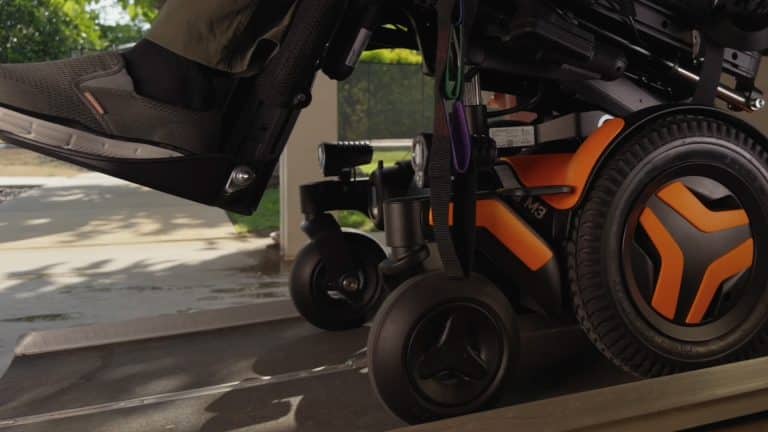
Apple Vision Pro eye control is moving beyond device navigation and into mobility support, with Apple preparing a new feature that lets users control compatible power wheelchair drive systems through the headset’s eye-tracking system.
The feature was announced as part of Apple’s latest accessibility updates and is designed for people who use power wheelchairs but cannot rely on a standard joystick. Apple says the new power wheelchair control feature will use the precision eye-tracking system on Apple Vision Pro to provide a responsive input method for compatible alternative drive systems.
At launch, the feature will support Tolt and LUCI alternative drive systems in the U.S., with accessory support for both Bluetooth and wired connections. Apple says it will continue working with developers to expand support for more wheelchair drive systems, making this an early step rather than a complete replacement for the broader range of mobility hardware already in use.

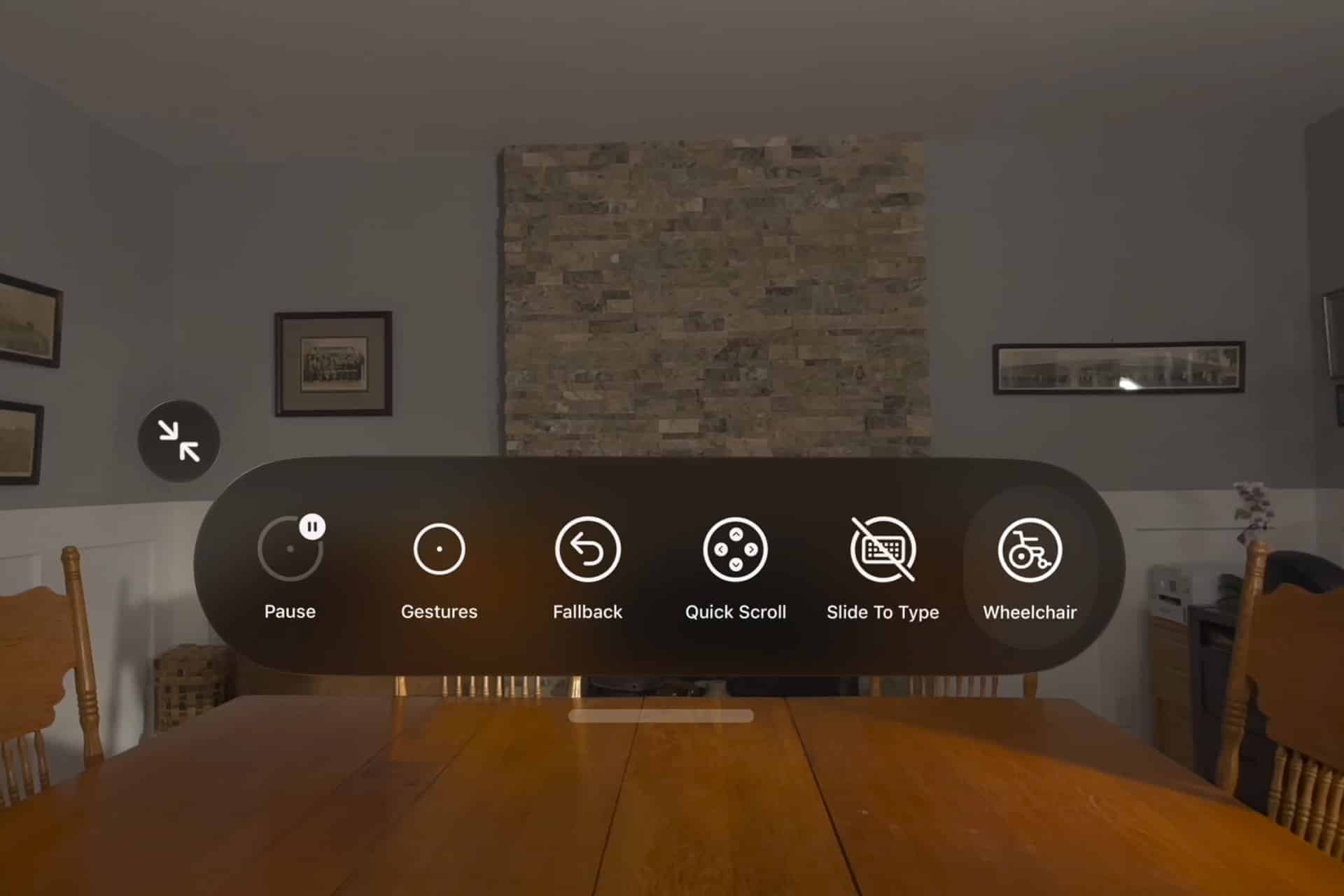
Apple Vision Pro Eye Control for Power Wheelchairs
Apple Vision Pro already uses eye tracking as a central part of its interface. Users look at an item to select it, then use gestures, voice, or other input methods to interact with visionOS. The new wheelchair control feature takes that same core technology and applies it to compatible mobility systems.
For some wheelchair users, that could create a more direct way to move independently. Apple’s announcement specifically focuses on people for whom joystick control is not an option. In those cases, alternative drive systems can be essential, and eye-based control can become more than a device feature. It can be part of daily mobility.
Apple says Vision Pro eye tracking does not require frequent recalibration and works in a variety of lighting conditions. That detail matters because wheelchair control is not the same as selecting an app icon. A mobility input method has to be consistent, responsive, and practical in real environments.
The first supported systems, Tolt and LUCI, place the feature in the assistive technology space rather than turning Vision Pro into a universal wheelchair controller. Users will need compatible equipment, proper setup, and the right support from their wheelchair or assistive technology provider.
Why Compatible Drive Systems Matter
The most important word in Apple’s announcement is compatible. Vision Pro will not control every power wheelchair by itself. It will work with supported alternative drive systems that can receive input through the connections Apple described.
That makes the feature closer to an accessibility bridge than a standalone mobility product. Vision Pro provides the eye-tracking input. The compatible drive system translates that input into wheelchair control. The power wheelchair itself remains part of a larger mobility setup that needs to be matched to the user’s needs.
This distinction is important for readers because wheelchair control is highly personal. Different users may rely on joysticks, head arrays, switches, sip-and-puff controls, chin controls, proportional controls, or other adaptive systems. A new eye-control option may be life-changing for some users while not being the right fit for others.
Apple’s decision to launch with Tolt and LUCI also keeps the feature within a controlled first wave. Both companies work in adaptive mobility and safety technology, giving Apple a starting point with systems designed for users who need alternatives to conventional wheelchair controls.
Team Gleason and the ALS Community
Apple’s announcement includes support from Team Gleason, the nonprofit founded by former NFL player Steve Gleason to help people living with ALS and other neuromuscular conditions. ALS can progressively affect movement and speech, making assistive technology central to communication, independence, and daily life for many people.
Pat Dolan, founder of GeoALS and a member of Team Gleason’s patient advisory board, described independent wheelchair control as “gold” in Apple’s announcement. His comment captures the practical side of the feature. This is not only about a new input method for a headset. It is about giving some users another way to move on their own terms.
Team Gleason CEO Blair Casey also framed the feature as part of a broader evolution in eye-driven wheelchair systems. That context matters because Apple is entering a field where specialized assistive technology has already been advancing for years. Vision Pro adds a mainstream Apple device with high-precision eye tracking to that work.
For Apple, the collaboration helps position Vision Pro as more than an entertainment, productivity, or spatial computing device. It places the headset inside a serious accessibility use case where precision input can affect a person’s independence.
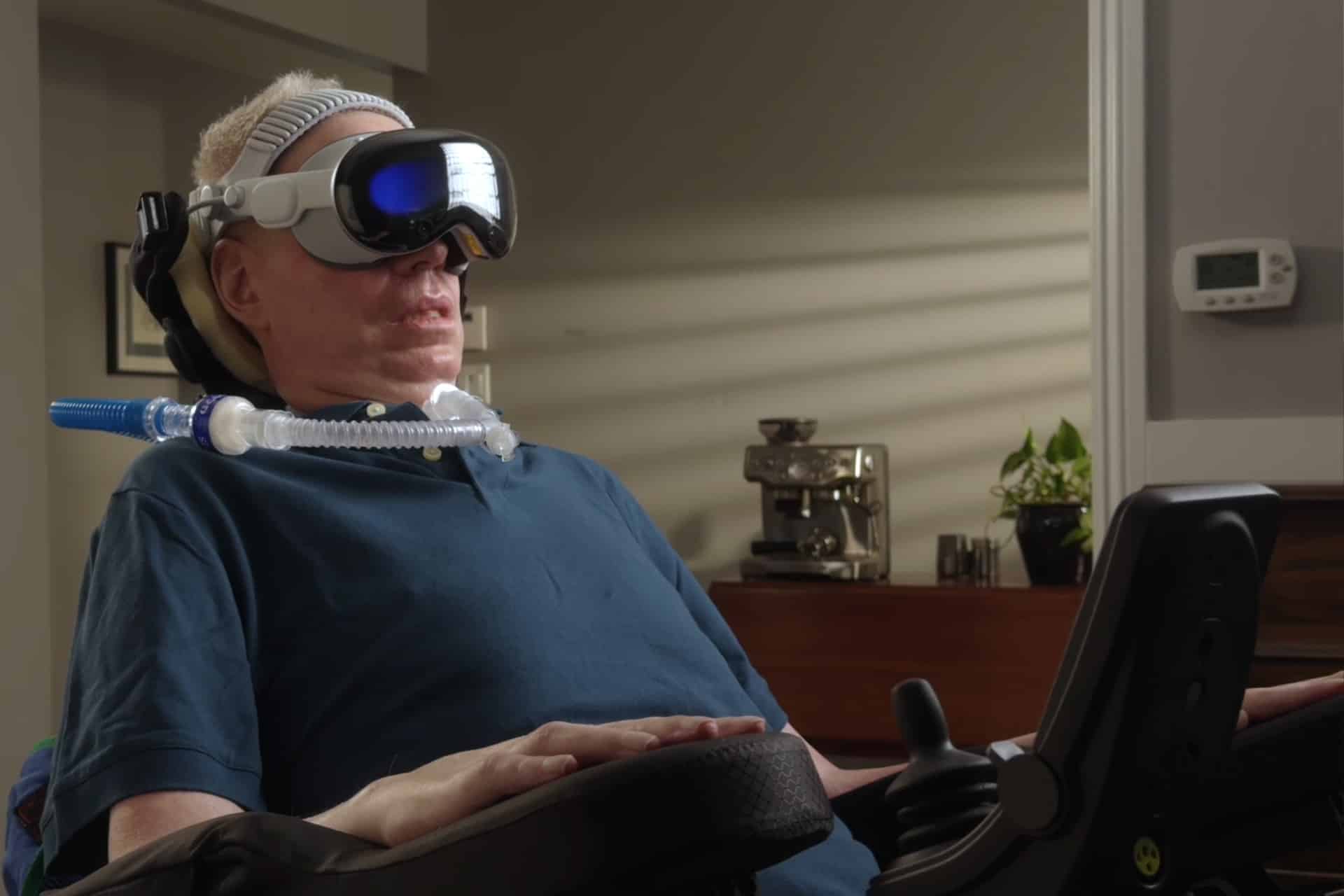
Vision Pro Accessibility Beyond the Headset
Apple has built Vision Pro around eyes, hands, and voice, but its accessibility tools also support users who cannot rely on all three. The headset includes features such as Dwell Control, Switch Control, VoiceOver, Sound Actions, and other options that help users interact with visionOS in different ways.
The wheelchair control announcement extends that accessibility approach outside the headset’s interface. Instead of using eye tracking only to control apps, menus, and content, Vision Pro becomes part of a broader assistive setup connected to physical movement.
That expansion is important for the future of spatial computing. Headsets are often discussed through immersive video, workspaces, gaming, and entertainment. Accessibility use cases show a different path, where the sensors built into a headset can support communication, navigation, and physical-world independence.
Apple’s broader accessibility work also includes eye tracking on iPhone and iPad, allowing users to navigate those devices with their eyes using the front-facing camera. Vision Pro is different because eye tracking is already a core input method, built deeply into how the device is used every day.
A Careful Step Into Mobility Support
The new wheelchair control feature should be treated as a major accessibility development, but not as a universal solution. It is launching in the U.S. with specific compatible systems, and users will need the right wheelchair hardware, setup, and guidance to know whether it fits their needs.
That careful framing is important because mobility technology has to be safe, reliable, and matched to the person using it. Apple’s announcement points to support for Bluetooth and wired connections, but it does not remove the need for professional evaluation or proper assistive technology support.
The feature also shows how Vision Pro may gain value through specialized use cases that go beyond the consumer pitch. A headset with precise eye tracking can be a media device, a computer interface, and, for some users, a new control layer for mobility hardware.
Apple says it will keep working with developers to expand support for more wheelchair drive systems. If that support grows, Apple Vision Pro eye control could become part of a wider ecosystem of adaptive mobility tools, giving more users a choice in how they control the devices that shape their independence.