


Apple Wallet Car Keys may be getting one of its largest mainstream boosts yet. Volkswagen is reportedly preparing to support car keys in Apple Wallet for future U.S. vehicles, based on new server-side code found in Apple’s systems. The code does not confirm which Volkswagen models will support the feature or when it will launch, but the pattern is familiar: Apple often prepares backend support before an automaker begins public rollout.
Volkswagen would be an important addition because of scale. Car Keys in Wallet has grown steadily, but it is still uneven across the U.S. market. BMW helped define the feature early, Hyundai, Genesis, Kia, Mercedes-Benz, Porsche, Rivian, Toyota, Volvo, and others have expanded support, and several more brands appear to be preparing launches. Volkswagen would move the feature closer to ordinary family SUVs, EVs, and mainstream daily drivers rather than keeping it concentrated around luxury or early-adopter models.
The timing also makes sense. Digital keys are becoming less of a novelty and more of a practical expectation. Many drivers already use iPhone for payments, boarding passes, home keys, hotel keys, transit cards, and IDs in Wallet. The car is the next obvious place for that same behavior.
How Car Keys in Wallet Work
Car Keys in Apple Wallet let a compatible iPhone or Apple Watch act as a vehicle key. Depending on the car and technology supported, the user can unlock, lock, and start the vehicle with NFC, Ultra Wideband, or a combination of NFC, Bluetooth, and UWB.
The simplest version works by holding the iPhone or Apple Watch near the vehicle’s door handle or reader. The device communicates with the car, unlocks it, and then allows the vehicle to start when the phone or watch is placed in the right area or detected by the system.
The more advanced experience is passive entry. With compatible vehicles and devices, the user can leave the iPhone in a pocket or bag and simply approach the car. The vehicle unlocks automatically when the user is close, starts when the device is inside, and may lock automatically when the user walks away. Apple says passive entry requires iPhone 11 or later, excluding certain models, or Apple Watch Series 6 or later, depending on vehicle support.
This difference matters for buyers. NFC car key support is useful, but passive entry is the version that feels closest to replacing a key fob. The driver does not need to unlock the iPhone, open Wallet, or tap through an app. The device becomes the key in the background.


The Access-Time Question
New users often ask how long it takes to unlock the car with iPhone. The answer depends on the car’s implementation.
With passive entry, the experience should feel close to a modern key fob. The vehicle detects the device as the user approaches, so access usually feels immediate by the time the person reaches the door. If the car supports automatic locking, the same idea applies when walking away.
With NFC-style use, the process is more deliberate. The user holds the iPhone or Apple Watch near the door handle, reader, or marked area and waits for the vehicle to respond. In daily use, that is usually fast enough to replace pulling out a key, but it still requires a physical tap or hold. It can feel slightly slower than passive entry because the user has to make contact at the right place.
Express Mode
Express Mode is the feature that removes another step. When Express Mode is available and enabled, the user does not need to unlock the iPhone or authenticate with Face ID every time. That is critical for car access because a key should not feel like a payment approval. The phone should behave like a key, not like a checkout screen.
Battery Power Reserve
Battery backup is another practical detail. Apple says car keys may still work for a period after an iPhone needs to be charged, using power reserve on supported devices. That does not remove the need to carry a backup key when traveling or during setup, but it reduces the fear that a low battery instantly locks the user out.
Brands Already Offering Car Keys in the U.S.
Availability changes by model, trim, model year, market, and sometimes connected-services setup, but the U.S. list has grown beyond BMW.
Brands already offering Apple Wallet-compatible car key support in at least some U.S. vehicles include:
- Audi
- BMW
- Genesis
- Hyundai
- Kia
- Lotus
- Mercedes-Benz
- Porsche
- Ram
- Rivian
- Toyota
- Volvo
New global brands also include:
- Mini
- Polestar
- BYD
- NIO
Globally, though U.S. availability is more model-specific and should be checked against the automaker and dealer before purchase.
BMW
BMW remains the broadest example. Its Digital Key and Digital Key Plus support many modern BMW models, and BMW’s U.S. documentation confirms native Apple Wallet support on iPhone and Apple Watch. Digital Key Plus is the more advanced passive-entry version on compatible vehicles.
Hyundai
Hyundai has expanded Digital Key 2 and Digital Key 2 Premium across newer models including Sonata, Santa Fe, IONIQ 5, IONIQ 5 N, Tucson, and Palisade in supported trims. Hyundai’s U.S. pages describe support for Apple Wallet, Google Wallet, and Samsung Pass on compatible vehicles.
Genesis also supports Apple devices through Digital Key 2 and Digital Key 2 Touch on selected models, including G90, GV60 Performance, G70, G80, GV80, GV80 Coupe, and newer GV70 trims depending on model year and configuration.
Kia
Kia offers Digital Key support across several newer models in global markets, with U.S. availability tied to specific vehicles and trims. Mercedes-Benz, Porsche, Rivian, Toyota, Volvo, Lotus, Audi, and Ram have also joined the Apple Wallet car key ecosystem through selected newer vehicles.
The key detail for buyers is that brand support does not mean every car from that brand supports the feature. A 2026 model may support it while a similar 2025 model does not. A higher trim may support it while a lower trim does not. Some features may require a connected-services subscription, a specific app setup, or an over-the-air update.
Volkswagen and the Next Wave
Volkswagen’s appearance in Apple server-side code suggests preparation, not launch. The code does not identify models, regions, timing, trims, or whether the feature will support passive entry at launch. Still, previous backend discoveries have often appeared before public support went live for other automakers.
Volkswagen is not the only brand expected to expand. Lexus has been reported as preparing Apple Wallet car key support starting with the 2026 ES. Porsche has begun support with the 2026 Macan EV, with the 2026 Cayenne EV expected to follow as availability expands. General Motors brands, including Cadillac, Chevrolet, and GMC, have also appeared in reports tied to backend preparation, suggesting wider support may be approaching.
This next wave is more important than the first wave because it reaches more types of buyers. BMW, Mercedes-Benz, Genesis, and Porsche helped make Car Keys credible in premium vehicles. Toyota, Volkswagen, Hyundai, Kia, Rivian, and potentially GM can make the feature feel normal across family SUVs, EVs, trucks, crossovers, and mainstream sedans.
That is when Car Keys becomes more than a luxury convenience. It becomes part of the vehicle purchase checklist.
Sharing Is One of the Best Features
Car Keys in Wallet are not only about replacing a physical key. They also make key sharing easier. A user can share a digital car key with another person through Wallet, and the owner can manage or revoke access later.
That is useful for families, couples, employees, valet situations, teenage drivers, temporary vehicle access, or lending a car to a friend. Depending on the automaker and vehicle, sharing may allow different permissions or access levels.
This is one of the areas where Wallet has an advantage over traditional key fobs. A physical fob can be lost, copied, forgotten, or handed off with no easy control. A digital key can be removed from another person’s device when access is no longer needed.
For households with multiple Apple devices, Apple Watch support can also be practical. A driver going for a run, to the beach, or to a gym may prefer taking only Apple Watch instead of carrying an iPhone or key fob, if the vehicle supports it.

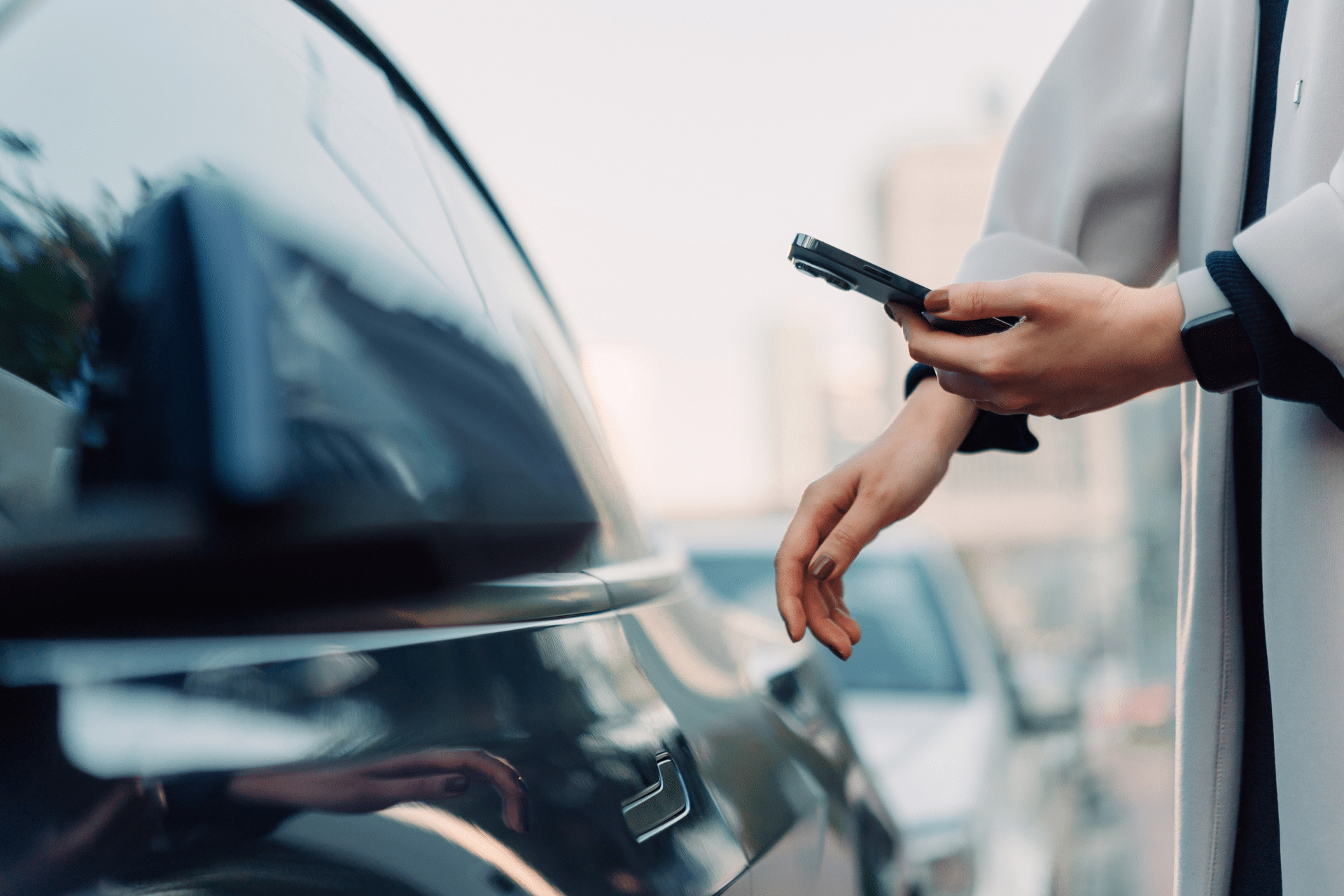
What Buyers Should Ask Before Choosing a Car
Anyone buying a vehicle for Apple Wallet Car Keys should ask specific questions before signing. Does this exact model, year, and trim support Apple Wallet car keys? Does it support passive entry or only tap-to-unlock? Does it work with both iPhone and Apple Watch? Is Express Mode supported? Can keys be shared with family members? Does the feature require a connected-services package? Can the dealer activate it at delivery? Is the feature already live or promised through a future update?
The answers matter because “digital key” can mean different things. Some automakers use proprietary apps. Some support Android first. Some support NFC but not UWB passive entry. Some require the vehicle manufacturer’s app to set up the key before adding it to Wallet. Some support Apple Wallet only on certain trims.
The best Car Key experience is the one where setup is completed before the buyer leaves the dealer. The owner should see the key in Wallet, test lock and unlock, test start, verify Apple Watch access if needed, and understand how to share or revoke a key.
Digital keys are convenient only when users trust them before they need them.
VW Could Help Make Car Keys Ordinary
Volkswagen support would give Apple Wallet Car Keys a stronger path into the mainstream U.S. car market. A future Tiguan, Atlas, ID.4, ID. Buzz, Golf GTI, Jetta, or other VW model with Wallet support would reach buyers who may not see themselves as early adopters but already use iPhone every day.
That is the real adoption point. Car Keys will not become common because drivers want another tech feature. They will become common when the phone or watch already in the driver’s pocket unlocks the car faster than searching for a fob.
The most useful next detail will be whether Volkswagen supports passive entry from the start. Tap-to-unlock is a good first step, but passive entry is what makes Apple Wallet feel like a true key replacement. If VW launches with that level of support, the feature could move from a nice extra to a daily habit for a much larger group of iPhone owners.