


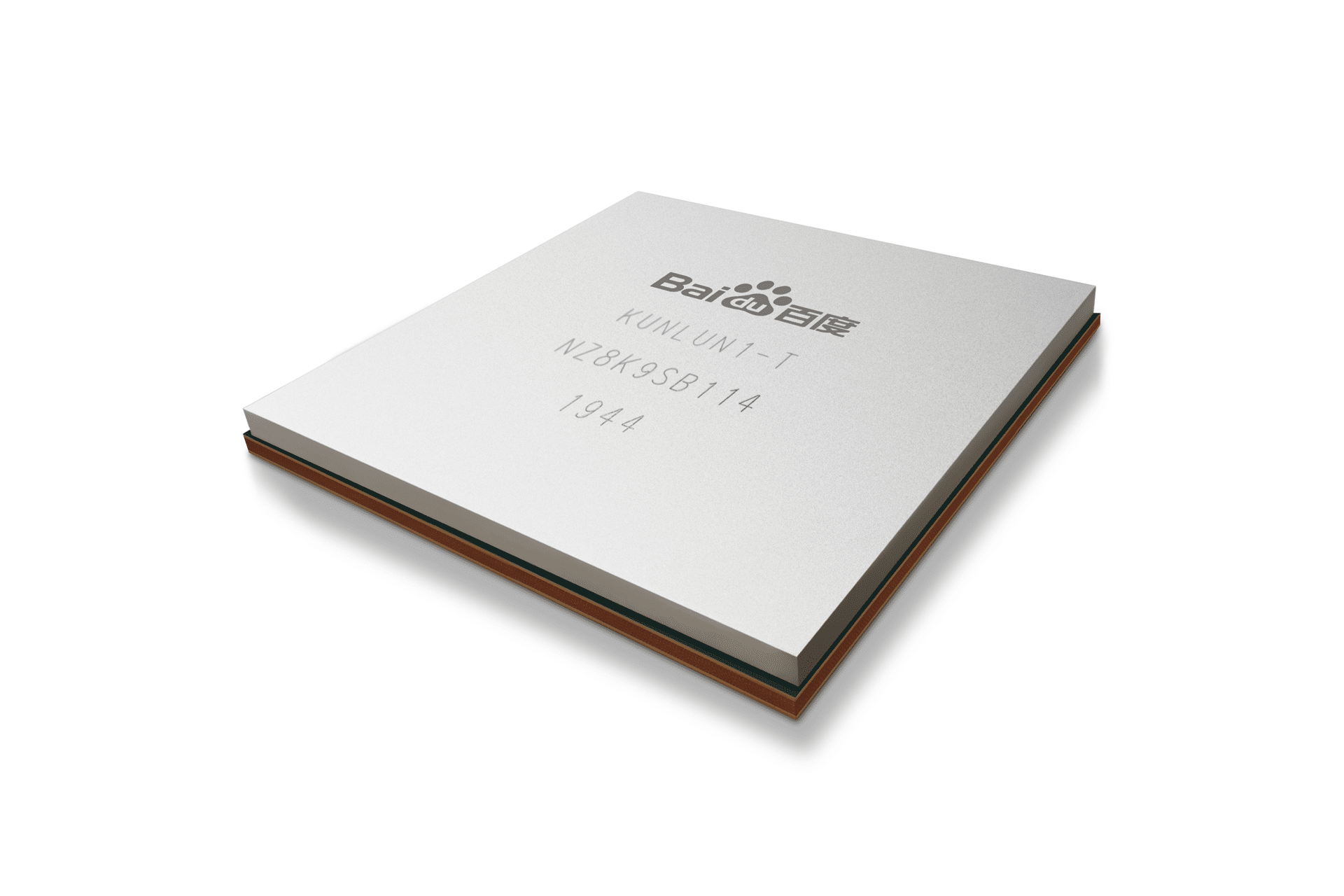
Chinese companies building large AI models and data-center infrastructure are increasingly adopting Baidu’s AI chips and cloud platforms as the country adjusts to reduced access to Nvidia’s high-end accelerators. Industry reports indicate that Baidu’s Kunlun processors, along with its broader AI computing framework, have gained traction among firms seeking locally sourced hardware capable of supporting training and inference tasks. This shift reflects a broader acceleration in China’s efforts to build an independent AI-compute ecosystem while global export controls continue to reshape supply chains.
Baidu’s Kunlun lineup was originally designed to power internal search and recommendation workloads. Over time the company expanded its hardware strategy, offering the chips to enterprises through Baidu Cloud. Now, with Nvidia’s advanced GPUs out of reach, businesses developing large language models and AI applications are turning to Baidu as one of the few domestic players operating at scale. Analysts note that while Kunlun chips do not match Nvidia’s highest-end GPUs on raw performance, they integrate directly with Baidu’s AI toolchain, providing a complete stack that many Chinese developers find practical and cost-effective.
Why Baidu Is Filling Nvidia’s Absence
Baidu operates one of China’s most mature AI cloud platforms, enabling customers to run training and inference workloads without importing foreign hardware.
The company offers a vertically integrated stack combining its Kunlun processors with model-development tools, model-serving frameworks and AI-orchestration software.
Growing demand for domestic alternatives has increased interest in Baidu’s chips among AI-first startups, industrial automation firms and companies building proprietary foundation models.
Enterprise users report that Baidu’s AI hardware has become easier to incorporate into training pipelines thanks to improvements in the company’s cloud ecosystem. Baidu recently expanded compute options for customers running large models, offering a combination of Kunlun accelerators and optimized software frameworks designed for multimodal and long-context tasks. These capabilities allow developers to scale training environments without depending on restricted foreign GPUs.
Market Dynamics Behind Baidu’s Momentum
China’s AI sector faces constraints in accessing Nvidia’s most advanced data-center GPUs, prompting a shift toward domestic compute platforms.
Several Chinese tech firms are accelerating investments in local accelerators, but Baidu remains one of the only providers with chips deployed in commercial data centers at scale.
Developers in China increasingly require stable long-term compute supply, pushing them toward vendors with proven manufacturing and cloud-deployment histories.
Competition within China’s domestic AI-chip space continues to grow. Companies including Huawei and startups specializing in niche accelerators are expanding their presence. Even so, Baidu’s early-mover advantage in cloud-based AI chips gives it a position that analysts describe as structurally significant. Baidu can offer hardware, software, inference hosting and full model-deployment pipelines under a single platform—an approach that reduces friction for enterprise customers navigating limited hardware availability.

As firms in China pursue larger language models and multimodal systems, demand for consistent compute supply is rising. Baidu’s Kunlun chips and cloud infrastructure deliver the predictability companies need to continue development despite external restrictions. At the same time, several enterprises are adopting hybrid strategies that combine Baidu’s chips with other domestic platforms to balance cost, performance and supply-chain stability.
Future Outlook for China’s AI-Compute Landscape
Industry researchers say the rapid adoption of domestic accelerators will likely lead to more specialized hardware designed for particular types of AI workloads.
Chinese firms are expected to continue expanding in-house accelerator designs, but near-term deployments will rely heavily on Baidu and other established providers.
As AI applications spread across finance, manufacturing and public-sector operations, companies require stable compute frameworks, which pushes them toward vendors with proven deployment pipelines.
The shift underscores how China’s AI sector is restructuring around domestic compute providers. Baidu’s position reflects years of investment in AI chips, cloud infrastructure and software platforms that now align with urgent market needs. With companies continuing to adjust to global restrictions, the combination of Baidu’s hardware and cloud services is becoming a central pillar of China’s AI-development landscape.

