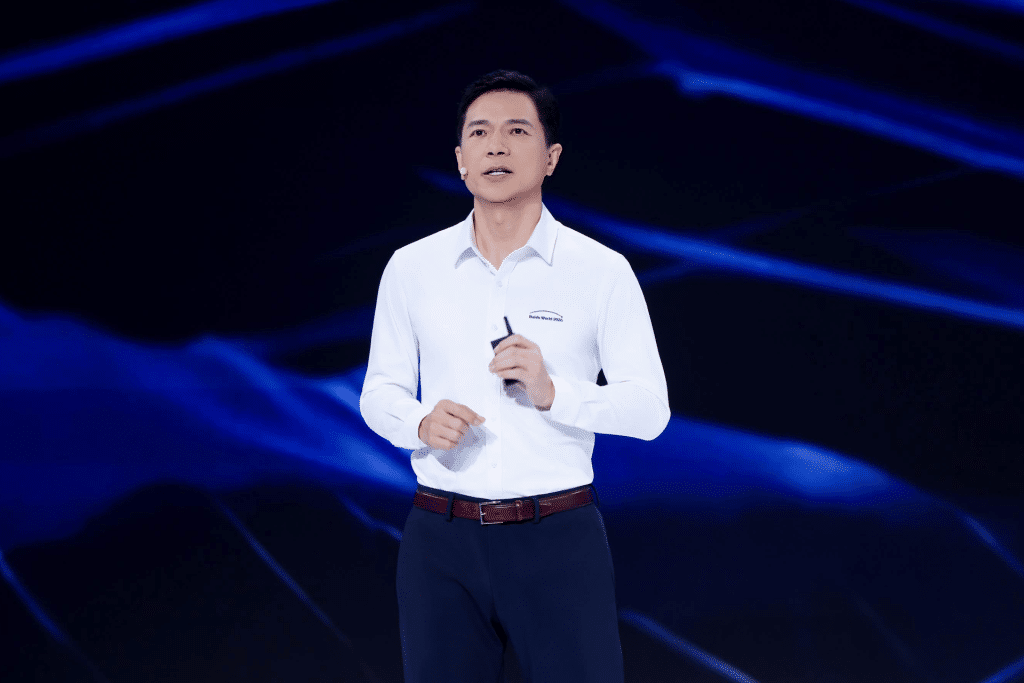
Baidu introduced a major expansion of its AI hardware and model lineup at Baidu World 2025, revealing two new AI chips — the M100 and M300 — as well as the company’s newest multimodal model, Ernie 5.0, and a significant update to its Tianchi Supernode data infrastructure. The announcements reflect Baidu’s strategy to reinforce its position in China’s AI sector by advancing its in-house silicon, foundational models, and large-scale computing clusters.
The new hardware and software lineup arrives at a time when Chinese tech companies are accelerating development of domestic AI chips to reduce reliance on foreign technology. Baidu is positioning its M-series processors as the core of its next-generation AI stack, supporting large models across cloud, enterprise, and industrial applications.
M100 and M300 Mark a New Phase in Baidu’s Chip Development
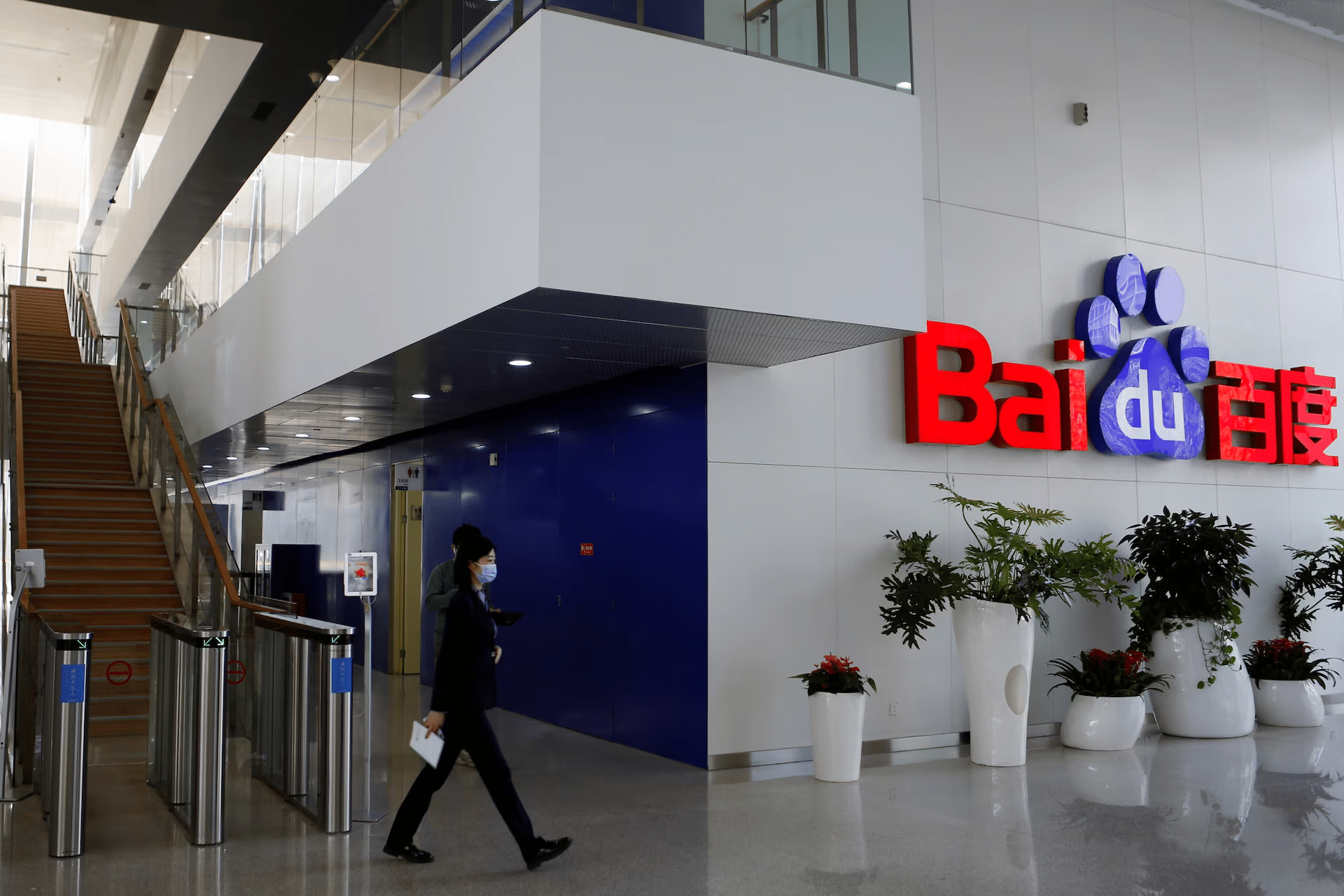
The M100 is the smaller of the two new chips but is designed for high-efficiency workloads. It targets inference-heavy environments, particularly where cost and power constraints are a concern. The chip supports Baidu’s optimized Tensor Engine and can run large-language models in latency-sensitive deployments such as search, recommendation, and conversational AI services.
The M300, by contrast, is positioned as Baidu’s highest-performance AI chip to date. It supports significantly higher throughput for training and inference and is intended to handle Baidu’s 100-billion-parameter and above-scale models. Baidu says the chip is built with improved interconnect bandwidth and memory access speeds, allowing it to integrate efficiently within multi-chip clusters.
While Baidu did not release complete benchmark numbers, it emphasized that both chips allow tighter hardware–software integration for running Ernie-series models and enterprise inference workloads. The new architecture is designed to reduce delays and improve power efficiency across large distributed systems.
Ernie 5.0 Introduces a Fully Native Multimodal Architecture
The introduction of Ernie 5.0 marks another evolution of Baidu’s foundational models. Unlike earlier versions that added multimodal capabilities on top of text-centric design, Ernie 5.0 is built as natively multimodal, processing text, images, audio, and structured data through a unified architecture.
According to Baidu, Ernie 5.0 offers improved reasoning, document understanding, and context alignment across different forms of input. The company demonstrated the model handling complex instructions involving multiple content types, such as audio transcription paired with visual interpretation and structured data extraction.
The model is intended to serve enterprise environments that require reliability and adaptation rather than strictly entertainment or consumer-facing applications. Early demonstrations highlighted use cases in medicine, automated support systems, and industrial analytics.
Tianchi Supernodes Receive Major Infrastructure Upgrade
The final component of Baidu’s announcement is the upgrade of its Tianchi Supernodes, the company’s high-density AI computing clusters. The new generation incorporates improvements in cooling systems, chip interconnect technology, and distributed scheduling algorithms to optimize cluster performance when running enormous training tasks.
These upgrades were presented as a necessary step to support Ernie 5.0 at commercial scale. Baidu emphasized that the architecture is built to support growing adoption of generative AI across industries that require stable deployment conditions and fast response times.
Positioning in China’s AI Hardware Race
Baidu’s new releases come at a moment when Chinese AI firms are aggressively expanding domestic chip capabilities. Unlike rivals building general-purpose silicon, Baidu is tailoring its hardware specifically to its AI stack, aligning the M-series chips tightly with Ernie models and Tianchi data centers.
The strategy reflects a shift toward vertically integrated AI ecosystems — a model already seen in companies across the U.S. and Europe — where chips, models, and cloud platforms are developed in tandem rather than as separate components.
Industry analysts note that Baidu’s consistent investment across its stack gives it a stable foundation as China pushes to accelerate AI adoption in cloud computing, enterprise automation, and smart cities.
As Baidu moves toward full commercial deployment of the M100, M300, and Ernie 5.0 throughout 2026, the company is expected to deepen its infrastructure commitments and roll out additional enterprise-focused services powered by these new systems.