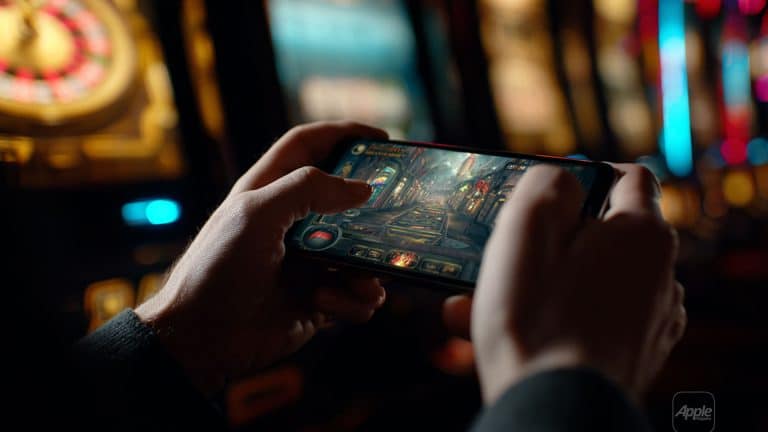
We’ve seen how significantly gaming culture has transformed since the introduction of the first iPhone, but now that Apple has been able to dominate so many levels of the gaming world and monopolize various levels within the supply chain, there are now many within technology who are taking a keen interest in just how this market will shape up throughout the rest of this decade and into the 2030s.
Where does casino gaming fit into this? Well, not only has it found a whole new customer base thanks to the shift in dynamics in the North American market, but the rise of decentralized payment systems, automation, and global advertising, a lot of which has been engineered by the success of Apple since the advent of this century, has played an important role in reshaping the contemporary casino gaming experience.
Today, we’re going to examine how Apple’s role and its move toward systemic AI integration could reshape casino gaming, and the wider gaming industry as we know it.
Altering the Casino Gaming Experience
There are no industries that stand still, well, definitely not those that are looking to expand their market. Apple showcased this on countless occasions throughout the last 25 years. Despite their differences, the casino gaming industry has also adopted an aggressive approach to integrating the latest technology.
There are several reasons behind the startling growth of the casino gaming market; some attribute it to the industry’s embrace of alternative payment options over the last two decades. For some, however, it’s far simpler. The emergence of mobile gaming technology has laid the groundwork for developers to expand the quality and scope of casino table games they offer online.
It’s about mixing the old with the new. The iPhone pioneered in many ways, but ultimately, the crux of its success was that it made it easier, cheaper, and more accessible to contact our friends. Casinos applied the same model, broadly speaking.
They looked at the market and the direction it was moving and placed a big bet on the collective shift in consumer demand, particularly online, and it paid off, as you can see in the infographic below, which, by every metric, suggests that the industry is set to grow by more than 13% between now and the end of the decade.
Automation In Casino Gaming – Striking a Balance
On the front lines of automation, if you are someone who spends a lot of time on YouTube as I do, you will have seen how AI scripts, voice-overs, and soulless content are inundating the platform.
There was a perfect middle ground here, for a brief window, especially for casinos and gamers. YouTube acted as a source of knowledge and provided free insight into blackjack strategy, as you can see in the link below, as well as other card games. Everybody benefited; it was cost-effective, insightful, and all parties got something from the exchange.

However, as this market became more saturated and the race became more about quantity than quality, subpar, automated content feels impossible to avoid. Compound this with the fact that every big Tech juggernaut continues to plow trillions into AI investment, including Apple, which is flirting with the idea of a full-AI iOS, where does the casino gaming experience find ways to retain its authenticity and USP?
Bespoke iGaming Content
Apple is betting big on AI. We’ve seen Apple Intelligence upgrades across every possible facet, and this approach has ramped up over the last 12 months. If you are looking to edit images, organize your day, or even perform image detection, which helps pull important data or translate information from a poster or image.
The advances have been remarkable, really, and highly beneficial if you are, for instance, somebody who travels overseas and has to take pictures of food labels to ensure they do not contain ingredients you are allergic to.
However, AI also has the power to understand your gaming preferences in more bespoke, minute detail. We’ve seen how powerful the algorithms are across social media, and how even the smallest changes from Google can rank content in a myriad of ways and propel the popularity of social media sites.
Thanks to automation and AI, we are now in a market where you no longer need to go looking for your content. It is delivered to the palm of your hand, and, for casino gaming companies, the marketing approach has shifted. Yes, they still employ an approach that fires promotions to mailing lists and uses their socials to promote marketing content, but the landscape is certainly moving toward automation.
Those marketing gurus who are able to get their finger on the pulse and grow their casino brand with authentic content could make a serious impact on the market in years to come – but it depends on many moving variables in a complex global market that is difficult to navigate.
What Does the Future Hold?
To get a good idea of how the casino gaming market will handle the advances and challenges of AI, the best measuring stick is customer response. Over the last decade and a half, as casino gaming moved from PCs to mobile games and now into the world of AI and crypto, it all hinges on what the customer wants.
If customers move away from AI ideas and don’t want automation and want autonomy to pick their own games and ideas, then we could see a shift toward more traditional forms of digital marketing.
The popularity of casino gaming is a fascinating talking point, given that it has transcended so many forms of media and grown from strength to strength. AI may impact more tailored advertisements and AI live dealers. Apple has made a major shift to AI, even leaning on Google for support.
However, ultimately, millions of people enjoy the social element of casino gaming, speaking to other players and speaking to live dealers via in-game chats, and unless this market disintegrates, then automation is not going to remove the human element from the market anytime soon.