

The Broadcom deal announced by Apple adds more than $30 billion to the company’s push for U.S.-made chips, with the money tied to custom silicon, wireless connectivity components and a major expansion in Fort Collins, Colorado. Apple said the new multiyear agreement will lead to the production of more than 15 billion U.S.-made chips and support hundreds of American jobs.
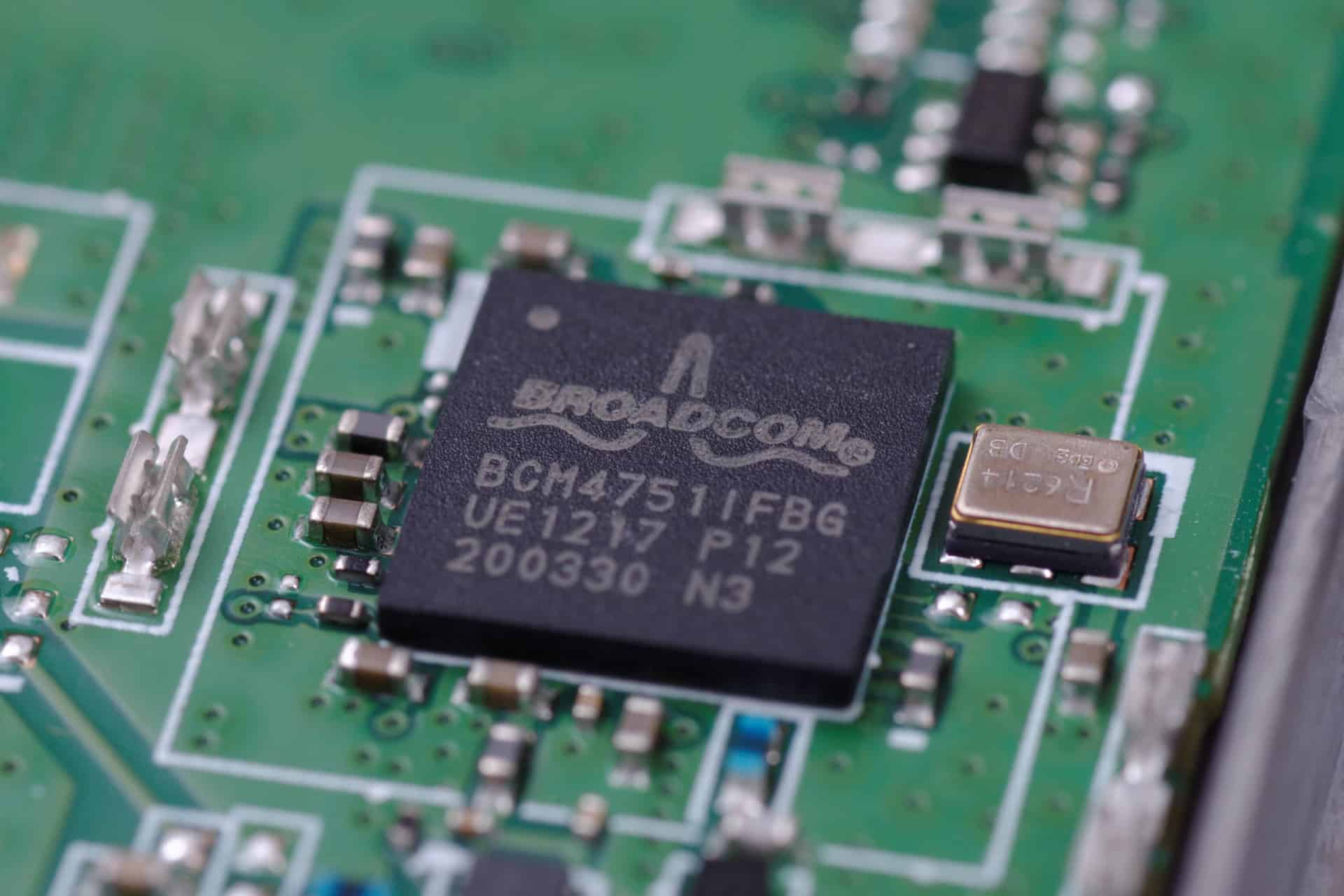
Broadcom will spend $1.5 billion to expand its Colorado factory as part of the arrangement, according to Reuters. The facility is expected to produce radio frequency components used in Apple products, including FBAR filters, a small but essential class of chip that helps devices manage wireless signals.
The announcement follows Broadcom’s separate disclosure that it had extended its Apple supply relationship through 2031. Together, the two developments give Apple a longer runway for wireless components while giving Broadcom a larger role in the company’s U.S. manufacturing story.
Broadcom Deal Centers on Wireless Components
The Broadcom deal is not about Apple moving final assembly of iPhones or Macs to the United States. It is about securing more U.S.-made parts inside products that are still assembled through a global supply chain. The distinction matters because chip manufacturing and device assembly sit in different parts of the production process.
Apple said the agreement covers custom silicon components and wireless connectivity technologies across a wide range of products. Reuters reported that the Colorado facility will focus on radio frequency chips, including FBAR filters. These components help devices connect across cellular, Wi-Fi, Bluetooth and GPS systems by filtering radio signals and reducing interference.
For users, these parts are invisible. They sit behind features that feel routine: making a FaceTime call, connecting AirPods, using Maps, switching between Wi-Fi and cellular data or pairing accessories. Yet wireless performance depends on a chain of specialized chips working with antennas, modems, software and power systems.
That is why Apple continues to rely on Broadcom even as it designs more of its own silicon. Apple’s in-house chip work has transformed the Mac and raised expectations for iPhone modems, processors and neural engines. But RF components remain complex, specialized and deeply tied to manufacturing expertise. Broadcom’s position in that layer gives it leverage Apple cannot easily replace overnight.

Colorado Expansion Gives Apple a Domestic Supply Point
The Fort Collins expansion gives Apple a more visible U.S. supply point at a time when Washington continues to pressure technology companies to bring more semiconductor work into the country. Apple said the agreement is part of its American Manufacturing Program, a larger effort to increase spending with U.S. suppliers and support domestic production.
Broadcom’s $1.5 billion factory investment also gives the deal a physical footprint. It is not only a purchase agreement or long-term supply contract. It includes capital spending on a Colorado facility that will help produce billions of chips for Apple devices.
The scale is large, but the type of chip matters. These are not the main processors that power iPhone, iPad or Mac. Apple’s A-series and M-series chips still depend heavily on advanced manufacturing from TSMC, with much of that production tied to Taiwan and, increasingly, Arizona. Memory, displays, camera modules and final assembly remain spread across several countries and supplier networks.
Still, a domestic RF chip pipeline gives Apple a concrete U.S. manufacturing story without forcing an immediate overhaul of its device assembly model. It also gives the company a supply-chain hedge for components that ship in huge volumes and are used across several product families.
The Deal Extends a Long Supplier Relationship
Apple and Broadcom have worked together for years, and the relationship became more visible in 2023 when Apple announced a multibillion-dollar agreement for U.S.-made 5G radio frequency components. The new agreement expands that relationship with a dollar figure expected to exceed $30 billion and a production target of more than 15 billion chips.
Reuters also reported that Broadcom’s expanded role runs through at least 2031. That timing is notable because investors have watched Apple’s custom silicon ambitions closely. When Apple brings more chip work in-house, suppliers can lose high-value design slots. Qualcomm has already faced that pressure around modem plans, and Broadcom has been viewed through a similar lens because of Apple’s interest in wireless integration.
The new agreement suggests Apple is not ready to cut Broadcom out of this area. Instead, it is locking in supply for multiple product generations while continuing to develop its own silicon where it sees strategic value.
For Broadcom, the deal offers long-term revenue visibility from one of the world’s largest electronics companies. For Apple, it preserves access to a supplier with deep experience in RF components while attaching more of that supply to U.S. production.

A Political and Supply-Chain Signal
Apple’s announcement lands in a political environment where U.S. chip production has become a high-profile issue. The company said it has been working with the administration and businesses across the country to source more chips from the United States. Reuters reported that the deal is part of Apple’s work with President Donald Trump’s administration to increase domestic sourcing.
That creates a careful balance for Apple. The company wants to show measurable U.S. investment without overstating how much of its supply chain can move quickly. A $30 billion Broadcom commitment is large enough to satisfy a public manufacturing narrative, but narrow enough to avoid the far greater difficulty of shifting final assembly or replacing Asian suppliers across the full product stack.
The deal also fits Apple’s larger pattern. The company has announced or supported U.S. semiconductor work tied to suppliers such as TSMC, Texas Instruments, GlobalFoundries, Amkor and others. Each agreement covers a different part of the chain. None of them alone makes Apple products U.S.-made, but together they create more domestic nodes inside a heavily international system.
That approach is less dramatic than a factory relocation headline, but more realistic. Apple depends on scale, precision, supplier clustering and years of process expertise. U.S. chip investments can reduce exposure in some areas, but they do not erase the company’s reliance on Asia for assembly, displays, batteries, camera systems and many high-volume components.
A Small Chip With a Large Business Role
The Broadcom deal shows how much of Apple’s supply-chain strategy now sits in components most users never see. A wireless filter does not carry the public profile of an M-series chip, but it can affect connectivity, reliability, power behavior and how well a device works across crowded signal environments.
That makes the Fort Collins expansion more than a political gesture. If Broadcom can produce high-volume RF components for Apple in Colorado, the factory becomes part of the product experience in a quiet way. It also gives Apple a domestic manufacturing point attached to features people use every day, from iPhone calls to Mac Wi-Fi and Apple Watch connectivity.
The next measure will be execution. Apple has put a public dollar figure on the agreement, Broadcom has a factory expansion to deliver, and the 15 billion-chip target gives both companies a number that can be tracked over the life of the deal. The less visible test will happen inside future devices, where the value of the agreement will show up through stable supply, reliable wireless performance and fewer disruptions in one of Apple’s most specialized chip categories