

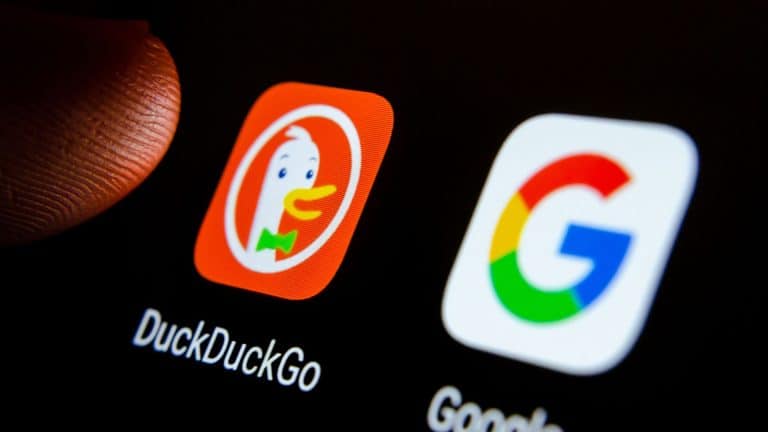
DuckDuckGo is seeing a new opening among iPhone users after Google used I/O 2026 to present one of the biggest AI-driven changes to Search in its history. Following Google’s announcements, DuckDuckGo said it saw a notable and sustained surge in U.S. usage, including a sharp rise in iPhone app installs. TechCrunch reported that DuckDuckGo installs were up 30% after Google’s AI-heavy Search overhaul, while 9to5Mac reported a particular spike in U.S. iPhone installs.
The timing is important because Google did not present AI as a small layer on top of Search. The company described a new era for Search, including a redesigned AI-powered search box, broader AI Mode availability, more agentic features, and tighter integration with personal Google services such as Gmail and Google Photos when users choose to connect them. Google called it the biggest upgrade to Search in more than 25 years.
For some users, that looks like progress. AI can summarize results, handle more complex queries, compare information, and help complete tasks. For others, it changes the basic search bargain. Search used to feel like a list of links with snippets. AI Search increasingly feels like a generated answer layer that decides what to surface first, how to summarize the web, and when a user should click through. That shift is creating a privacy and control backlash, and DuckDuckGo is positioned to benefit from it.
The iPhone angle matters because Apple users are already trained to think about privacy as part of the device experience. Safari includes built-in privacy protections, iOS asks for app permissions, and Apple has spent years marketing privacy as a platform value. When Google makes Search more personal, more agentic, and more AI-driven, some iPhone users may look for a search option that feels lighter and less tied to data collection.
DuckDuckGo’s pitch is simple: private search without tracking. In a moment when Google is making Search more intelligent and more integrated, that simplicity becomes the product.
Google I/O Turned Search Into an AI Platform
DuckDuckGo’s install spike followed a Google I/O where Search became a central AI platform rather than only a search-results page. Google said it is bringing advanced model capabilities to Search, introducing a new intelligent AI-powered search box, expanding AI Mode, and enabling users to use agents by asking questions. Google also said Personal Intelligence in AI Mode is expanding to nearly 200 countries and territories across 98 languages, with optional connections to apps like Gmail and Google Photos and future support for Calendar.
That is a major change in how Google wants users to interact with the web. Search becomes more conversational, more task-oriented, and more connected to personal data when users opt in. The company’s argument is that AI can help people search more naturally, ask longer questions, and get more useful answers without opening many separate pages.
The concern is that AI Search can also reduce user control. Some users do not want AI summaries placed above links. Some publishers worry about lower traffic when answers are generated directly on Google. Some users worry that personal data connections could make Search feel too integrated with email, photos, and calendar information. Others simply prefer traditional search results because they want to choose sources themselves.
DuckDuckGo benefits from that split. It does not need every Google user to reject AI Search. It only needs a meaningful share of users to decide that Search has become too heavy, too automated, or too data-driven for their taste.

iPhone Users Are a Natural Audience
DuckDuckGo’s iPhone install spike makes sense because iPhone users already have several paths to reduce Google dependence. They can install the DuckDuckGo browser, use DuckDuckGo as a search engine, and adjust Safari’s default search settings where available. Apple also gives users privacy cues throughout iOS, which can make a privacy-focused search app feel consistent with the rest of the device.
To change Safari search engine on iPhone:
Settings > Apps > Safari > Search Engine
Available options vary by region and software version, but Safari commonly supports alternatives including DuckDuckGo in many markets. Users can also install DuckDuckGo’s iPhone app if they want a separate private browser experience with tracker blocking, private search, and related privacy tools.
This matters because the iPhone has become one of the most valuable search surfaces in the world. Google pays Apple billions of dollars annually to remain Safari’s default search engine in many regions, a relationship that has also been central to U.S. antitrust scrutiny. If user behavior begins shifting away from Google on iPhone, even at the margins, it becomes strategically important.
DuckDuckGo is still much smaller than Google. A 30% install jump does not make it a mainstream search leader overnight. But search choice does not need to flip all at once. It can shift through moments of discomfort, especially when a dominant product changes too aggressively.
AI Search Creates a Trust Question
DuckDuckGo’s momentum is really about trust. AI Search asks users to trust generated answers, source selection, personalization, and automated task handling. That can be useful, but it also changes the feeling of search. The user is not only browsing links. They are interacting with a model that summarizes, ranks, and sometimes acts.
Google says Personal Intelligence in AI Mode is designed with transparency, choice, and control, and that users choose if and when to connect services like Gmail and Google Photos. That control language is important, but many users still react to the direction of the product. They may not want search to become an AI assistant tied to personal services, even if the connection is optional.
DuckDuckGo’s message is the opposite. It does not promise the most agentic search experience. It promises less tracking, less profiling, and a more private search model. In an AI-heavy moment, that restraint becomes a selling point.
There is also a quality issue. AI summaries can be helpful, but users have seen AI systems make errors, flatten nuance, or present weak answers confidently. For searches involving news, health, finance, travel, local decisions, or shopping, some users may prefer source-first browsing. DuckDuckGo can market itself as a way to keep search closer to the web instead of moving everything through an AI answer box.

Apple’s Role Becomes More Interesting
DuckDuckGo’s iPhone growth also adds pressure to Apple’s search strategy. Apple is not a traditional search company, but it controls Safari, Spotlight, Siri, Apple Intelligence, App Store discovery, Maps, and system-level search surfaces across iPhone, iPad, and Mac. As Google moves Search toward AI agents, Apple has to decide how much of the search and assistant experience it wants to own, partner for, or leave to outside services.
Apple’s privacy brand gives it room to support alternatives, but its business relationship with Google remains enormous. If more users actively seek private search options after Google’s AI push, Apple may face stronger expectations around search choice, default settings, and AI transparency.
This also connects to Siri. Apple is expected to use WWDC26 to clarify the next phase of Apple Intelligence and Siri. If Siri becomes more capable, Apple may eventually reduce some reliance on traditional web search for device-level questions and app actions. But for open web search, Apple still needs partners or a stronger search product of its own.
DuckDuckGo’s install spike shows that users may not only be choosing between Google and another search engine. They may be choosing between two philosophies: AI-personalized search and privacy-first search.
A Small Surge With Bigger Meaning
DuckDuckGo’s U.S. iPhone install spike does not mean Google Search is suddenly in danger. Google remains the dominant search engine, and its AI features may prove useful enough that most users stay. But the reaction matters because it shows a visible group of users wants an off-ramp from AI-heavy search.
That is the bigger story. AI is becoming the default layer across search, browsers, assistants, productivity apps, and operating systems. Some users welcome that. Others want more control over when AI appears, what data it uses, and whether traditional web links remain central.
DuckDuckGo is benefiting because it offers a clear alternative at the exact moment Google is making Search more complex. For iPhone users, the choice is easy to test: install the app, change Safari settings, and see whether a private search experience feels better.
Google is betting that AI will make Search more useful. DuckDuckGo is betting that many users still want search to feel private, simple, and under their control. The install spike suggests that after Google I/O, more iPhone users are at least willing to try the second option.