

Reports indicate Apple’s foldable efforts continue, but the specifics of screen size, timing and practicality differ between a phone and a tablet.
Apple’s path into foldable hardware has intensified with multiple credible reports pointing to an “iPhone Fold” device expected in 2026. Industry coverage describes a book-style foldable smartphone — potentially part of the iPhone 18 lineup — that could be Apple’s first foray into flexible displays for mainstream consumer devices. This aligns with broader expectations that Apple will finally join the foldable phone market, historically led by competitors like Samsung and Google.
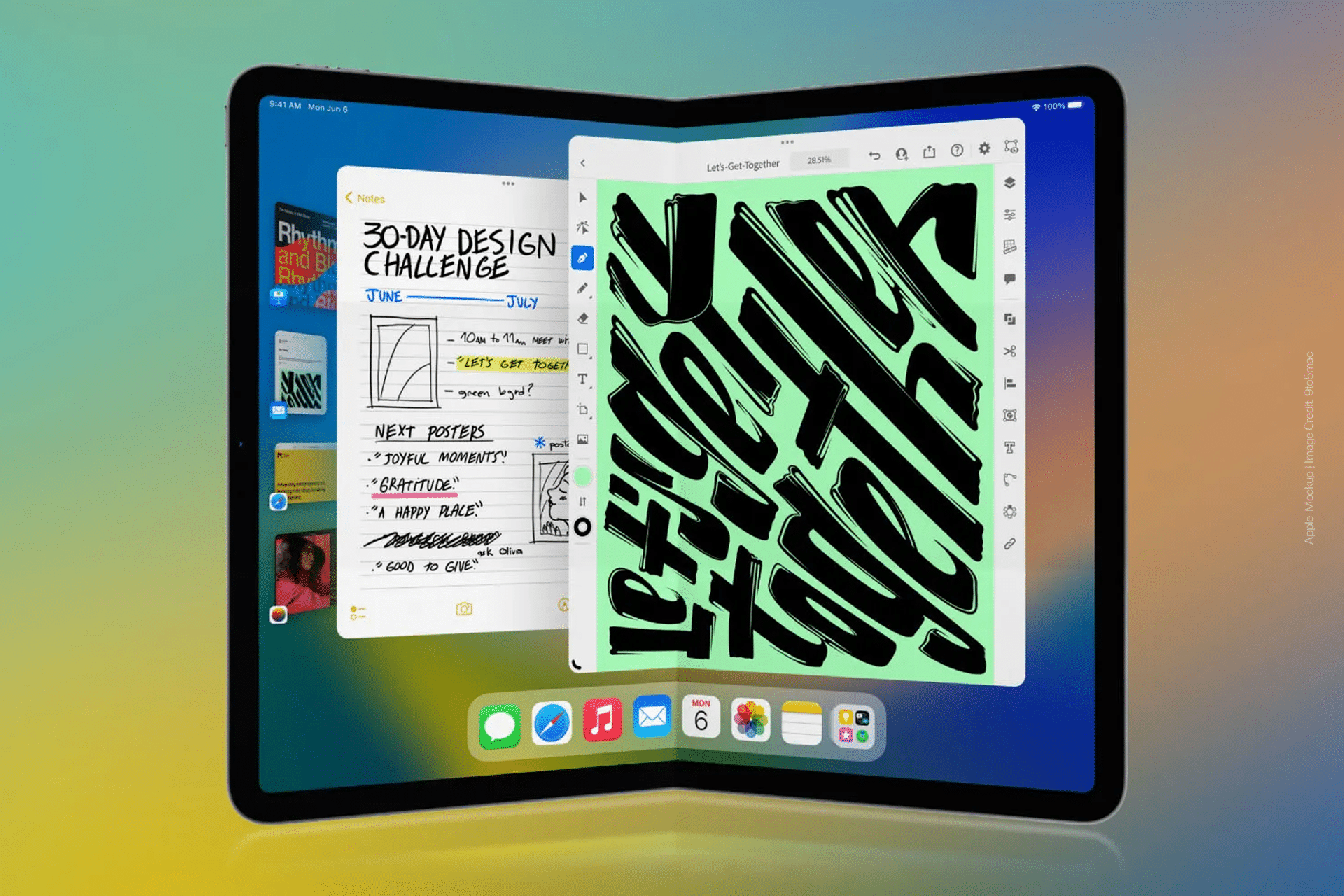
At the same time, foldable tablet rumors are less immediate. While early industry analysis suggested Apple might explore camera-sized large foldables first, more current reports indicate that work on a larger foldable iPad has been paused or delayed as Apple concentrates on the upcoming foldable iPhone and resolves display and manufacturing challenges. These hurdles — such as reducing production costs and perfecting hinges and crease-free flexible glass — tend to push the foldable tablet timeline further out.
Design and Use Case Differences
A foldable iPad form factor has inherent advantages over a smartphone fold in Apple’s ecosystem. Larger displays naturally lend themselves to multitasking, productivity workflows, content creation, and media consumption — experiences iPad users already favor. With iPadOS 26 introducing the Liquid Glass interface and expanded multitasking features, Apple’s software evolution appears to be positioning bigger screens for more versatile use cases, making a foldable tablet a natural extension.
In contrast, foldable smartphones face significant design pressures. Apple reportedly emphasizes perfection in display quality and build quality, especially regarding crease prevention, durability and overall experience. Though multiple reputable sources now suggest Apple’s first foldable iPhone is approaching readiness for a 2026 release with a book-style form similar to the Samsung Galaxy Z Fold, the challenges inherent in a compact foldable device — including achieving durable, seamless folding mechanics — remain significant.

Market Strategy and Engineering Reality
Apple’s traditional approach when entering a new device category is to wait until technology can meet its high design standards and deliver a premium experience. The rumoured 2026 foldable iPhone appears poised to leverage advanced OLED panels and a crease-minimizing hinge, but even here the R&D and supply chain complexity have been noted in industry reporting. This conservative approach has likely contributed to delays and high expectations for Apple’s first foldable product.
By contrast, a foldable iPad essentially pushes Apple’s existing large-screen ecosystem further without forcing the compromises that a miniaturized foldable phone demands. With iPad users already accustomed to expansive screen real estate and multitasking workflows, the transition to a foldable tablet could be smoother from both hardware and software standpoints — even if the product arrives later in Apple’s roadmap.
Public Expectations and Analyst Views
Recent coverage suggests that Apple’s foldable efforts will initially center around a phone before expanding into larger screens. Some analysts now believe that the foldable iPhone’s 2026 debut will serve as Apple’s testbed for foldable hardware and user experience, with tablet-scale foldables targeted for a tentative 2027–2028 timeframe or beyond as technology and production efficiencies improve.
Whether Apple ultimately prioritizes a foldable iPad, a foldable MacBook, or some hybrid device remains a subject of ongoing industry speculation. What’s clear from current coverage is that Apple’s strategy reflects balancing engineering challenges with user experience expectations, and that larger foldable screens could become a prominent chapter in Apple’s evolving device ecosystem once core technical hurdles are overcome.


