

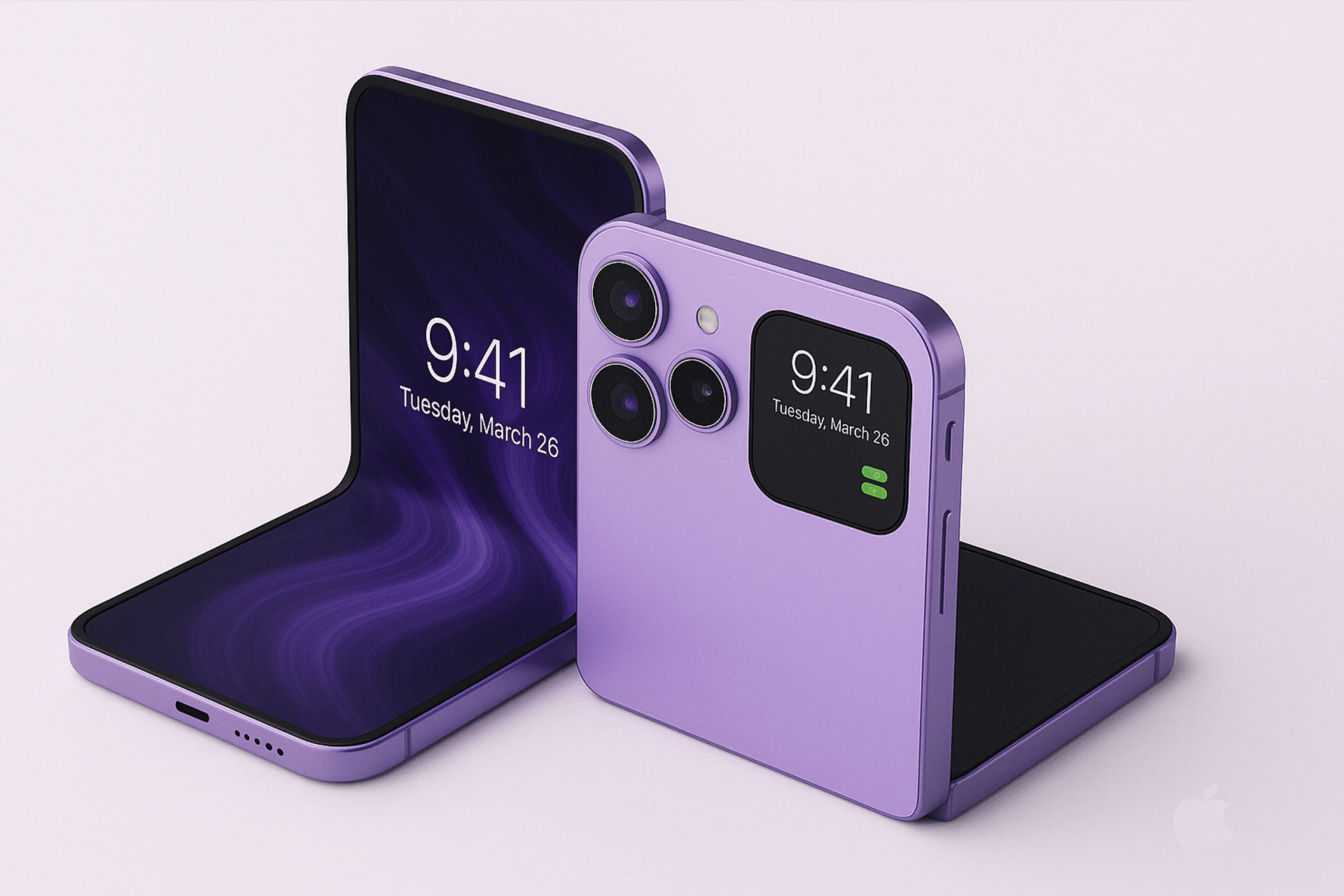
Apple’s work on a foldable iPhone increasingly points to ultra-thin glass as the foundation of its display strategy, with a clear focus on reducing the visible crease that defines current foldable devices. Supply-chain references and internal testing signals suggest Apple is evaluating display stacks that combine refined glass layers, flexible substrates, and redesigned hinge mechanics to create a more uniform screen surface.
Crease visibility remains one of the most persistent compromises in foldable phones. Even as competitors improve brightness and durability, the fold line often remains visible under direct light and noticeable during touch interaction. Apple’s approach indicates that crease reduction is being treated as a core requirement rather than a tolerated limitation.
Ultra-Thin Glass
Ultra-thin glass, commonly referred to as UTG, is chemically strengthened glass engineered to bend repeatedly without cracking. In foldable devices, it replaces plastic top layers, improving scratch resistance and restoring the feel of traditional glass while maintaining flexibility.
Reports tied to Apple’s foldable development suggest multiple UTG thickness profiles are under evaluation. Variations in elasticity, reinforcement, and lamination directly affect how the glass behaves at the fold point. The objective is not total crease elimination, which remains difficult with current materials, but meaningful reduction under everyday viewing conditions.
How the glass interacts with underlying OLED layers also plays a role. Even small changes in lamination pressure or bonding materials can influence how stress accumulates along the fold over time, shaping both visual appearance and long-term reliability.
Crease Reduction as a Design Priority
The crease impacts more than aesthetics. It affects reading comfort, handwriting accuracy, video immersion, and perceived build quality. For a device positioned within Apple’s premium lineup, these factors carry weight.
Apple’s display philosophy has consistently emphasized uniform brightness, predictable touch response, and visual continuity. A foldable iPhone would be expected to deliver those same traits across its entire surface. Minimizing the crease brings the experience closer to that standard, particularly for tasks that rely on uninterrupted screen space.
Hinge and Structural Engineering
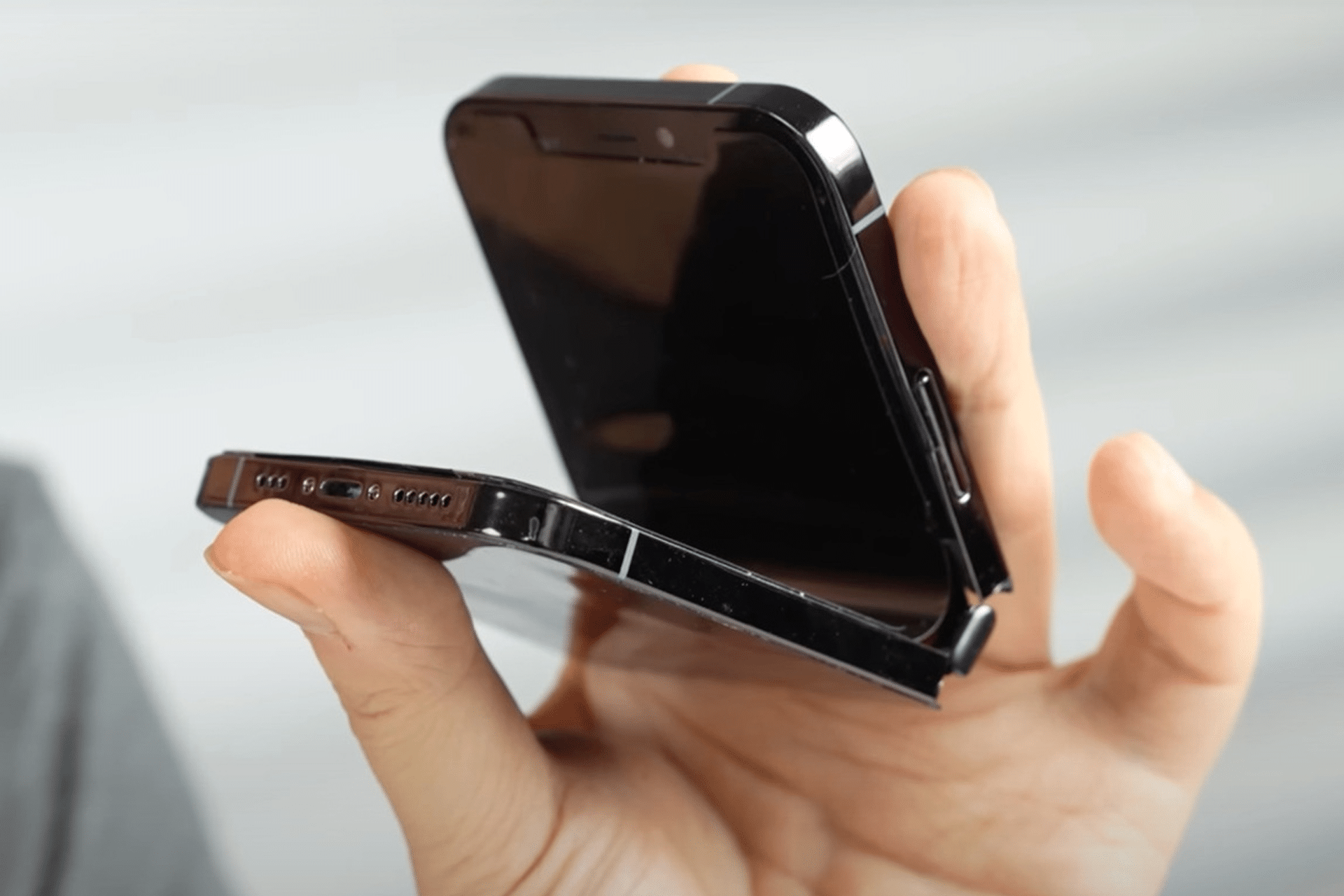
Glass behavior is inseparable from hinge design. Crease depth and permanence are strongly influenced by how the display bends internally. Apple is believed to be testing hinge structures that allow the screen to fold along a broader curve rather than a sharp angle, reducing concentrated stress at a single point.
Such designs demand precise tolerances and rigid internal support to maintain alignment over thousands of folds. Even a small increase in bend radius can significantly reduce long-term deformation in ultra-thin glass layers.
Apple’s experience with mechanical precision across MacBooks and iPads suggests hinge refinement is likely advancing in parallel with material testing.
Display Experience
A foldable iPhone with reduced creasing would offer tangible improvements in everyday use. Touch gestures would feel more consistent across the display, glare artifacts would be less distracting, and handwriting or drawing interactions would benefit from a flatter surface.
These gains matter most in scenarios where foldable screens are expected to excel, including multitasking layouts, document reading, creative workflows, and extended media viewing. A smoother fold area makes the device behave more like a continuous canvas rather than two panels joined at a seam.
Manufacturing and Supply
Producing ultra-thin glass at scale remains complex. Yield rates, consistency, and durability testing all factor into whether a material is viable for mass production. Apple is reportedly working with multiple suppliers to evaluate UTG samples and manufacturing techniques, allowing comparison before committing to a final process.
This approach aligns with Apple’s broader supply strategy, reducing risk while maintaining leverage over quality standards. It also suggests the foldable project has moved beyond early conceptual work into more practical engineering evaluation.
Timeline Signals
No official launch window has been confirmed, but the presence of advanced glass testing and hinge optimization points to steady internal progress. Apple’s historical rollout patterns indicate that major display changes typically surface only after extended validation across durability, performance, and manufacturing readiness.
As testing continues, refinements to glass composition and hinge geometry are likely to shape how a foldable iPhone integrates with multitasking features, accessory support, and the broader device ecosystem.


