Full-AI iOS is no longer a distant science-fiction idea. The question is not whether artificial intelligence will change the app economy. It already is. The harder question is how much time app developers have before the operating system itself can handle many of the jobs that once required separate apps, human-built interfaces, and traditional software teams.
The answer is uncomfortable but not absolute. Over the next 10 years, AI will likely erase the need for many simple apps, weaken entire categories of single-purpose utilities, and change how software is designed, built, distributed, and monetized. But it is not certain that iOS becomes a fully AI-provided world where human developers vanish. The more likely future is a split economy: simple tasks become absorbed by Siri, Apple Intelligence, and agentic system layers, while human developers move toward higher-value work around products, trust, taste, communities, brands, compliance, safety, and complex business systems.
That still represents a huge disruption. Apple said the global App Store ecosystem facilitated nearly $1.3 trillion in developer billings and sales in 2024, showing how large the economy around iPhone software has become. The U.S. App Store ecosystem alone facilitated $406 billion in billings and sales that year, including physical goods and services, in-app advertising, and digital goods and services. If AI changes the interface between users and apps, the effects will not be limited to coders. They will reach media, retail, food delivery, transportation, finance, games, education, fitness, healthcare-adjacent apps, subscriptions, advertising, and local services.
“The scary part is that AI does not need to replace every app to change the economy. It only needs to replace the reason users open many of them.”
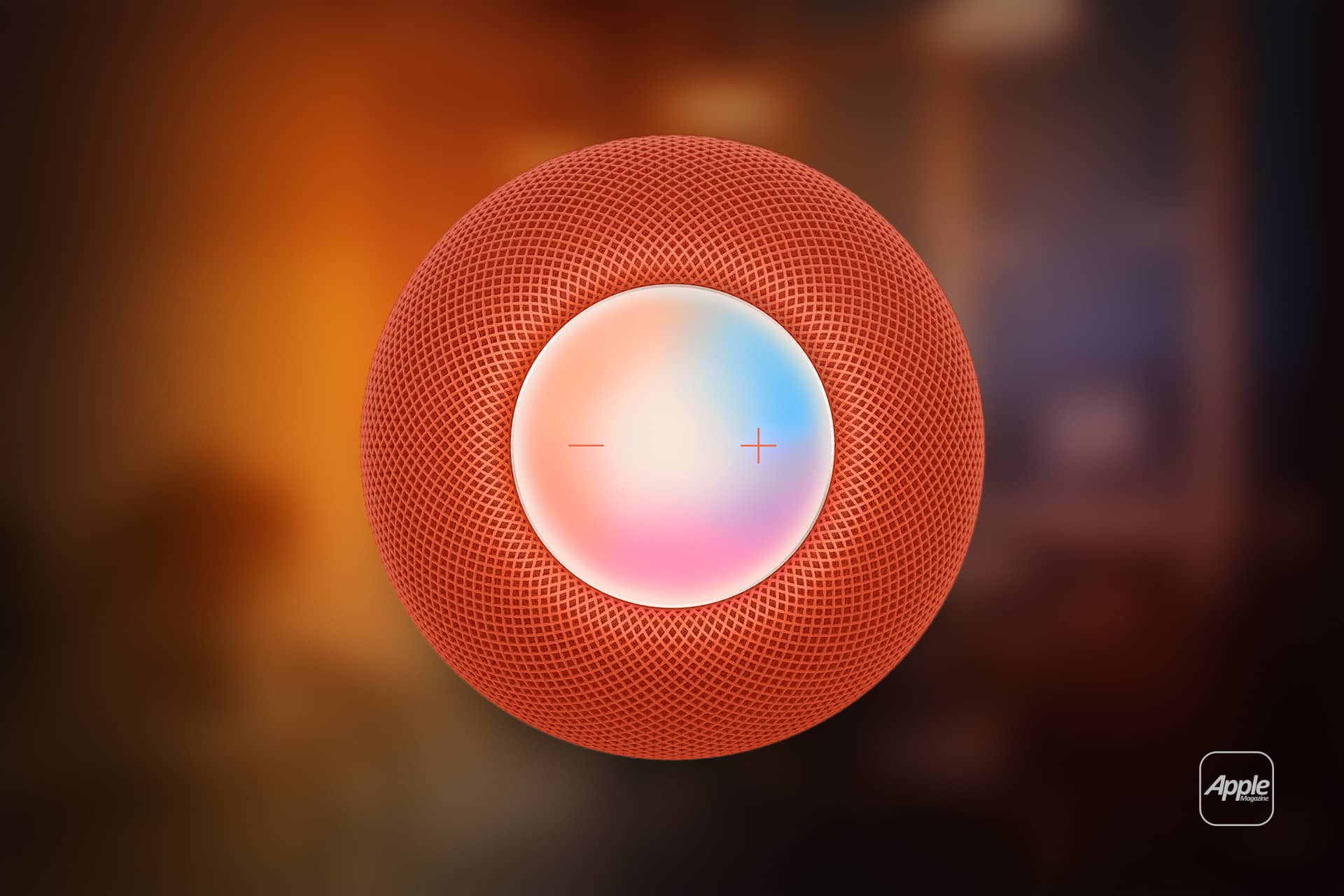
Image Credit: AppleMagazine
The First Wave Will Hit Utility Apps
Full-AI iOS will likely begin by absorbing the simplest app categories. Calculators, timers, note formatters, basic image tools, text rewriters, trip organizers, unit converters, simple habit trackers, reminder utilities, file renamers, basic budgeting helpers, translation tools, and small productivity apps are the most exposed. Many of these apps exist because the operating system did not understand intent well enough.
If Siri becomes a real agent, the user may not need to open a separate app to resize a photo, summarize a note, clean a PDF, plan a packing list, organize receipts, generate a caption, build a simple workout, compare grocery prices, or prepare a study schedule. The user may ask the operating system, and Apple Intelligence may complete the task through built-in tools, Foundation Models, App Intents, or a third-party model selected by the user.
That is the first major timeline. Within two to three years, many simple app ideas may become features rather than businesses. Developers can still build them, but the market will be harder. If the iPhone does the job natively, users will not pay for another icon.
This has happened before. Flashlights, QR scanners, document scanners, password managers, sleep tracking, translation, photo edits, voice memos, white noise, and many camera tools were once separate app opportunities. Apple gradually absorbed many of them. AI accelerates that pattern because absorption no longer requires Apple to manually build every feature. A capable assistant can generate small workflows on demand.
The next stage is more disruptive. Instead of Apple adding a feature once a year, an AI agent can create a temporary feature when the user asks. That means the app economy begins competing not only with Apple’s built-in apps, but with the operating system’s ability to improvise.
The App Icon May Become Less Important
Full-AI iOS threatens the app icon because agentic interfaces move attention away from opening apps and toward asking for outcomes. The user does not want “a travel app.” The user wants the weekend plan changed. The user does not want “a finance app.” The user wants to know why spending rose this month. The user does not want “a photo editor.” The user wants the background cleaned and the image made ready for a listing.
This is where Siri, App Intents, and Apple Intelligence become powerful. App Intents lets developers expose app actions to system experiences. That means apps can still matter, but they may operate behind the assistant rather than in front of the user. A restaurant app may provide booking actions. A bank app may provide transaction categories. A fitness app may provide workout history. A travel app may provide itinerary updates.
The developer does not disappear in that model. The interface changes. Apps become service layers, data layers, trust layers, and action providers. The business fight shifts from “download my app” to “let my app be the best action Siri can call.”
That is a major change for business developers. App design has long centered on screens, onboarding, retention, notifications, subscriptions, and engagement. In an AI-first iOS, developers may need to design clear actions, permissions, data models, confirmations, and agent-safe workflows. The app becomes less of a destination and more of a capability.
This could be painful for apps that depend on attention. Social media, games, shopping, and media platforms still want users inside their own experiences. But many utility and service apps may become partially invisible, used through the system layer rather than opened directly.
Games Show the Most Radical Future
Full-AI iOS becomes more frightening when games enter the discussion. Games are one of the largest and most creative parts of the app economy, but they are also deeply exposed to generative AI. The current game industry already uses AI-assisted tools for coding, testing, animation, asset creation, voice pipelines, localization, level design, and production workflows. Sony has described AI as a powerful tool for speeding game development, while still emphasizing that human creativity remains central.
The next wave is more extreme: real-time generative games. Research systems such as Decart and Etched’s Oasis have shown interactive, real-time, open-world experiences generated by AI. Google DeepMind’s Genie work points toward general-purpose world models that can generate explorable environments from simple prompts. These systems are still early, inconsistent, and far from replacing polished commercial games, but the direction is obvious.
Today’s games are built, rendered, tested, shipped, patched, and monetized. A future AI-native game could be generated as the player moves. The world, characters, quests, dialogue, physics-like behavior, and visual style could be created dynamically from user input and model prediction. Instead of downloading a fixed game, a player might ask for a world: a detective story in a rainy city, a cozy farming game on Mars, a racing game through a futuristic São Paulo, a puzzle dungeon that adapts to the player’s skill.
That would disrupt development, but it would not automatically eliminate developers. The hardest part of games is not only rendering images. It is rules, balance, progression, emotion, pacing, controls, fairness, narrative design, multiplayer stability, community, moderation, monetization, identity, and trust. AI can generate a world, but a great game still needs direction.
The likely 10-year outcome is not that every game becomes fully generated. It is that game development splits. Casual and experimental games become easier to generate. Personalized game moments become common. Small teams become more powerful. Large studios use AI to cut production time. Human designers move toward creative direction, systems design, brand building, and quality control. The number of people needed for some tasks may shrink, but the value of strong creative judgment may rise.
A 10-Year Projection for Developers
Full-AI iOS will likely unfold in phases rather than arrive all at once.
From 2026 to 2028
AI will mostly compress production. Developers will use AI agents inside Xcode and other tools to write code faster, generate tests, build prototypes, fix bugs, create assets, and automate repetitive work. Many simple apps will become cheaper to build, which means more competition and lower prices. The danger will be commoditization. If anyone can build a simple app, a simple app becomes less valuable.
From 2028 to 2031
The assistant layer becomes more important. Siri or another system-level AI will handle more tasks directly. App Intents-style frameworks will decide which apps remain visible to the system. Many app businesses will need to become agent-ready. The winners will be apps with trusted data, strong brands, useful APIs, loyal communities, regulated access, or specialized workflows. The losers will be apps that only wrap a simple action the operating system can now perform.
From 2031 to 2036
AI-native software becomes more common. Users may generate temporary tools, workflows, games, lessons, dashboards, and media experiences on demand. Some apps may be replaced by personalized agents. Some games may be partially or mostly generated in real time. Some software teams may become much smaller. A founder, designer, domain expert, and AI engineering stack may do what once required a larger team.
That does not mean human developers have only 10 years before extinction. It means developers have about three to five years to adapt before the pressure becomes much sharper, and about 10 years before the app economy may look structurally different.
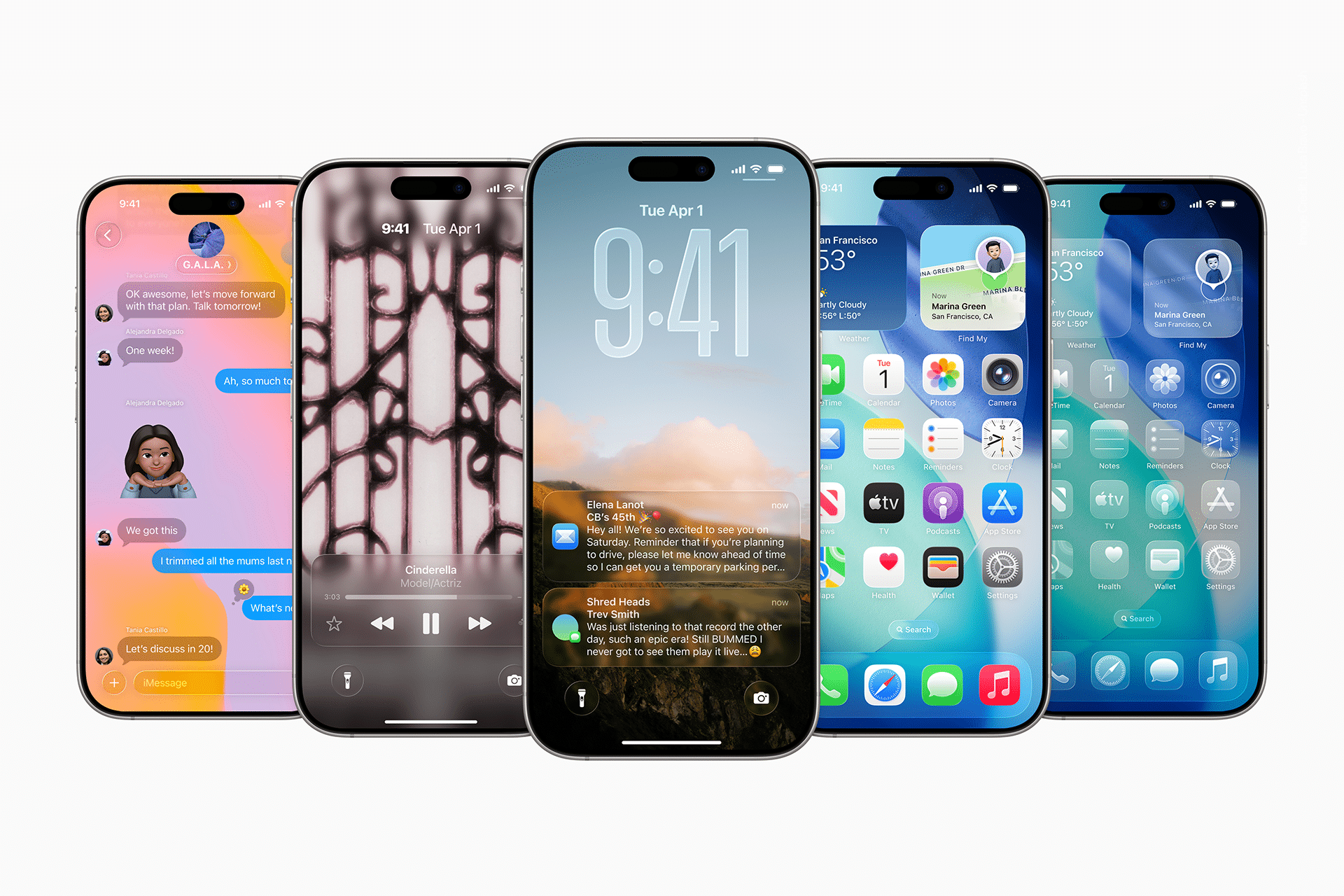
Image Credit: Apple Inc.
The Human Developer Still Has a Place
Full-AI iOS is not guaranteed to become a single AI provider for everything because users and businesses still need trust. A medical appointment app, banking app, school platform, legal workflow, airline system, enterprise tool, payroll product, or health-adjacent service cannot be replaced by a hallucinating assistant with no accountability. Even a game needs consistency if people pay for it, compete in it, or build a community around it.
Human business developers will still matter where the product is tied to real-world responsibility. Payments, identity, compliance, customer support, security, design taste, brand voice, licensing, creator relationships, community management, safety, accessibility, and local market knowledge are not solved by model output alone.
The developer role will change. More people will become product orchestrators. They will define the goal, data boundaries, user experience, business model, safety rules, and agent behavior. Coding will remain, but less of the value will come from typing every line manually. More value will come from knowing what should be built, why it matters, who it serves, and how it behaves when the AI is wrong.
That may be frightening for the current digital economy because many companies are built around tasks that AI can compress. Goldman Sachs Research has estimated that hundreds of millions of jobs globally are exposed to automation by AI, and its 2026 outlook describes a shift toward human-orchestrated teams of specialized AI agents. The same logic applies to app development. Fewer people may produce more software. The market may reward smaller, faster teams. Entry-level coding work may become harder to protect.
But exposure is not the same as disappearance. AI changes work before it eliminates it. Developers who learn to build with agents, design for Siri-like interfaces, expose App Intents, manage AI reliability, and understand real business domains will be more valuable than developers who only build isolated app screens.
The Digital Economy Will Not Stay Safe
Full-AI iOS is not a certainty in the most extreme form, but the disruption is real. The app economy was built around one assumption: users open apps to get things done. AI challenges that assumption. If users ask the operating system instead, the app economy moves behind the assistant. That changes discovery, advertising, subscriptions, retention, developer strategy, and even what an app is.
Apple has a complicated role in this future. It can protect developers by making App Intents and Siri Extensions a fair way for apps to participate in AI workflows. It can also threaten developers by absorbing more functions into Apple Intelligence. Regulators may eventually ask whether Siri has become a new gatekeeper above the App Store.
The safest developer strategy is to stop thinking of apps as static icons and start thinking of them as trusted capabilities. A good app in 2030 may be one that Siri can call, users can trust, AI can operate safely, and a business can stand behind. The interface may be smaller. The responsibility may be larger.
The next 10 years will not erase all app developers. It will erase the old comfort of assuming every digital need deserves a separate app. Human developers will survive where they bring judgment, accountability, taste, domain expertise, and business trust. The rest of the app economy will face the same question the iPhone once asked old desktop tools: if the device can do this by itself, why should the user open something else?