


Game Porting Toolkit has become one of Apple’s most direct attempts to court PC game developers. With Game Porting Toolkit 4, Apple is trying to reduce the friction that has kept many Windows-first studios from treating Mac, iPad, and iPhone as serious destinations for advanced games.
The message is simple: developers should not need to guess how hard a port will be before investing engineering time. Apple’s toolkit lets studios evaluate Windows game builds on Apple silicon, identify compatibility issues, convert shader work toward Metal, and understand what performance work is needed before committing to a full native release.
That approach matters because Apple’s gaming problem has rarely been hardware alone. Modern Macs have fast chips, strong media engines, unified memory, efficient GPUs, and growing support for console-level games across iPhone and iPad. The harder problem is developer economics. Most major PC games are built around Windows, DirectX, Nvidia and AMD graphics pipelines, existing anti-cheat systems, launcher infrastructure, and storefront habits that do not naturally point toward macOS.
Game Porting Toolkit is Apple’s answer to that gap. It does not instantly turn Mac into a PC gaming platform, but it gives developers a faster way to measure the work, test the business case, and see whether Apple platforms deserve a serious port.
Game Porting Toolkit 4 Sharpens Apple’s Developer Pitch
Game Porting Toolkit 4 is presented by Apple as a way to bring advanced games to a unified gaming platform across Mac, iPad, and iPhone. That wording is not accidental. Apple is no longer only asking studios to support Mac. It is asking them to see Apple devices as a connected gaming market.
That changes the pitch. A PC developer may not prioritize Mac alone, especially if expected sales are small compared with Windows and consoles. But if the same porting effort can support Mac, high-end iPad models, and recent iPhone Pro hardware, the potential audience becomes more attractive.
Apple has also expanded the toolkit around practical developer needs. Its current Game Porting Toolkit page highlights improved compatibility, expanded guidance, and updated tools. Apple also offers Metal Developer Tools for Windows, which helps studios start work from the environment where many PC games already live.
That is important because developers do not want a marketing slogan. They want a workflow. They need to know whether the game runs, which graphics calls fail, which shaders need work, where performance drops, and whether the port can be finished without rewriting too much of the engine.
Apple’s WWDC26 games guide also frames the new toolkit around speed. One developer session, “Speedrun your game port with agentic coding,” shows how Apple expects AI coding assistants to help developers adopt Metal 4, integrate MetalFX, and tune games for Apple hardware. That is a more aggressive pitch than simply offering documentation.
Apple is trying to make porting feel less like a custom engineering gamble and more like a guided process.

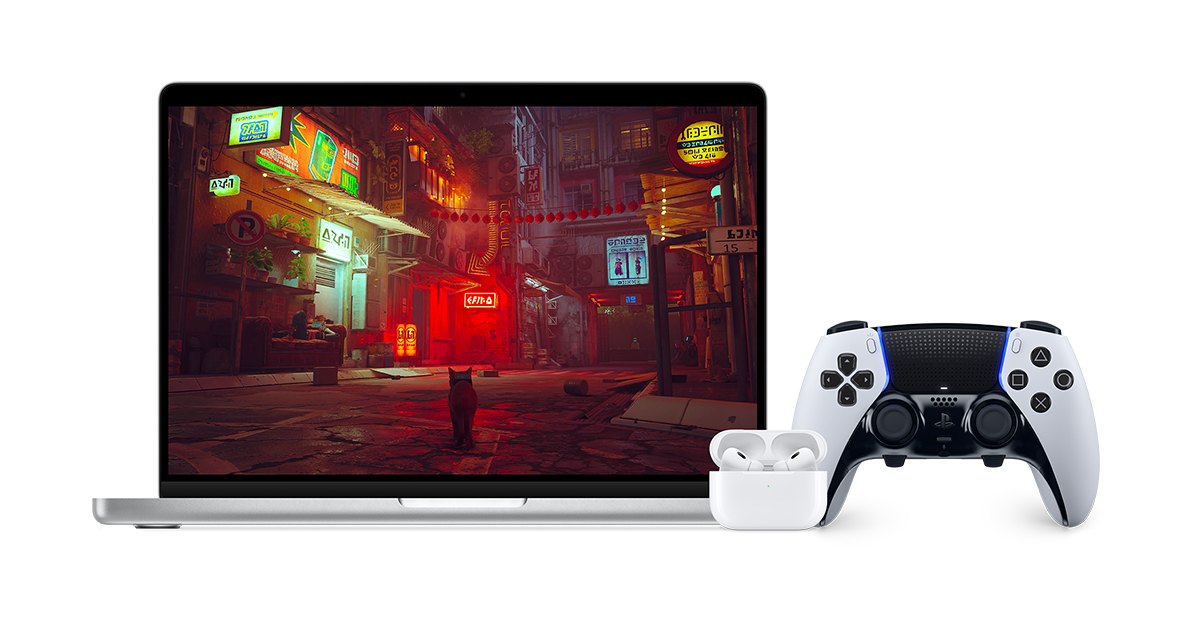
Why PC Developers Have Been Hard to Win
Apple has wanted more games on Mac for decades, but PC developers have had reasonable reasons to stay focused elsewhere. Windows dominates PC gaming. Steam, Epic Games Store, Xbox, Nvidia, AMD, DirectX 12, Vulkan, and established anti-cheat systems define much of the market. Mac users also have a reputation for buying fewer high-end games, partly because fewer games arrive there in the first place.
That cycle is hard to break. Developers do not port because the audience looks small. The audience stays small because the games do not arrive. Apple silicon improved the hardware side, but hardware alone does not fix years of platform habits.
There are also technical barriers. Many PC games depend on DirectX 12, HLSL shaders, Windows middleware, launcher systems, online services, input assumptions, and anti-cheat technology. Translating or replacing those pieces takes money and time. A studio preparing a major PC and console launch may not want another platform unless the path is predictable.
Game Porting Toolkit helps because it gives teams a practical first step. A studio can run an existing Windows build on Apple silicon to evaluate performance and compatibility before deciding how much native Metal work is worth doing. The toolkit becomes a business filter as much as a technical tool.
If the early test is promising, the studio has a stronger case for a native version. If the early test exposes too much work, the studio learns that before committing a full team.
Metal Is the Real Destination
Game Porting Toolkit is useful for evaluation, but Apple’s real goal is not translation forever. Apple wants games to adopt Metal and feel native on its hardware.
Metal is Apple’s low-level graphics and compute API. It is central to performance on Mac, iPhone, iPad, Apple TV, and Vision Pro. For games, Metal is where studios can take better advantage of Apple GPUs, memory architecture, MetalFX, frame pacing, shader optimization, and platform-specific features.
That is why Apple’s porting pitch includes shader conversion and Metal debugging. A game may begin by testing a Windows build, but a polished release needs deeper work. Developers still have to tune graphics settings, input, controller support, display behavior, save systems, storefront integration, memory use, battery impact, and thermal performance.
MetalFX is part of the performance story. Apple has used MetalFX upscaling and related technologies to help demanding games run better across Apple hardware. With Metal 4 and newer tools, Apple is trying to make its graphics stack more appealing to studios used to PC features such as upscaling, frame generation, and advanced shader pipelines.
The challenge is trust. Developers need confidence that Apple will keep investing in these tools, not only introduce them during WWDC and move on. Game studios plan projects over years. Apple’s pitch needs consistency across multiple hardware generations.
AI Coding Becomes Part of the Porting Workflow
One of the most interesting parts of Apple’s 2026 gaming push is the use of agentic coding in porting work. Apple’s WWDC26 session describes working with an AI coding assistant to adopt Metal 4, integrate MetalFX, and tune games for Apple hardware.
That fits the broader shift in software development. AI tools can help inspect code, suggest API changes, rewrite repetitive sections, summarize errors, and speed up migration tasks. Game porting often contains exactly that kind of work: many small compatibility changes, shader adjustments, build fixes, and platform-specific replacements.
AI will not port a large game by itself. A major title still needs graphics engineers, QA, performance tuning, platform testing, storefront work, and design decisions. But AI can reduce some of the tedious translation work that makes a smaller Mac port harder to justify.
This is where Apple may have a more modern argument than before. Instead of asking studios to assign a large team to Apple platforms early, it can offer tools that let a smaller team explore feasibility faster. If agentic coding shortens the first stage of a port, more developers may at least test the path.
Apple’s advantage is that it controls the hardware, operating systems, graphics framework, developer tools, and App Store distribution. If those pieces work together, porting can become less fragmented than supporting many PC configurations.

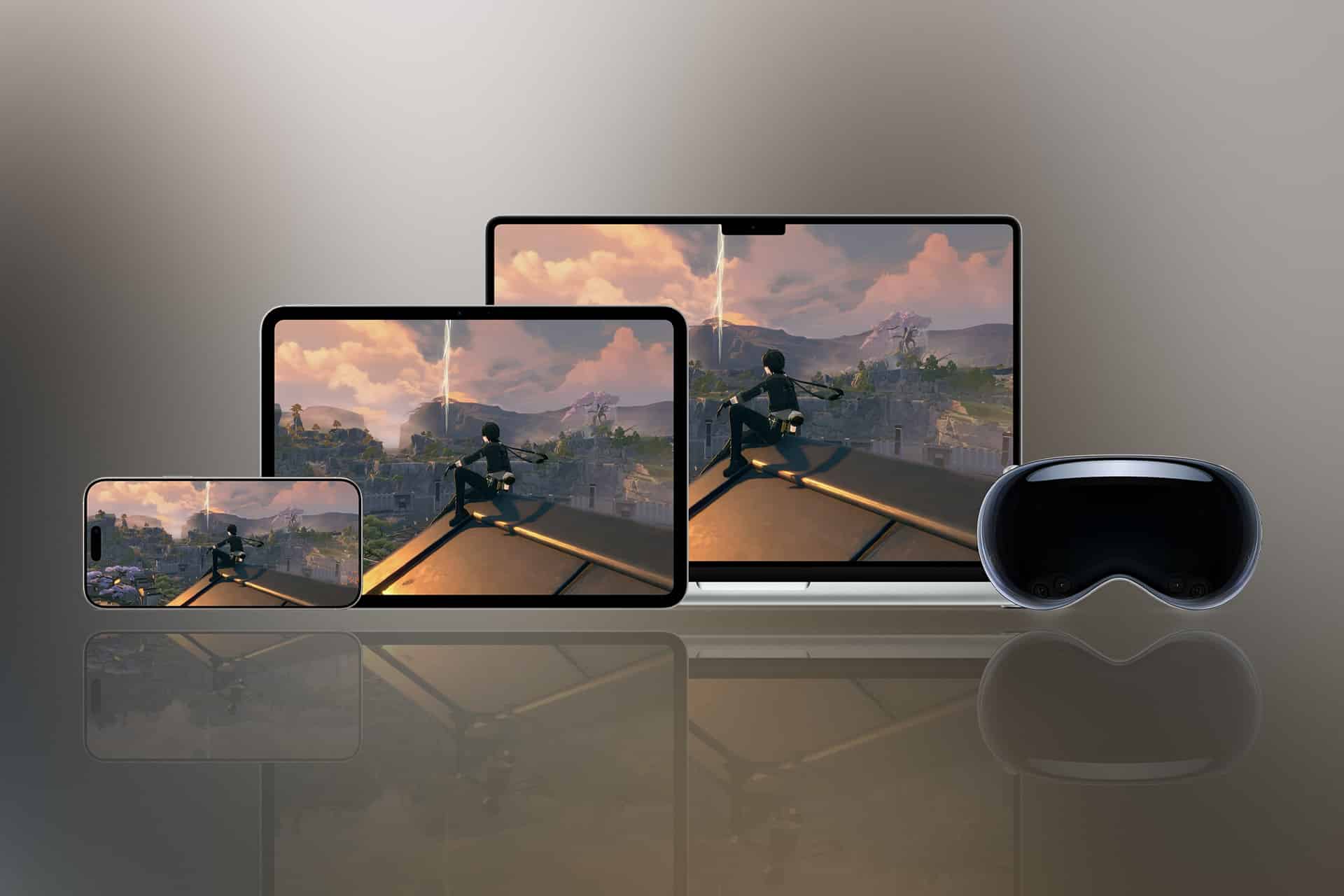
The iPhone and iPad Angle Changes the Math
Apple’s strongest gaming argument may not be Mac alone. It may be the combination of Mac, iPad, and iPhone.
Recent iPhone Pro and iPad Pro models can run console-scale games that would have seemed unrealistic on mobile hardware a few years ago. Apple has promoted titles such as Resident Evil, Death Stranding, Assassin’s Creed, and other high-end releases as examples of what its chips can handle. Those launches have not turned Apple devices into a console replacement overnight, but they show the direction.
For PC developers, the question becomes whether a port can reach multiple Apple devices with related work. A Mac release alone may be niche. A Mac, iPad, and iPhone release tied to Apple silicon and Metal may have a stronger business case.
The same game may not fit every screen or input style equally. A complex PC interface can feel awkward on iPhone. Touch controls may need careful work. Battery life matters on mobile. Storage sizes matter too, especially for large AAA games. Still, Apple’s unified architecture gives developers a clearer reason to think beyond one device category.
This is why Game Porting Toolkit is more than a Mac tool. Apple is trying to make its whole platform feel like a gaming target.
What Apple Still Needs to Prove
Game Porting Toolkit lowers barriers, but Apple still has to prove that developers can make money. Tools alone do not create a gaming market. Studios need players, storefront visibility, controller support, reliable performance, fair economics, and confidence that Apple users will buy premium games.
Apple also needs to improve discovery. The App Store is strong for mobile games, but premium console-style games can struggle if users are trained around free-to-play pricing. Mac game discovery is fragmented across the App Store, Steam, direct downloads, and publisher launchers. Developers need a clear route to reach customers.
Anti-cheat is another issue. Many competitive PC games rely on kernel-level or Windows-specific anti-cheat systems that do not easily transfer to macOS. That limits the types of games Apple can attract quickly. Single-player, co-op, strategy, simulation, indie, narrative, RPG, and controller-friendly games may remain easier targets than competitive shooters built around Windows infrastructure.
Apple also needs consistency in hardware expectations. Developers want to know which Macs, iPads, and iPhones can run their games well. If the supported-device list becomes too narrow, the audience shrinks. If it becomes too wide, performance tuning becomes harder.
Game Porting Toolkit can help answer those questions, but Apple needs real releases to prove the model.
A More Serious Gaming Strategy
Game Porting Toolkit shows that Apple is taking a more practical approach to gaming. Instead of only showing impressive demos or relying on hardware claims, it is addressing the developer pipeline. Evaluation, shader conversion, Metal tools, Windows-side support, AI-assisted porting, and platform guidance all speak to the actual work studios face.
That does not make Apple a direct rival to Windows gaming yet. Windows still has the library, the storefronts, the player culture, the GPU ecosystem, and the developer default. Apple is trying to move from afterthought to viable secondary platform.
The next phase will depend on whether developers use the toolkit for finished releases, not only experiments. If more major studios test their PC builds, measure the work, and ship polished Apple versions, Game Porting Toolkit will have done its job. If it remains mostly a curiosity for enthusiasts running Windows games unofficially, Apple’s gaming push will stay limited.
The tool is promising because it meets developers where they are. PC developers already have Windows builds. Apple is giving them a way to start there, evaluate quickly, and move toward Metal when the case makes sense.
For Apple, gaming has always needed more than fast chips. It needed a bridge from the PC world. Game Porting Toolkit is that bridge, and version 4 suggests Apple wants more developers to cross it.