

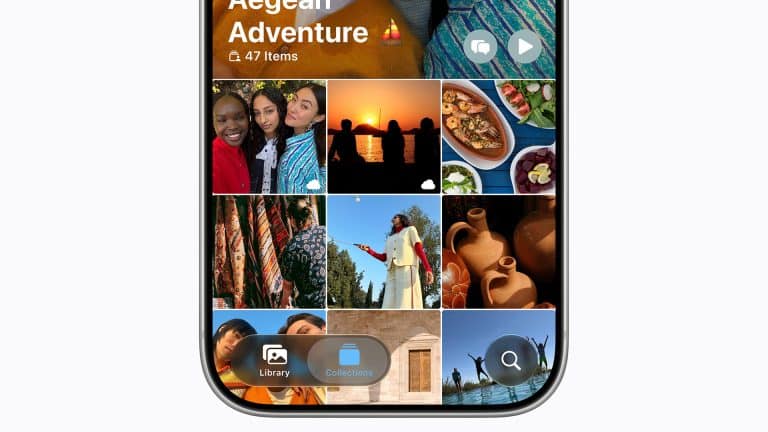
iCloud Shared Albums are getting one of their most practical upgrades in years, with Apple bringing full-resolution uploads and broader collaboration for Android and Windows users.
The change, announced during WWDC26, addresses two of the longest-running frustrations around Apple’s photo-sharing system. Shared Albums have been convenient for iPhone, iPad, and Mac users, but they have also carried quality limits and awkward participation rules for people outside Apple’s ecosystem. Android users often had a weaker experience, and Windows users depended on iCloud access that did not always feel equal to sharing inside Photos.
Apple is now making Shared Albums more useful as a real collaboration tool. Full-resolution uploads mean shared photos can preserve far more detail than before, while expanded support for Android and Windows participation makes the feature less dependent on every person using an Apple device.
iCloud Shared Albums Fix a Quality Problem
The full-resolution change is the biggest improvement because Shared Albums have historically reduced photo quality. Apple’s previous Shared Albums limits reduced photos to 2048 pixels on the long edge, with panoramic photos allowed up to 5400 pixels wide. Videos were also limited, with delivery at up to 720p resolution.
That made Shared Albums fine for casual viewing, but not ideal for people who wanted to keep originals, print images, edit photos later, or collect pictures from an event without losing detail. A shared vacation album, wedding album, school event, birthday, sports game, concert, or travel collection could look good on a phone screen while still falling short of the original image quality captured by newer iPhones.
Full-resolution uploads change that. iPhone cameras now capture more detailed images, and users increasingly expect shared photos to remain useful beyond social viewing. A shared album should not feel like a place where quality quietly disappears.
This upgrade makes iCloud Shared Albums more credible for serious personal photo sharing. Users can collect images from different people and still keep files that are closer to the originals, instead of treating Shared Albums as a convenience layer separate from the real photo library.


Android and Windows Users Get a Better Role
The cross-platform change may be just as important as the resolution upgrade. Apple’s photo ecosystem works best when everyone in a group uses iPhone, iPad, or Mac. Real life is not that clean. Families, schools, teams, workplaces, friend groups, travel groups, and events often include Android phones and Windows PCs.
Until now, that mixed-device reality could make iCloud Shared Albums feel limited. Non-Apple users might be able to view photos through a public web link, but true collaboration was not as smooth as it was for iCloud users inside Apple’s apps. Android users in particular were often left outside the full shared-album workflow.
Apple’s WWDC26 update gives Android and Windows users a stronger place in Shared Albums. The change makes it easier for people outside Apple’s ecosystem to contribute to shared photo collections, reducing the need to fall back on messaging threads, compressed attachments, social apps, cloud folders, or third-party photo services.
That matters because photo sharing is social by nature. A shared album loses value if only half the group can participate properly. Apple’s move makes iCloud Photos more useful in mixed-device groups without forcing everyone to switch phones.
A More Open Apple Photos Experience
Apple is often criticized for keeping its ecosystem tightly controlled, but this Shared Albums update moves in a more open direction. It does not make iCloud Photos fully platform-neutral, but it reduces one of the most obvious pain points for people sharing images across device lines.
For Apple, this is also a strategic improvement. If iCloud Shared Albums work better with Android and Windows users, iPhone owners have less reason to move event sharing into Google Photos, WhatsApp, Dropbox, OneDrive, or other third-party services. Apple can keep the iPhone user at the center of the album while making participation easier for everyone else.
That is the kind of interoperability Apple prefers: the experience remains anchored in Apple’s ecosystem, but the walls become lower where collaboration demands it.
The change also fits the broader WWDC26 theme. Apple focused heavily on ecosystem interoperability, privacy, family tools, AI features, and cross-device continuity. Shared Albums may not be as flashy as Siri AI or Liquid Glass, but it reflects the same direction: make Apple services work better in real-world groups, not only in all-Apple households.

Full-Resolution Sharing Helps Events and Groups
The most obvious use case is event sharing. A group of people can capture the same trip, wedding, party, school event, conference, sports match, or holiday gathering from different angles. With full-resolution uploads, those photos become more useful for albums, prints, editing, keepsakes, and long-term storage.
This also helps families and friend groups with mixed devices. One person may use iPhone 17 Pro, another may use a Samsung Galaxy device, another may edit on a Windows laptop, and someone else may manage the album from a Mac. Shared Albums becoming more flexible means the group can use one album without dividing photos by device brand.
The old system often encouraged workarounds. People would send compressed images through messaging apps, create separate Google Photos links, upload to cloud drives, or ask others to resend originals later. Those workflows created duplicates, missing images, and lower-quality files. A stronger iCloud Shared Albums experience can reduce that friction.
For Apple Photos users, the upgrade also makes Shared Albums feel more aligned with the quality of modern iPhone cameras. Apple sells iPhone photography as a premium experience. Its sharing tools now need to preserve that quality more consistently.
Privacy and Control Still Matter
Expanded sharing also raises privacy questions. Shared Albums are often personal, and broader Android and Windows collaboration means Apple needs to keep controls clear. Users need to know who can view, contribute, download, and invite others. Public links and private invitations should remain easy to distinguish.
Apple’s existing Shared Albums system already lets album owners manage participants and sharing options, but the cross-platform expansion makes those controls more important. A shared album for a school trip, private event, or family gathering is different from a public gallery. Apple will need to make sure broader access does not create confusion about who can see what.
The company’s broader privacy position gives it a reason to handle this carefully. Apple can make photo collaboration more open without making albums feel exposed. The best version of the feature gives non-Apple users better participation while keeping the album owner in control.
That balance will define whether users trust Shared Albums for more than casual collections.

A Stronger Rival to Google Photos
The update also makes iCloud Shared Albums a stronger rival to Google Photos, one of the most common choices for cross-platform photo sharing. Google Photos has long had an advantage in mixed-device groups because it works naturally across Android, iPhone, Windows, and the web.
Apple does not need to copy Google Photos completely. Its advantage is deep integration with the Photos app, iCloud, iPhone camera features, Memories, shared libraries, Apple TV viewing, Mac editing, and the wider Apple ecosystem. But cross-platform participation has been a gap.
Full-resolution Shared Albums and better Android and Windows collaboration narrow that gap. iPhone users can stay inside Apple Photos while still including people who do not use Apple devices. That makes iCloud more practical as a group-sharing service.
The move may also help Apple’s services business. A better Shared Albums experience gives users another reason to rely on iCloud storage, especially as photo libraries keep growing through high-resolution images, Live Photos, videos, and shared media.
A Quiet but Useful WWDC26 Upgrade
iCloud Shared Albums may not be the loudest WWDC26 announcement, but it is one of the more useful ones. Apple is fixing a real limitation that many users have complained about for years: shared photos should not lose meaningful quality, and non-Apple users should not be treated as afterthoughts in group albums.
The upgrade makes Apple Photos more practical for events, travel, families, classrooms, teams, and mixed-device groups. It also shows Apple taking a slightly more flexible approach to services that depend on collaboration. The iPhone can remain the center of the experience without requiring every participant to live inside Apple’s ecosystem.
Full-resolution uploads make Shared Albums better for quality. Android and Windows support makes them better for real life. Together, they turn iCloud Shared Albums from a convenient but limited feature into a more serious photo-sharing tool for the way people actually share pictures today.