


iPhone 17 demand has become a good problem with difficult consequences. Apple’s latest earnings showed customers still want the newest iPhone at enormous scale, but Tim Cook made clear that the company could have sold more if it had been able to secure additional advanced chips. That changes the reading of the quarter. Apple was not demand-constrained. It was supply-constrained.
Apple reported $111.2 billion in revenue for its fiscal second quarter, with iPhone revenue of roughly $57 billion and total sales ahead of Wall Street expectations. Reuters reported that iPhone sales were held back by supply constraints for the advanced processor chips used in the iPhone 17 family. Cook said demand was “off the charts” and that Apple had “a little less flexibility in the supply chain at the moment” when trying to get more parts.
That phrase matters because flexibility is one of Apple’s historic strengths. The company is known for using scale, supplier relationships, long-range planning, and operational discipline to shift production, secure components, and meet launch demand better than almost any consumer electronics company. When Apple says it has less flexibility than usual, the constraint is not ordinary launch friction. It points to a tighter advanced-chip environment shaped by iPhone demand, Mac demand, AI data-center competition, and the limits of leading-edge semiconductor capacity.
The iPhone 17 lineup is built on advanced processor technology tied to the same broad manufacturing ecosystem used by many high-performance AI chips. That puts Apple in a more crowded supply market than in earlier iPhone cycles. A strong iPhone year now competes indirectly with the AI infrastructure boom, where cloud companies and chipmakers are fighting for capacity, packaging, memory, and foundry priority.


Apple’s Supply Chain Has Less Room to Flex
iPhone 17 demand exposed a problem Apple usually tries to keep invisible. The company can forecast demand, secure capacity, and plan production far in advance, but it cannot instantly create more advanced chip output when the market is already tight. Semiconductor production at the leading edge requires long planning cycles, specialized equipment, high yields, and massive foundry coordination.
That is why Cook’s comment stands out. Apple did not say demand was soft. It did not blame price resistance or weak consumer interest. It said the parts were harder to get. Reuters reported that Apple executives described supply constraints around advanced processor chips, while The Verge noted that iPhone revenue still rose sharply despite the shortages.
The difference is important for investors. Weak demand would suggest an iPhone cycle problem. Limited supply suggests Apple left revenue on the table. That is frustrating, but it also means the product itself is performing well. The challenge is turning that demand into shipped units before buyers delay, downgrade, or wait for the next cycle.
The problem is also broader than iPhone. MacBook Neo demand has been strong, Mac mini and Mac Studio availability has tightened, and memory costs are rising. Apple is dealing with multiple pressure points at once: advanced processors, unified memory, storage configurations, and production capacity. Supply flexibility becomes harder when several categories are asking for more of the same constrained inputs.
TSMC Dependence Becomes More Visible
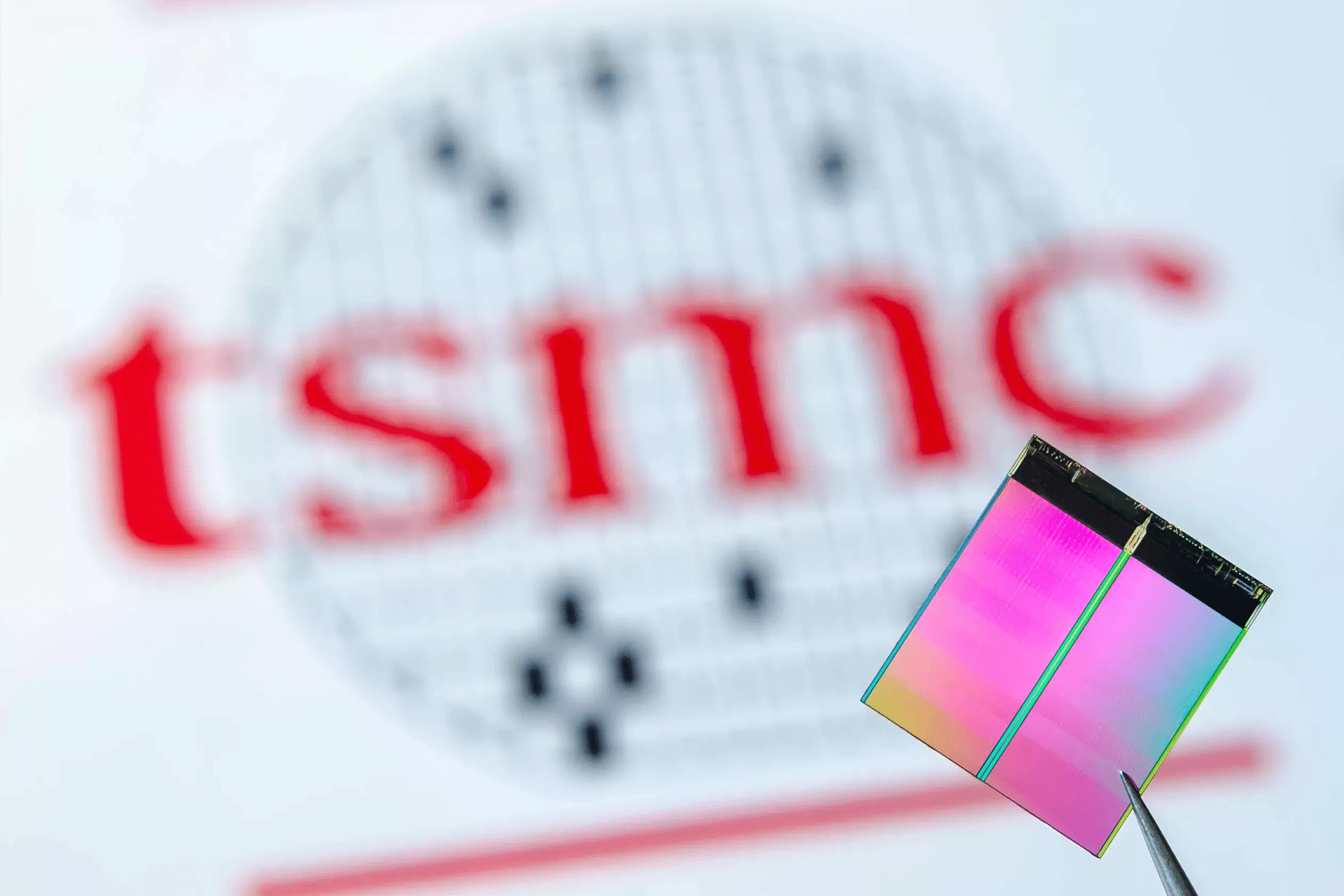
Apple’s reliance on TSMC remains one of its greatest strengths and one of its clearest concentration risks. TSMC has given Apple access to leading-edge manufacturing that made the A-series and M-series chip transitions possible. It is a key reason iPhone, iPad, Mac, and Apple Vision Pro can deliver high performance with strong power efficiency.
The issue is not that TSMC is failing Apple. The issue is that TSMC is in extraordinary demand. AI accelerators, server chips, high-performance computing, and Apple’s own processors all depend on advanced manufacturing capacity. When Apple needs more iPhone chips after demand runs hotter than expected, there may be less spare capacity available than in earlier cycles.
That is why reports that Apple has explored Intel and Samsung as possible future U.S. chipmaking options matter. Reuters reported that Apple held exploratory discussions with Intel and Samsung about producing main device chips in the United States, though no orders have been placed and Bloomberg reported that Apple remains concerned about whether non-TSMC technology can match TSMC’s scale and consistency.
Those talks should not be read as a breakup with TSMC. They are better understood as supply insurance. Apple wants options before a future constraint becomes more damaging. A second advanced-chip route would give Apple more leverage, more resilience, and a stronger U.S. manufacturing story, but only if the technology can meet Apple’s standards.
For now, TSMC remains the center of Apple silicon. The iPhone 17 constraint simply makes the dependence more visible.
Demand Strength Can Still Create Pricing Pressure
iPhone 17 demand gives Apple pricing power, but supply constraints complicate how that power can be used. If Apple cannot ship enough units, it has to decide where limited components go: which models, which storage tiers, which countries, which carrier channels, and which launch windows.
That can affect the iPhone 18 lineup. Apple may protect headline starting prices while recovering margin through storage tiers, Pro configurations, or regional adjustments. If memory and chip costs remain elevated, Apple may avoid a broad price increase and instead use configuration strategy to guide buyers toward models with better supply and profitability.
The company also has to be careful with customer behavior. Strong demand is valuable only if buyers can get the product in a reasonable time. Long delivery estimates can push some customers toward older models, different configurations, or delayed upgrades. Apple can manage that with carrier promotions, trade-ins, and channel allocation, but scarcity still carries risk.
The Mac side shows how visible those choices can become. Apple has already removed or narrowed some Mac mini and Mac Studio configurations as memory pressure worsens, while delivery estimates for certain desktop Macs have stretched. The same kind of supply discipline could appear in future iPhone storage tiers or regional availability if constraints persist.
Ternus Inherits an Operations Test
John Ternus will inherit more than a product roadmap. He will inherit a supply-chain environment where advanced chips, memory, AI infrastructure, and regional manufacturing politics are becoming harder to manage. Cook’s Apple became famous for operational execution. Ternus will be judged partly on whether Apple can preserve that execution while demand and component competition intensify.
That is a difficult handoff. Ternus comes from hardware engineering, which may help him understand the product and silicon tradeoffs deeply. But Apple’s next era will require tight coordination between design, chip planning, suppliers, AI infrastructure, pricing, and manufacturing flexibility. The iPhone 17 cycle shows how quickly a successful product can become a supply problem.
The good news for Apple is that demand remains strong. The company’s June-quarter forecast of 14 percent to 17 percent sales growth was well above analyst expectations cited by Reuters, suggesting management still sees momentum continuing despite supply constraints.
The harder question is whether Apple can add enough flexibility before the next wave of products. iPhone 18, new Apple Intelligence features, future Macs, and possible U.S. chipmaking moves all depend on a supply chain that can respond faster when demand surprises on the upside.
Apple’s supply-chain problem after iPhone 17 is not weakness in the usual sense. It is the pressure that comes when demand, AI-era component competition, and leading-edge manufacturing limits collide. Apple still has one of the strongest operations machines in technology, but Cook’s warning shows that even Cupertino has less room to maneuver when every major player wants the same advanced parts at the same time.