iPhone AI processing is becoming the latest chapter in a familiar technology story: machinery that once required an entire room gradually compresses into something small enough to carry in a pocket.
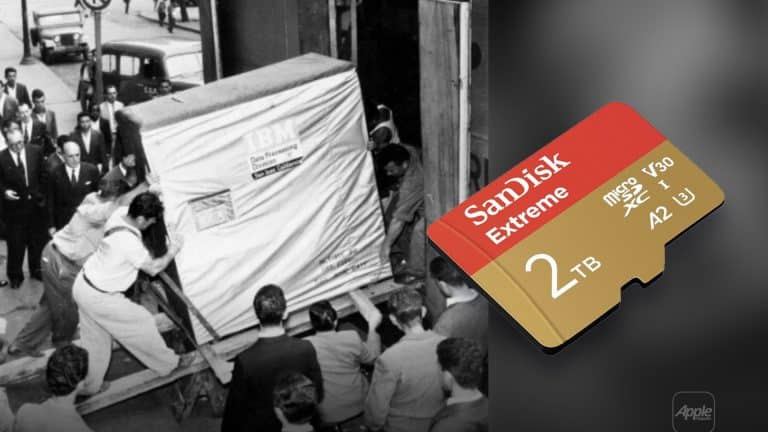
The first commercial random-access disk system provides an instructive comparison. Introduced by IBM in 1956, the IBM 350 stored about 5MB of data while occupying the space of two refrigerators. Modern compact solid-state drives can place several terabytes inside a component measuring only a few millimeters. A current 4TB M.2 2230 drive is small enough for an ultrathin computer or handheld device.
Storage did not advance only because engineers built larger warehouses filled with more disk drives. The decisive progress came from density, materials, manufacturing precision, lower power consumption and radically smaller components.
AI is approaching a comparable transition. The industry is currently dominated by enormous terrestrial data centers that require power plants, substations, transmission lines, cooling equipment, water systems, fiber routes, roads and acres of land. That architecture has produced extraordinary models, but it also reflects a legacy assumption: “greater intelligence must be created by constructing ever-larger installations on the ground.”
The next phase may develop in two opposite directions at once. More processing will move into compact devices such as iPhone, while the most demanding models may eventually run in orbital infrastructure connected directly to those devices.
iPhone AI Processing Becomes the New Density Contest
The competition around mobile AI is no longer limited to producing a faster smartphone processor. Chipmakers must compress more computational capacity into a constrained thermal and energy envelope.
An iPhone cannot rely on industrial cooling, dedicated electrical infrastructure or a rack filled with accelerators. It must run from a small battery, remain comfortable to hold and divide its resources among cameras, displays, radios, apps and background services.
This forces a different type of innovation. A mobile processor must complete useful work with fewer watts, shorter memory paths and less heat. The winning architecture will not necessarily be the one that produces the largest benchmark number. It may be the one that completes a sophisticated task while consuming the least energy and transferring the least data.
Apple Intelligence already uses a divided model. Supported tasks can run directly on iPhone, iPad or Mac, while more demanding operations can move to Private Cloud Compute. Apple expanded that architecture in 2026 to include models running across its own systems and protected third-party cloud infrastructure.
That arrangement is an early form of distributed intelligence. The device handles private context, immediate interaction and tasks within its available capacity. Remote infrastructure supplies additional computation when the request exceeds local limits.
Continued chip miniaturization can move the dividing line. More capable Neural Engines, denser transistors, faster unified memory and specialized accelerators can keep an increasing share of processing on the device.
This does not mean a future iPhone will contain the equivalent of a giant AI training cluster. Training frontier models and serving complex reasoning at scale involve different demands from summarizing a message, identifying objects in a photograph or acting across personal apps.
The opportunity lies in specialization. An iPhone does not need to recreate every function of a general-purpose data center. It needs hardware optimized for models, data, and interactions that occur on the device.
A compact SSD did not become possible by shrinking a 1956 mechanical disk system in equal proportions. Engineers changed the medium, controller, interface and physical design. AI miniaturization will also require more than placing a smaller version of today’s server inside a phone.
The device may contain compact personal models, encrypted local context and processors dedicated to common operations. Large remote systems would handle tasks requiring extensive world knowledge, long reasoning chains or major computational bursts.


Ground Infrastructure Reveals a Legacy Mindset
Terrestrial AI facilities are expanding because they are the only proven method for operating current models at global scale. Calling them obsolete would ignore the infrastructure already supporting millions of users and critical business systems.
The limitation is the assumption that more ground construction is the only credible path forward.
The International Energy Agency projects that global data-center electricity consumption could reach about 945 terawatt-hours by 2030, more than twice the 2024 level. AI is identified as the leading source of that increase, with the United States accounting for a large part of the additional demand. (IEA)
Electricity is only one part of the footprint. New facilities can require long utility negotiations, transformers, backup generation, cooling systems, new transmission capacity and access to fiber networks. The physical server building is only the visible center of a much larger industrial envelope.
The industry has responded by announcing larger campuses, acquiring more land and negotiating access to power measured in gigawatts. This can resemble innovation because each generation contains faster chips, but the wider structure remains familiar: centralized machines connected to users through terrestrial networks.
A breakthrough architecture would question that entire arrangement.
Device miniaturization reduces the number of requests that must leave the user. Orbital compute could eventually relocate part of the remaining processing closer to continuous solar energy and a satellite network already positioned above large portions of Earth.
Both directions reduce dependence on the conventional chain between a person and a distant ground facility.
The Elon Musk Factor Moves AI Into Orbit
The Elon Musk factor is the willingness to treat a constraint as evidence that the architecture should change rather than merely grow.
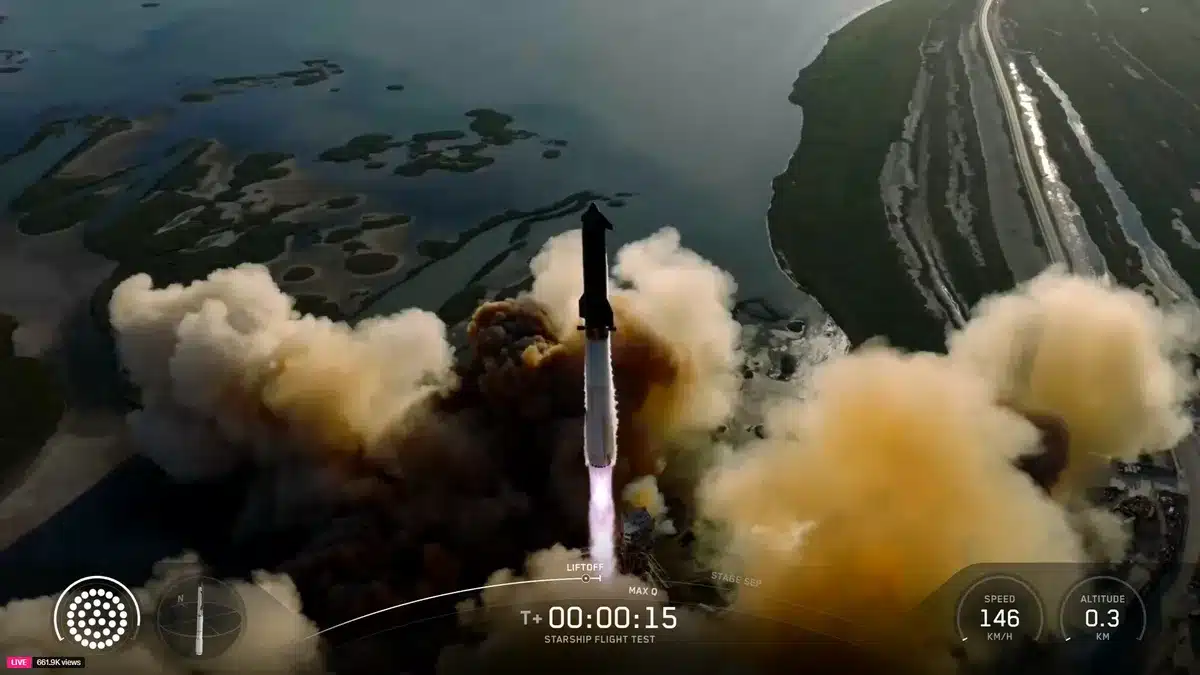
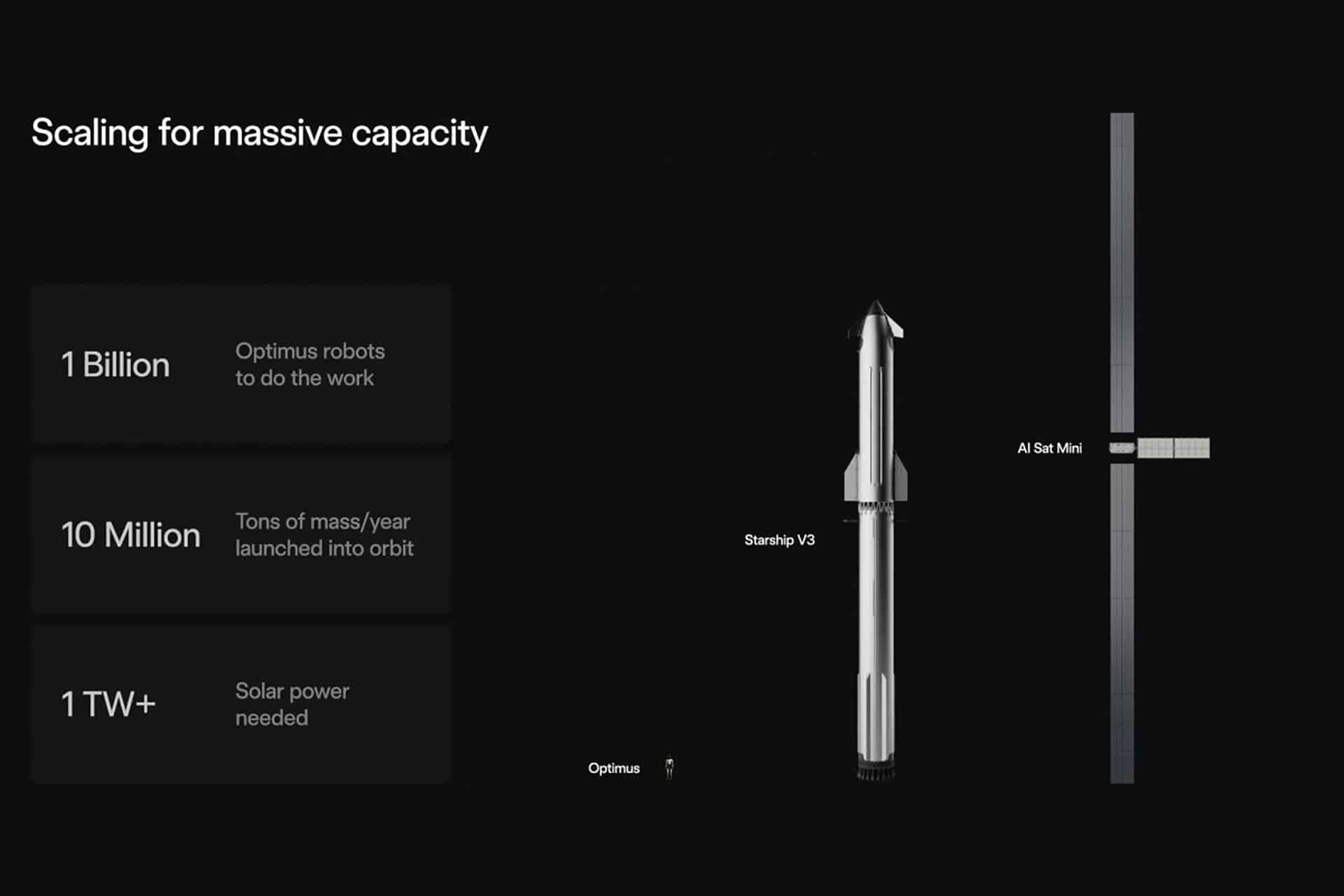
SpaceX now publicly describes plans for orbital AI compute satellites and identifies potential initial deployment as early as 2028. Its strategy combines reusable heavy launch, satellite manufacturing, solar energy, AI systems and a worldwide communications network. The company acknowledges that orbital compute remains technically complex, capital-intensive and dependent on regulatory approval.
SpaceX argues that orbital systems could draw solar energy without atmospheric or weather interruptions while avoiding some terrestrial limitations involving land, grids and cooling. Radiation, maintenance, heat rejection, launch economics and hardware replacement create a different set of problems, so space is not a cost-free alternative.
The strategic value comes from vertical integration. A company controlling rockets, satellites, communications, AI models and custom silicon can attempt something that would require several unrelated providers under a conventional structure.
Starlink also provides the communications layer. SpaceX has already deployed a large satellite-to-mobile constellation, and its next-generation network is intended to expand from messaging and limited data toward fuller cellular connectivity. Its satellites effectively place mobile coverage above areas where terrestrial towers are absent or uneconomical.
Connecting these programs represents a plausible future architecture, not an existing Apple or SpaceX product.
The combination is nevertheless technically provocative. A future device could complete private and routine work locally, then communicate through a direct-to-cell satellite link when larger computation is required. The request could reach orbital compute without first passing through a nearby cell tower, extensive terrestrial backhaul and a remote ground campus.
Such a system would not remove Earth from the network. Ground stations, control systems, manufacturing, software development and regional infrastructure would remain necessary. It could reduce the dependence on placing every major computational resource beside an electrical grid and conventional telecom network.
Apple represents the miniaturization side of this model. Its advantage comes from controlling processor design, operating systems, devices and privacy architecture. SpaceX represents the infrastructure inversion: instead of extending ground networks into every location, it places communications and computation above them.
The competitive pressure surrounding mobile AI processing may therefore extend beyond faster Neural Engines. The deeper contest concerns where intelligence should live, how little energy it can consume and how directly a device can reach the remaining capacity.
A future iPhone could hold models that would once have required a server, much as a tiny solid-state module now carries hundreds of thousands of times the storage capacity of the first commercial disk system. When the local processor reaches its limit, the next machine in the chain may be passing overhead rather than sitting inside another enormous building in the desert.