

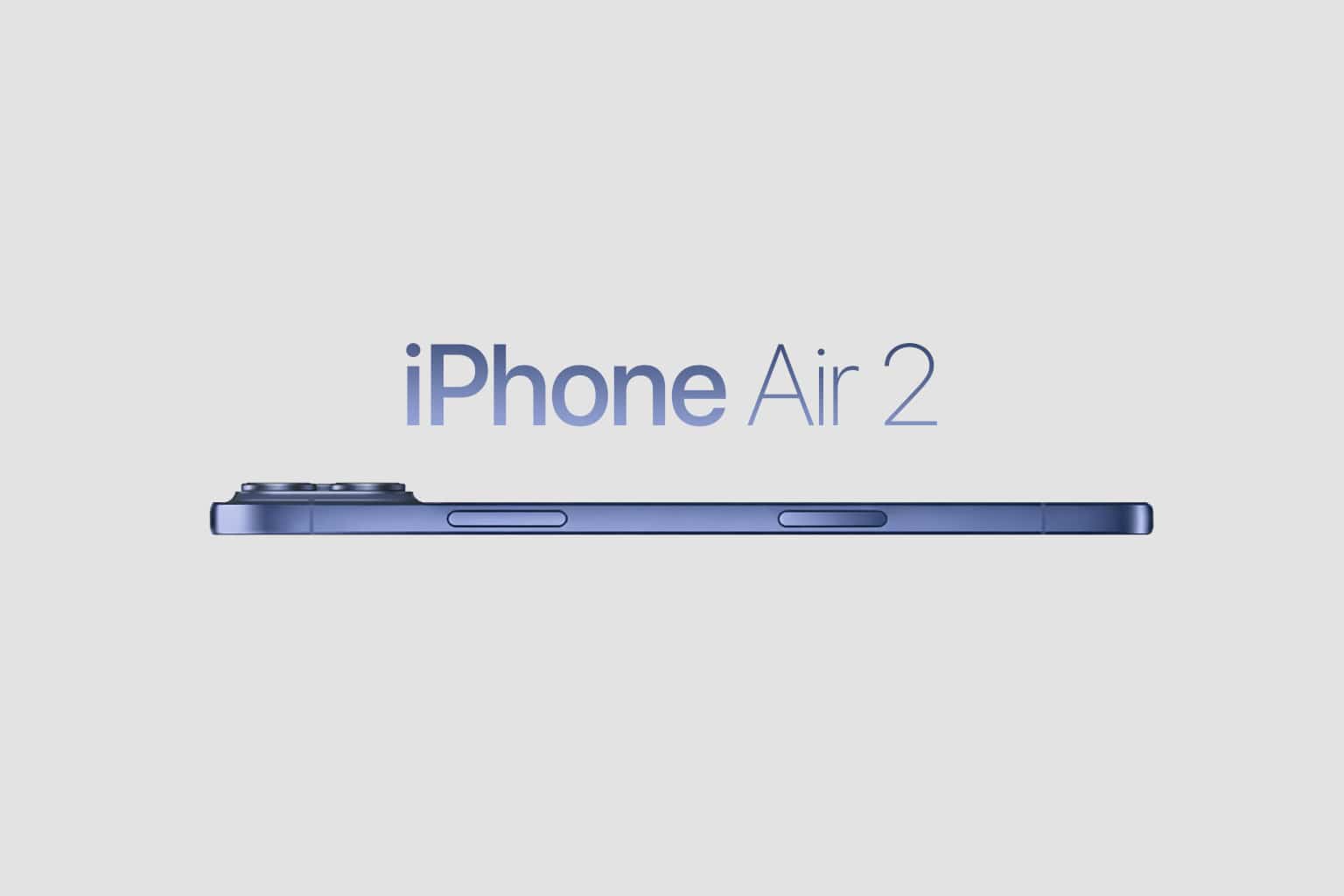
Apple is reportedly preparing a second-generation iPhone Air for spring 2027, giving the ultra-thin model a chance to fix the two complaints that followed the first version: a single rear camera and battery life that had to live within an unusually slim body.
According to Bloomberg’s Mark Gurman, the next iPhone Air is already in advanced testing inside Apple under the code name V62. The current prototypes keep the existing look but add a second rear camera for ultrawide photography. Apple is also working on longer battery life, though it is not yet clear whether that will come from a larger battery, a more efficient chip, software tuning, or a mix of all three.
The timing is just as interesting as the hardware. Apple is expected to split its iPhone cycle, launching the iPhone 18 Pro and iPhone 18 Pro Max in the fall, then bringing the standard iPhone 18 and iPhone Air 2 in spring 2027. That would move Apple away from the familiar one-wave September iPhone lineup and give the company another major phone moment months later.
For the iPhone Air, that staggered release could be a second chance. The original model gave Apple a new design story, but its compromises were easy to see. The sequel appears designed to keep the thin shape while making the phone feel less limited.
A Thin iPhone With a Real Camera Upgrade
The first iPhone Air stood out because of its design. It was slimmer, lighter, and visually different from the rest of the lineup. But Apple made a visible tradeoff by giving it only one rear camera.
That decision created a strange gap. Buyers paying for a premium iPhone design still missed a camera feature available on other models. Ultrawide photography is not a niche tool anymore. It is useful for travel, architecture, group shots, tight indoor spaces, landscapes, social content, and quick creative framing. It also supports the way people use the iPhone camera casually: point, capture, adjust later.
Adding an ultrawide lens would make iPhone Air 2 feel more complete. It would not turn the device into an iPhone Pro, and Apple will almost certainly keep telephoto, advanced video tools, and other premium camera features for Pro models. But a second camera would remove the most obvious weakness from the Air.
That matters because the Air is supposed to feel premium. Thinness is not enough if buyers feel they are giving up too much.


Battery Life Is the Harder Fix
The camera complaint is straightforward. Add another lens. Battery life is more complicated.
An ultra-thin phone has less internal room for battery cells. Apple can improve battery life with a larger battery, but the Air’s design leaves less space to work with. Gurman’s report says it is not clear whether Apple will use a bigger battery or rely on efficiency gains.
Efficiency may be the more realistic path. The iPhone Air 2 is expected to use a version of Apple’s A20 Pro processor. If that chip is more power-efficient, it could help extend battery life without forcing Apple to thicken the design. Software tuning, display efficiency, modem improvements, and thermal management could also help.
The challenge is user perception. Thin phones invite battery anxiety. Even if the iPhone Air 2 lasts longer, Apple will need the improvement to be noticeable in daily use. A small technical gain may not be enough to change the reputation of the product.
Battery life is one of the few iPhone specs people feel every day. The Air can look beautiful in a store, but the device has to survive a full day away from a charger.
Apple Wants the Air to Stay Visually Familiar
The reported prototypes keep the current design language, which suggests Apple is not treating iPhone Air 2 as a full redesign. The goal appears to be refinement.
That can be smart. The Air’s identity depends on its thin body. Changing the design too much would weaken the reason the product exists. Apple seems more likely to polish the formula: keep the silhouette, add the missing camera, improve battery life, and move to a newer chip.
This is similar to how Apple often handles second-generation products. The first version introduces the idea. The second version fixes the obvious complaints. iPhone Air 2 could become the model that makes the Air line easier to recommend.
The risk is that the design remains too compromised. If the Air still trails the standard iPhone in battery life or the Pro models in camera flexibility, buyers will have to decide whether thinness is worth the tradeoff. Apple needs the answer to feel less painful than it did on the first model.
A20 Pro Gives the Air More Credibility
The expected A20 Pro chip is another sign Apple wants iPhone Air 2 to sit closer to the premium side of the lineup.
A Pro-class chip would help performance, AI features, camera processing, battery efficiency, and long-term software support. It could also help Apple position the Air as more than a design experiment. A thin iPhone with a weaker chip would feel like a fashion model. A thin iPhone with a high-end chip feels more like a distinct flagship.
That matters as Apple Intelligence and Siri AI become more demanding. Newer iPhones are increasingly judged by how well they handle on-device AI, camera models, voice features, visual intelligence, and background processing. The Air cannot become a serious long-term category if it feels underpowered after one or two software cycles.
Apple may still reserve the most advanced thermal performance and camera system for Pro models, but giving the Air a strong chip keeps it credible.
Spring Launch Changes the iPhone Calendar
The reported spring 2027 launch may be as important as the phone itself. Apple has traditionally concentrated major iPhone launches in September, creating a huge fall upgrade wave. A staggered schedule would spread attention and revenue across the year.
Under the reported plan, Apple would launch iPhone 18 Pro and iPhone 18 Pro Max in the fall, then follow with iPhone 18 and iPhone Air 2 in spring 2027. That gives Apple two major iPhone windows instead of one.
The strategy could help in several ways. It gives the Pro models a cleaner spotlight in September. It gives the standard and Air models their own cycle rather than making them look secondary beside the Pro launch. It also helps Apple compete with Samsung, which refreshes major devices across different parts of the year.
For investors, a split schedule could smooth iPhone revenue across quarters. For buyers, it changes the upgrade decision. A user who does not want a Pro iPhone may have a reason to wait until spring instead of shopping in September.
Why the Air Matters to Apple’s iPhone Business
The iPhone business is enormous, but mature. Apple needs new shapes, tiers, and upgrade reasons to keep the lineup interesting. The Air gives Apple another path between the standard iPhone and the Pro models.
The original Air was a design statement. It proved Apple could make a thinner iPhone again and sell it as a premium object. The second version has to prove the category can last.
That is why the reported upgrades are so targeted. Apple is not adding random features. It is addressing the two weaknesses that made the first Air easier to admire than recommend. A second camera gives the phone more everyday flexibility. Better battery life makes the thin design less risky. A20 Pro keeps the performance story strong.
If those pieces come together, iPhone Air 2 could become a cleaner choice for users who want a stylish, light, premium iPhone without stepping into the Pro Max size or the Pro camera system.
The Samsung Pressure Is Real
A staggered iPhone schedule would also help Apple answer Samsung’s rhythm. Samsung launches major Galaxy products across the year, keeping attention on foldables, Ultra phones, midrange models, wearables, and ecosystem products at different moments. Apple’s one big iPhone season has been powerful, but it leaves long stretches where competitors can dominate the conversation.
A spring iPhone Air 2 gives Apple another flagship-adjacent launch outside the fall. It can refresh interest in the iPhone lineup, bring new retail traffic, and create another media cycle around design and AI features.
That does not mean Apple is copying Samsung directly. Apple’s product discipline is different. But the market has changed. Buyers no longer wait for one annual smartphone moment. AI features, camera improvements, foldables, thinner designs, and regional launches keep the market active year-round.
Apple may be adapting its calendar to match that reality.

The Air Still Needs a Clear Buyer
The biggest question is who the iPhone Air 2 is for.
The standard iPhone serves mainstream buyers. The Pro models serve camera, performance, and premium buyers. The Pro Max serves people who want the largest display and longest battery life. The Air has to serve people who care deeply about feel, weight, and design.
That can work, but only if the compromises are controlled. A thin phone can be desirable when it still has a strong camera, reliable battery life, and premium performance. It becomes harder to sell when it feels like a beautiful device with too many missing pieces.
The ultrawide camera and battery work are therefore not small upgrades. They define whether the Air line has a future.
A Second-Generation Test for Apple’s Thin iPhone
The iPhone Air 2 sounds like a classic second-generation Apple product: same idea, fewer rough edges.
The first model made the Air recognizable. The second needs to make it practical. Bloomberg’s report suggests Apple knows exactly where the repairs need to happen. Add the ultrawide camera. Stretch battery life. Keep the thin design. Use a serious chip. Launch it in a window where it can get attention.
That does not guarantee success. The Air still has to compete against the standard iPhone 18, the Pro models, older discounted iPhones, and Samsung’s yearly lineup. It also has to convince users that thinness is a feature worth paying for.
But the rumored direction is the right one. If the iPhone Air 2 keeps the look and removes the two loudest complaints, Apple may finally have a thin iPhone that feels less like a compromise and more like its own category.