

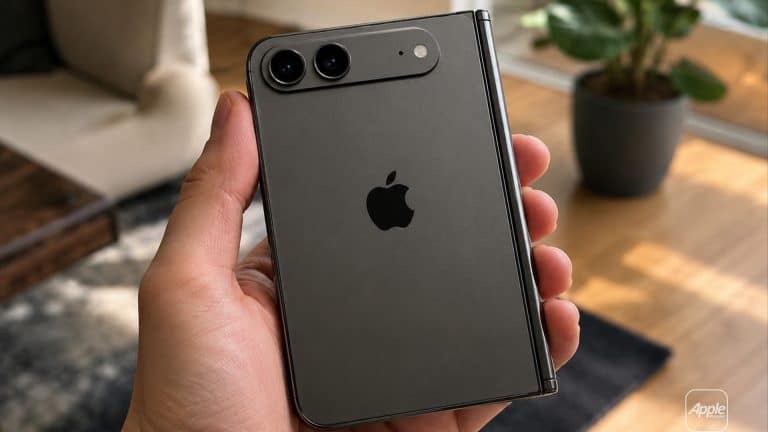
iPhone Fold production is already being treated like a major supply-chain event, not a small first-generation experiment. Apple has reportedly told suppliers to prepare for about 10 million foldable iPhones, up from earlier expectations of roughly 7 million to 8 million units, according to Nikkei Asia reporting cited by Investing.com and other outlets.
That shift changes the tone around Apple’s first foldable iPhone. A limited launch would have allowed Apple to test demand carefully, manage early manufacturing risk, and keep the device framed as an ultra-premium showcase. A 10 million-unit target suggests something more ambitious: Apple wants the foldable iPhone to be visible inside the main premium lineup from the start.
The reported ramp also comes as Apple secures parts for roughly 80 million smartphones for the second half of 2026, including iPhone 18 Pro, iPhone 18 Pro Max, and the first foldable iPhone. Some suppliers have reportedly been told to prepare capacity for as many as 85 million units, depending on final market conditions and component availability.
Apple has not announced the device, name, price, or configuration. But the supply-chain signal points to a premium iPhone strategy built around scale, allocation priority, and stronger control over scarce components.
A Larger Build Changes Supplier Behavior
The difference between 7 million units and 10 million units is not just a forecast adjustment. In a complex hardware category, that increase affects panel reservations, hinge suppliers, battery planning, memory purchases, assembly-line readiness, logistics, quality-control staffing, and launch-market allocation.
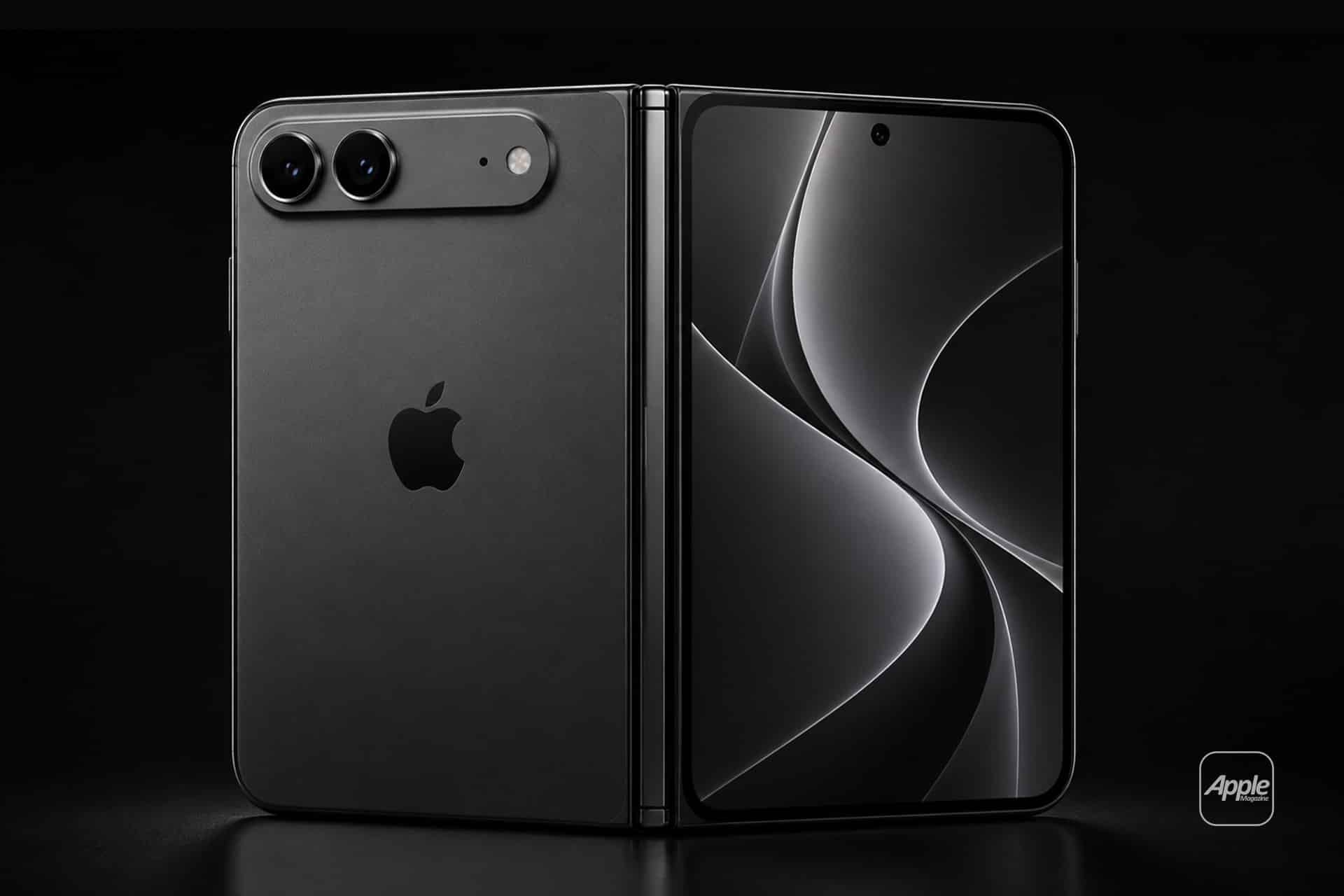
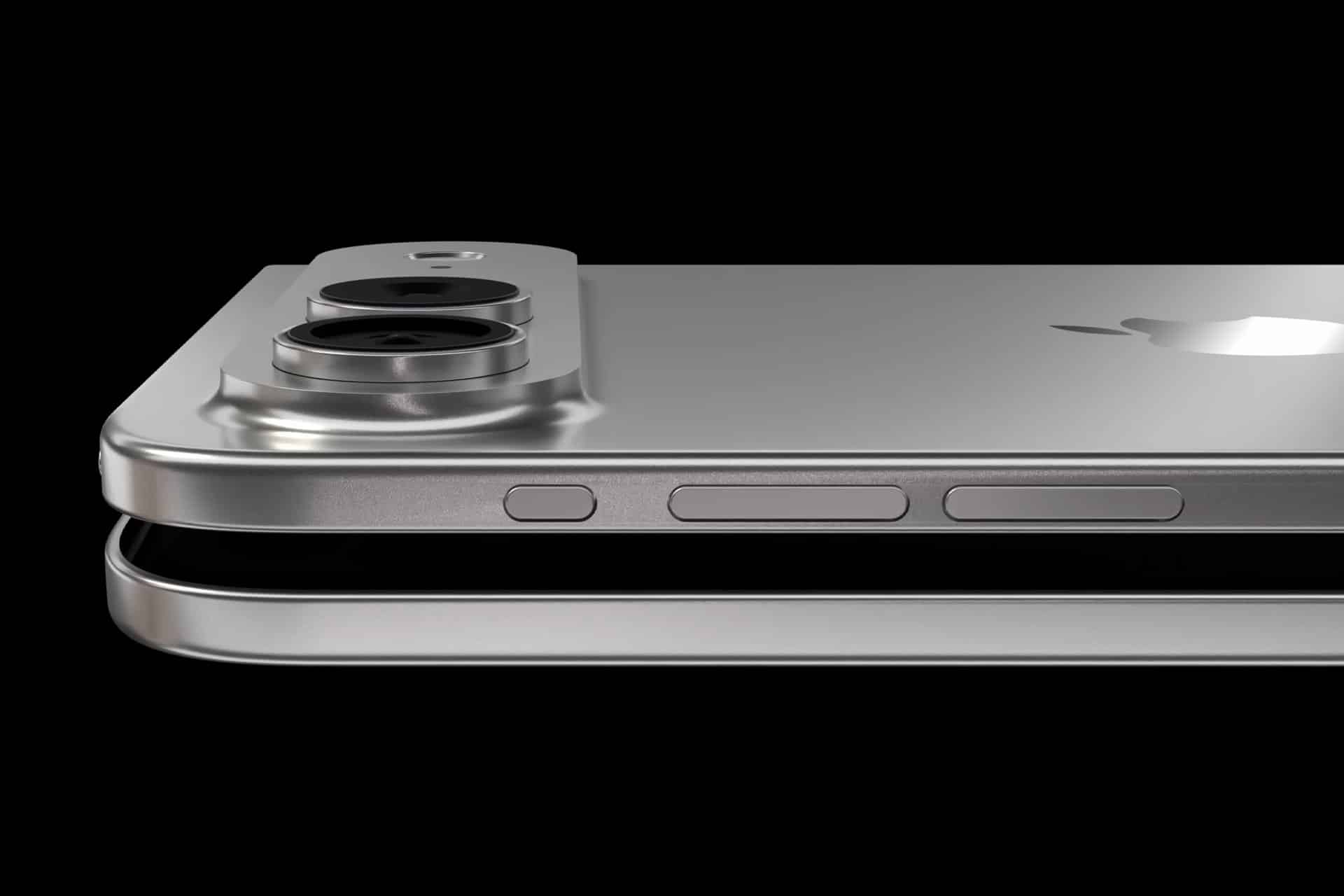
A foldable iPhone is harder to build than a conventional iPhone. The device needs a foldable OLED panel with tight crease control, a durable hinge, thin battery packaging across two halves, precise internal reinforcement, different durability testing, and a more demanding final assembly process. Any increase in forecast volume puts pressure on suppliers months before the product reaches customers.
That is why the new number matters. Apple appears to be asking its supply chain to prepare for the foldable as a serious production program, not an experimental side model. It also means suppliers need to reserve enough premium components before rivals, especially while memory and display supply remain under pressure from AI data centers and high-end electronics demand.
For suppliers, a larger Apple foldable order could reshape priorities. Display makers, hinge suppliers, and assembly partners tend to follow volume and margin. A 10 million-unit Apple target gives component partners stronger reason to dedicate capacity to the project, refine yields, and move more engineering support toward Apple’s requirements.
This is where Apple’s scale becomes a strategic advantage. Competitors may have years of foldable experience, but Apple can enter with a large order that immediately changes the economics of the category.

Why Apple Is Securing Parts Early
The timing reflects the broader component environment. Smartphone vendors are dealing with rising memory and storage costs, tighter supply in some advanced parts, and pressure from AI infrastructure spending. If Apple plans to ship a foldable iPhone at premium volume, it cannot wait until late in the cycle to secure displays, NAND flash, DRAM, hinges, and specialized mechanical parts.
Nikkei Asia’s report that Apple has booked parts for roughly 80 million smartphones suggests a more defensive supply-chain posture. The company is locking in key components for the highest-value models first. That would explain why the reported order focuses on iPhone 18 Pro, iPhone 18 Pro Max, and the iPhone Fold/Ultra, rather than a full traditional lineup.
This is a different kind of iPhone planning. Apple is not only deciding how many phones it expects to sell. It is deciding which products deserve priority access to constrained parts.
That matters because the first foldable iPhone will likely carry lower manufacturing tolerance for errors. Apple cannot afford wide launch shortages, high return rates, or visible quality issues on a device expected to sit above the Pro Max tier. Early component booking gives the company more room to test, reject, reorder, and rebalance before volume production reaches its most stressful stage.
It also gives Apple more leverage over suppliers. When the order size is meaningful, suppliers have stronger incentives to meet Apple’s specifications instead of treating the project as a niche run with limited upside.
The Foldable Category Gets an Apple-Sized Shock
The foldable market has been growing, but it remains small compared with traditional smartphones. Samsung, Google, OnePlus, Honor, Huawei, Motorola, and other brands have already built the category, refined hinges, experimented with aspect ratios, and educated early buyers. Apple entering with a larger-than-expected production plan could reset expectations immediately.
A 10 million-unit target would give the foldable category something it has lacked: a single launch with the cultural and carrier weight of the iPhone. Even if the device remains expensive, Apple’s presence can expand awareness, increase retail visibility, and push developers to treat foldable layouts as more than an Android-only concern.
That could affect the entire component chain. Foldable OLED suppliers may gain stronger growth visibility. Hinge and ultra-thin glass suppliers may receive more investment. Case makers, accessory brands, repair networks, insurance providers, and carrier sales teams may start building foldable-specific programs around iPhone demand.
The category may also become less defined by experimentation and more by premium positioning. Many current foldables compete on technology novelty, durability claims, or multitasking. Apple is likely to make the category about premium daily use: one device that can move between phone, reading device, editing surface, travel screen, and AI workspace.
The supply-chain ramp suggests Apple does not want to merely join the foldable market. It wants to make the first foldable iPhone large enough to influence what the category becomes next.
Production Risk Is Still High
A higher target does not remove risk. It increases it. The first foldable iPhone has to meet Apple’s normal quality expectations while using parts and manufacturing steps that are less mature than standard iPhone production.
Foldable panels can suffer from yield issues, crease inconsistency, coating durability problems, pressure sensitivity, lamination defects, and long-term wear concerns. Hinges can introduce alignment risk. Thin bodies reduce tolerance for battery, thermal, and camera compromises. Any issue becomes more costly when the target moves toward 10 million units.
That makes the supplier ramp a confidence signal, but not a guarantee. Apple may ask suppliers to prepare for a larger number while still adjusting final output based on yield, quality, and demand. The company often plans capacity with room to move because real production depends on late-stage validation.
There is also a channel risk. A premium foldable iPhone cannot arrive with confusing availability, uneven carrier support, or repair uncertainty. Buyers paying for the most expensive iPhone tier will expect Apple Stores, carriers, service providers, and AppleCare to be ready from day one.
The production plan therefore has to extend beyond factories. Apple needs retail training, accessory readiness, support documentation, trade-in handling, repair pricing, demo units, and marketing that explains why the device exists above the Pro Max.
The Supply Chain Is Preparing for a New iPhone Ladder
The reported 80 million-unit parts booking shows how Apple may be changing the iPhone ladder. Instead of giving every model equal strategic weight at the same time, Apple appears to be concentrating the early cycle around the most profitable devices.
That would make sense in a market where value is rising faster than volume. Premium devices can better absorb component inflation. They also attract customers more likely to buy storage upgrades, AppleCare, iCloud storage, accessories, and services.
The foldable iPhone fits this structure as the new top of the line. It does not need to replace the Pro Max or become the default iPhone. It needs to sit above the traditional lineup and give Apple a reason to raise the ceiling.
That role also explains why the reported production target matters more than the exact name. Whether Apple calls it iPhone Ultra, iPhone Fold, or another brand, the device is being prepared as a high-end product with enough unit planning to matter across suppliers.
A smaller forecast would have suggested caution. The new figure suggests Apple is preparing the market, the factories, and the channel for a premium tier that can ship at visible scale.
Carrier Financing Will Shape the Launch
A foldable iPhone expected above the Pro Max tier will depend heavily on carrier financing. A high sticker price is difficult for most buyers, but monthly installments, trade-in credits, and premium wireless plans can make an expensive device feel more reachable.
That is another reason a 10 million-unit plan is significant. Apple would not prepare that scale without expecting carriers to play a major role. U.S. carriers, in particular, have helped normalize premium iPhone pricing by spreading cost over long financing periods and using trade-ins to reduce monthly payments.
The foldable iPhone could push that model further. Carriers may use it as a retention tool for high-value customers, especially those already on unlimited premium plans. Apple benefits because the device can remain ultra-premium while the monthly cost feels less extreme.
The risk is that carriers may need stronger promotions to move a first-generation foldable at volume. That could compress carrier economics, especially if the device is expensive to subsidize. Apple’s production confidence suggests it believes the combination of brand, novelty, trade-ins, and premium demand can support the launch.
Retail will be just as important. A foldable iPhone needs to be touched, opened, folded, and compared in person. Apple Stores could become the place where skepticism turns into interest, especially if the hinge, display, and software feel more polished than existing foldables.
Developers Get a Clearer Signal
A higher production target also sends a message to developers. Foldable iPhone support may not be optional for long if Apple places 10 million units into the market and ties the device to the premium lineup.
Developers do not usually redesign apps for tiny experiments. They respond to installed base, visibility, and Apple’s platform direction. If the foldable iPhone ships at meaningful volume, app makers will have more reason to support wider layouts, landscape behavior, split interfaces, drag-and-drop, flexible input areas, and possibly Apple Pencil workflows where relevant.
That could be especially true for productivity, creative, finance, health, education, mapping, note-taking, video, photo, design, and AI apps. A larger inner display gives these categories more room to improve. The lower-screen input concept could also open new UI patterns if Apple gives developers the right frameworks.
The production ramp therefore affects software before the device arrives. Apple’s message to developers may be stronger if the company can imply that this is not a one-off device. A foldable iPhone with real volume gives developers a business reason to care.
A More Aggressive First Move
Apple usually waits before entering new categories, then tries to arrive with polish, scale, and a clearer consumer message. The reported foldable iPhone ramp follows that pattern. The company appears to be entering late, but not quietly.
The next challenge is execution. A foldable iPhone at this scale has to make the hinge disappear emotionally, even if it remains physically present. The display has to look premium. The software has to make the larger canvas useful. The battery has to be credible. The retail story has to be immediate. The price has to feel tied to capability, not only novelty.
Apple’s suppliers are now reportedly preparing for a foldable iPhone that can matter in year one. That alone changes the market. A category that has spent years waiting for Apple may finally have to absorb an Apple launch big enough to reshape its own supply chain.