


iPhone NFC tags can turn small stickers, cards, and keychain tags into physical buttons for Shortcuts. A user taps the top of an iPhone near the tag, and the phone can run an automation: start a playlist, open directions, change Focus, log a task, turn on a Home scene, send a message, start a timer, or open an app.
The appeal is simple. Shortcuts usually live on screen, inside widgets, or behind Siri commands. NFC tags make them physical. A tag placed on a desk, nightstand, car mount, laundry machine, medicine cabinet, guitar case, backpack, or front door can trigger the same action every time. The iPhone becomes the scanner, and the tag becomes the button.
NFC automation works best for routines repeated often enough that opening apps feels slow. It is not meant to replace every tap on iPhone. It is meant to remove small friction from predictable moments.
iPhone NFC Tags and Shortcuts
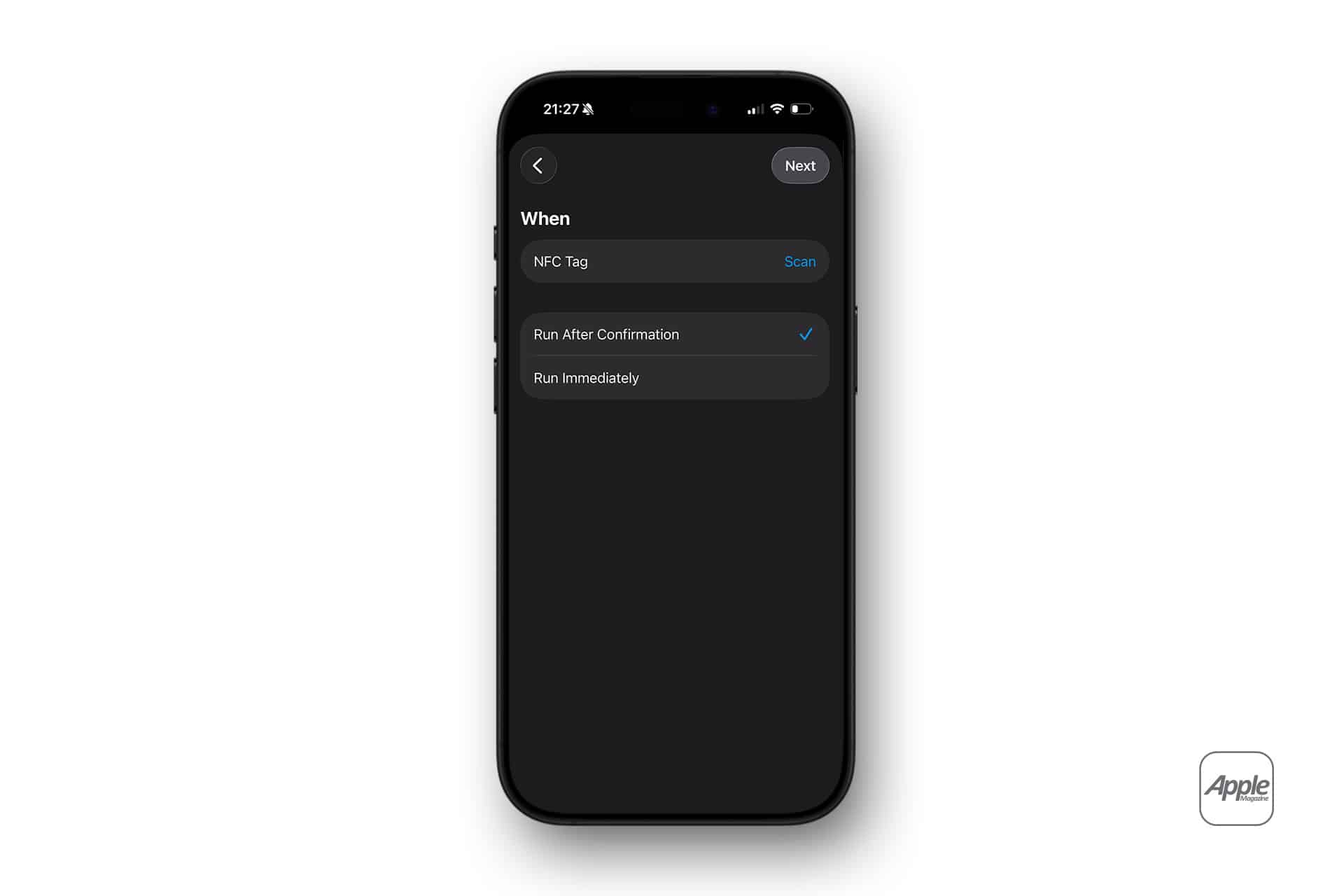
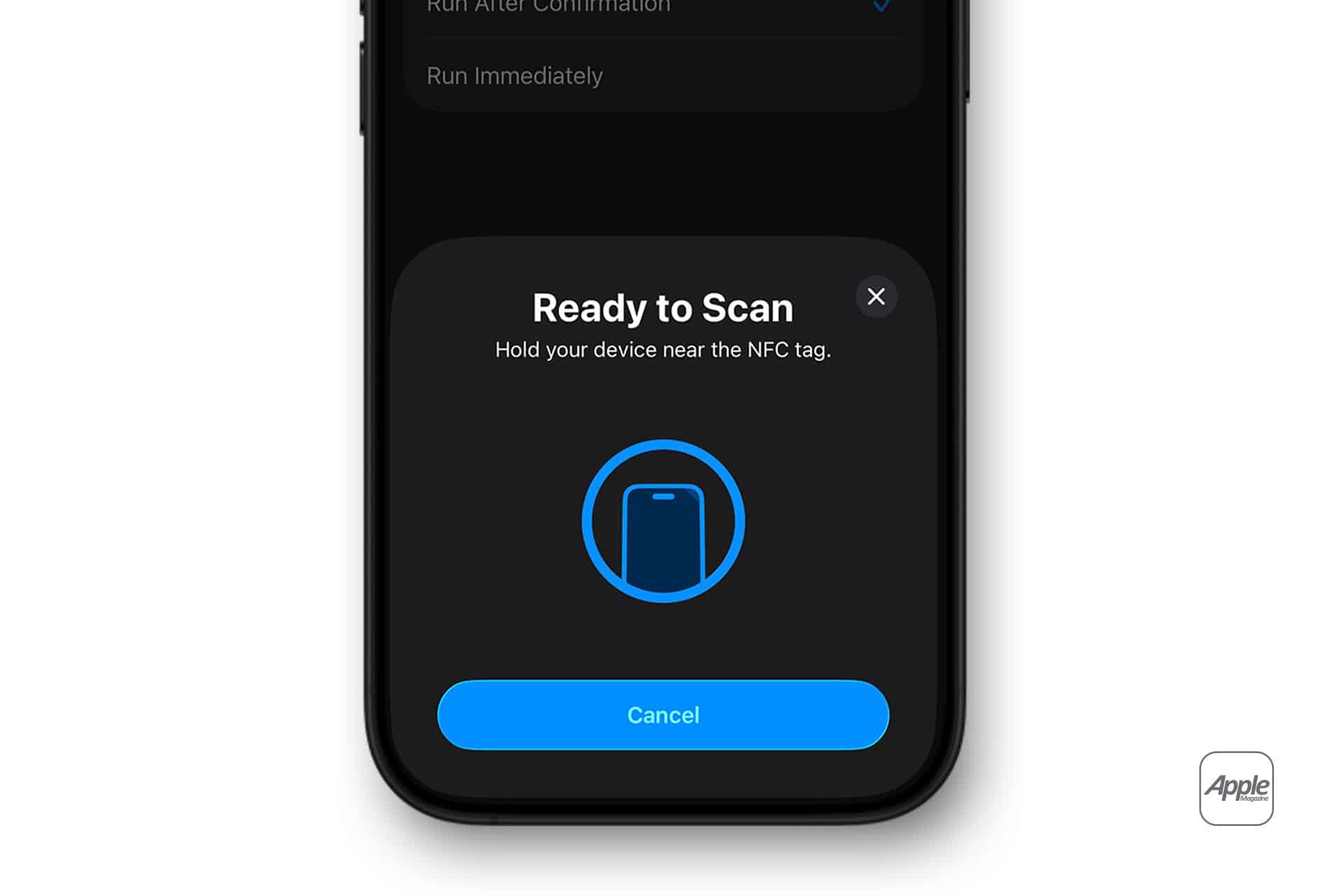
iPhone NFC tag automation is built inside the Shortcuts app. The user creates a personal automation, scans an NFC tag, names it, then chooses what should happen when the tag is tapped.
To create one:
Shortcuts > Automation > Add Button > NFC > Scan
After scanning the tag, iPhone asks for a name. The name can be simple, such as “Desk,” “Bedtime,” “Car,” “Laundry,” “Medication,” “Workout,” or “Front Door.” Then the user chooses actions from Shortcuts.
A basic desk automation could be:
NFC Tag > Set Focus to Work > Open Calendar > Start Playlist
A bedtime automation could be:
NFC Tag > Set Focus to Sleep > Set Volume > Turn Off Lights
A car automation could be:
NFC Tag > Open Maps > Get Directions Home > Play Podcast
The tag itself does not need to store the whole shortcut. In most personal automations, the iPhone recognizes the tag and runs the automation saved on the device. That makes the setup flexible because the same tag can be reassigned later by editing the automation.

Where NFC Tags Work Best
NFC tags are useful when they are placed exactly where the action begins. A tag on a desk can start a work routine. A tag near the bed can trigger a nighttime setup. A tag by the door can turn off lights and open directions. A tag on a washing machine can start a laundry timer. A tag on a medication box can open a health note or log a reminder.
This physical placement is what makes NFC feel different from widgets or Siri. The tag belongs to a location, object, or habit. It does not ask the user to remember where the shortcut is. The shortcut is attached to the place where it is needed.
Useful examples include:
- Desk tag: turns on Work Focus, opens Mail, opens Calendar, and starts background music.
- Nightstand tag: dims lights, sets Sleep Focus, lowers volume, and opens an alarm screen.
- Kitchen tag: starts a cooking timer, opens a recipe note, or plays a specific playlist.
- Laundry tag: starts a timer matching the washer or dryer cycle.
- Car tag: opens Maps, starts a podcast, and sends an estimated arrival message.
- Backpack tag: opens a checklist, turns on School or Work Focus, and checks battery levels.
- Home entrance tag: turns off lights, adjusts thermostat, and opens Find My or Wallet.
The best automations are short. A tag that runs too many actions can become unpredictable or annoying. A tag that performs one to three useful actions usually feels faster and more reliable.
Smart Home Scenes With NFC
NFC tags work especially well with the Home app. A tag can trigger a HomeKit or Matter scene without opening Home or asking Siri. That turns rooms and objects into smart-home controls.
A living room tag could trigger:
Home Scene > Movie Night
A front-door tag could trigger:
Home Scene > Away
A bedside tag could trigger:
Home Scene > Good Night
To create the scene first:
Home > Add Button > Add Scene > Choose Accessories > Save
Then connect it to the tag:
Shortcuts > Automation > NFC > Scan Tag > Control Home > Choose Scene
This is helpful when voice commands are inconvenient. A user may not want to speak to Siri at night, during a call, or while others are nearby. A silent tap can run the same home routine.
NFC tags can also give physical access to smart-home actions without adding more switches. A small tag under a desk can turn on a lamp. A tag beside a couch can set a reading scene. A tag in a closet can turn on a light and start a timer.
Focus Modes and Daily Routines
Focus modes are one of the cleanest uses for NFC. A tag can switch the iPhone into Work, Personal, Sleep, Fitness, Driving, or a custom Focus based on location or activity.
To create a Focus action:
Shortcuts > Automation > NFC > Set Focus > Choose Focus
A work desk tag can turn on Work Focus and open the apps needed for the day. A gym bag tag can turn on Fitness Focus and start a workout playlist. A bedside tag can set Sleep Focus and lower brightness.
This makes Focus feel less like a setting and more like a mode attached to the environment. The user is not digging through Control Center. A tap starts the context.
Focus automations are also easy to reverse. A second tag can turn the Focus off or start a different routine. A tag near the office exit can end Work Focus, open directions, and start music for the commute.
NFC Tags for Lists, Notes, and Logs
NFC tags can also make simple recordkeeping faster. A tag can open a specific note, add to a reminder list, log water, start a timer, or create a dated entry.
A tag on a refrigerator could open a grocery list. A tag on a medication box could open a note with dosage instructions or add a reminder. A tag on a plant pot could log watering. A tag on exercise equipment could open a workout plan.
To open a note:
Shortcuts > Automation > NFC > Open Note
To add a reminder:
Shortcuts > Automation > NFC > Add New Reminder
To start a timer:
Shortcuts > Automation > NFC > Start Timer
These automations are useful because they reduce the space between remembering and acting. The tag is already on the object, so the iPhone can open the correct list or start the correct action immediately.
Privacy and Confirmation Settings
Personal NFC automations can usually run automatically after scanning, though some actions may ask for confirmation depending on iOS behavior, app permissions, security, or the type of action being performed. Apple limits certain background actions to protect user privacy and prevent unwanted behavior.
That is worth remembering when designing tags. A tag that opens an app, starts a timer, changes Focus, controls Home accessories, or plays music is usually straightforward. A tag that sends messages, shares data, opens sensitive files, or interacts with payments may require more care.
Users should avoid placing personal NFC tags in public areas where others can scan or tamper with them. The tag may not expose the shortcut by itself, but public tags can be replaced, moved, or confused with malicious tags created by someone else.
A safer habit is to use personal tags at home, in a private workspace, inside a car, or on personal objects. For public NFC tags, iPhone should be treated with caution. Do not follow unexpected links or install profiles from unknown tags.
NFC Tags Are Not Apple Pay
NFC tags use the same general contactless idea people associate with Apple Pay, but they are not the same thing. Apple Pay uses secure payment credentials, Face ID or Touch ID, and a protected transaction process. NFC tags for Shortcuts are simple triggers. They are closer to tiny physical labels that iPhone can recognize.
That difference matters because users may expect payment-like behavior from any NFC interaction. Shortcut tags are safer when used for low-risk routines: opening an app, launching a Home scene, starting a timer, changing Focus, or opening directions.
They should not be treated as secure identity tools unless the workflow is designed with proper authentication and app support. A tag on a door does not replace a smart lock credential. A tag on a wallet does not replace Apple Pay. A tag on a work desk does not replace account security.
The best use is convenience, not authentication.
Choosing and Placing NFC Tags
Most users can use simple NFC stickers or cards sold for phones. Compatibility can vary, but common writable NFC tags such as NTAG213, NTAG215, and NTAG216 are often used for iPhone shortcut triggers. For personal automations, capacity is usually not a major concern because the shortcut lives on the iPhone.
Placement matters more than tag type. Metal surfaces can interfere with NFC tags unless the tag is designed for metal. Thick cases, awkward placement, or poor tag quality can make scanning less reliable. The best location is flat, reachable, and close to where the routine happens.
The iPhone’s NFC reading area is near the top of the device. A good scan usually happens when the top edge of the iPhone is brought close to the tag for a moment.
If a tag fails to scan, try a different placement, remove thick material between the phone and tag, or use an anti-metal NFC tag for metal surfaces.
A Simple NFC Setup Worth Trying
A first NFC automation should be small and useful. A nightstand tag is a good start because the routine is predictable.
Example:
Shortcuts > Automation > NFC > Scan Bedside Tag > Set Focus to Sleep > Set Volume to 20% > Turn Off Bedroom Lights
A desk tag is another easy test:
Shortcuts > Automation > NFC > Scan Desk Tag > Set Focus to Work > Open Mail > Open Calendar
A laundry tag is even simpler:
Shortcuts > Automation > NFC > Scan Laundry Tag > Start Timer for 45 Minutes
These examples work because they match a physical place. The tag is not a gimmick. It becomes a shortcut attached to the moment.
Physical Shortcuts for Apple Routines
iPhone NFC tag automation is one of the most practical parts of Shortcuts because it turns digital routines into physical interactions. A tap can start a work setup, bedtime scene, laundry timer, car routine, grocery list, reading mode, or smart-home action.
The feature works best when the automation is short, the tag is placed where the habit begins, and the action saves more time than it adds. A tag hidden under a desk, beside a lamp, inside a car, or near the front door can make iPhone feel more responsive to the user’s daily rhythm.
NFC tags do not need to be flashy. Their value is the opposite. They disappear into the room, object, or routine until a tap is needed. With the right setup, Shortcuts becomes less like an app to manage and more like a set of small physical controls built around the places people already use.