

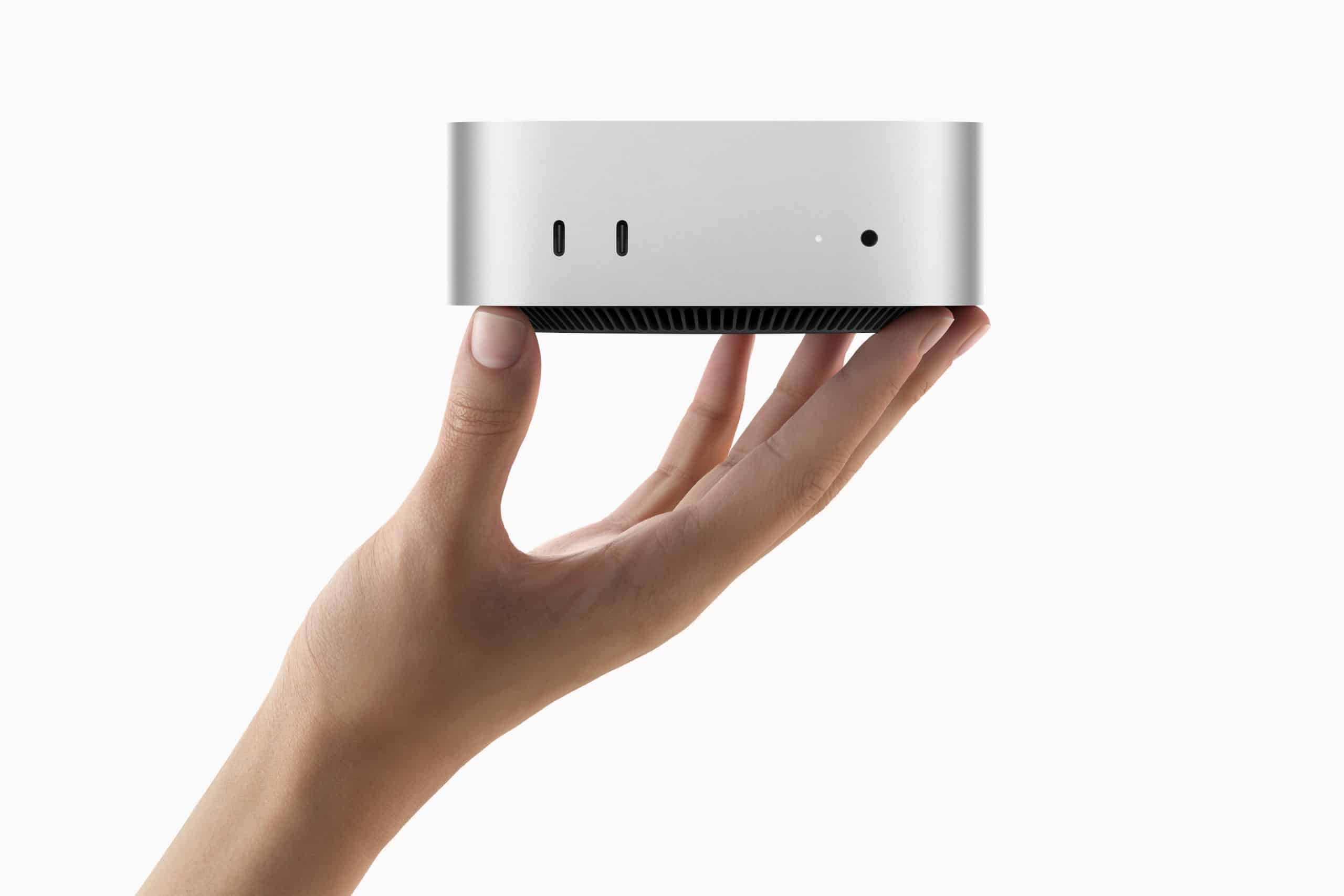
Mac mini is becoming an unlikely favorite for developers running local AI agents, as the shift from single-prompt chatbots to long-running automation changes what people need from a computer. The story is no longer only about which GPU can push the largest language model. Agentic workloads use the whole system: CPU, GPU, Neural Engine, memory, storage, I/O, macOS automation and power efficiency.
That is why Apple’s smallest desktop is drawing new attention. A Mac mini can sit on a desk or shelf, run quietly for hours, and handle local models, coding agents, file workflows, browser tasks and automation pipelines without the cost or noise of a traditional workstation. For many developers, it is not replacing a cloud cluster. It is becoming a local control point for AI work that does not need to leave the machine.
Apple silicon chief Johny Srouji recently framed the shift around the full chip, not only the GPU. In a discussion reported by The Deep View and later cited by TechRadar, he said agentic AI is not just about a GPU crunching an LLM anymore; it is about different parts of the chip contributing to tool calling and the surrounding workflow. That is a useful way to understand why the Mac mini and Mac Studio are seeing unusual demand from AI developers.
Mac Mini Fits the Agentic AI Workflow
Mac mini works well for local AI agents because those workloads are often continuous rather than explosive. A developer may run an agent that watches a codebase, edits files, launches a browser, calls command-line tools, tests an app, summarizes documents or coordinates several smaller models. The task can involve reasoning, but also file access, app control, scripting and state management across hours.
That is different from training a giant model or running one huge prompt through a data center GPU. Agentic AI is a mixed workload. It needs compute for inference, but it also needs responsive system behavior, fast storage, stable memory, efficient background processing and tight integration with the operating system.
Apple silicon is built for that kind of mixed work. The CPU handles general tasks, the GPU can accelerate model operations, the Neural Engine supports machine learning workloads through Apple’s frameworks, and unified memory lets the system share a large memory pool across compute units. That memory design is one of the main reasons Macs have become popular with local model users.
High-memory configurations matter. A machine with more unified memory can run larger models, keep more context available and support multiple processes without constant swapping. That is why demand has reportedly been strongest for Mac mini, Mac Studio and other Mac configurations with larger memory options.

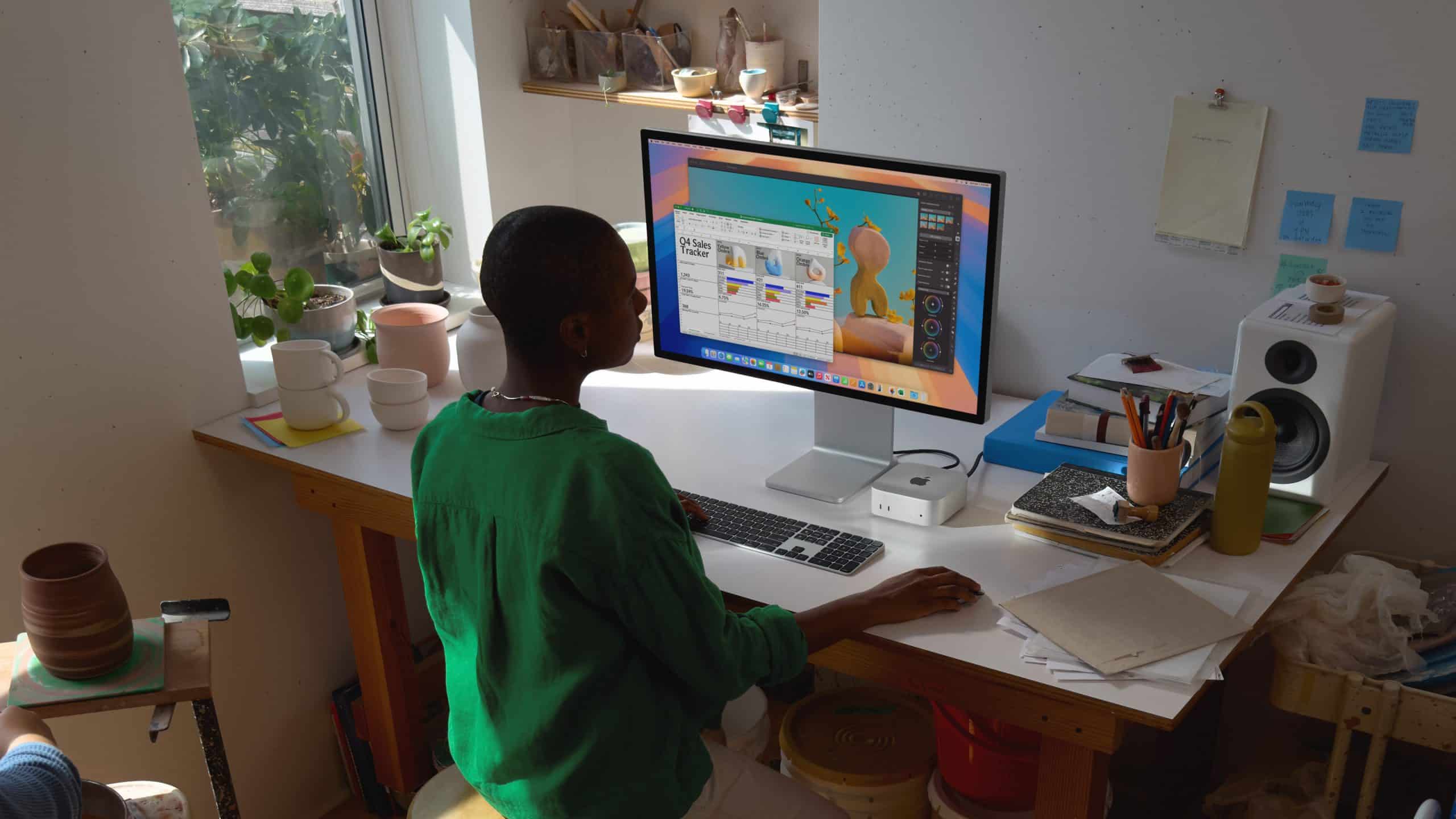
Unified Memory Is the Real Advantage
The Mac’s AI appeal is often misunderstood. Apple is not winning local AI interest because every Mac is more powerful than a dedicated Nvidia workstation. It is winning in a specific lane: compact, efficient, high-memory local inference and agent automation.
Unified memory gives Apple silicon a practical edge because the CPU, GPU and other accelerators can access the same memory pool. Traditional desktop systems often split memory between system RAM and VRAM. That can create limits when a model needs more memory than the GPU has available. On a Mac, the memory pool is shared, which can make larger local models easier to run on consumer hardware.
This does not remove every limit. A Mac is still constrained by memory capacity, bandwidth, thermals and software optimization. But for developers experimenting with local agents, the setup can be simpler. A high-memory Mac does not require a separate GPU build, a large power supply or the same level of cooling as a conventional AI workstation.
Apple’s MLX framework also helps. It was created to make machine learning work better on Apple silicon, and the developer community has been building tools around local inference, model conversion and multimodal workloads. Research and open-source projects have shown growing interest in using Macs for LLM and multimodal model serving, especially when privacy and local control matter.
Why Local Agents Are Driving Hardware Demand
The local AI trend is partly economic. Cloud inference can become expensive when agents run for long sessions, call tools repeatedly or process private datasets. A local system has an upfront hardware cost, but it avoids constant per-token or per-request fees for many workflows.
Privacy is another reason. Developers, researchers, lawyers, founders, journalists and companies may not want every document, repo, transcript or customer record sent to a cloud model. Running local agents gives them more control over sensitive data, even if they still use cloud models for some tasks.
Latency also matters. A local agent can interact with files, scripts, browsers and apps without waiting on remote services for every step. That can make the workflow feel more like desktop automation and less like a chatbot that occasionally reaches into the system.
The Wall Street Journal reported earlier this year that Mac mini models became harder to buy as local AI demand rose, with some high-memory configurations facing long delays. Apple has also seen strong demand for Mac Studio, which gives developers more memory, more GPU power and more thermal headroom for sustained workloads.
That does not mean every AI user should buy a Mac desktop. Large-scale training, heavy multi-user serving and frontier-model work still belong in GPU clusters. The Mac mini sits in another category: a personal or small-team AI machine that can run local agents, test workflows and keep private data nearby.

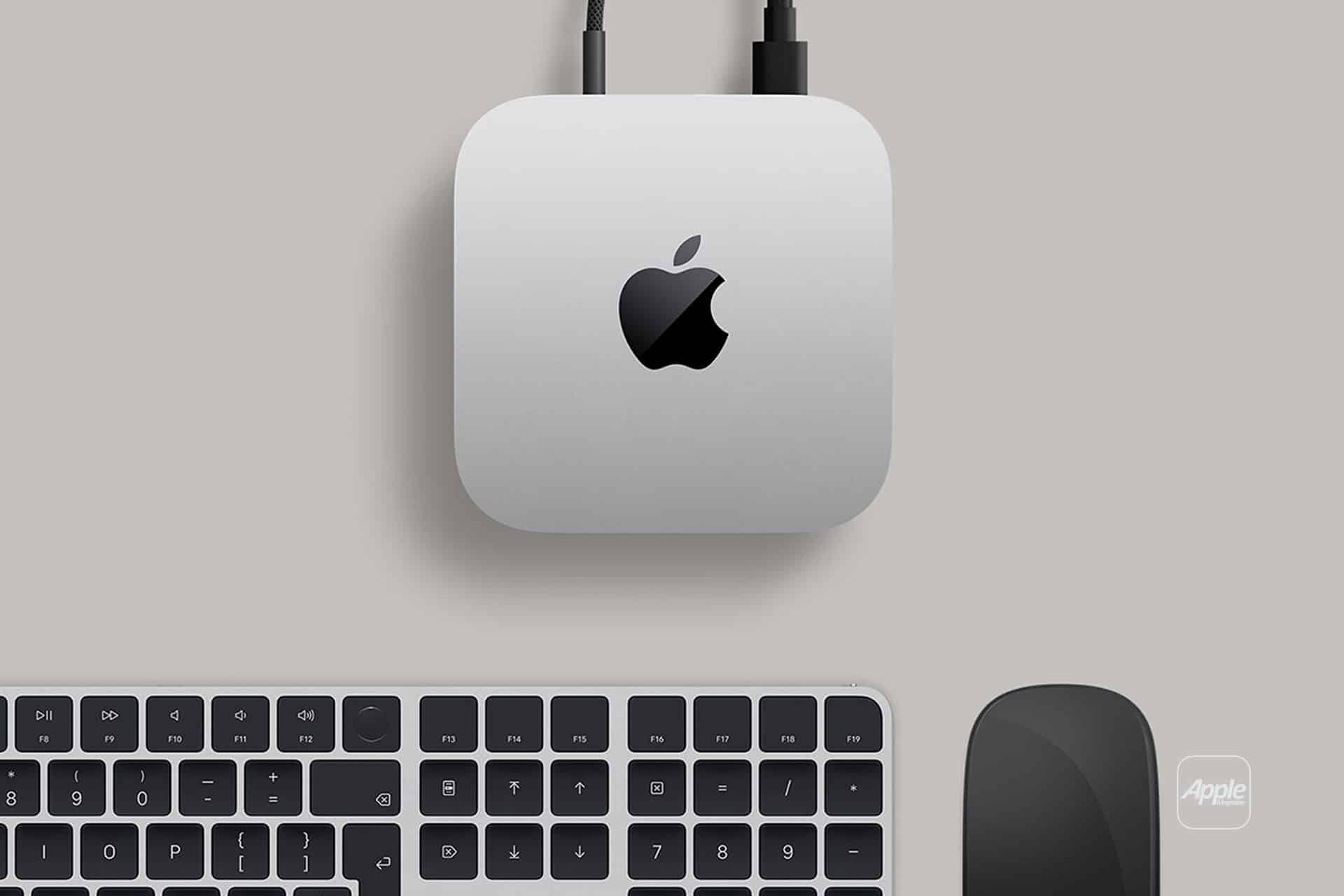
A Small Desktop With a Bigger Role
Mac mini’s value is not only its price. It is the combination of size, efficiency and macOS. A small desktop can remain plugged in, connected to storage and available as a local AI node. Developers can use it as a workstation, automation server, test machine or private inference box.
For agentic workflows, macOS itself becomes part of the appeal. Agents that work across desktop apps need access to files, windows, browsers, terminals, development tools and local services. A Mac can become the environment the agent is operating inside, not merely the computer that runs the model.
That is also why benchmarks based only on tokens per second miss part of the picture. Speed matters, but an agent’s usefulness depends on whether it can complete multi-step tasks reliably. It may need to read a folder, edit a spreadsheet, open a browser, run a shell command, compare output and adjust its next action. The system surrounding the model affects the quality of the workflow.
This is where the Mac mini becomes more interesting than its size suggests. It is affordable enough for experimentation, efficient enough for long sessions and powerful enough for many local AI tasks when configured with enough memory.
Apple’s AI Hardware Story Is Expanding
Apple’s public AI message has centered on iPhone, Siri, Apple Intelligence and Private Cloud Compute. The Mac may become just as significant for developers. A Mac mini or Mac Studio can act as the local side of an AI workflow while Apple builds more device-side intelligence into iPhone, iPad and Vision Pro.
That creates a different kind of hardware story. Apple does not need to sell the Mac as a data center replacement. It can position it as the machine where private, local, always-available AI work happens. For developers, that may be more useful than another abstract promise about future AI features.
The next phase will depend on memory pricing, M-series upgrades, MLX progress and how well agent frameworks use Apple silicon. If models become more efficient and agents become more reliable, a compact Mac could become a normal part of an AI developer’s setup: one machine for code, tools, local context and private inference.
The Mac mini’s rise in this space is less surprising when the workload is understood correctly. Agentic AI is not a single model running in isolation. It is a system of models, tools, files, apps and decisions. Apple built its chips around system-level efficiency. That is exactly why its smallest desktop is suddenly being discussed as a serious machine for AI agents.