

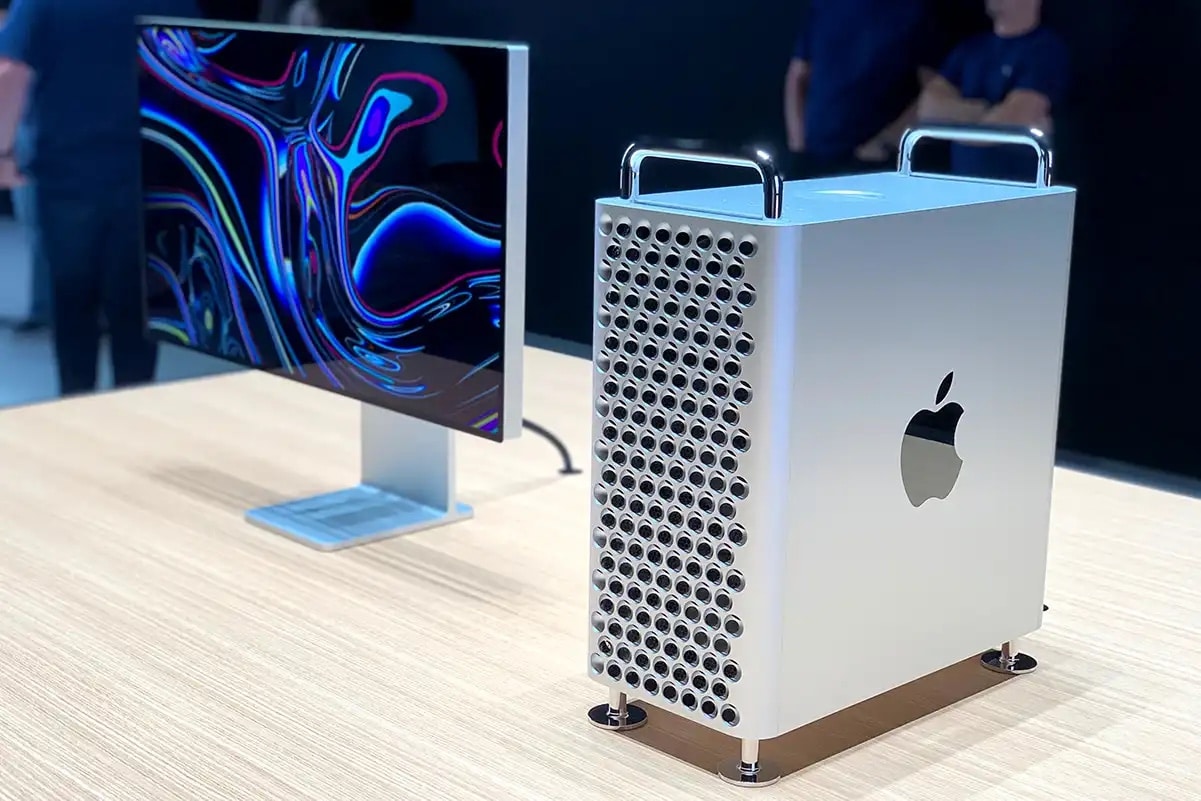
Apple has officially discontinued the Mac Pro, removing the standalone workstation from its website as of March 26, 2026. With no future models planned, the decision closes a chapter that defined Apple’s most modular and expandable desktop line for decades. The traditional PCIe tower, once the symbol of Apple’s professional computing ambition, is no longer part of the company’s roadmap.
The shift does not signal a retreat from high-performance desktops. Instead, it reflects a strategic consolidation. The Mac Studio, equipped with high-end Ultra-class Apple silicon chips, now stands as the company’s primary high-performance desktop offering. In practical terms, Apple appears to be declaring that the era of the large, modular workstation tower has reached its conclusion.
For professionals who relied on internal PCIe expansion, multiple GPU configurations, and custom storage arrays, the discontinuation marks a structural change. Apple’s direction is clear: performance scaling will occur through system-on-chip architecture, unified memory, and tightly integrated hardware design rather than modular internal upgrades.
The End of the PCIe Tower
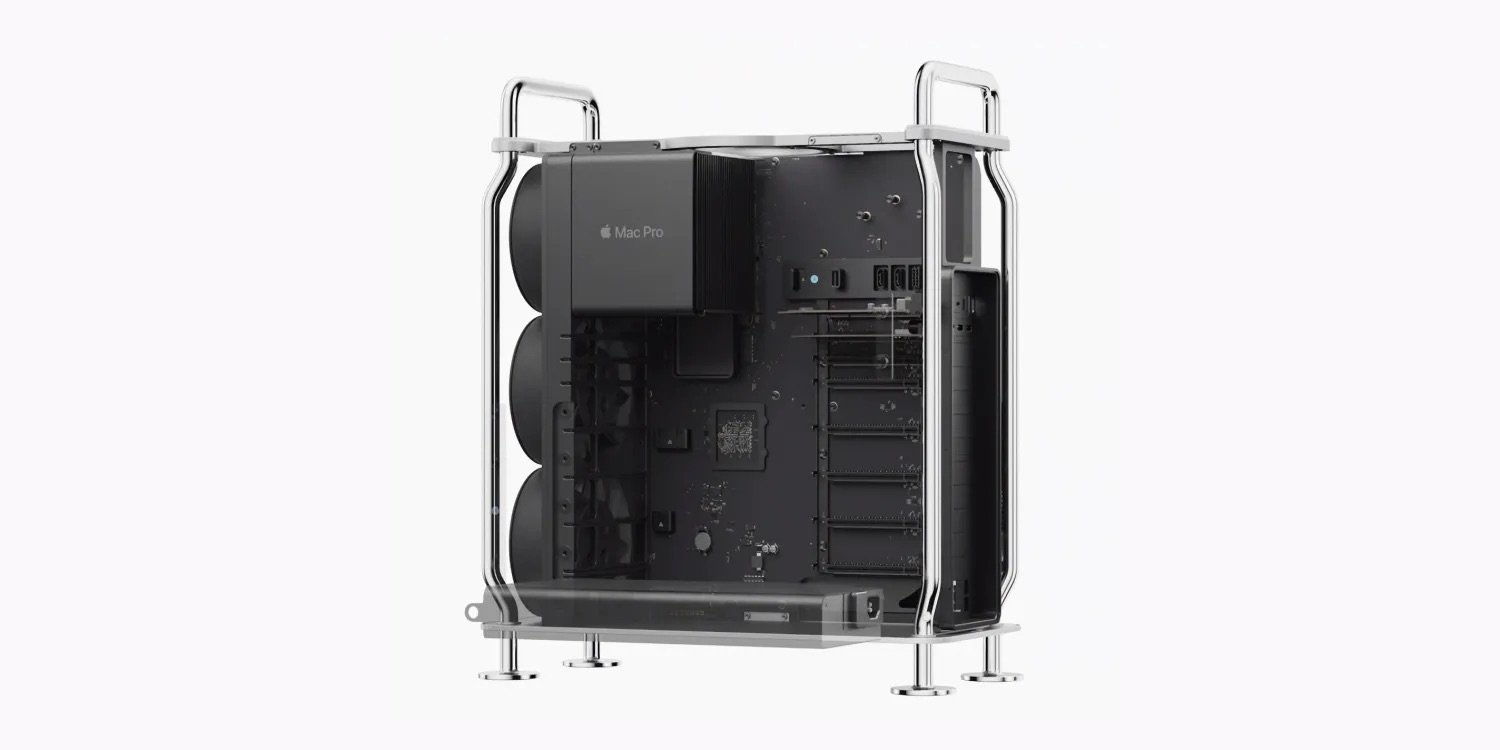
The Mac Pro historically represented Apple’s most configurable machine. Earlier Intel-based models allowed users to install graphics cards, expand memory, and add PCIe storage or specialized hardware. Even during the early Apple silicon transition, the Mac Pro maintained its tower format, offering PCIe slots for professional workflows that required dedicated capture cards, audio interfaces, and networking solutions.
However, with Apple silicon’s architecture emphasizing integrated components, traditional GPU upgrades and CPU swaps became structurally incompatible with the company’s chip design philosophy. Apple’s unified memory architecture binds CPU, GPU, and Neural Engine into a single high-bandwidth system. That integration delivers performance efficiency but limits modular replacement.
By discontinuing the Mac Pro, Apple formally ends the coexistence of modular expansion and system-on-chip design within its desktop portfolio.
Mac Studio as the High-End Successor
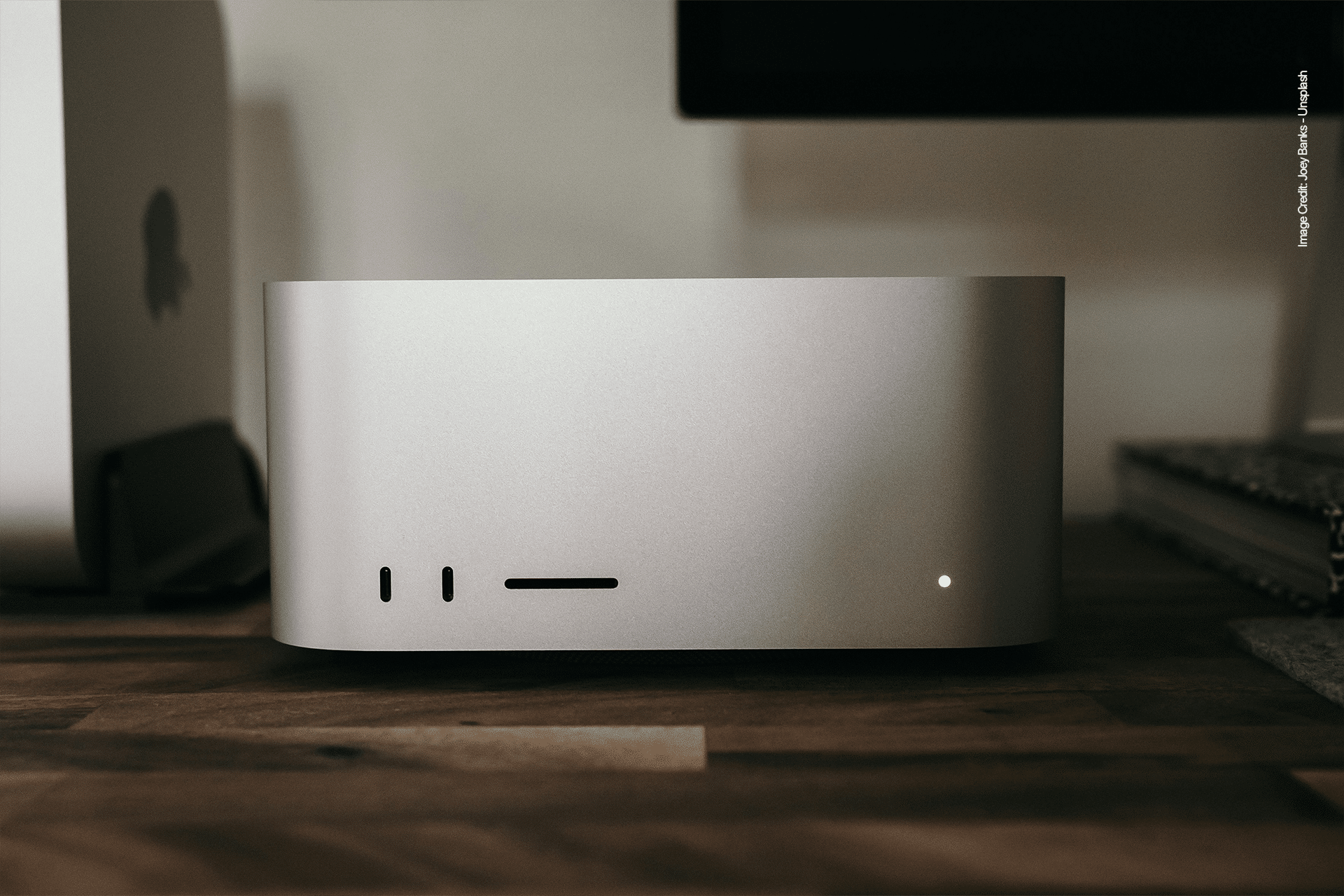
The Mac Studio now occupies the performance tier once associated with the Mac Pro. Equipped with Ultra chips that combine multiple high-performance cores, expanded GPU configurations, and massive memory bandwidth, Mac Studio delivers workstation-level output within a compact chassis.
Rather than scale vertically through internal slots, Apple scales horizontally through silicon integration. Ultra-class chips aggregate processing units onto a unified package, achieving computational density that once required multiple discrete components.
The difference lies in philosophy. Instead of users upgrading parts incrementally, Apple provides predefined performance tiers through chip configurations.
For many creative professionals — video editors, 3D artists, software developers — the Mac Studio’s architecture meets or exceeds prior Mac Pro benchmarks. The absence of internal PCIe flexibility affects a narrower segment of workflows than it once did, particularly as external Thunderbolt expansion has matured.

Apple Silicon Completes the Transition
When Apple announced its transition away from Intel processors, the Mac Pro represented one of the final frontiers of that shift. Its complexity and professional user base made it a symbolic holdout.
With its discontinuation, Apple’s desktop strategy becomes fully unified around Apple silicon integration. The company no longer maintains a product that relies on traditional upgrade paths or socket-based CPU architecture.
This aligns with Apple’s broader design principles: fewer product variations, tightly controlled hardware configurations, and vertical integration from silicon to operating system.
It also simplifies the desktop lineup. Instead of choosing between a modular tower and an integrated compact workstation, customers now select performance levels within a consolidated architecture.

Professional Workflows in a New Framework
For industries that relied heavily on PCIe expansion — high-end audio production, broadcast capture systems, advanced networking environments — the shift introduces adaptation. External expansion chassis connected via Thunderbolt remain viable solutions, though they alter the internal modular paradigm.
Apple appears confident that high-bandwidth external connectivity, combined with integrated silicon performance, provides sufficient flexibility for modern professional workflows.
Meanwhile, the broader professional market has shifted toward cloud rendering, distributed workflows, and external storage arrays. The need for internal graphics card swaps or CPU replacements has diminished relative to earlier computing eras.
The Mac Pro’s role as a customizable tower made sense when hardware cycles demanded component upgrades. Apple silicon’s performance-per-watt improvements and unified architecture reduce the need for that incremental hardware evolution.
A Symbolic Closure
The Mac Pro’s discontinuation carries symbolic weight beyond its sales volume. It represented Apple’s most powerful machine, a visual embodiment of professional capability.
From the aluminum tower designs of the early 2000s to the cylindrical model and later the lattice-fronted chassis, the Mac Pro was a statement product.
Ending the line signals that Apple’s vision of high-performance computing no longer includes modular towers. Performance is defined by silicon engineering rather than internal slot flexibility.
Mac Studio’s compact footprint reinforces that shift. High-end computing power no longer requires a large enclosure filled with replaceable components.


Desktop Strategy Going Forward
Apple’s desktop lineup now centers on three tiers:
- Mac mini for entry-level and midrange users
- Mac Studio for high-performance workflows
- iMac for integrated all-in-one environments
The Mac Pro’s absence simplifies positioning but narrows hardware diversity.
For professionals invested in Apple’s ecosystem, the question becomes less about upgrade paths and more about configuration choices at purchase. Memory, storage, and chip selection are determined upfront rather than adjusted later.
That model mirrors Apple’s broader hardware philosophy across MacBook and iPad lines.
As of March 26, 2026, the Mac Pro joins the list of discontinued Apple products that defined earlier computing eras. The workstation tower that once symbolized maximum configurability has given way to a system where silicon integration defines performance limits.
In Apple’s current strategy, power resides not in expandable slots but in densely integrated architecture engineered from the transistor level upward.
Rest in peace, Mac Pro.

