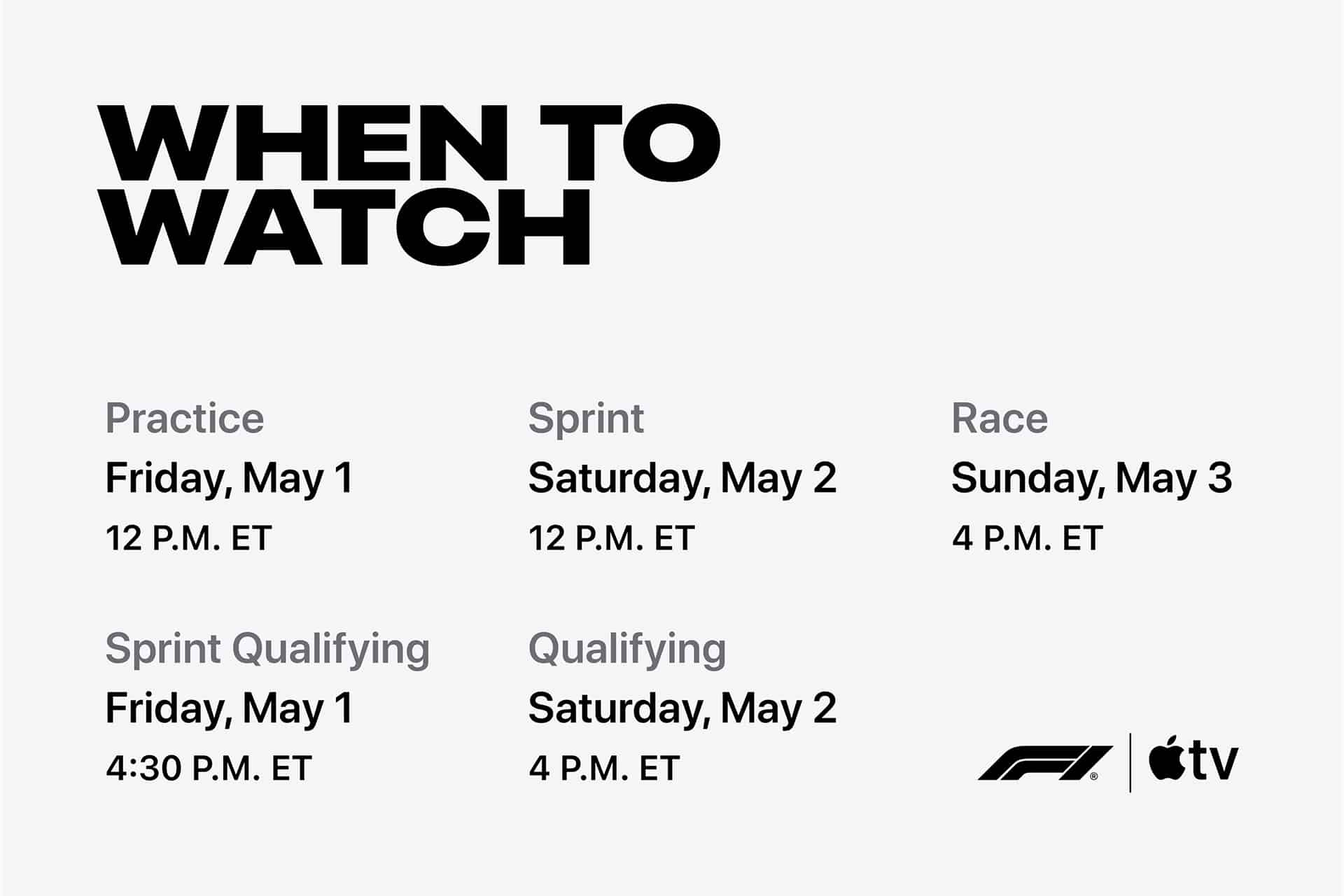
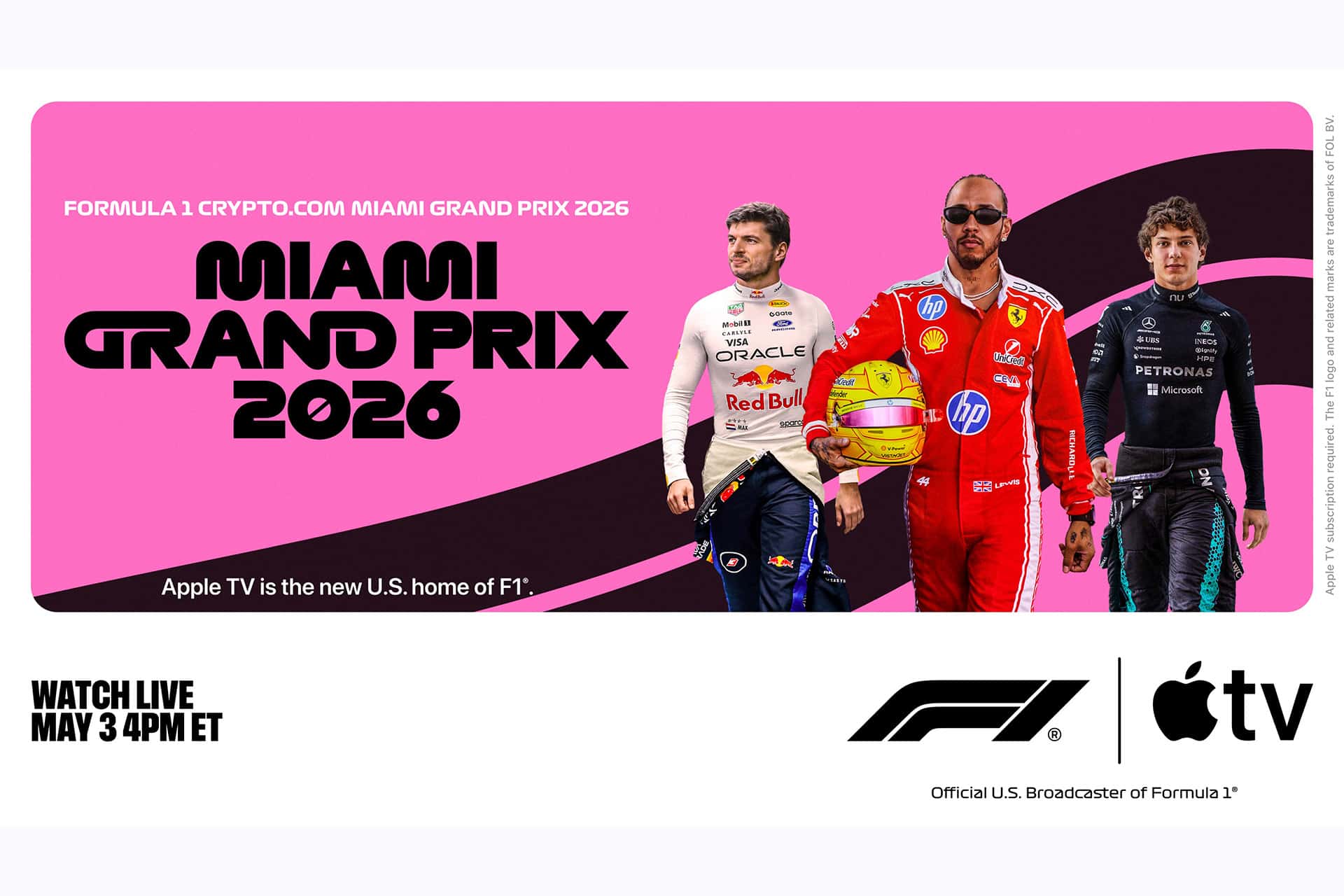
Miami Grand Prix coverage on Apple TV marks the first U.S. race weekend of Apple’s new Formula 1 era, turning the event into much more than another live sports stream. The FORMULA 1 CRYPTO.COM MIAMI GRAND PRIX 2026 streams exclusively on Apple TV in the U.S., with every session available live and on demand, including practice, qualifying, Sprint coverage, and the race itself. Apple says the weekend will include English and Spanish commentary, up to 30 additional live feeds across all sessions, customizable Multiview, Apple News integration, Apple Maps race-week details, Apple Music programming, Today at Apple events, IMAX screenings, a Times Square public watch event, and creator-led altcasts on Tubi.
That scale shows how differently Apple is treating F1 compared with a normal sports-rights acquisition. The company is not simply placing the race inside the Apple TV app and calling the job done. It is using the Miami Grand Prix to demonstrate how a race weekend can move across its ecosystem: watch on Apple TV, follow coverage in Apple News, explore the circuit in Maps, listen through Music, attend events at Apple Aventura, and gather around large-format or public screenings. For U.S. fans, the weekend becomes the clearest sign yet of how Apple wants Formula 1 to live beyond the broadcast window.
The race also arrives at a crucial moment for Apple TV’s sports strategy. Formula 1 moved to Apple TV as its new exclusive U.S. home for the 2026 season, with Apple offering practice, qualifying, Sprints, and Grands Prix across the calendar. Formula 1’s own announcement described Apple TV as the place for U.S. fans to watch every Grand Prix live and on demand throughout the season. The Miami weekend is the first major U.S. test of that model, bringing the sport’s American audience into a fully Apple-managed race experience.

Apple TV Turns the Race Feed Into a Customizable Experience
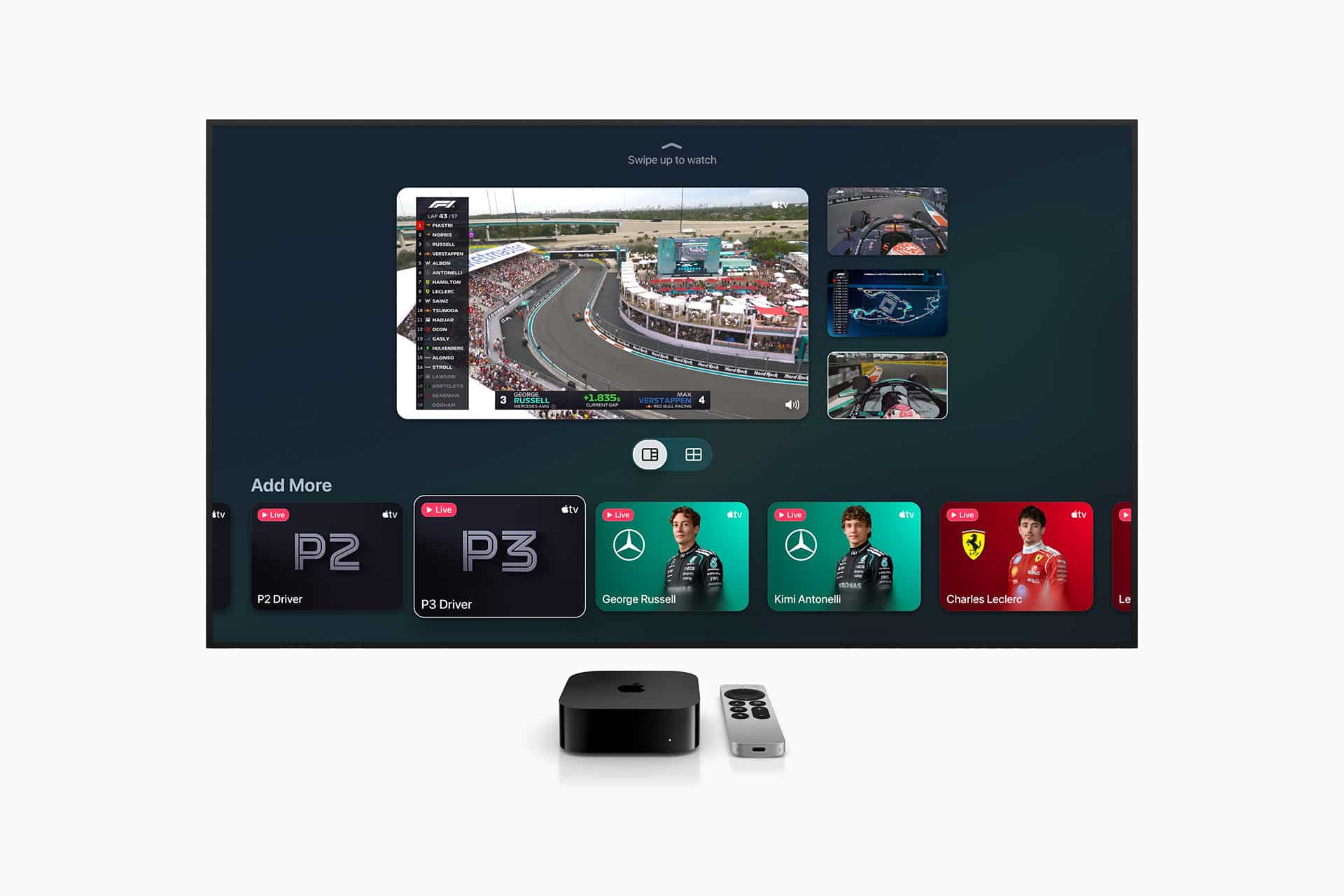
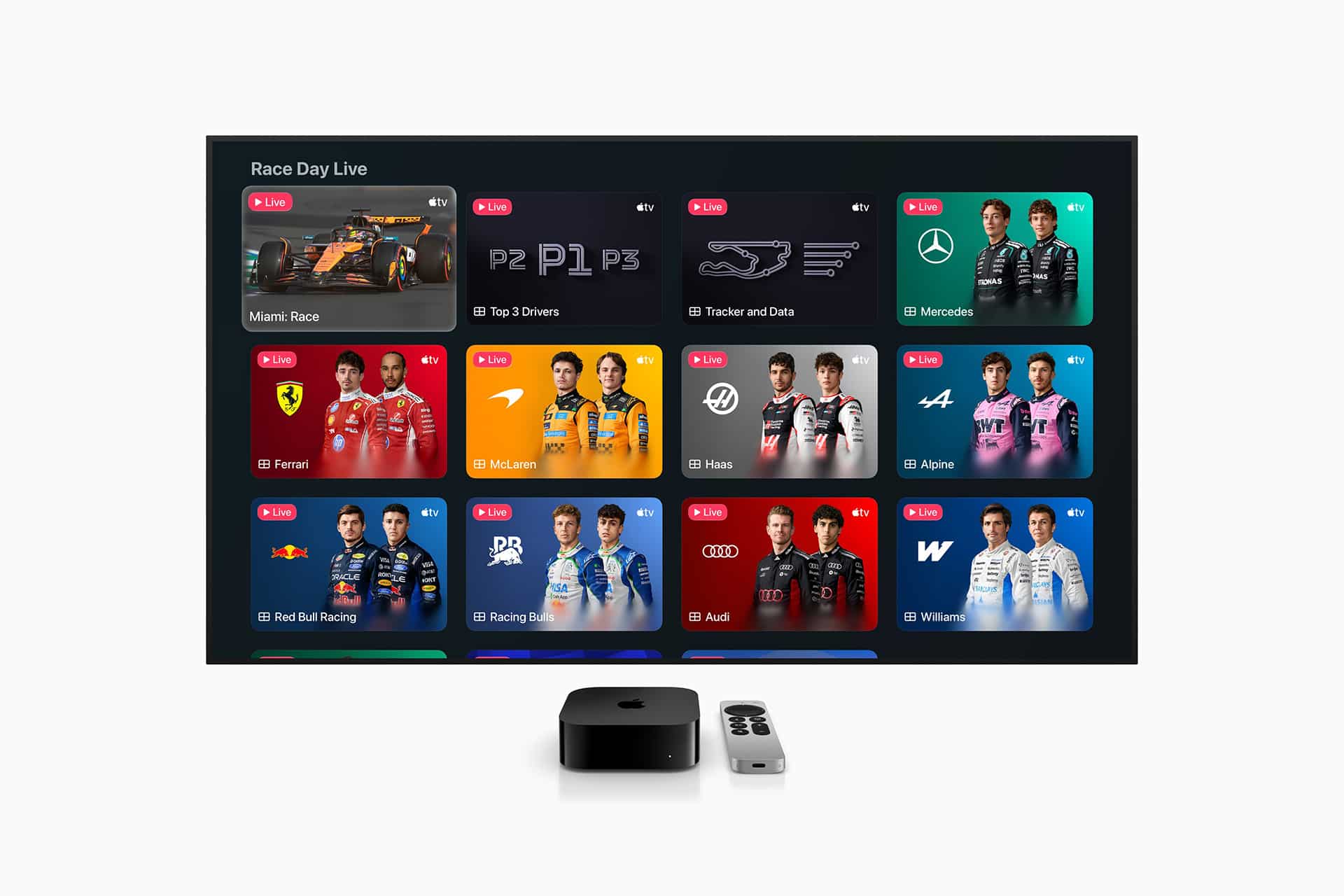
Apple’s F1 coverage is built around choice. For the Miami Grand Prix, viewers get the main race feed with commentary, but they can also access a much broader set of viewing angles and data. Apple says coverage includes Driver Tracker for a bird’s-eye view of the race, timing and data feeds, a mixed onboard feed that automatically switches between cameras as the race unfolds, and a Podium feed that follows the drivers running in P1, P2, and P3 throughout the session. The company also says viewers can use a fully customizable Multiview experience or choose a one-tap preconfigured layout for every team.
That makes the Apple TV version of F1 feel closer to a control room than a single channel. A casual viewer can follow the main broadcast. A more committed fan can monitor timing, onboard cameras, team-focused layouts, and track position at the same time. For a sport where strategy, tire management, pit timing, track position, and small pace changes often decide the race, that extra control gives Apple a way to make streaming feel more useful than a traditional broadcast feed.
The Miami Grand Prix is especially suited to that kind of treatment. The event includes a Sprint weekend, which means more competitive sessions, more strategy variation, and more opportunities for fans to follow shifting track conditions across multiple days. Apple’s page for the main race lists the May 3 race as live, ad-free, and available on demand without spoilers, reinforcing the idea that the Apple TV app is now built as the race home rather than a simple live feed.
This also helps Apple differentiate its F1 package from older television coverage. Sports streaming often gets criticized when it only recreates cable inside another app. Apple is clearly trying to avoid that. Multiview, onboard feeds, timing data, team layouts, and session replay are the features that make the digital version feel native to streaming. The company is using the Miami weekend to show that F1 on Apple TV is not only about rights ownership. It is about product design.
New F1 Shows Expand the Race Weekend
Apple is also building original Formula 1 programming around the live race. Circuits in Focus debuts April 30 on Apple TV, with 2016 F1 World Champion Nico Rosberg and creator, car builder, and driver Emelia Hartford previewing each circuit before the race weekend begins. Apple says the series uses EA SPORTS F1 25, the official game of the FIA Formula One World Championship, to bring viewers onto the track and explain the strategy, braking points, curves, and split-second decisions that could shape the weekend.
That is a smart format because F1 is not always self-explanatory for newer fans. A race becomes much easier to follow when viewers understand where overtaking can happen, where braking zones matter, how tire strategy interacts with track layout, and which sections punish mistakes. Using Rosberg gives Apple a credible champion-level voice, while Hartford brings a creator’s energy and a builder-driver perspective that can make technical material easier to approach.
After the race, Apple will continue coverage with The POV, a social series featuring former Red Bull Racing senior technician Calum Nicholas and content creator and engineer Christina Roki. Apple says the series will react to decisive overtakes, strategy calls, and unexpected turning points from the weekend. That gives the F1 package a post-race layer designed for the way younger and digital-first fans already consume sports: not only through the live event, but through reaction, analysis, clips, and context after the result.
Together, these shows help Apple fill the space before and after the sessions. That matters because F1 fandom does not begin when the lights go out and end at the checkered flag. Fans follow practice form, qualifying mistakes, team updates, tire strategy, technical changes, and post-race debate. Apple is building programming that gives the race weekend a stronger editorial shape.
Miami Grand Prix Takes Over Apple News, Maps, and Music
The Miami Grand Prix also shows how Apple can spread F1 across services without making each service feel forced. Apple News will offer race-week notifications and personalized coverage from leading publishers, with the ability to follow favorite drivers and teams for live results, standings, and highlights. Apple says users can also view the race directly within the News app through a special Miami Grand Prix experience and jump to the Apple TV app for the full stream.
That gives Apple News a practical race-week role. It becomes the place to follow the build-up, standings, highlights, and live context, while Apple TV remains the full viewing destination. For fans who do not watch every session live, this matters. News can keep the weekend visible between sessions and help turn F1 into a daily information habit rather than only a Sunday event.
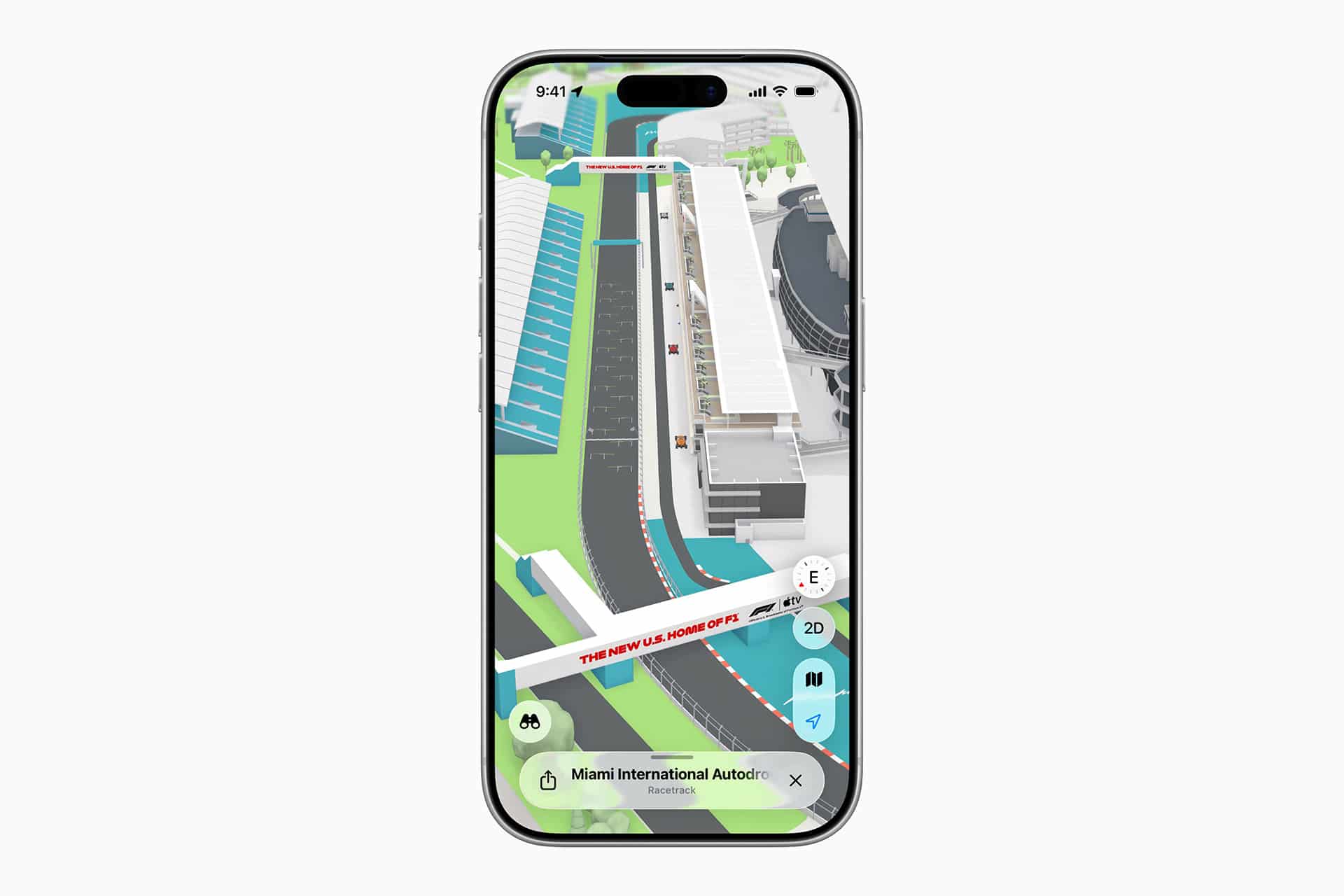
Apple Maps adds another layer for fans attending in person. Apple says Maps includes a comprehensive circuit map with turn numbers, grandstands, custom-designed 3D landmarks such as the F1 pit building, the marina, and the Hard Rock Beach Club, along with event entry gates, road closures, pedestrian walkways, and a local guide for Miami F1 Race Week. That is exactly the kind of local utility that makes sense for a huge event spread across a complex venue.
Apple Music turns the weekend into an audio experience too. Apple says subscribers can access a Miami-centric DJ mix from Panamanian artist Dímelo Flow, who will perform a live in-store DJ set at Apple Aventura on May 1. Cadillac driver Sergio “Checo” Pérez will also share a personal driver playlist, and the Formula 1: Sounds of the Circuit playlist has been updated for the season. Apple Music will also provide audio livestreams of both the Sprint and the Race.
Those integrations make the Miami Grand Prix feel less like a one-app event and more like a weekend living across Apple’s ecosystem. News handles information. Maps handles location. Music handles atmosphere. Apple TV handles the race. The strength is not that every service does the same thing. Each one adds a different layer to the same sports moment.
Apple Builds a Race Weekend Beyond the Screen
Apple is also pushing the Miami Grand Prix into physical experiences. At Apple Aventura, Apple TV is hosting a full day of race-week programming on May 1, including the Cadillac F1 special livery, Practice and Sprint Qualifying sessions on oversized screens with stadium seating, a live Apple Music performance by Dímelo Flow, and an Apple Books talk with Formula 1 figure Susie Wolff about her memoir, Driven. Apple’s Today at Apple event page separately describes the Miami Grand Prix livestream as part of its F1 on Apple TV programming, with practice, qualifying, Sprints, and races available through Apple TV.
The company is also taking the race into theaters and public space. Apple says fans across the U.S. can experience the Miami Grand Prix live in IMAX at more than 50 locations nationwide, while New York fans will be able to watch a live public screening in Times Square. These moves give Apple a way to turn a streaming-rights package into a shared event, which is one of the challenges every sports streamer faces. Watching at home is convenient, but sports culture also depends on crowds, reactions, and public energy.
Tubi adds another angle with The Fast Lane: Miami, a creator-hosted live altcast featuring Michelle Khare, Jeremiah Burton, and F1 expert Scott Mansell. Apple says the series will mix race insights, real-time driver tracking, onboard footage, culture-forward guests, and commentary. That format gives newer or more casual fans another entry point, separate from the standard broadcast voice.
The Miami Grand Prix weekend is therefore functioning as a showcase for Apple’s sports ambitions. Apple TV owns the live U.S. F1 experience. Apple News, Maps, Music, Apple Aventura, IMAX, Times Square, and Tubi extend it into the rest of the week. The result is a more ambitious approach than simply paying for rights and streaming a feed.
For Apple, Formula 1 is an ideal sport for this kind of ecosystem treatment. It has global drivers, advanced data, recognizable teams, strong lifestyle overlap, luxury appeal, technical depth, and a fast-growing U.S. audience. Miami brings all of that into one highly marketable weekend. If Apple can make F1 feel richer, easier to follow, and more immersive across its services, the Miami Grand Prix may become the clearest early example of what live sports on Apple TV is supposed to become.