

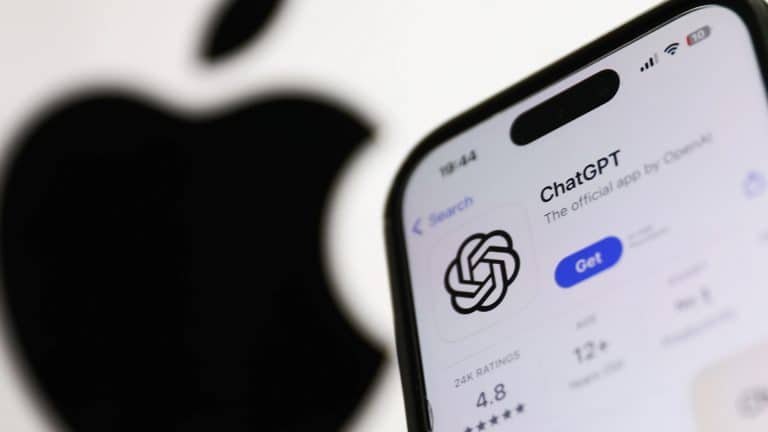
OpenAI tensions have exposed one of the biggest weaknesses in Apple’s current artificial intelligence strategy: the company needs outside models, but outside model providers need clear value from being inside Apple’s ecosystem. When those incentives fall out of balance, a partnership that looked strategically useful can quickly become strained.
The company is reportedly exploring legal options against Apple over a partnership that has not delivered the benefits the ChatGPT maker expected. Bloomberg News reported that OpenAI is working with external legal counsel and considering options that could include a breach-of-contract notice. Reuters and the Financial Times also reported that OpenAI has become frustrated with Apple’s commitment to the partnership, especially as Apple moves toward broader use of other third-party models, including Google’s Gemini.
The issue is not simply that Apple wants more than one AI provider. The original Apple-OpenAI deal was not exclusive, and Apple has always tried to avoid depending too heavily on a single partner in strategically important areas. The tension is that OpenAI appears to believe Apple has not promoted or integrated ChatGPT deeply enough to justify the value OpenAI expected from the arrangement.
That creates a difficult moment before WWDC26. Apple is expected to show a rebuilt Siri, a more ambitious Apple Intelligence roadmap, possible Gemini-powered features, and a larger developer strategy around AI. If OpenAI is already dissatisfied, Apple’s broader model-choice approach could make the partnership problem more visible. The more Apple diversifies, the more each AI partner may ask what it is actually receiving in return.

Apple Wants Optionality, Partners Want Priority
OpenAI Apple AI tension starts with a basic strategic mismatch. Apple wants optionality. AI model providers want distribution, usage, data-driven product learning, brand placement, and revenue. Apple’s installed base is one of the most valuable distribution channels in technology, but Apple does not usually give partners equal control over the user experience.
That is the Apple pattern. The company integrates outside services when they fill a gap, but it tries to keep the interface, privacy prompts, system design, and user relationship under Apple control. ChatGPT integration in Apple Intelligence fits that model. Siri can ask whether the user wants to send certain requests to ChatGPT, but ChatGPT does not become the default identity of the iPhone. It is a provider behind an Apple-controlled flow.
That may be good for users because it keeps the experience clear and permission-based. It may be less attractive for OpenAI if the integration does not drive enough visible usage or strategic advantage. OpenAI has its own ambitions: ChatGPT apps, agent workflows, enterprise tools, model subscriptions, and possibly AI-native devices. A passive role inside Apple Intelligence may not be enough if Apple also begins leaning on Gemini, Claude, or other models.
Apple’s side is understandable. The company cannot let one external AI provider become too central to Siri or iOS. If Apple builds the next decade of iPhone intelligence around OpenAI alone, it creates dependency, pricing risk, product risk, legal risk, and strategic exposure. A multi-model strategy lets Apple compare providers, switch models when needed, negotiate better terms, and offer users more choice.
That does not make the relationship easy. AI providers are not ordinary suppliers. They are building their own platforms, their own consumer brands, and their own paths to the user.
Siri Is the Real Control Point
OpenAI Apple AI conflict becomes more important because Siri is expected to become Apple’s central AI interface in iOS 27. Reports have described a redesigned Siri with a standalone app, chatbot-style interface, Dynamic Island integration, personal context, and agent powers across apps. If that happens, Siri becomes the control point between users, apps, Apple Intelligence, and outside models.
That is exactly where partner tension becomes unavoidable. If a user asks Siri for help writing, planning, coding, searching, summarizing, or generating an image, Apple has to decide which model should answer. Apple could use its own on-device models for private and lightweight tasks, Private Cloud Compute for more complex Apple-controlled requests, ChatGPT for certain external queries, Gemini for other capabilities, and developer apps through App Intents when the action belongs inside an app.
That layered structure may be the right product strategy, but it creates competition inside the assistant. OpenAI may not want to be one option among several. Google may want Gemini to appear deeply integrated. Anthropic may want Claude positioned as the safer or more capable model for certain workflows. Developers may want their apps chosen before a general AI model answers on their behalf.
Apple’s advantage is that it owns Siri, iOS, the device context, and the permission layer. Its risk is that every partner may become unhappy if Apple’s interface captures most of the value while the models do the heavy lifting.
This is the partnership problem in one sentence: Apple wants AI suppliers; AI suppliers want platform power.


Legal Pressure Would Complicate Apple’s AI Reset
OpenAI Apple AI legal tension could become a distraction at the exact moment Apple is trying to reset its AI narrative. The company already faces pressure from delayed Siri features, consumer lawsuits over AI advertising, and investor skepticism about its position in the AI race. A potential dispute with OpenAI adds another layer.
The legal path remains uncertain. Reports say OpenAI is exploring options, not that a lawsuit has already been filed. A breach-of-contract notice would depend on the exact terms of the Apple-OpenAI agreement, which are not public. The partnership was reportedly non-exclusive, which could limit OpenAI’s leverage if Apple is simply adding other model providers. The more complicated question may be whether Apple made commitments around integration, promotion, access, or product support that OpenAI believes were not met.
Even without a lawsuit, the optics matter. Apple’s AI strategy has been built partly on the idea that the company can combine its privacy-first ecosystem with best-in-class outside models when needed. If its first major outside AI partner feels underused or sidelined, that raises questions about whether other model companies will want similar deals unless the terms are clearer.
Apple also has to manage consumer trust. Users do not want an AI system that feels like a legal fight behind the scenes. They want Siri to work, Apple Intelligence to be useful, and privacy prompts to be understandable. A public dispute could make Apple’s AI architecture look less settled.
That is why WWDC26 becomes even more important. Apple needs to show a coherent model strategy: what runs on device, what runs through Private Cloud Compute, when ChatGPT appears, whether Gemini is involved, how users choose models, and how developers participate.
Gemini Could Shift the Balance
OpenAI Apple AI tensions are partly about Google. Reports have said Apple is preparing deeper Gemini involvement in Apple Intelligence, potentially including iOS 27 features. If Gemini becomes a major part of Siri or system tools, OpenAI’s role could shrink even if ChatGPT remains available.
Apple has strong reasons to consider Gemini. Google has deep AI infrastructure, search knowledge, Android experience, and model development capacity. It also already has a long-standing financial relationship with Apple through search. A Gemini partnership could give Apple access to capabilities that complement or compete with ChatGPT, while preventing OpenAI from becoming too central.
But Gemini creates its own strategic risk. Apple has spent years positioning Google as a privacy contrast in parts of its marketing and product design. Relying more heavily on Gemini may require careful privacy messaging, clear user consent, and strong boundaries around data use. Apple cannot make Google feel invisible inside Siri if users care which model is handling a request.
This is where Apple’s model-choice approach could help. Instead of presenting one partner as the answer, Apple can build a system where users select or approve external models for certain tasks. That gives Apple flexibility and reduces dependence. It also makes the interface more complex.
The best version would be simple enough for mainstream users and transparent enough for regulators, developers, and AI partners. The worst version would feel like a confusing set of hidden handoffs between Apple, OpenAI, Google, and other providers.

Apple Needs AI Partners Without Losing the Interface
OpenAI Apple AI conflict shows that Apple’s AI future will depend on negotiation as much as engineering. The company does not currently have a single model strategy that eliminates the need for partners. Its own models are useful for private and on-device features, but outside models remain important for broader reasoning, knowledge, generation, and competitive capability.
That means Apple must build a partnership model that works for everyone. AI providers need enough visibility and usage to justify the deal. Developers need App Intents and Foundation Models to participate without being replaced. Users need control and privacy. Regulators need to see that Apple is not turning Siri into a closed gatekeeper. Apple needs to keep the interface and user trust.
That is a difficult balance, but it is also Apple’s natural territory. The company has always built platforms where outside parties create value inside Apple-controlled boundaries. The App Store is the obvious example. The problem is that AI partners are more powerful than ordinary developers and more likely to compete directly with Apple for the future interface.
The OpenAI dispute, if it moves forward, may become a warning for every future Apple AI deal. The contract must define expectations clearly. The product role must be visible. The data rules must be precise. The user experience must be honest about which model is answering. The partner must understand that Apple will not give up the iPhone interface.
Apple’s AI partnership problem is not that it needs outside help. It is that every outside helper wants a bigger role in the platform Apple is trying to protect. WWDC26 now has to show whether Apple can turn that tension into a coherent strategy before it turns into a larger conflict.