
OpenAI and Taiwan’s Foxconn have agreed to a new partnership to design and manufacture advanced AI hardware in the United States, according to reporting from the Financial Post. The collaboration marks one of the strongest commitments yet to bringing AI-focused production back to US soil, reflecting both companies’ strategic interest in expanding domestic manufacturing capacity for next-generation computing systems.
Under the agreement, Foxconn will take on the hardware engineering and production side, while OpenAI will provide model research, software architecture and system-level design guidance. The partnership extends beyond traditional device assembly and is expected to include specialized components tailored for running large-scale AI workloads.
A Domestic Manufacturing Shift for AI Hardware
The decision to center production in the United States reflects the supply-chain recalibration underway across the AI industry. Many companies producing AI servers, accelerators and model-specific hardware still rely on Asia-based facilities for fabrication and assembly. For OpenAI, securing a manufacturing pipeline inside the US creates proximity to major data-center operators, lowers logistical overhead for enterprise deployments and aligns with broader national efforts to boost domestic semiconductor and AI infrastructure.
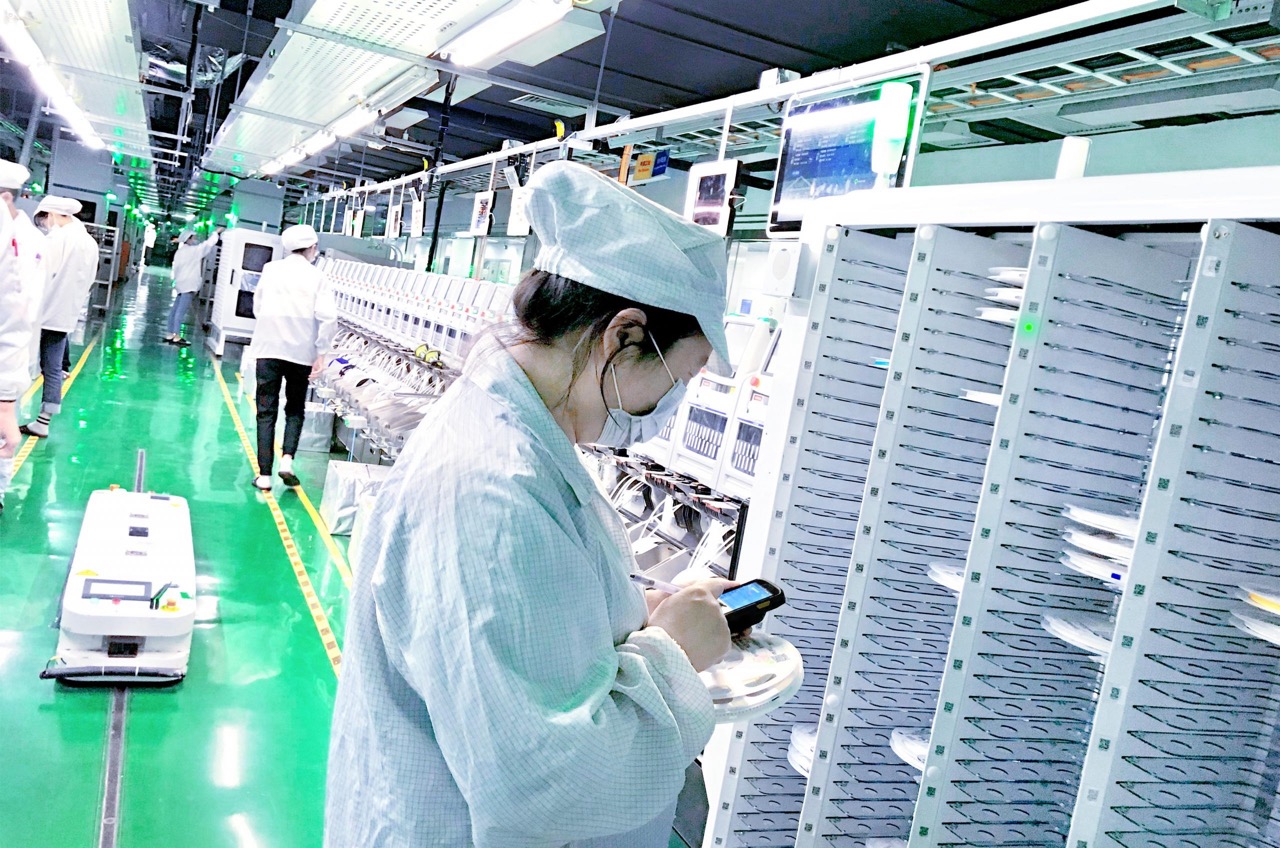
Foxconn has maintained US facilities for years, though most were historically focused on niche assembly or component staging for partners. This agreement signals a more targeted pivot: building systems explicitly designed for AI inference, training support and the surrounding hardware ecosystem.

Strategic Value for Both Companies
For OpenAI, the partnership offers a way to accelerate its hardware roadmap after a year marked by rising interest in specialized AI systems. As models grow in size and complexity, hardware design needs to match new demands in thermal management, power efficiency and data-center scale integration. Working directly with Foxconn allows OpenAI to tune device specifications around its model behavior rather than relying on general-purpose systems.
For Foxconn, participation in the AI boom opens a new category of opportunity beyond consumer electronics. With global shipments of smartphones and PCs stabilizing, high-performance computing and AI data-center infrastructure have become central to the company’s long-term growth strategy. Collaborating with OpenAI offers visibility into the needs of a fast-expanding sector and access to one of the most influential players shaping AI workloads.
The companies have not disclosed specific products or timelines, but early work appears focused on server-class hardware and supporting components rather than consumer devices.
Expanding the US AI Infrastructure Footprint
If the initiative proceeds at scale, the partnership could strengthen the growing cluster of AI manufacturing and data-center development happening in the US. States such as Arizona, Texas and Ohio have drawn substantial semiconductor and cloud-infrastructure investment in recent years. A dedicated OpenAI-Foxconn pipeline would contribute to this trend while offering more supply-chain resilience at a time when global logistics face continued pressure.
The collaboration also reflects a broader industry shift toward vertically integrated AI stacks. As companies build models that require new forms of local acceleration, the line between software, silicon and hardware systems continues to narrow. In that context, a partnership between a leading AI research organization and one of the world’s largest contract manufacturers fits the long-term direction seen across major technology firms.
Details on the rollout remain limited, and both companies are expected to outline the scope of early hardware programs once internal development milestones are met. OpenAI’s focus on expanding model capabilities — combined with Foxconn’s manufacturing scale — suggests that the initial systems will target commercial and enterprise deployments rather than consumer use.
More information is expected as the partnership advances and both sides refine how engineering responsibilities will be shared across US facilities.