



Silo season 3 is returning on Friday, July 3, with Apple releasing a final trailer that points the series toward its biggest unanswered question: how humanity ended up underground in the first place.
The hit sci-fi drama follows the lives of 10,000 people living inside a massive underground bunker, where generations have been told the outside world is toxic and uninhabitable. The first two seasons focused on Juliette Nichols, played by Rebecca Ferguson, as she uncovered the hidden systems of control inside Silo 18 and pushed closer to the truth behind the world above.
The new season moves the story into a larger shape. Apple’s trailer makes clear that season 3 will not only continue Juliette’s fight after her forced cleaning and return, but also move into the past to show the events that led to the creation of the silos. That dual timeline gives the series a wider scope as it adapts more of Hugh Howey’s original book trilogy.
Silo Season 3 Returns July 3
Silo season 3 will premiere globally on July 3 with the first episode, followed by one new episode every Friday through September 4. The season will include 10 episodes, keeping the same weekly structure Apple has used for many of its biggest scripted dramas.
The trailer shows a darker, more expansive season, with Juliette surviving outside the silo but returning changed by what happened to her. Apple’s official description says she comes back with memory loss as Silo 18 recovers from rebellion and faces a dangerous new threat. That gives the present-day storyline a more unstable foundation after the events of season 2.
At the same time, the season introduces an origin story set centuries earlier. That timeline is expected to explore the world before the silos, including the decisions, fears, and political forces that helped create the underground system. The move gives Silo a chance to answer questions the series has been holding since its first episode without turning the story into simple exposition.
The phrase used in Apple’s official trailer, “The end of the world had a beginning,” captures the shift. Silo is no longer only about whether the outside is safe. It is now about who built the system, why it was built, and how much of the truth has been deliberately erased.
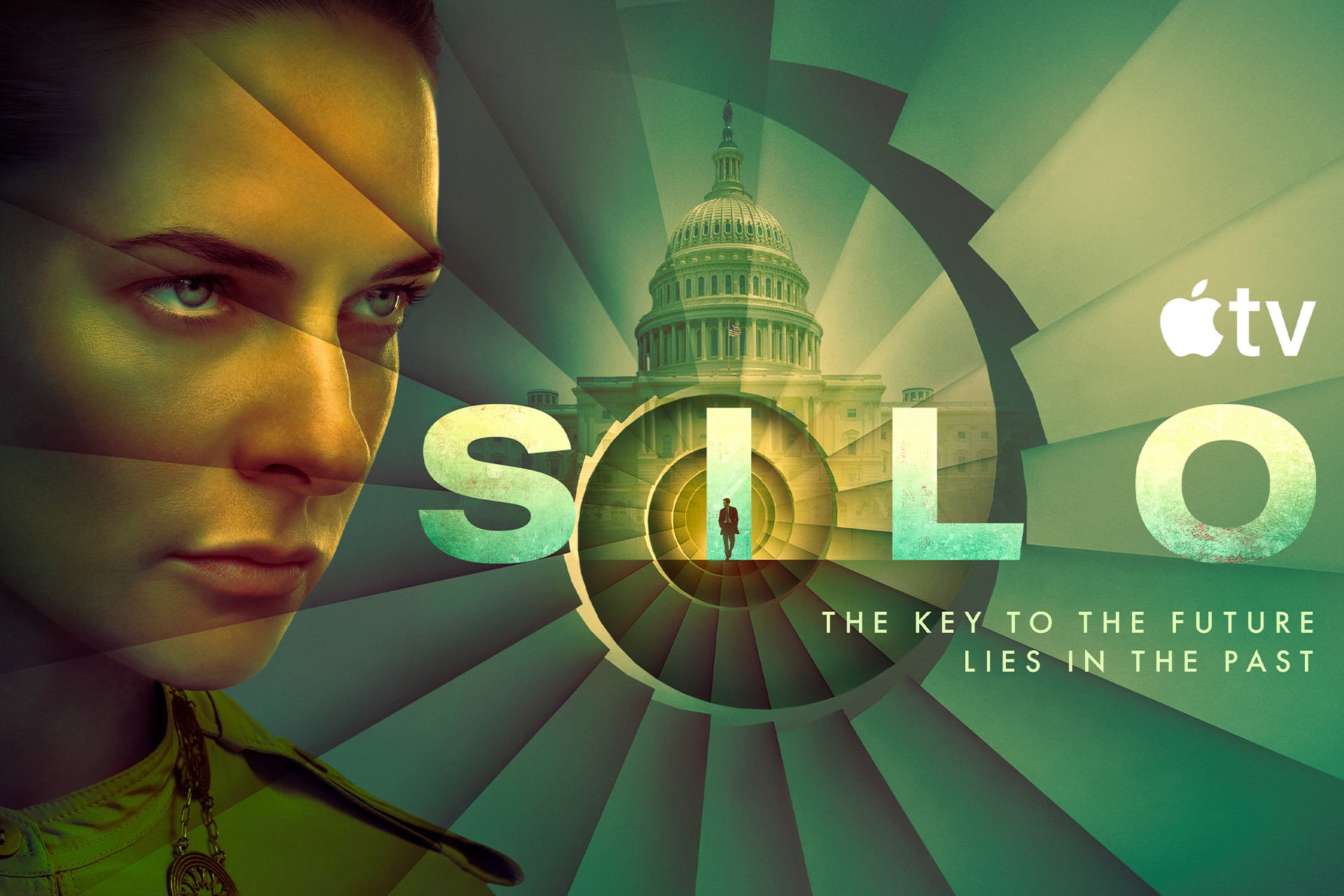

Rebecca Ferguson Leads a Larger Cast
Rebecca Ferguson returns as Juliette Nichols, the engineer whose search for answers has made her the center of the series. Ferguson also serves as an executive producer, continuing her role as both the face of the show and one of its key creative anchors.
Season 3 also brings back several major cast members, including Common, Harriet Walter, Chinaza Uche, Avi Nash, Rick Gomez, and Steve Zahn. Tim Robbins, whose Bernard Holland became one of the show’s defining figures in the first two seasons, remains central to the larger power structure around Silo 18.
The new timeline introduces Jessica Henwick as Helen and Ashley Zukerman as Daniel, characters tied to the pre-silo world. Their roles are expected to help open the series beyond the enclosed, mechanical world viewers know, showing a society before the catastrophe and before the rules of the silo became law.
That expansion is important because Silo has always used confinement as one of its strongest dramatic tools. The bunker’s staircases, apartments, farms, machinery, screens, and forbidden knowledge created a sealed world where every answer led to another lie. Season 3 appears ready to contrast that claustrophobic setting with a broader world that existed before the underground system took hold.
Hugh Howey’s Books Move Deeper Into the Series
Silo is based on Hugh Howey’s bestselling trilogy, made up of Wool, Shift, and Dust. The first two seasons drew heavily from Wool, following Juliette’s rise from engineer to reluctant truth-seeker as she challenged the official history of Silo 18.
Season 3 is expected to pull more directly from Shift, the second book in the trilogy, which explores the origins of the silo system. That makes the new season a turning point for the adaptation. Instead of staying mostly inside one silo and one rebellion, the story begins to reveal the machinery behind the entire world.
This is where Silo can become more than a survival mystery. The series has already shown how information, fear, history, and technology can be used to control a population. The origin timeline gives it a chance to show how those controls were first justified, who accepted them, and who understood what they would become.
Apple has already renewed Silo for a fourth and final season, giving the show a clear endpoint. That matters for a mystery-driven series because viewers can trust that the story is moving toward answers rather than stretching its secrets indefinitely. Season 3 now becomes the bridge between discovery and resolution.

A Key Sci-Fi Return for Apple
Silo has become one of Apple’s most important genre dramas, giving the service a large-scale sci-fi series with a strong lead performance, a literary foundation, and a world that can expand across multiple seasons. It sits beside other major Apple Originals such as Foundation, Severance, For All Mankind, and Invasion as part of the company’s broader investment in science fiction.
The show’s appeal comes from its control of information. The silo is not only a setting. It is a social system where history is edited, images are manipulated, questions are punished, and survival depends on obedience. Juliette’s role is powerful because she approaches that system as an engineer. She looks for how things work, where they break, and what someone tried to hide behind the walls.
Season 3 gives Apple a chance to deepen that structure by showing both sides of the lie. The present timeline follows people living under the system. The past timeline begins to show the people who built it. That could make the new season the most revealing chapter of the series so far.
The trailer also suggests a brighter visual range, with more scenes outside the familiar underground setting. That contrast could help the show evolve without losing the industrial atmosphere that made the first two seasons distinctive.
A Bigger Story Before the Final Season
Silo season 3 arrives at an important point for the series. The first season built the mystery. The second season expanded the world beyond one silo. The third season now appears ready to explain how the world was broken and why the silos became humanity’s last known structure.
That makes the July 3 premiere more than a simple return date. It begins the second half of the show’s full arc, with a fourth and final season already planned to finish the adaptation. Apple’s final trailer positions the new episodes as the moment when the origin story finally starts to surface.
For viewers who have not watched the series, the first two seasons are already streaming. For returning audiences, season 3 should bring the most direct movement yet toward the central questions: who created the silos, what happened to the world outside, and whether the people inside were ever meant to know the truth.