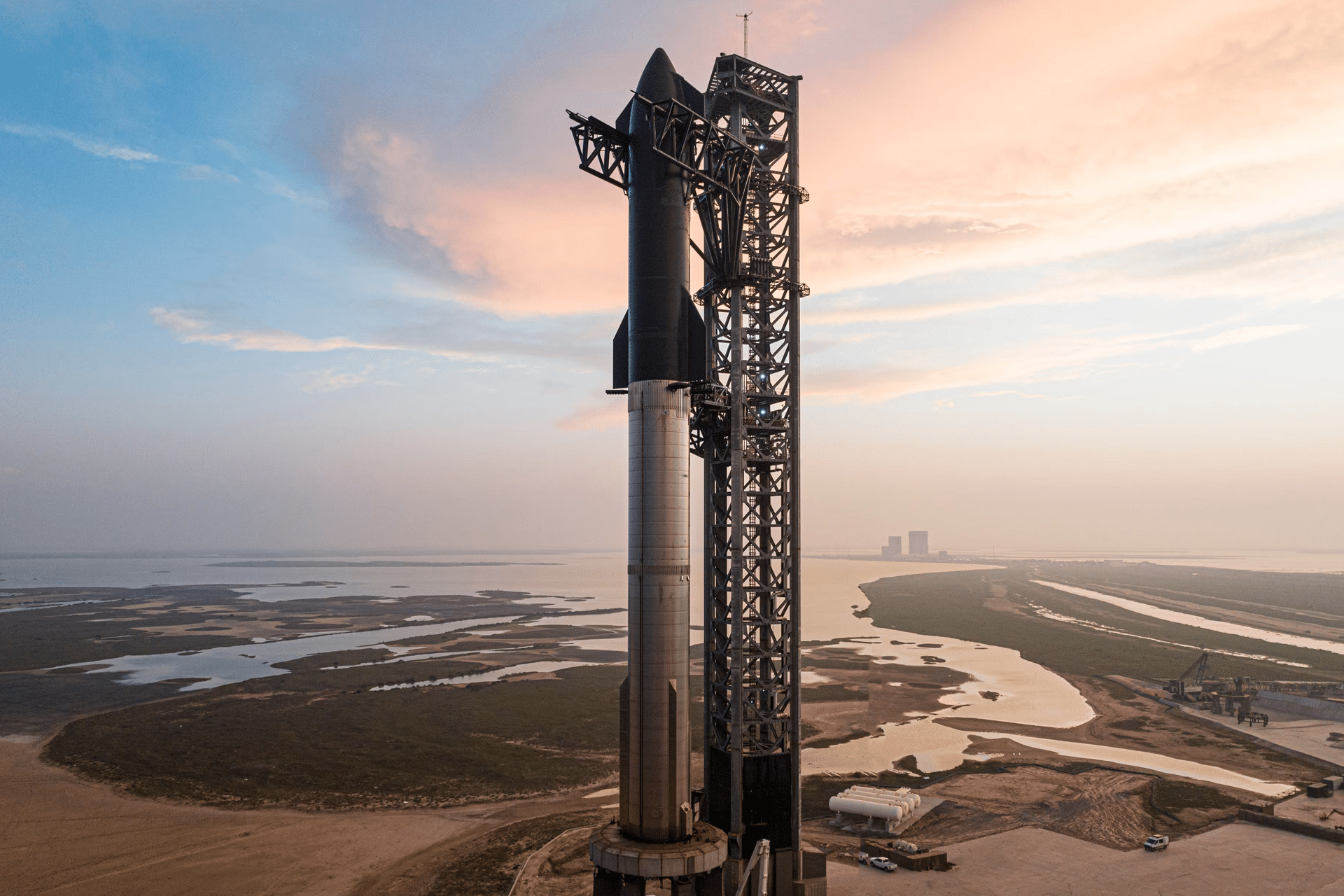
SpaceX and Apple operate in different worlds, but the strategy behind their dominance is becoming easier to compare. Apple used iPhone as the gateway to personal computing, then expanded into services, payments, privacy, productivity, wearables, entertainment, health, and Apple Intelligence. SpaceX is using reusable launch as the gateway to space, then expanding into Starlink, direct-to-cell service, satellite infrastructure, orbital logistics, government communications, AI computing, and eventually robotic construction beyond Earth.
The comparison is not about rockets looking like iPhones or satellites behaving like Macs. It is about platform control. Apple dominated the device people touched every day. SpaceX is trying to dominate the route to orbit. Apple built an installed base for Siri AI and Apple Intelligence. SpaceX is building a launch and satellite base for orbital AI computing and the next generation of space infrastructure.
The timing makes the comparison sharper. SpaceX’s IPO has become one of the defining market stories of 2026, with a planned $75 billion raise at a $1.75 trillion valuation and Nasdaq trading under the SPCX ticker. Apple’s IPO on December 12, 1980, started at $22 per share and became one of the most studied wealth-creation stories in technology history. SpaceX is entering the public markets with a much larger valuation, but the strategic question is familiar: can one company use a breakthrough platform to reshape the next century of industry?
Apple’s Entrance Point Was iPhone
Apple’s modern power came from controlling the entrance point to personal computing. The iPhone was not only a phone. It became the main interface for apps, photos, messages, banking, maps, payments, health, entertainment, work, authentication, and now AI.
That entrance point gave Apple scale. Apple said in early 2026 that its active installed base had passed 2.5 billion devices. Independent analyst Horace Dediu estimated that around 1.6 billion of those active devices are iPhones. Those numbers matter because Apple’s AI future does not need to start from a blank market. Siri AI, Apple Intelligence, Private Cloud Compute, App Intents, and on-device machine learning can be pushed into a user base already carrying the hardware.
SpaceX’s entrance point is not a screen. It is launch. Falcon 9 became the repeatable gateway to orbit. Starlink became the demand engine built on top of that gateway. Starship is the next attempt to scale the system from launches to industrial logistics.
Apple turned the pocket into a platform. SpaceX is trying to turn orbit into one.

SpaceX’s Unstoppable Patch Starts With Launch
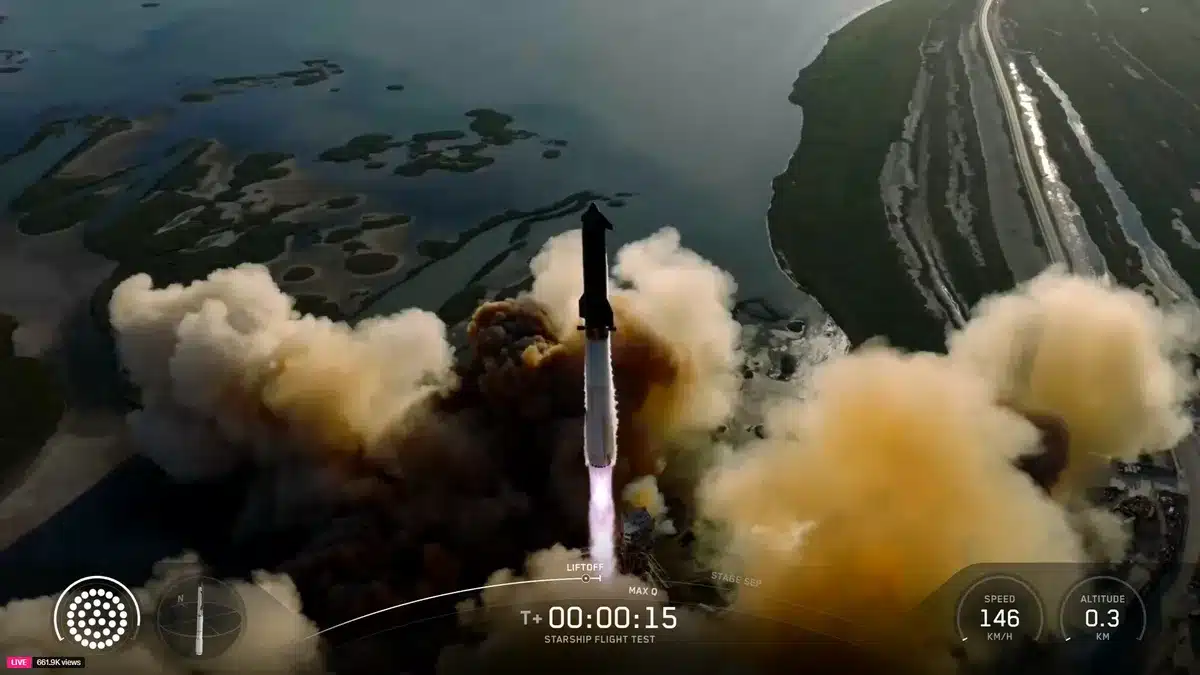
Falcon 9 is SpaceX’s iPhone moment. It turned a product into an operating rhythm.
SpaceX did not only build a rocket that could reach orbit. It built a reusable launch system that could fly repeatedly, serve outside customers, support NASA and defense missions, deploy Starlink, recover boosters, and improve through constant repetition. That cadence became the advantage.
The numbers show how far the gap has opened. SpaceX conducted 165 orbital launches in 2025, up from 134 in 2024, 96 in 2023, and 61 in 2022. That is not a normal aerospace curve. It is a manufacturing and operations curve.
The payload-mass comparison is even more important. SpaceX’s own 2026 update noted that even in 2025, the most prolific launch year in history, only about 3,000 tons of payload were launched into orbit worldwide. Space statistics indicate that the cumulative payload-to-orbit total has exceeded 44,000 tons since the inception of the space age, with the USSR Sputnik satellite launching in 1957.
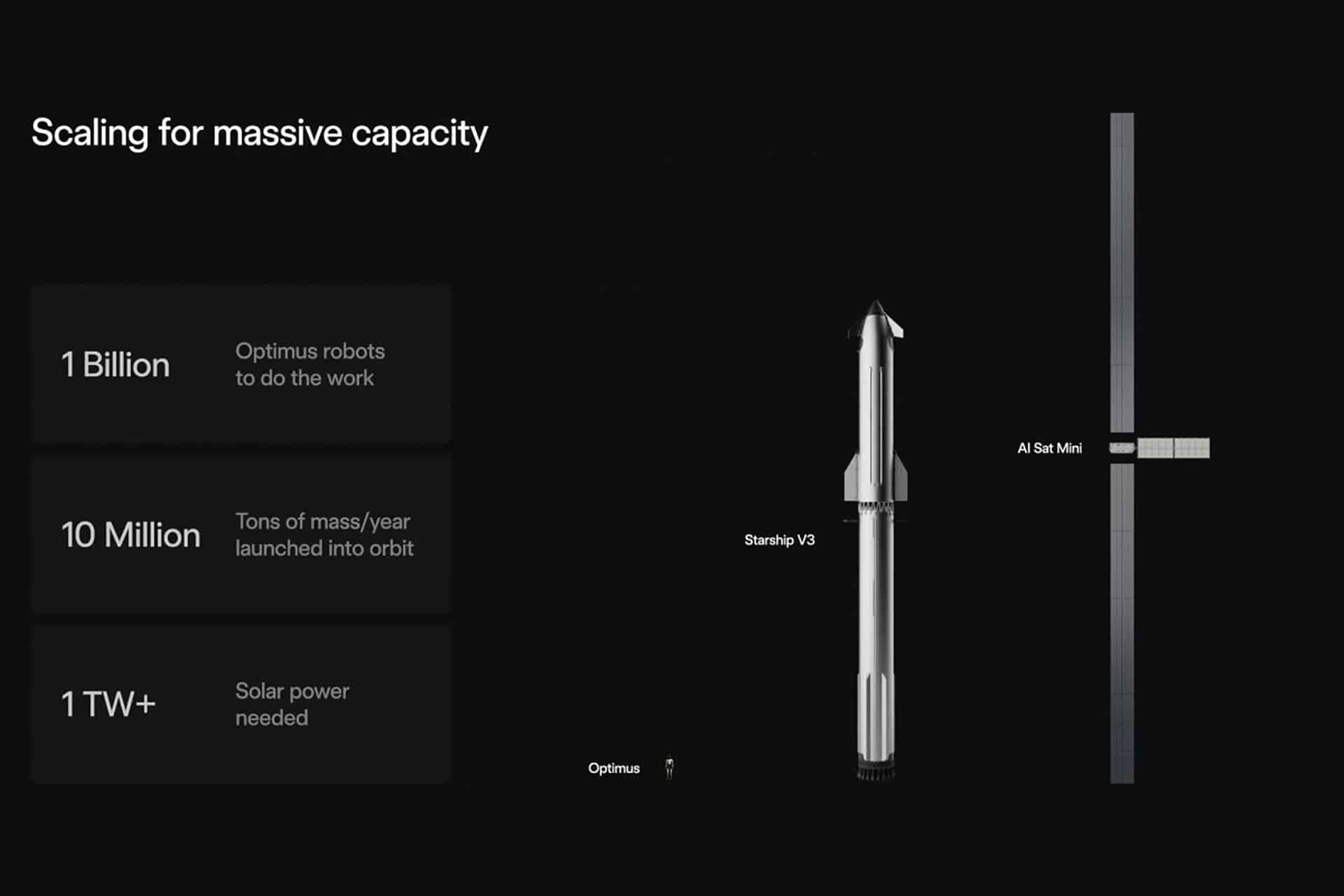
That matters because SpaceX is no longer talking only about competing with yearly launch providers. Its Starship roadmap points toward numbers that could overwhelm the entire history of orbital payload mass. SpaceX has described the math behind launching 1 million tons per year of satellites for AI compute. If that target ever became operational, it would exceed the historical total many times in a single year.

Starship Changes the Scale
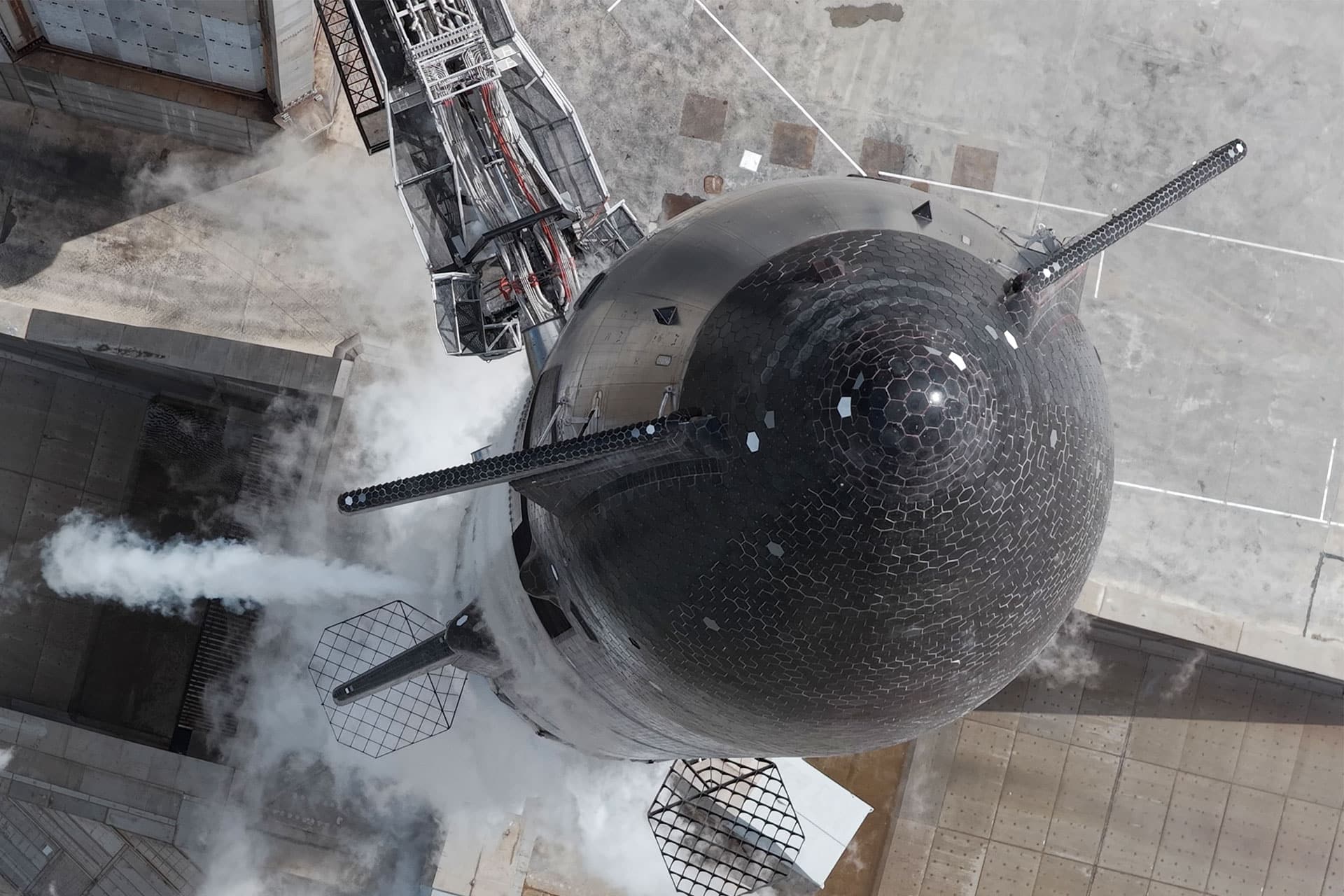
Starship is not yet the reliable system Falcon 9 already is. Falcon 9 is operational. Starship is still proving reliability, reuse, infrastructure, regulation, and cadence. But the strategic ambition is visible.
SpaceX says Starship is designed to carry more than 100 metric tons to orbit in a fully reusable configuration. That is a different class of vehicle. Reuters has reported that SpaceX has discussed thousands of annual Starship launches in the future, while FAA-related reporting has referenced ambitions as high as 10,000 annual launches within five years, a target that would require far stronger reliability, more launch sites, and regulatory approval.
SpaceX has also pointed to a manufacturing vision built around high-volume Starship production. Public reporting around Starfactory has described the company’s goal of eventually producing one Starship vehicle per day. Even if that remains aspirational, it shows the direction: rockets treated less like rare national projects and more like industrial products moving through a production line.
This is where SpaceX’s strategy becomes Apple-like again. Apple did not dominate by making one great iPhone. It dominated by turning iPhone into a repeatable platform, backed by supply chain control, chips, software, services, retail, and developer support. SpaceX is trying to turn Starship into the repeatable transport layer for a space economy.
The Financial Engine Is Starlink
Starlink is SpaceX’s services business.
Apple’s services business grew because iPhone created a massive installed base. iCloud, Apple Music, Apple TV, AppleCare, App Store revenue, Apple Pay, subscriptions, and other services sit on top of devices people already own.
Starlink sits on top of SpaceX’s launch advantage. A satellite internet business requires satellites, launches, terminals, ground stations, software, spectrum rights, customer support, and constant replenishment. Most companies would have to pay another launch provider to build that network. SpaceX launches its own.
Reuters reported that Starlink serves 10.3 million users through about 9,600 satellites and contributed roughly 60 percent of SpaceX’s $18.67 billion in revenue last year. That is the most useful financial comparison to Apple’s model. Launch is the gateway. Starlink is recurring revenue. Starlink creates launch demand. Launch capacity makes Starlink cheaper and faster to expand.
Apple’s flywheel is device to service to loyalty. SpaceX’s flywheel is rocket to satellite to connectivity revenue.
The IPO Makes the Apple Comparison Timely
Apple’s IPO became a symbol of the personal-computer age. Apple went public on December 12, 1980, at $22 per share. Its offering was the largest U.S. IPO since Ford in 1956 and became a landmark in Silicon Valley history. The real escalation came later, as Apple used the Mac, iPod, iPhone, App Store, services, and Apple silicon to become one of the world’s most valuable companies.
SpaceX’s IPO enters the market with a much larger story already priced in. Reuters reported SpaceX planned to raise $75 billion at $135 per share, targeting a valuation around $1.75 trillion, with shares expected to trade on Nasdaq under SPCX. That is not a traditional aerospace valuation. It is a platform valuation.
The market is not valuing SpaceX only as a rocket company. It is valuing the possibility of a company that controls reusable launch, satellite internet, AI infrastructure, orbital computing, government communications, and future space logistics.
That is the same kind of leap investors eventually made with Apple. Apple was not only a computer maker. It became a consumer technology platform. SpaceX is asking investors to believe it is not only a launch provider. It is becoming the infrastructure company for the next space economy.
Preparation Is the Lucky Factor of Master Minds
Apple looked perfectly positioned when services exploded because it had spent years building the iPhone installed base, iCloud, the App Store, Apple Account, payment systems, developer tools, and hardware trust. Apple Intelligence now benefits from that preparation. Siri AI has a potential distribution base of more than a billion iPhones because Apple spent nearly two decades building the gateway first.
SpaceX may be preparing the same kind of future advantage. Orbital AI computing is still speculative, but the pressure behind it is real. AI data centers need energy, cooling, land, power-grid access, chips, security, and connectivity. Earth-based data centers are already colliding with electricity demand and infrastructure constraints. Space offers solar exposure, physical expansion, and a different energy equation, but it also brings major engineering challenges: heat rejection, radiation, maintenance, latency, launch cost, and reliability.
Preparation often looks like luck only after the market changes.
SpaceX aims to launch orbital AI computing tests by late 2027 and has sought approval for up to 1 million space-based data-center satellites. The company has also claimed it is the only player with a commercially viable path to orbital AI compute at scale. The reason is straightforward: no other company combines reusable launch, Starship ambition, Starlink operations, satellite manufacturing, and global network experience in the same way.
Apple prepared personal AI by owning the device. SpaceX is preparing orbital AI by owning the road to orbit.
Tesla Optimus Adds the Robotic Layer
Tesla Optimus introduces another valuable strategic feature.
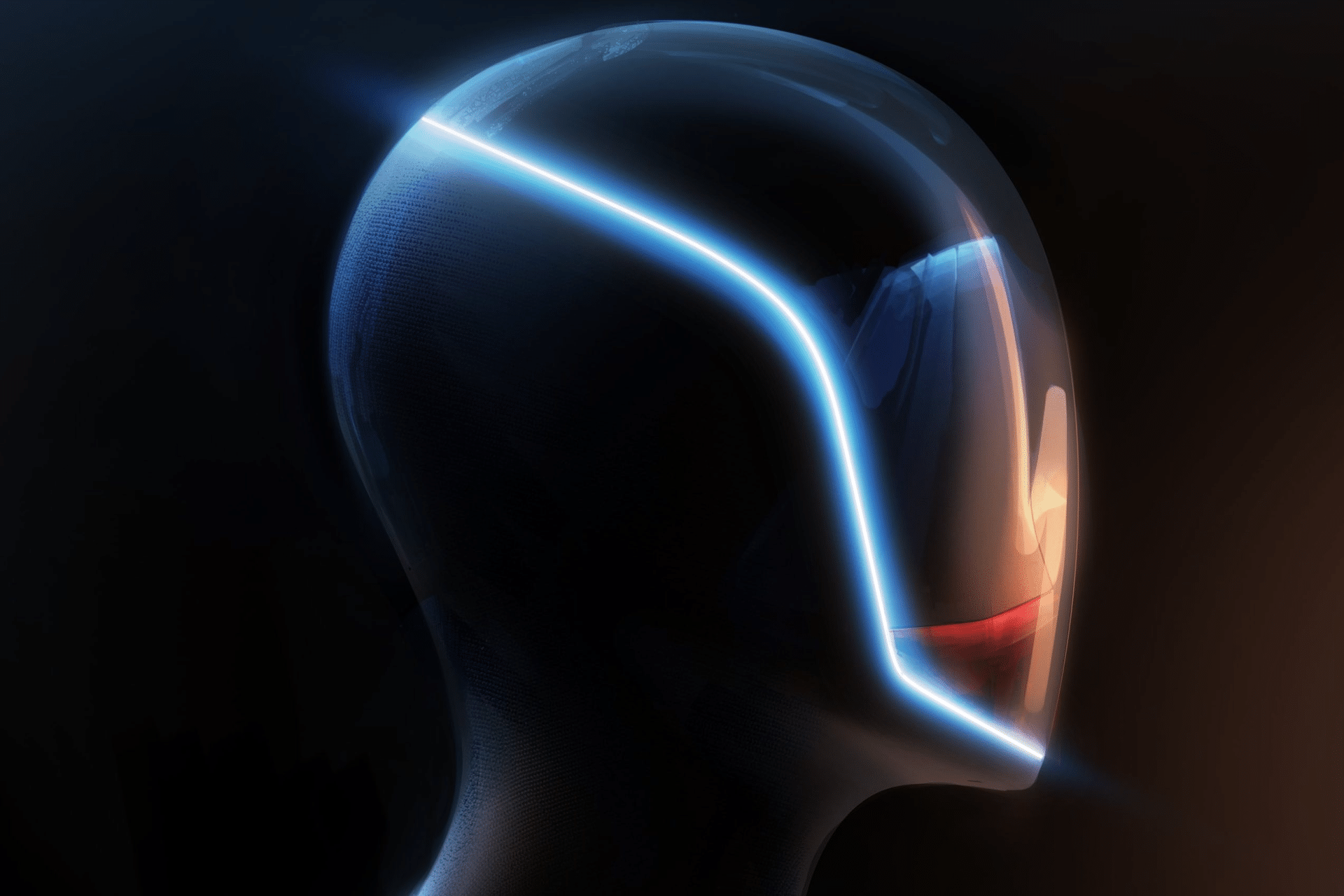
Tesla’s humanoid robot project is aimed first at physical work on Earth: factories, logistics, repetitive labor, and tasks that require movement through human-designed spaces. The long-term production claims around Optimus are ambitious and uncertain, with timelines frequently shifting. Still, the technology stack matters: robotics, computer vision, AI inference, motion planning, batteries, actuators, and manufacturing scale:
SpaceX and Tesla are the cornerstones of the space manufacturing industry.
If robots become reliable enough and SpaceX reduces the cost of moving mass to orbit, robotics could become part of space infrastructure. Orbital assembly, satellite servicing, lunar construction, Mars logistics, and maintenance tasks all become more viable if machines can do work humans cannot safely or cheaply do at scale.
This is a strategic possibility created by overlapping capabilities. Apple’s ecosystem advantage came from hardware, software, chips, services, and developers reinforcing one another. Musk’s industrial ecosystem could eventually connect launch, satellites, AI, robotics, energy, and manufacturing.
The same principle applies: the next industry is easier to dominate when the enabling layers already exist.
The Interoperability Network Is the Moat
Apple’s moat is not just iPhone. It is iPhone working with Mac, iPad, Apple Watch, AirPods, Apple TV, HomePod, iCloud, Wallet, Health, Messages, FaceTime, App Store, and Apple Intelligence. The more pieces connect, the harder the system is to leave.
SpaceX is building an industrial version of that moat. Falcon 9 supports Starlink. Starlink funds more launches. Starship could deploy larger satellites and orbital infrastructure. Direct-to-cell extends the network into mobile communications. Government services add strategic demand. Orbital AI could require Starship-scale deployment. Future robotic construction could rely on the low-cost mass to orbit, reaching destinations like the Moon and Mars.
This is not consumer convenience. It is infrastructure dependency.
The moat is not one rocket, one satellite, or one terminal. It is the network of systems that reinforce one another. Launch supports satellites. Satellites create revenue. Revenue funds infrastructure. Infrastructure enables new markets. New markets require more launch.
That is how an ecosystem becomes dominant.
These Strategies Will Be Studied for Centuries
Apple and SpaceX are not only company stories. They are case studies in industrial architecture.
Apple showed how controlling the personal-computing gateway could create decades of expansion: devices, software, chips, services, payments, health, privacy, media, and AI. SpaceX is showing how controlling the orbital gateway could create a new chain of expansion: launch, satellite internet, direct-to-cell, government infrastructure, Starship logistics, orbital computing, robotics, and space-based industry.
Both companies understood that dominance begins before the market fully sees the destination. The public sees the product. The strategist sees the gateway.
Apple’s IPO started as a personal-computer milestone and became the opening chapter of a company that eventually reshaped global consumer technology. SpaceX’s IPO is being pitched as a launch, satellite, and AI infrastructure story at once. If SpaceX executes even part of its Starship and orbital-compute vision, today’s IPO will be remembered less as a financial event and more as the moment the space economy became a public-market platform.
These strategies will be studied for centuries because they show how the most powerful companies are not built around one product. They are built around the entrance point to everything that comes after.
Apple transformed the iPhone into a gateway for personal computing. SpaceX aims to turn launches into a gateway for civilization beyond Earth.