


Apple has unveiled a new generation of displays designed to complement the Mac lineup, introducing an updated Studio Display and the all-new Studio Display XDR. While the standard Studio Display refines its feature set, Studio Display XDR targets professional users who demand advanced brightness, contrast precision, and color accuracy.
The new display family is built around improved connectivity, upgraded camera and audio systems, and expanded workflow flexibility.
Studio Display XDR Redefines the Pro Standard
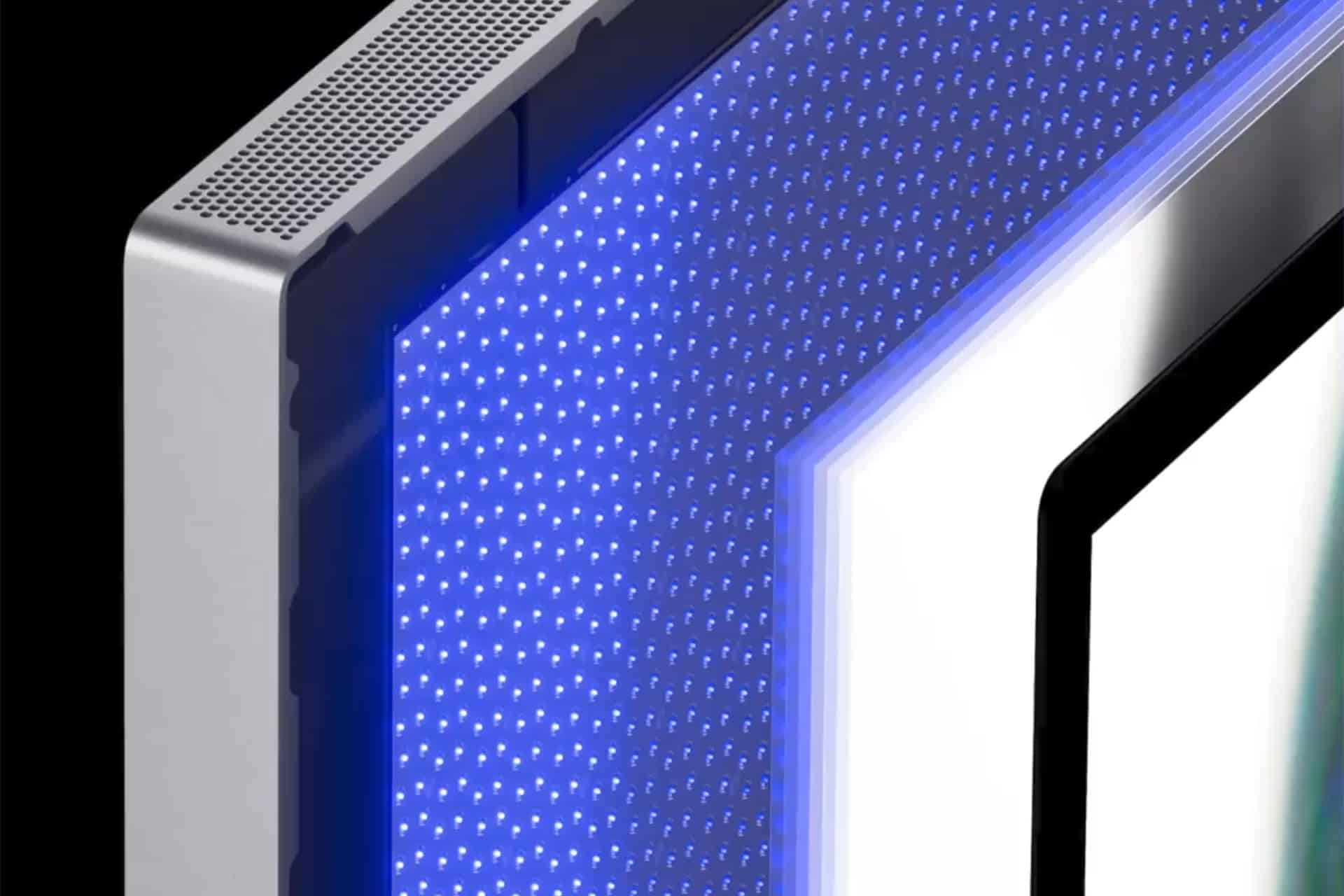
Studio Display XDR features a 27-inch 5K Retina XDR display with a 5120-by-2880 resolution. Its mini-LED backlight system includes over 2,000 local dimming zones, enabling precise brightness control across the panel.
Key display specifications include:
- Up to 1000 nits sustained SDR brightness
- Up to 2000 nits peak HDR brightness
- 1,000,000:1 contrast ratio
- 120Hz refresh rate
- Adaptive Sync with variable refresh from 47Hz to 120Hz
The mini-LED system reduces blooming and halo effects while delivering deep blacks and high-contrast highlights. For HDR video editors, colorists, and VFX professionals, brightness and contrast consistency are critical for accurate content grading.

Enhanced Color Accuracy for Creative Workflows
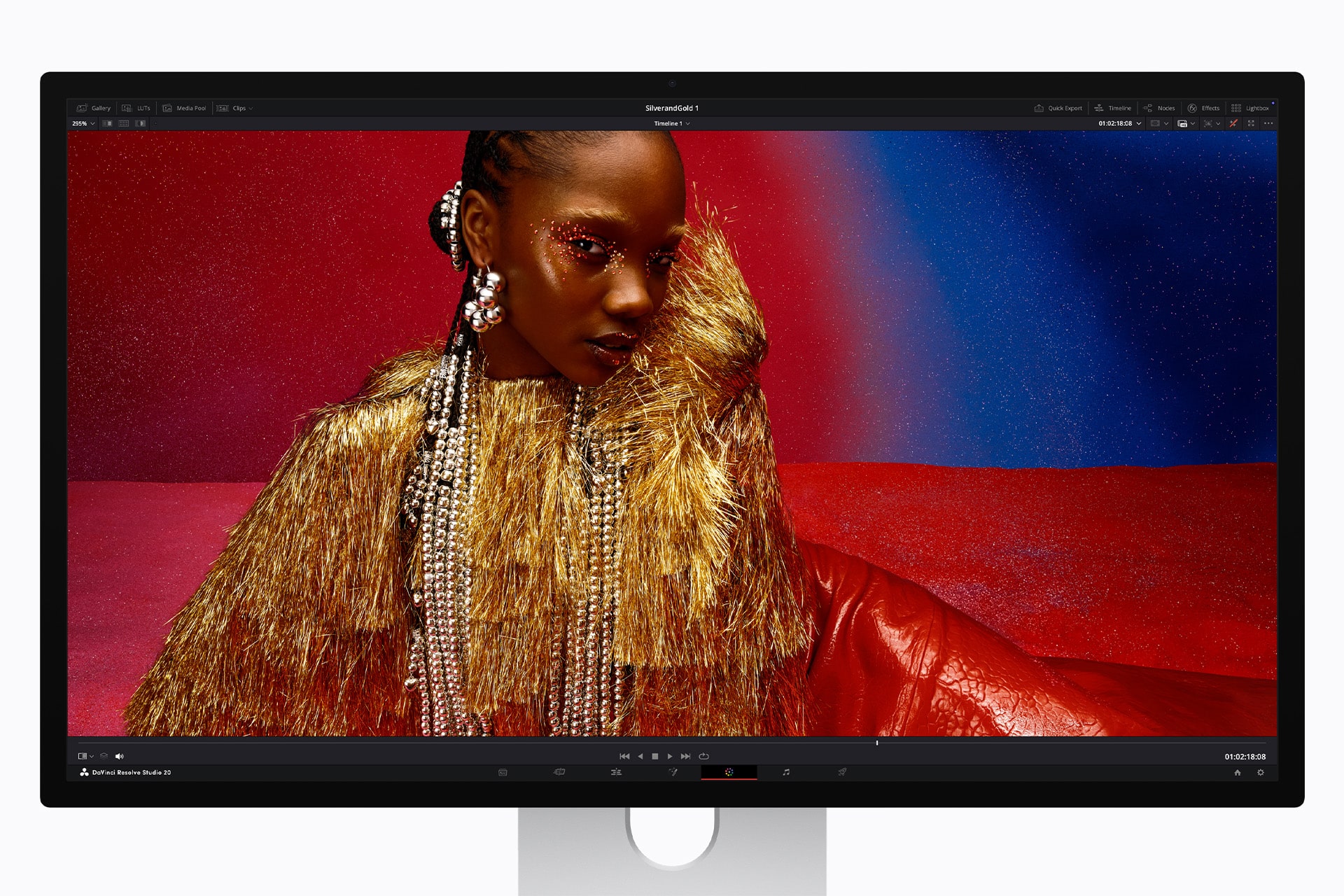
Studio Display XDR supports P3 wide color and Adobe RGB color gamuts. This makes it suitable for print design, digital photography, HDR filmmaking, and cross-platform content production.
With more than 80 percent Rec. 2020 coverage for HDR workflows, the display serves as a reference-grade option for professionals switching between color spaces. The unified preset configuration simplifies transitions between P3 and Adobe RGB without recalibration.
Advanced XDR Technology and Motion Handling
The 120Hz refresh rate increases motion smoothness across video playback, animation workflows, and gaming. Adaptive Sync dynamically adjusts frame rates to reduce tearing and improve responsiveness.
For editors working in apps such as Adobe Premiere or DaVinci Resolve, smoother timeline scrubbing and preview playback benefit from this higher refresh rate.
The display also introduces DICOM medical imaging presets alongside a Medical Imaging Calibrator tool in macOS, enabling radiology workflows. This expands Studio Display XDR into specialized healthcare environments where image fidelity is critical.
Thunderbolt 5 and Integrated System Design
Studio Display XDR includes two Thunderbolt 5 ports and two additional USB-C ports, functioning as a hub for professional setups. Thunderbolt 5 supports high-speed data transfer and daisy-chaining multiple displays.
The included Thunderbolt 5 Pro cable provides up to 140W of charging power, sufficient to fast-charge a 16-inch MacBook Pro.
The display also integrates a 12MP Center Stage camera with Desk View support, a studio-quality three-microphone array with beamforming, and a six-speaker sound system with Spatial Audio. This combination reduces the need for external conferencing hardware in professional environments.
Studio Display — Refined for Everyday and Pro Users
Alongside the XDR model, the updated Studio Display features:
- 27-inch 5K Retina panel
- 600 nits brightness
- P3 wide color
- Thunderbolt 5 connectivity
- Improved 12MP Center Stage camera
- Six-speaker audio system
It supports daisy-chaining up to four displays and offers nano-texture glass for glare reduction in bright environments.
Pricing and Availability
The new Studio Display starts at $1,599 with a tilt-adjustable stand. Studio Display XDR starts at $3,299 with a tilt- and height-adjustable stand. Both models are available with standard or nano-texture glass.
Pre-orders begin March 4, with availability starting March 11.
Studio Display XDR positions itself as Apple’s most advanced standalone display, combining mini-LED XDR brightness, 120Hz motion handling, professional color accuracy, Thunderbolt 5 connectivity, and integrated conferencing hardware into a single, Mac-optimized solution.