


Studio Display now sits in a different market than the one Apple entered in 2022. At launch, Apple’s 27-inch 5K monitor filled a gap for Mac users who wanted Retina sharpness, strong speakers, a built-in camera, tight macOS integration, and a design that matched Mac Studio and MacBook Pro. There were alternatives, but very few delivered the same 5120-by-2880 resolution at 218 pixels per inch in a Mac-friendly package.
That advantage is no longer as clean. Cheaper 5K monitors are becoming more common, and several are designed directly for Mac users. BenQ’s MA270S, for example, offers a 27-inch 5K panel, 218 PPI, 99% P3 color coverage, Thunderbolt 4, macOS brightness controls, and a lower price than Studio Display. Samsung’s ViewFinity S9 also competes in the 27-inch 5K category, with a removable camera, matte finish, smart-monitor features, and Thunderbolt connectivity. ASUS has brought 27-inch 5K into its ProArt line, targeting creators who care about color and pixel density.
That does not make Studio Display obsolete. It does make Apple’s monitor easier to question. The decision is no longer “Apple 5K or compromise.” It is now “Apple’s complete display experience or a cheaper 5K screen with fewer Apple-specific extras.”
Studio Display Still Has Apple’s Best Mac Integration
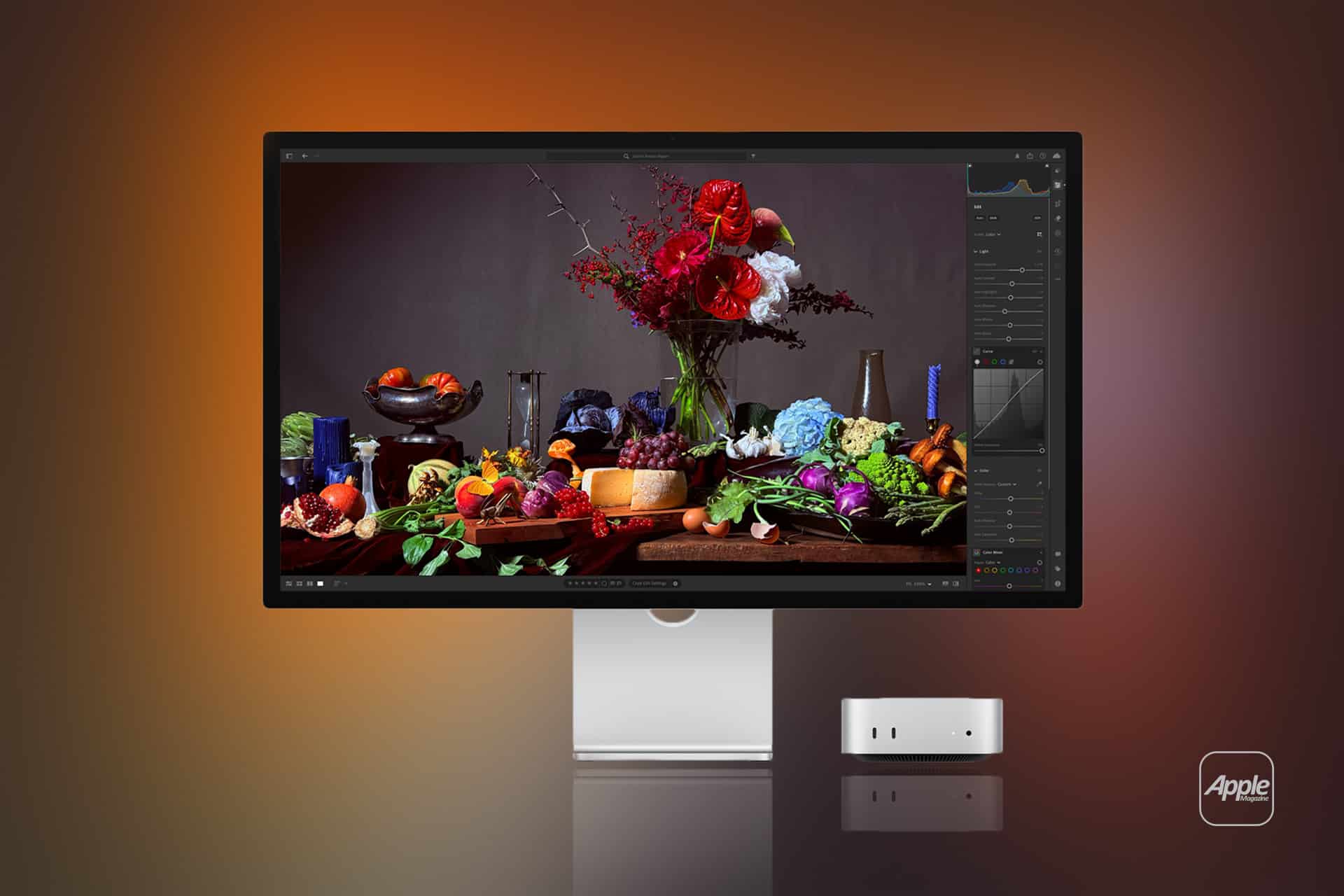
Studio Display remains the most integrated external monitor for Mac users. Apple’s official specifications include a 27-inch 5K Retina panel with 5120-by-2880 resolution, 218 pixels per inch, 600 nits of brightness, support for 1 billion colors, P3 wide color, True Tone, and a 60Hz refresh rate. It also includes a 12MP Ultra Wide camera with Center Stage, a three-mic array, and a six-speaker system with Spatial Audio.
That combination is the reason Studio Display still has appeal. It is not only a panel. It is a monitor, webcam, speaker system, microphone array, Mac-style hub, and desk object in one. For users who want a clean setup, a single Thunderbolt cable, and no separate webcam or speakers, the package is convenient.
macOS integration also gives Studio Display a more native feel. Brightness, True Tone, camera behavior, audio, and system controls work the way Mac users expect. The design matches Apple’s hardware language, and the display avoids the menu-button complexity that many third-party monitors still carry.
That polish has value. A Mac Studio or Mac mini paired with Studio Display feels like a complete desktop, not a collection of parts. For offices, executives, designers, editors, and users who care about desk simplicity, that may be enough to justify the premium.
The problem is that Apple charges heavily for the whole package. Studio Display starts at $1,599, and the height-adjustable stand adds a large extra cost. Nano-texture glass also increases the price. Once configured, Apple’s display can cost far more than several competing 5K monitors.

Cheaper 5K Monitors Are Closing the Gap
The rise of cheaper 5K monitors changes the value equation. BenQ’s MA270S is the most direct recent example because it is clearly aimed at Mac users. BenQ lists a 27-inch 5K display with 218 PPI, 99% P3 color space, 2000:1 contrast, 500 nits brightness, a 70Hz refresh rate, ergonomic design, Nano Gloss coating, and Thunderbolt 4 connectivity. Retailers have listed it around $999 to $1,099, making it hundreds of dollars cheaper than Apple’s display.
That price gap matters. A user can buy a 5K, Mac-focused monitor and keep enough money for accessories, storage, AppleCare, a better keyboard, or a larger SSD upgrade on a Mac. The MA270S also includes an adjustable stand instead of turning ergonomics into a paid upgrade.
Samsung’s ViewFinity S9 gives buyers another 5K option. Samsung lists the 27-inch model with 5K resolution, Thunderbolt 4, a matte display, a SlimFit camera, and smart-monitor features. Its official U.S. price has been listed at $1,599.99, but Samsung displays are often discounted, which can make the real buying price more flexible than Apple’s.
ASUS ProArt Display PA27JCV adds more pressure from the creator side. ASUS lists a 27-inch 5K IPS panel with 218 PPI, 99% DCI-P3, 95% Adobe RGB, and USB-C with 96-watt power delivery. That is exactly the kind of specification set that matters to designers, photographers, and video editors who want sharpness and color without paying for Apple branding.
The key point is not that every competitor beats Studio Display. They do not. Apple still has stronger integrated speakers, a better all-in-one feel, and deeper macOS polish. But the display market now gives Mac users more credible ways to get 5K sharpness for less.
Where Studio Display Feels Dated
Studio Display’s biggest weakness is not its panel quality. It is the feeling that the monitor has not moved while the market around it has.
The 60Hz refresh rate remains limiting for some buyers. A higher refresh rate is not essential for writing, design, photography, coding, or office work, but it makes scrolling, animation, and general motion feel smoother. Some cheaper competitors now offer slightly higher refresh rates, while gaming and creator monitors in other categories push much higher.
HDR is another gap. Studio Display is bright for SDR work at 600 nits, but it is not a mini-LED or OLED HDR display. Users who work seriously with HDR video need to look at other options, including Apple’s Pro Display XDR or high-end third-party reference displays.
The webcam also remains mixed in reputation. Center Stage is useful, but Studio Display’s camera was criticized at launch and improved through software. Many users still prefer an external webcam for sharper calls or better low-light performance.
Then there is the stand. Apple’s base stand tilts but does not adjust for height. For a premium desktop monitor, that feels restrictive. Apple sells a height-adjustable stand, but the price increase makes the display harder to defend when competitors include ergonomic stands by default.
These issues do not ruin Studio Display. They simply make the $1,599 starting price feel less automatic.
Why Apple Has Not Replaced It Yet
Studio Display remains viable because Apple sells an experience, not only a spec sheet. Many Mac users do not want to compare panels, ports, color modes, OSD menus, speakers, webcams, and macOS compatibility. They want a display that turns on, looks right, sounds good, and behaves like part of the Mac.
That customer exists, and Apple knows it. Studio Display is especially appealing to users buying Mac Studio, Mac mini, or a docked MacBook Pro for a clean desk. It is also attractive in professional environments where consistency matters. A company can deploy multiple Studio Displays and know exactly how they will look, connect, and behave.
Apple also avoids the monitor race that many PC brands fight. It does not update displays constantly. It does not chase every panel trend or discount cycle. That can make Apple displays feel slow to evolve, but it also makes them stable accessories that remain on sale for years.
The question is how long that strategy works when 5K alternatives improve. Apple can charge more for integration, but it cannot ignore value forever. If more $999-to-$1,200 5K Mac-focused monitors arrive, Studio Display needs either a price adjustment or a meaningful hardware update.
What a Better Studio Display Needs
A next-generation Studio Display would not need to become a Pro Display XDR replacement. It would need to address the obvious friction points.
A 120Hz panel would make the display feel more modern, especially for MacBook Pro users accustomed to ProMotion. Better HDR support, possibly through mini-LED or another advanced backlight system, would make the monitor more attractive for video workflows. A sharper camera, Thunderbolt 5, improved ports, and a height-adjustable stand included by default would also make the value easier to defend.
Apple could also use display intelligence as a differentiator. Center Stage, spatial audio, ambient light adaptation, reference modes, color consistency, and macOS-level controls are areas where Apple can still do more than commodity monitor brands. If the next Studio Display feels like a smarter Mac accessory rather than a static screen, Apple can preserve its premium position.
The stand issue should be the easiest fix. At this price level, height adjustment should not feel like a luxury. Cheaper monitors have made that harder to justify.
Who Should Still Buy Studio Display
Studio Display remains the best choice for users who care about the complete Apple experience more than the lowest 5K price. It makes sense for Mac Studio and Mac mini owners who want a polished desktop setup with good audio, a built-in camera, simple cabling, and full macOS integration.
It is also a good fit for users who value Retina sharpness for text. The 27-inch 5K format is excellent for macOS because it preserves Apple’s preferred scaling and makes text look clean. Writers, developers, designers, editors, and office users can benefit from that every day.
Cheaper 5K monitors make more sense for buyers who already have a webcam, use separate speakers, want an adjustable stand without paying Apple’s premium, or care mostly about the panel. BenQ’s MA270S is especially interesting for MacBook users who want 5K sharpness and Mac-oriented controls at a lower price. ASUS ProArt models may appeal to creators who prioritize color specifications. Samsung’s ViewFinity S9 may fit buyers who want a 5K monitor with smart features and discount potential.
The decision is now more personal. Studio Display is no longer the only clean 5K answer for Mac users. It is the most Apple-like one.
Apple’s Display Needs a Stronger Argument
The rise of cheaper 5K monitors does not kill Studio Display. It exposes the parts of Apple’s display strategy that feel frozen. The panel is still sharp. The industrial design is still strong. The speakers are still excellent for a monitor. The Mac integration remains better than most competitors.
But 5K resolution is no longer rare enough to carry the whole story. Third-party brands are learning what Mac users want: Retina-like density, USB-C or Thunderbolt, P3 color, brightness control from the keyboard, clean design, and fewer setup headaches.
That is why Studio Display’s future depends on Apple refreshing the reason to pay more. The next version does not need to be cheap. It needs to feel clearly ahead.
Until then, Studio Display remains a premium convenience product in a market that finally has real alternatives. For many Mac users, that may be enough. For everyone else, the cheaper 5K era has made Apple’s monitor much easier to skip.