

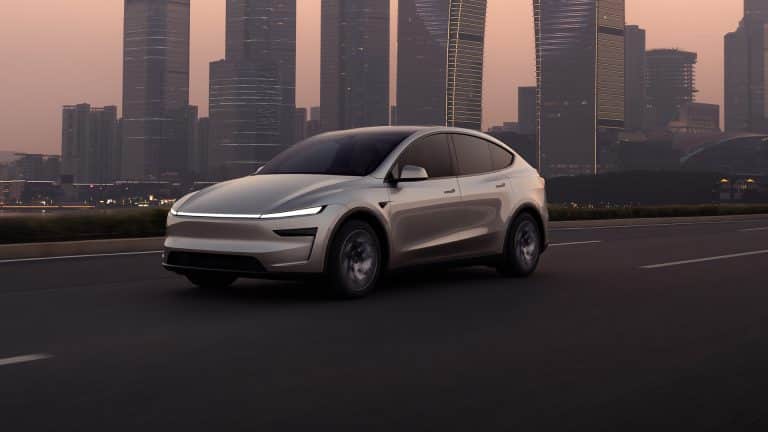
Tesla has avoided Apple CarPlay for more than a decade, keeping full control of its in-car software while most automakers gave iPhone users a direct way to bring Apple Maps, Messages, Music, Podcasts, and third-party apps onto the dashboard. That wall may finally be weakening.
Tesla is reportedly working with Apple on CarPlay support for its electric vehicles, a reversal that would bring one of the most requested iPhone features to Tesla’s touchscreen. The reported version is not expected to be CarPlay Ultra, Apple’s deeper multi-screen car interface. Instead, Tesla is said to be testing a more limited CarPlay experience that would run inside a window within Tesla’s own software.
The most interesting part is not simply that Tesla may add CarPlay. It is what may have been holding it back. Tesla’s own navigation system is tied closely to routing, battery planning, charging stops, Supercharger guidance, and driver-assistance features. A separate Apple Maps route running inside CarPlay could create a split-brain problem: one route on Apple’s side, another route inside Tesla’s system.
Apple’s iOS 27 CarPlay changes may be the missing bridge. At WWDC26, Apple introduced route sharing for CarPlay navigation apps, allowing routes to be shared with the vehicle after driver approval. For Tesla, that could offer a cleaner way to let CarPlay exist without breaking the car’s native navigation logic.
Tesla’s CarPlay Resistance Was About Control
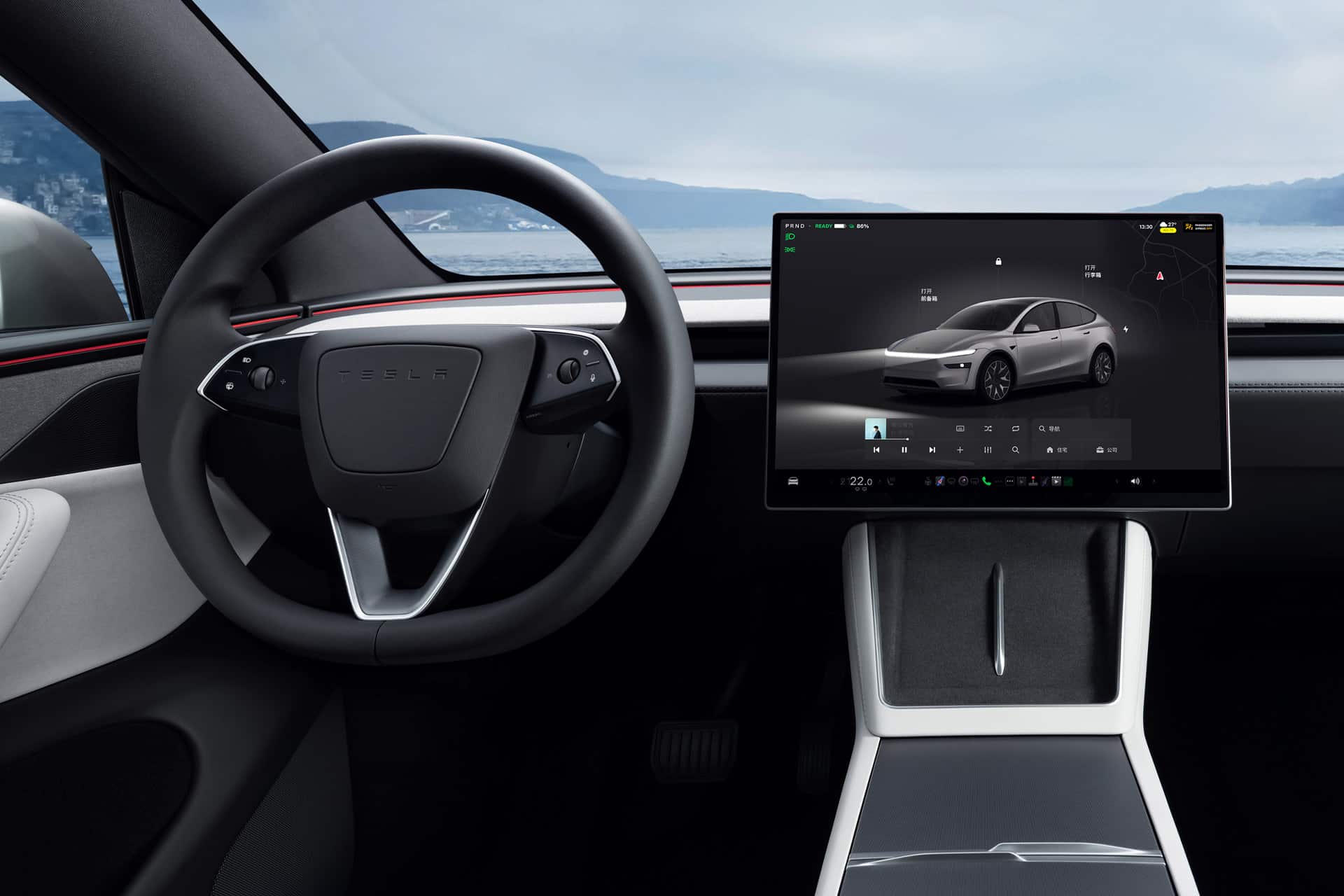
Tesla’s refusal to support CarPlay has never been a simple omission. The company built its vehicles around a large central touchscreen and a vertically integrated software experience. Navigation, climate, media, charging, vehicle settings, cameras, driver-assistance information, energy use, and entertainment all live inside Tesla’s own interface.
Adding CarPlay would mean letting another software layer onto one of the most valuable screens in the car. For years, Tesla resisted that idea.
The company did add individual Apple services, including Apple Music, but it stopped short of full CarPlay. That gave Tesla control over the interface, data, navigation, and customer experience. It also kept drivers inside Tesla’s software instead of turning the screen into an iPhone extension.
That strategy has advantages. Tesla can update its interface quickly, integrate features tightly with the vehicle, and keep navigation connected to battery and charging systems. It can also avoid the fragmented look that happens when automakers mix native software with phone projection.
But the downside has always been user demand. Many Tesla drivers use iPhone. Many prefer Apple Maps, Apple Podcasts, Messages, Calendar, third-party audio apps, or the familiar CarPlay layout. For some buyers, the lack of CarPlay has become one of Tesla’s strangest omissions.

A Windowed CarPlay Experience Makes More Sense
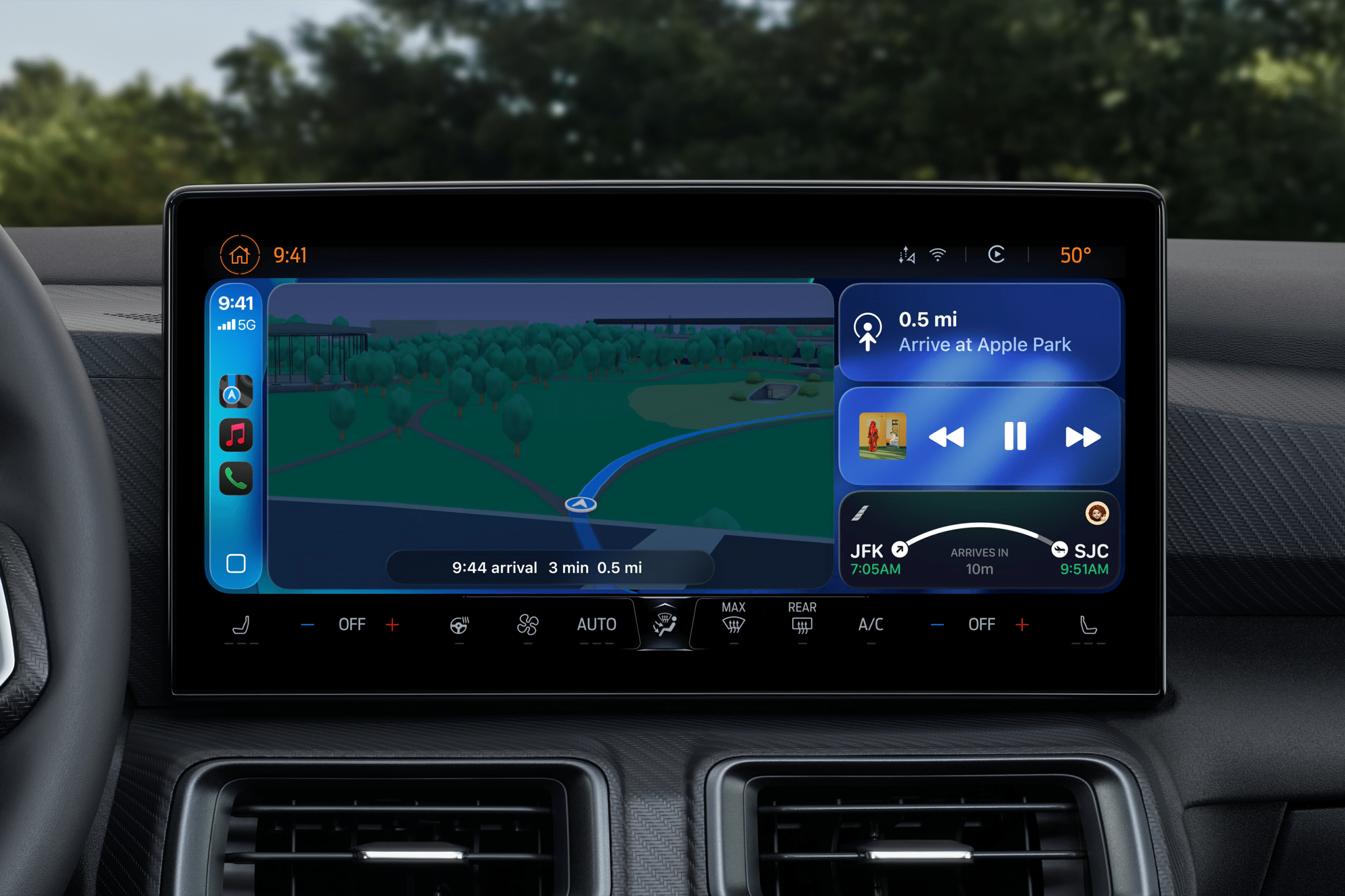
Reports have suggested Tesla is not planning to let CarPlay take over the full display. That would be consistent with Tesla’s software philosophy. A windowed CarPlay implementation would give drivers iPhone integration while preserving Tesla’s main interface around it.
That compromise could be the only realistic path. Tesla would keep control of core vehicle functions, cameras, climate, energy, charging, and driver-assistance information. Apple would get a CarPlay surface for navigation, messaging, media, calls, and supported apps.
This would also separate Tesla from automakers adopting CarPlay Ultra. CarPlay Ultra is designed to power more of the in-car experience, including instrument clusters and deeper vehicle controls, where automakers allow it. Tesla is unlikely to hand over that much of its interface.
A windowed version would be narrower, but it may still satisfy many iPhone users. For most drivers, CarPlay is not about replacing the car. It is about getting safer access to the iPhone apps they already use while driving.
Why Navigation Was the Hard Part
Navigation is the hardest piece because Tesla’s route planning is not generic. In an electric vehicle, route guidance is tied to energy use, battery state, charger availability, charging speed, elevation, weather, traffic, and the Supercharger network. Tesla’s system can precondition the battery before a Supercharger stop, estimate arrival charge, and plan long-distance routes around charging needs.
Apple Maps can also support EV routing in compatible vehicles, but Tesla’s software has its own deep car-side logic. If CarPlay ran Apple Maps separately while Tesla’s navigation had a different route, the car could lose context for charging and driver-assistance behavior.
That is the conflict Apple’s new route-sharing tools may address. Apple told developers at WWDC26 that CarPlay navigation apps can opt in to route sharing using the Map template. When pairing with a vehicle, the driver is prompted to approve route sharing for that vehicle. Once approved, a navigation app can share a route when connected to the vehicle, and apps can disable sharing for trips that are not eligible.
For Tesla, that kind of connection could let a CarPlay navigation route become useful to the vehicle instead of remaining trapped inside the CarPlay window. The car could receive route information while still keeping Tesla’s own systems in control of vehicle-specific behavior.
Apple Maps EV Routing Adds Another Piece
Apple already supports EV routing in Maps for compatible vehicles. Apple’s iPhone guide says that for compatible EVs that do not require a manufacturer app, users can connect iPhone to CarPlay, open Maps, get directions, and tap Connect above the route list to set up EV routing. For vehicles that require a manufacturer app, users can set up EV routing through that automaker’s app.
That matters because Tesla’s route problem is not only about screen projection. It is about data exchange between phone, map, and car. Apple needs a way for Maps and CarPlay to understand vehicle context. Tesla needs a way to keep its routing, battery, and charging systems reliable if another navigation app is visible.
Route sharing could make that relationship more practical. It does not mean Apple Maps would replace Tesla navigation. It means Apple Maps or another CarPlay navigation app could pass route intent to the car, allowing Tesla’s software to stay aware of where the driver is going.
That is a much better fit for Tesla than a traditional CarPlay setup where the phone and vehicle behave like separate systems.

Driver Approval Is Part of the Design
Apple’s WWDC26 route-sharing description includes a permission step: the driver approves route sharing for the vehicle. That detail is essential.
Cars are not phones. A route can affect charging stops, driver-assistance behavior, traffic decisions, range planning, and safety-related prompts. Apple cannot treat route data like a casual app preference. The driver has to understand that a navigation app is sharing trip information with the vehicle.
That permission model could help Tesla feel more comfortable with CarPlay. Tesla would not need to accept every route from every app automatically. The driver approves sharing, the app opts in, and ineligible trips can be excluded.
For users, the permission step also builds trust. A driver should know when Apple Maps, Google Maps, Waze, or another CarPlay navigation app is passing route information to the car. In a Tesla, that distinction may be especially important because the vehicle’s native navigation is linked to charging and assisted-driving workflows.
CarPlay in Tesla Would Still Be Limited
Even if Apple and Tesla move forward, Tesla drivers should not expect CarPlay to turn the vehicle into a conventional CarPlay car.
The reported implementation is expected to be wireless and windowed. It would likely run as an app-like area inside Tesla’s existing interface rather than replacing the whole screen. Tesla would probably keep its own navigation, vehicle controls, energy displays, cameras, climate controls, charging tools, and driver-assistance panels.
That would disappoint some users who want full CarPlay behavior. But it may be the version Tesla is willing to ship.
A limited CarPlay window would still bring major benefits. Drivers could use Apple Maps, Apple Music, Podcasts, Messages, Phone, Calendar, audiobooks, and supported third-party apps through a familiar interface. Siri could handle messages and calls. iPhone users would get a more standard in-car experience without aftermarket workarounds.
For Tesla, the feature could remove a long-running complaint while preserving the company’s software identity.
Why Tesla May Be Changing Its Mind
Tesla’s market position has changed since CarPlay first became common. The company is no longer the only serious EV option in many markets. Hyundai, Kia, Ford, Rivian, BMW, Mercedes-Benz, Porsche, Volvo, Polestar, and others compete for EV buyers with stronger software, better charging compatibility, and broader interior technology.
CarPlay support is also a purchase factor. Many drivers expect it. Some will not buy a vehicle without it. Even buyers who like Tesla’s software may still want iPhone integration for everyday apps.
Adding CarPlay would not make Tesla less Tesla. It would make the car easier to live with for iPhone owners.
There is also a sales angle. Tesla has faced more competition, more pricing pressure, and more scrutiny around its brand. A feature as requested as CarPlay could help soften the ownership experience without requiring a major hardware redesign.
Tesla has already shown some willingness to add Apple services when customer demand is high enough. CarPlay would be a larger step, but the logic is similar: meet users where they already are.
Apple Also Needs Tesla
Apple benefits from this as much as Tesla does. Tesla remains one of the most visible EV brands in the world, and its absence from CarPlay has always been awkward for Apple.
CarPlay is widely supported across the auto industry, but Tesla’s omission stands out because Tesla buyers are tech-forward and often own iPhones. Bringing CarPlay to Tesla would strengthen Apple’s claim that iPhone belongs naturally in the car, even in vehicles built around advanced native software.
It would also give Apple more relevance in EV navigation. Apple Maps has improved, but Tesla’s navigation remains deeply trusted by Tesla owners because it understands charging and range. If Apple can work with Tesla rather than around it, CarPlay becomes more credible in the EV space.
The timing also fits Apple’s broader automotive shift. Apple no longer has its own car project, but CarPlay, Maps, Wallet car keys, EV routing, SharePlay in cars, and Siri give the company a strong software role inside vehicles.
Tesla would be a symbolic win.
CarPlay Ultra Is Not the Right Model for Tesla
CarPlay Ultra is Apple’s most ambitious car interface, extending across more screens and deeper vehicle systems. It depends on automaker cooperation at a level Tesla is unlikely to provide.
That is why the reported Tesla plan appears to involve regular CarPlay rather than CarPlay Ultra. Tesla has no reason to let Apple control its instrument cluster, vehicle settings, or core interface. Its software is part of its brand.
Regular CarPlay in a window is more realistic. It gives users iPhone access without asking Tesla to surrender the dashboard. It also avoids the complexity of mapping Tesla’s unique interface into Apple’s full-car design system.
This may become a model for other software-first automakers. Companies that do not want CarPlay Ultra may still support a narrower CarPlay experience if Apple provides better route sharing, EV integration, and safer boundaries between phone and vehicle.
The best compromise is not always the most complete version. It is the version an automaker will actually ship.
The Missing Link Is Trust Between Systems
The phrase “missing link” fits because the challenge has never been only technical display support. Tesla can show apps on a screen. Apple can project CarPlay wirelessly. The real issue is trust between systems.
Tesla needs to trust that CarPlay will not create conflicting navigation, confuse drivers, or weaken vehicle-specific features. Apple needs to give CarPlay enough access to be useful without demanding control Tesla will not give. Drivers need to trust that the car remains safe, the route is coherent, and the iPhone integration does not interfere with the driving experience.
Route sharing gives all three sides a better path. Apple Maps can send route intent. Tesla can interpret it inside the vehicle context. Drivers can approve the connection.
That is much more suitable for an EV than a basic phone-projection model.
A Tesla CarPlay Launch Would Still Need Care
A Tesla CarPlay rollout would need careful execution. It would need to work across different screen layouts, vehicle generations, regional software rules, and Tesla’s own update system. It would need to handle Apple Maps, third-party navigation apps, charging stops, Superchargers, route changes, voice prompts, and driver-assistance interactions.
Tesla would also need to decide how CarPlay appears on screen. A small window may feel cramped. A larger window may cover too much Tesla interface. Split-screen behavior, audio routing, notifications, calls, messages, and navigation prompts would all need polish.
That is why the feature has reportedly taken time. CarPlay in a Tesla is not like adding it to a conventional head unit. The Tesla screen is the car’s control center. Any iPhone layer has to respect that.
The payoff could be worth it. Tesla owners would get long-requested iPhone support. Apple would gain a major CarPlay holdout. Tesla would keep its native software intact while reducing one of the most common complaints from iPhone users.
Apple Maps May Have Solved the Tesla Problem
Apple’s WWDC26 route-sharing change may not have been announced as a Tesla feature, but it looks like the kind of plumbing Tesla would need.
CarPlay can no longer be only a mirror for phone apps when cars depend on software for charging, range, autonomy features, and energy planning. The phone and car need to exchange more useful context. Apple’s new route-sharing tools give CarPlay a way to participate without taking over.
That is why this change may matter so much. Tesla does not need CarPlay Ultra. It needs a controlled, limited, navigation-aware CarPlay window that can coexist with Tesla software.
If Apple and Tesla are truly working toward that goal, the iOS 27 CarPlay changes could be the piece that moves the project from internal testing to a real feature.
For now, Tesla CarPlay remains reported, not announced. But the technical path is easier to see than it was before WWDC26.