When you place a bet on a live esports match and odds update within a second of a round ending, it looks effortless from the outside. Behind that experience is an engineering stack that barely resembles what betting platforms ran on a decade ago – real-time data feeds, edge computing nodes, cloud-native architecture, blockchain payment rails, and odds algorithms recalculating faster than any human trader could manage.
The global sports betting market is growing incredibly quickly, and is already very large. That kind of market and fast expansion requires serious infrastructure, and the gap between platforms that have built it properly and those that haven’t shows up clearly in how the product feels to use.
Real-Time Data Is the Foundation Everything Else Runs On
Modern betting platforms process thousands of data points per second during live events. Player positions, in-game economies, round outcomes, objective timers – all of this flows from data partners into odds engines that recalculate markets in real time, sometimes updating several times within a single second. The time between an event happening in a match and odds reflecting it on screen is now consistently under one second on well-built platforms. On less sophisticated ones, that latency can stretch to five or ten seconds – long enough to be exploited by bettors with faster information access, and long enough to feel broken to anyone watching the match simultaneously.
Data rights have become a core competitive asset. Some firms hold exclusive data agreements with major esports organizers and traditional sports leagues, providing the raw feed that platforms build markets from. Platforms that can’t access official data either work from slower unofficial feeds or model their own odds – both of which create accuracy and latency problems that show up in the live betting experience.
Edge computing has addressed part of the latency problem by moving processing closer to users. Rather than routing data from a match server to a central data center and back out to the user, edge nodes placed at network peripheries reduce the round-trip time significantly. For esports specifically – where matches are already delivered digitally and data is generated in software rather than from physical tracking hardware – this infrastructure advantage compounds.


Why Dota 2 Is One of the Most Demanding Titles for Betting Infrastructure
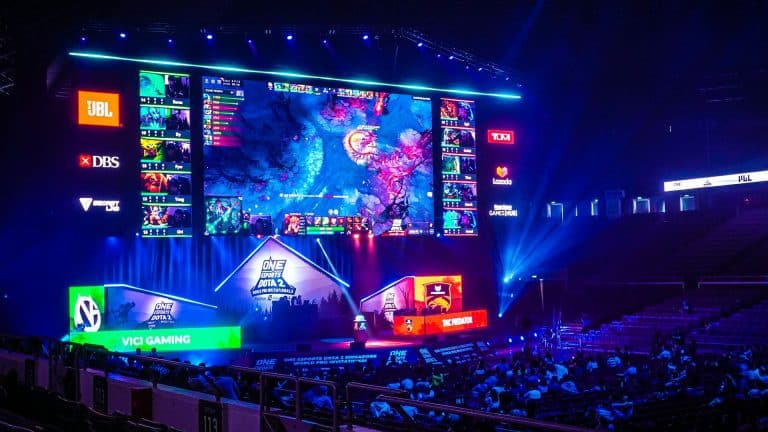
Not all esports titles make equal demands on a platform’s data infrastructure, and Dota 2 sits near the top of that complexity scale. The game’s mechanics produce a denser stream of market-relevant events than most other esports formats – hero purchases, item courier deliveries, creep stack timings, buyback availability, kill streak bounties, Roshan respawn windows – each of which can move the expected outcome of a match or individual fight.
For anyone following the competitive Dota 2 betting scene, that complexity is part of what makes the markets interesting. A good platform should cover Dota 2 across major tournaments and regional leagues with match winner, map handicaps, first blood, total kills, and live in-play markets that update as the game’s economy and objective control shifts. That breadth creates more betting opportunities than a closed franchise system, and for bettors who’ve invested in understanding the specific mechanical and strategic patterns, the market depth rewards that knowledge directly.
The Strategic Differences That Shape Betting
Dota 2 and League of Legends are some of the most popular games in the MOBA genre, and while their roots are similar, they’ve evolved into different competitive experiences with different strategic demands. Understanding those differences matters for anyone approaching either game’s betting markets seriously.
League of Legends features a smaller, symmetrical map with fixed roles and predictable lane setups. Games typically run around 30 minutes with strong snowball mechanics that make early advantages harder to overcome. The Dota 2 map is larger and asymmetrical, hero roles flex between positions depending on draft and item builds, and matches typically run 40 to 45 minutes with mechanics like buybacks and kill streak bounties that keep matches competitive longer into their runtime. Neither game is straightforwardly more complex – League emphasizes micro-spacing, kiting, and ability chaining, while Dota centers on turn rates, deliberate positioning, terrain exploitation, and vision denial. Both reward deep game knowledge in ways that translate directly into better-informed betting decisions.

These distinctions have practical implications for live betting. Bettors who understand which game they’re watching, and what a given deficit or advantage actually means in that specific context, read live market movements more accurately than those working from surface-level information.
Crypto and Blockchain Have Changed the Payment Layer
The payment infrastructure behind modern betting platforms has been rebuilt around cryptocurrency in ways that go beyond simply accepting Bitcoin deposits. Blockchain-based smart contracts handle an increasing share of payout processing – self-executing programs that check match results through verified data feeds and release winnings automatically without human intervention. This reduces dispute rates because the contract logic is public, and the data source is verifiable. It also reduces settlement times: crypto withdrawals that would take 48-72 hours through traditional payment rails often process within minutes on blockchain infrastructure.
Stablecoins have become the preferred instrument for bettors who want crypto’s speed and global reach without the price volatility that made early cryptocurrency integration unappealing. A 2025 analysis found stablecoins accounted for roughly 30% of all on-chain crypto transaction volume. For platforms, stablecoin support means consistent payout values and lower foreign exchange risk across multi-jurisdiction operations.
The Cloud Architecture That Makes Scale Possible
Major esports events create betting traffic spikes that are orders of magnitude higher than typical daily volume. Each major tournament generates a concurrent user load that a fixed-capacity server infrastructure cannot handle reliably. Cloud-native architecture solves this by scaling dynamically: compute resources expand automatically as traffic rises and contract when it normalizes, keeping the experience consistent without the cost of permanently provisioning for peak load.
The platforms that have invested in cloud-native architecture from the ground up handle these spikes without visible degradation. Those running on legacy fixed-capacity systems either cap their live betting markets during high-traffic events, throttle user connections, or simply go down – each of which damages trust in ways that are hard to recover from. For a market where the live betting experience has become central to what differentiates platforms, infrastructure stability during peak events has become a competitive determinant rather than a baseline operational concern.