


Vision Pro content is now one of the most important questions facing Apple’s spatial-computing platform. The hardware can impress in a demo. The display quality can make movies feel enormous. Apple Immersive Video can place a viewer courtside, underwater, inside a concert, or beside athletes in ways a normal TV cannot. But a platform does not grow because the first experience is impressive. It grows when users have enough reasons to come back every week.
That is the central challenge for Apple Vision Pro. The device has a stronger content foundation than many first-generation products because it can run visionOS apps, compatible iPhone and iPad apps, Apple TV, Disney+, 3D movies, spatial videos, games, productivity tools, and enterprise software. Apple says users can discover native visionOS apps as well as compatible iPhone and iPad apps in the App Store on Vision Pro. Apple TV also supports Apple Immersive Video, described as 180-degree 8K recordings captured with Spatial Audio, along with 3D movies purchased or rented through the app.
The problem is not that there is nothing to watch or use. The problem is whether there is enough Vision Pro-native content to make the device feel like a growing platform rather than a premium window into existing media. A 2D app floating in space can be useful. A giant virtual movie screen can be beautiful. But the content that makes Vision Pro feel irreplaceable is the content that cannot be experienced the same way anywhere else.
Apple knows this. The company has been slowly building Apple Immersive Video with sports, travel, music, documentary, scripted, adventure, and performance content. Apple previewed new immersive films and episodes in 2025 from partners including the Audi F1 Project, BBC, CANAL+, CNN, HYBE, MotoGP, Red Bull, and others, with some captured using Blackmagic Design’s URSA Cine Immersive camera and edited on Mac with DaVinci Resolve Studio. That production pipeline matters because Vision Pro needs more than Apple-produced showcases. It needs a creator and studio ecosystem.

Apple Immersive Video Is the Best Proof Point
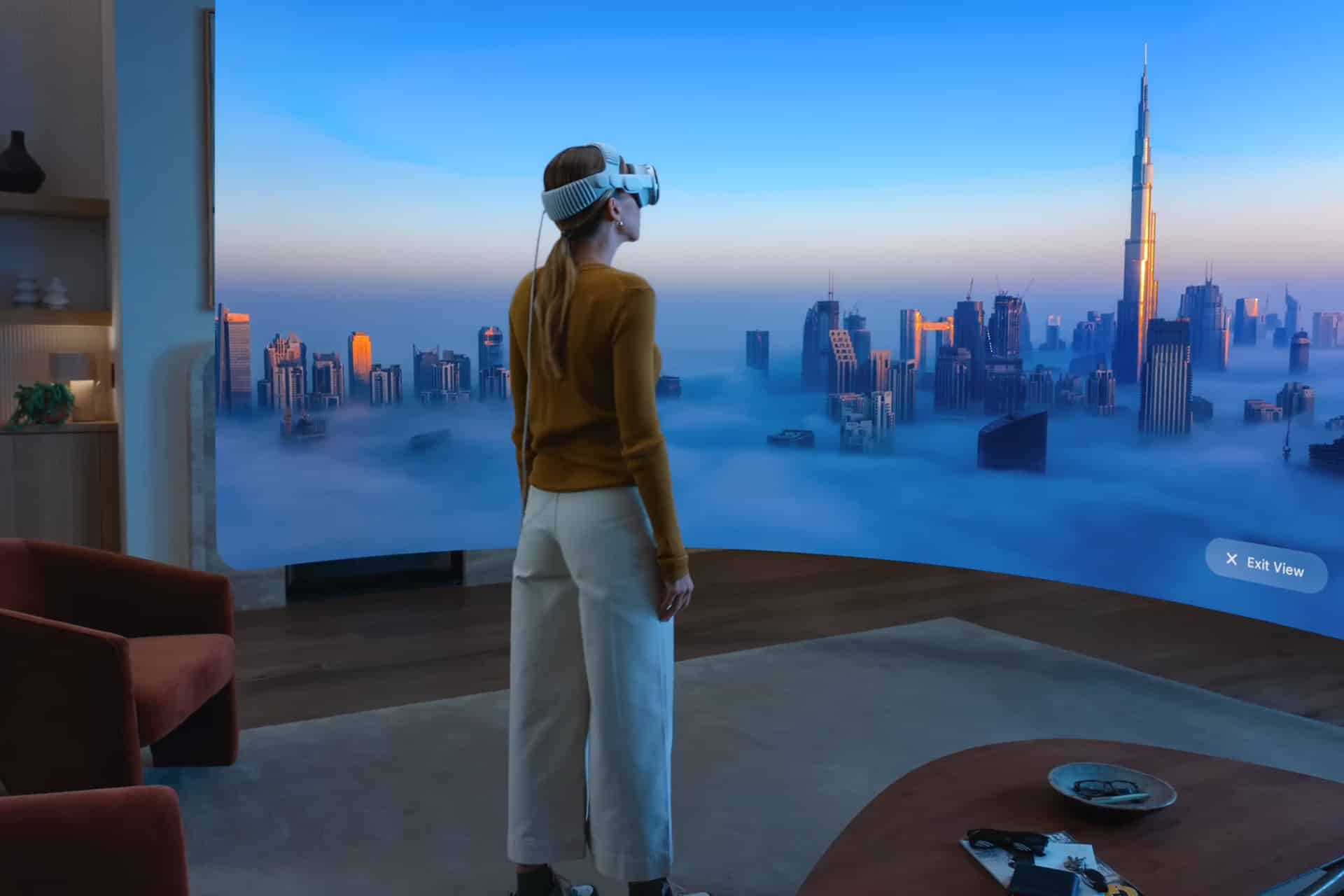
Vision Pro content feels most convincing when Apple Immersive Video is involved. A flat movie on a virtual screen can be excellent, but it does not fully explain why a headset needs to exist. Immersive video does. Apple’s format uses 180-degree 8K 3D video with Spatial Audio, placing the viewer inside the scene rather than simply in front of it.
The early slate has shown why this can be powerful. Apple has released immersive sports experiences, music performances, nature and travel films, adventure content, and documentary-style pieces. The Metallica immersive concert from Mexico City, for example, used a custom stage setup with 14 immersive cameras and Spatial Audio to bring Vision Pro viewers closer to the performance. Apple has also pushed sports examples, including immersive NBA-related content and planned live immersive Lakers games through the NBA and Spectrum SportsNet apps.
Sports may become the strongest use case. Live sports already depend on presence, scale, and emotion. A courtside or pitch-level perspective in immersive video can offer something traditional TV cannot. If Apple can eventually support more live immersive sports, Vision Pro gains a clearer entertainment identity. A user may not wear the headset for every show, but they might for a major match, race, concert, or event that feels physically different inside the device.
That is where content availability becomes a platform-growth question. One immersive concert is a strong demo. A regular schedule of concerts, sports, documentaries, and event programming becomes a habit.
Disney+ Shows Why Partners Matter
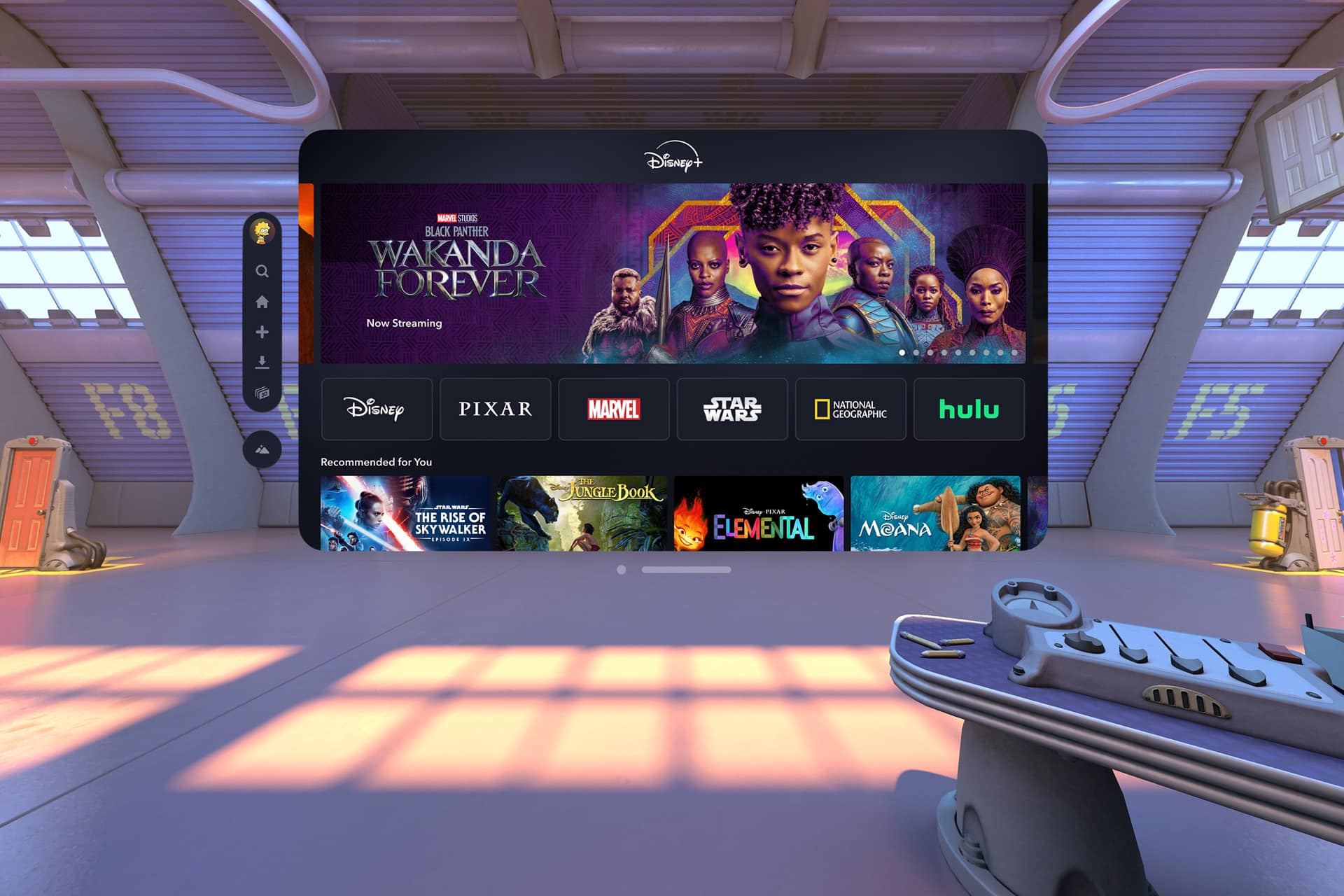
Vision Pro content also depends on major partners. Disney+ was one of the most important launch supporters because it brought a familiar streaming brand, immersive environments, and selected 3D movies to the platform. Its App Store listing for Vision Pro describes the Disney+ experience with immersive environments and select 3D movies, alongside its ordinary catalog of movies, series, and originals.
That matters because Apple cannot build the platform alone. Apple TV and Apple Immersive Video can define the high-end experience, but Vision Pro needs studios, sports leagues, broadcasters, game developers, education companies, fitness platforms, design tools, enterprise software makers, and independent creators to treat spatial content as worth producing.
Disney is a natural partner because its franchises, parks, animation, sports assets, and 3D library fit the medium. But Apple needs more than Disney. It needs Netflix-level mainstream attention, YouTube-scale creator participation, sports-rights experiments, game studios, educational content, museum experiences, travel brands, live-event producers, and filmmakers who want to use the format as more than a novelty.
The challenge is economics. Vision Pro’s audience remains far smaller than iPhone, iPad, Mac, or Apple TV. A studio has to justify production costs for an audience that is still early. That is why Apple’s production pipeline with Blackmagic is important. The $29,995 URSA Cine Immersive camera and DaVinci Resolve support create a real end-to-end workflow for Apple Immersive Video. The easier it becomes to shoot, edit, and deliver immersive content, the more likely partners are to experiment.
Apps Are Necessary, but Native Spatial Apps Matter More
Vision Pro content is not only video. Apps matter just as much. visionOS gives developers an infinite canvas, familiar Apple frameworks, SwiftUI, RealityKit, ARKit, spatial input, windows, volumes, and immersive spaces. Apple’s developer page encourages developers to rethink app experiences for spatial computing rather than simply bring over flat interfaces.
That distinction is essential. Compatible iPad and iPhone apps make the platform usable on day one, but native spatial apps make the platform feel alive. A 2D app in a window can be convenient. A spatial app that uses depth, scale, hand input, 3D models, collaboration, immersive environments, or room awareness creates a reason to use Vision Pro specifically.
The App Store already has Vision apps and games, including spatial games, productivity tools, design apps, education apps, entertainment services, and compatible iPad/iPhone apps. But the platform still needs more breakthrough native experiences. It needs the equivalent of the early iPhone apps that made multitouch obvious, the early iPad apps that made tablet creativity understandable, and the early Apple Watch features that made wrist-based interactions useful.
For Vision Pro, those defining apps could come from 3D design, medical visualization, sports analysis, filmmaking, architecture, education, simulation, spatial productivity, live events, or immersive gaming. Entertainment gets the attention, but enterprise and professional content may build the strongest early justification.
3D Movies Are Useful, but They Are Not Enough
Vision Pro content benefits from 3D movies because the device provides one of the best home 3D viewing experiences available. Apple TV lets users buy and rent 3D movies, and Disney+ supports selected 3D titles. For film fans, that is meaningful. Many households do not own 3D TVs, and theatrical 3D is tied to cinema availability. Vision Pro gives 3D movies a new premium home.
Still, 3D movies alone cannot carry the platform. They are a library feature, not a growth engine. A user may watch a few major films in 3D, but that does not create a constant reason to wear the device unless the catalog keeps expanding and the experience feels clearly superior to a large TV or projector.
The same applies to flat streaming. Watching Apple TV, Disney+, Max through Safari or apps, Prime Video where available, or other services on a giant virtual screen can be excellent, especially for travel or private viewing. But that makes Vision Pro a luxury personal cinema, not necessarily a new computing platform.
Apple needs both. Traditional content helps justify everyday entertainment use. Immersive content explains why the device is different.
The Platform Needs a Stronger Release Cadence
Vision Pro content availability will depend heavily on cadence. Apple has released impressive immersive pieces, but the library still feels curated and limited compared with ordinary streaming expectations. Users are trained by Netflix, YouTube, TikTok, Disney+, Apple TV, and sports apps to expect constant new material. Vision Pro cannot match that scale quickly, but it needs a visible rhythm.
A monthly immersive release is better than silence. A weekly or event-based cadence would be stronger. Seasonal sports, concert series, travel documentaries, behind-the-scenes film experiences, live music, education modules, and short-form immersive stories could make Vision Pro feel active even before the installed base grows.
Apple should also make discovery easier. One criticism around Vision Pro content is that users do not always know what is new, what is native, what is immersive, what is 3D, and what is merely compatible. Apple can improve this through stronger App Store collections, Apple TV placement, editorial pages, notifications, trailers viewable outside Vision Pro, and better promotion across iPhone, iPad, Mac, and Apple TV.
This is important because Vision Pro owners should not have to hunt for reasons to use the device. The platform itself should tell them what is new and why it is worth returning.


Creators Need Tools and Incentives
Vision Pro content growth depends on creators having a reason to produce for the platform. Apple has started building that pipeline through the Apple Immersive Video format, Blackmagic’s camera, DaVinci Resolve support, and visionOS developer tools. But production still needs incentives.
Studios need revenue or strategic visibility. Sports leagues need audience and rights value. Musicians need fan engagement. Educators need distribution. Developers need enough users to justify native spatial apps. Independent creators need lower-cost capture tools, easier publishing paths, and clearer monetization.
Apple can help by funding flagship projects, commissioning more immersive originals, promoting partner content heavily, creating grants or production programs, offering better analytics for immersive viewing, and making Vision Pro content easier to preview on non-Vision devices. A creator should be able to promote an immersive experience on iPhone and web even if the full experience requires Vision Pro.
Apple also needs a path for spatial video shot on iPhone to become more than personal clips. iPhone spatial video is useful for memories, but the creative ecosystem needs editing tools, templates, publishing options, and social or community formats that make spatial content easier to share.
The lower the production barrier, the faster the content library grows.
Vision Pro’s Price Makes Content Even More Important
Vision Pro content availability matters more because the hardware is expensive. A premium headset has to justify itself repeatedly. The first demo may sell the concept, but ongoing content sells continued use. Without enough native apps and immersive media, even a technically advanced device can become something users admire more than they use.
This is especially important before Apple releases lighter or cheaper models. A more affordable Vision product would expand the audience, but it will only succeed if the content library is ready. Apple needs to build the ecosystem before the broader device arrives, not after. That means investing now while the installed base is still small.
The pattern is familiar. iPhone needed apps. iPad needed tablet apps. Apple Watch needed health, fitness, notifications, and watch-native use cases. Vision Pro needs spatial apps and immersive content. Hardware opens the door. Content makes the room worth entering.
The best argument for Apple’s patience is that it is already creating the production infrastructure. Apple is not only waiting for developers. It is building formats, tools, camera workflows, service integrations, and first-party content. That is the right approach, but the pace has to keep increasing.
The Real Growth Question
Vision Pro content is the real test because platform growth depends on repeat value. Apple has shown that Vision Pro can deliver extraordinary moments. The next challenge is turning extraordinary moments into a regular library.
The strongest path is a mix of content types. Apple Immersive Video should lead with sports, concerts, travel, documentaries, and scripted experiments. Apple TV should keep expanding 3D movies and Vision Pro-specific experiences. Disney and other partners should bring more environments, 3D catalogs, and immersive tie-ins. Developers should build native spatial apps that do more than mirror iPad windows. Enterprise and education should use Vision Pro where spatial computing solves real problems. iPhone spatial video should help users create personal content that makes the device emotionally valuable.
Apple does not need Vision Pro to become a mass-market headset overnight. It needs the content base to grow faster than the perception that there is not enough to do. That is the platform-growth question.
The hardware already proves Apple can build a premium spatial computer. The content library now has to prove that people should keep putting it on.