

The arrival of the official YouTube app for Apple Vision Pro marks one of the most anticipated additions to the visionOS ecosystem, finally replacing the browser-based viewing experience that early adopters relied on.
With native integration, the platform now supports immersive viewing environments, spatial video formats, and full account synchronization, enabling a seamless streaming workflow directly inside Apple’s spatial computing interface.
From the first day Vision Pro launched, users experimented with streaming through Safari workarounds or third-party applications, which provided only partial functionality. Playback often lacked optimized spatial rendering, gesture responsiveness, or immersive theater environments. The native release removes those limitations, bringing YouTube fully into the spatial interface with features designed specifically for mixed-reality interaction.
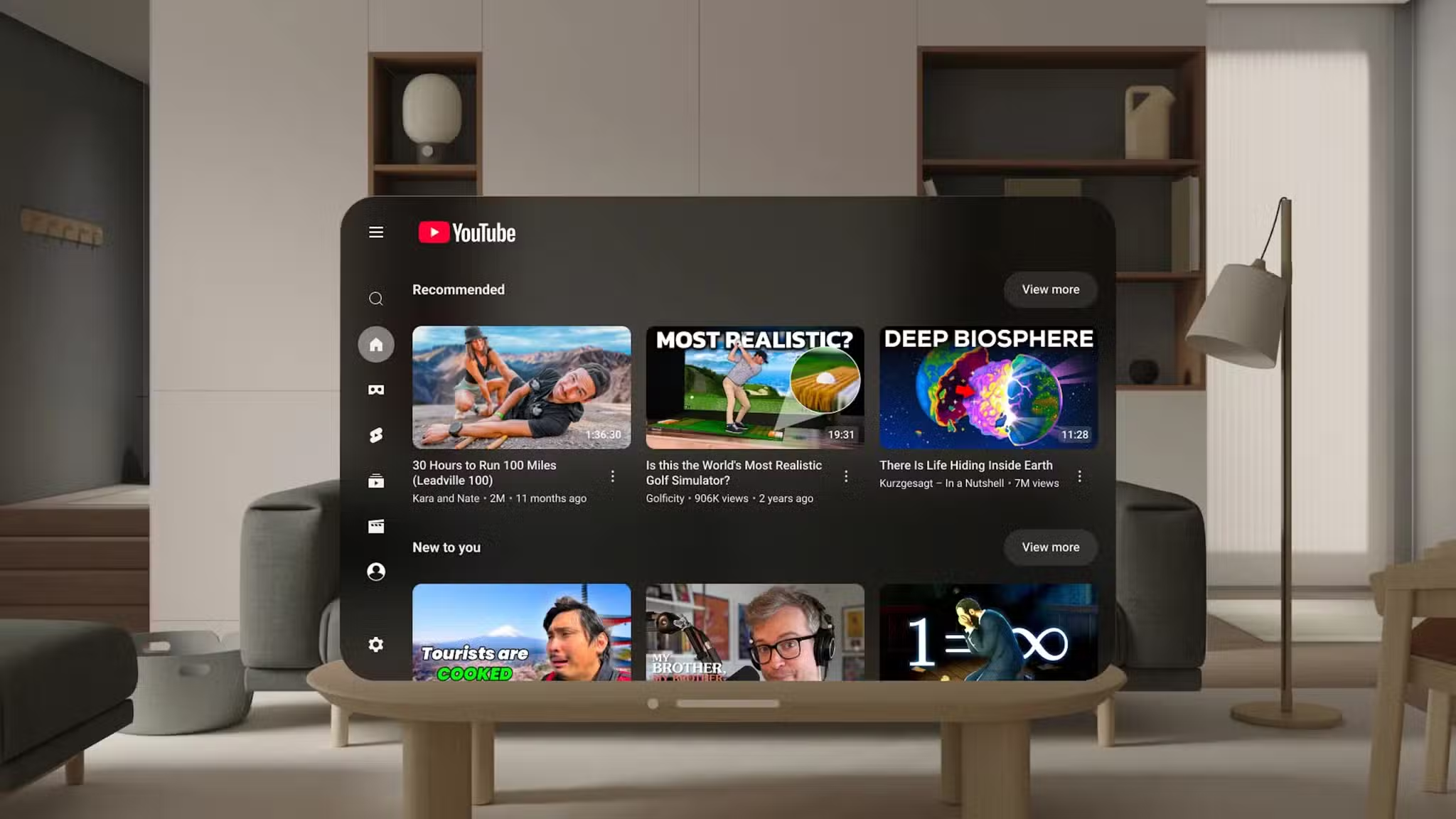
Native Spatial Playback and Immersive Theater Viewing
The official Vision Pro YouTube app introduces a Spatial tab that aggregates immersive video formats including 3D, 360-degree, and VR180 content. These formats take advantage of the headset’s high-resolution displays and spatial rendering pipeline, allowing viewers to explore environments by naturally shifting head position or adjusting perspective through gesture navigation. The experience moves beyond flat-screen playback and into a spatial viewing format where depth, distance, and motion behave realistically.
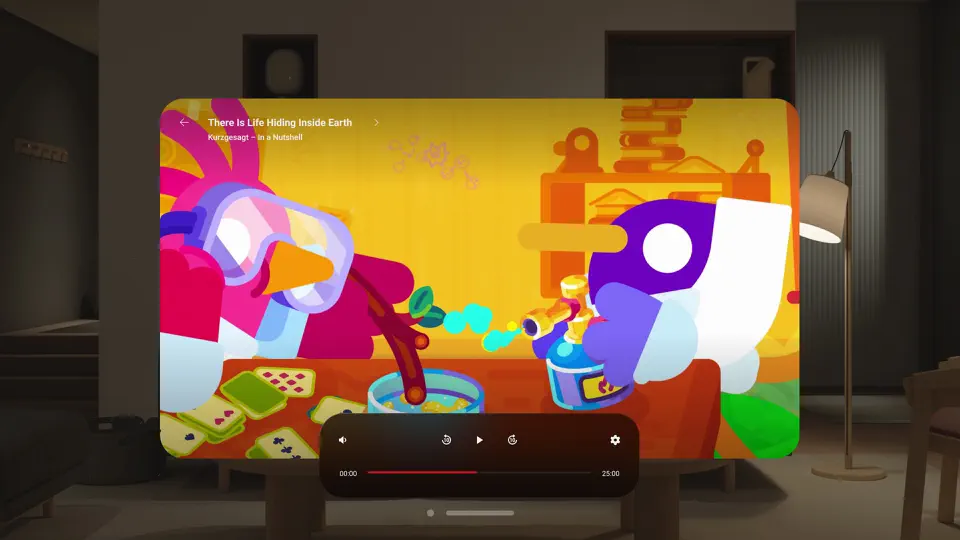
The Theater environment built into the app transforms the viewing experience into a large virtual cinema space. Users can position the screen at different sizes, distances, or environments, enabling a viewing layout that adapts to workspaces, living rooms, or travel environments. Gesture-based controls allow quick adjustments to playback, navigation, or environment positioning without requiring traditional remote devices.
Playback performance also benefits from Apple silicon acceleration. On newer Vision Pro models equipped with advanced processing capabilities, YouTube supports high-resolution playback including 8K streams where available, ensuring that immersive footage maintains clarity even when displayed across very large virtual screens.
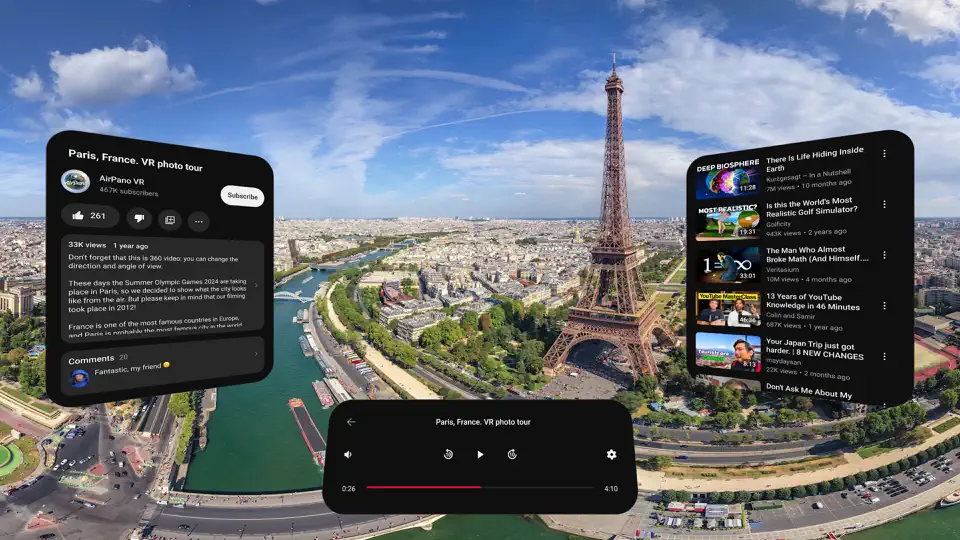
Full Account Integration and Content Discovery
Unlike early browser-based streaming methods, the native app includes full sign-in support, giving access to subscriptions, playlists, recommendations, and Shorts. This integration ensures that viewing history, saved videos, and personalized discovery features function identically to the mobile and desktop YouTube experience, but now within a spatial computing environment.
Because the app connects directly to the system interface, content can be resumed quickly from the visionOS multitasking interface, allowing users to position videos alongside productivity apps, messaging windows, or creative tools. This multitasking approach reflects how spatial computing environments increasingly support mixed workflows rather than single-app sessions.
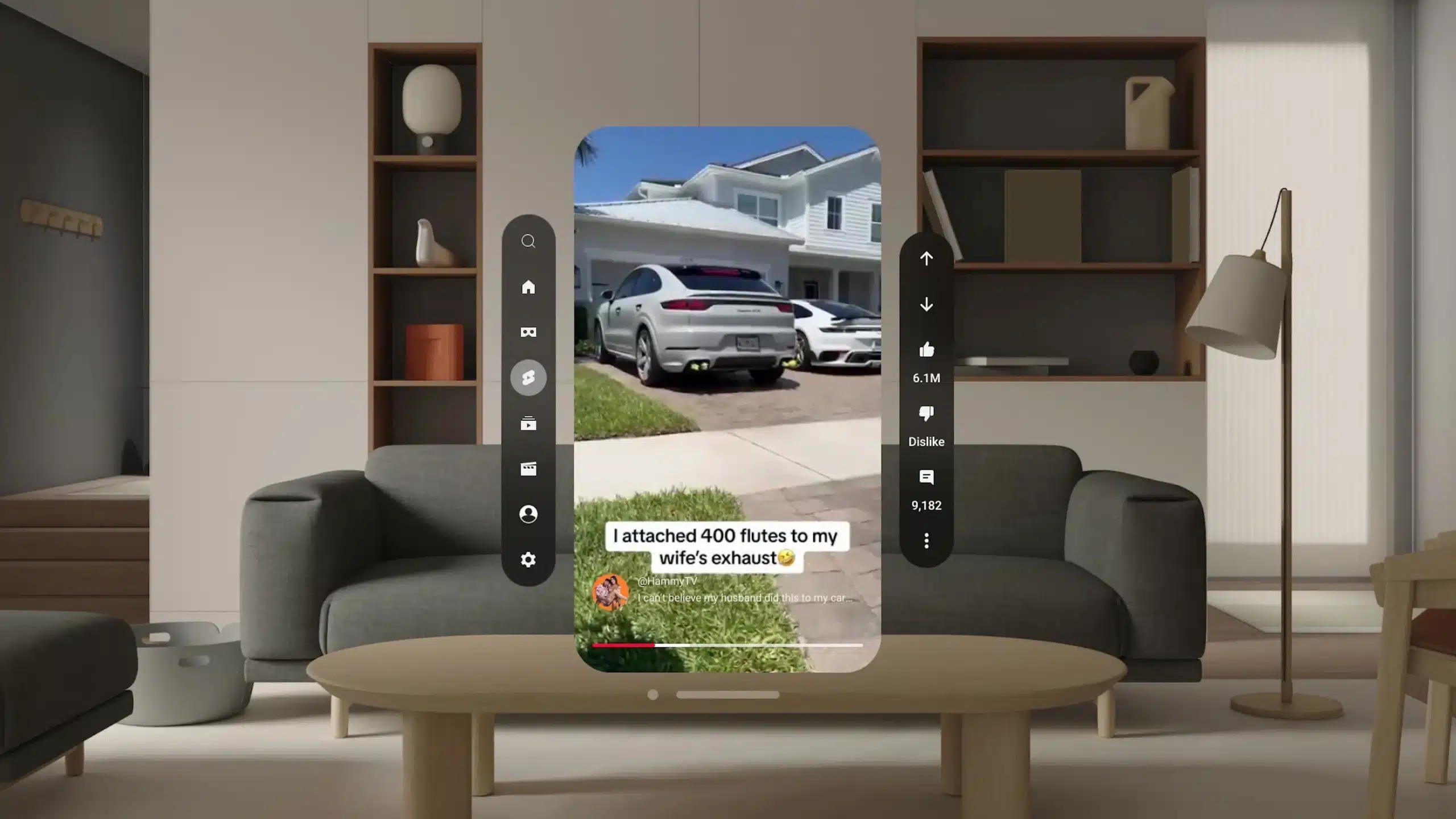
The addition of Shorts viewing inside the spatial interface also introduces new interaction patterns, enabling vertical content to be resized, repositioned, or placed within floating windows while maintaining gesture-based navigation.
A Signal for Broader XR App Expansion
The release of YouTube on Vision Pro suggests a broader shift toward expanding major platform applications within the spatial computing ecosystem. Large-scale video platforms often serve as anchor applications that drive user engagement in new device categories, particularly when immersive formats such as VR180 or spatial recordings are involved.
Industry observers note that the launch may indicate a growing presence of cross-platform XR applications arriving on visionOS, potentially including expanded support for live immersive sports broadcasts, concert streams, and spatial documentary formats. These types of productions require native application support to fully leverage spatial rendering pipelines and high-resolution playback capabilities.
Because immersive video production continues to increase, especially in sports and entertainment broadcasting, the presence of a native YouTube client provides a distribution channel capable of scaling spatial content globally without requiring specialized third-party playback systems.
Spatial Streaming as a Core Vision Pro Use Case
Video consumption has historically driven adoption across new display technologies, from high-definition televisions to mobile streaming devices. Spatial computing environments extend this trend by combining immersive visuals with interactive interfaces, allowing viewers to reposition displays, control environments, and combine playback with multitasking workflows.
The YouTube Vision Pro launch highlights how spatial video formats are transitioning from experimental content into standard distribution channels. As immersive production tools become more accessible and spatial capture capabilities expand across cameras and smartphones, content libraries are expected to grow rapidly, reinforcing immersive streaming as a central component of the spatial computing experience.
The integration also simplifies daily use by removing the need for browser workarounds, offering a dedicated streaming interface that aligns with the design language and interaction patterns of visionOS. With the addition of immersive playback formats, theater environments, and full account functionality, the Vision Pro YouTube app establishes a foundation for broader adoption of spatial media experiences across Apple’s expanding mixed-reality platform.


