

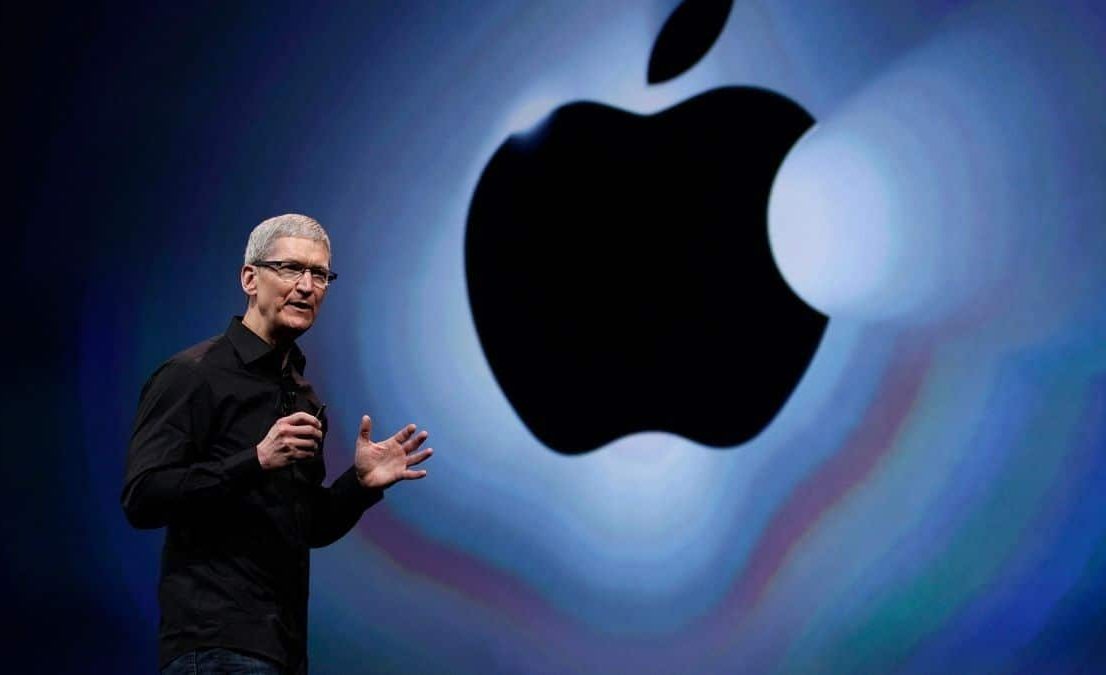
Apple does not communicate like a typical public company. It reports like one, certainly, with quarterly results, proxy statements, annual reports, and formal shareholder meetings. But Apple also speaks through product events, Newsroom releases, developer sessions, retail storytelling, and ecosystem announcements.
That broader system helps explain how the company keeps investors, partners, and users aligned without sounding like it is telling a different story to each group.
Apple’s own investor materials make that structure visible, pointing investors not only to earnings releases and SEC filings, but also to governance information and annual meeting details.

How Apple Handles Quarterly and Annual Communication
The most disciplined part of Apple’s stakeholder communication is investor relations. Every quarter, Apple publishes results in a format the market recognizes immediately: revenue, earnings per share, category highlights, cash flow, capital return, and a live webcast of the earnings call. In its first-quarter fiscal 2026 release, Apple reported $143.8 billion in revenue, diluted EPS of $2.84, more than 2.5 billion active devices, and a replay of the earnings webcast for about two weeks afterward. That consistency is part of the message. Investors are not only evaluating the numbers. They are watching how Apple frames performance, where it puts emphasis, and how stable the tone remains from one quarter to the next.
The tone itself is carefully divided. Tim Cook usually anchors the quarter in product demand, installed-base growth, and customer engagement. The financial side reinforces margins, cash generation, and shareholder returns. In the same January 2026 release, Apple paired record revenue and EPS with a dividend announcement and nearly $32 billion returned to shareholders from operating cash flow generated during the quarter. That pairing is typical Apple. It tells the market that the company is both a consumer brand and a disciplined machine for cash generation.
The annual shareholder meeting serves a different purpose. Quarterly earnings are about performance and momentum. The annual meeting is about governance, process, and legitimacy. Apple’s investor FAQ and SEC proxy materials outline the formal side of that relationship: voting rights, board matters, executive compensation, annual reports, and meeting access. In recent years, Apple has held the annual shareholder meeting virtually, which preserves the formal mechanics while adapting to modern expectations around accessibility and participation. For institutional investors, long-term shareholders, and governance watchers, that side of the company matters as much as any product announcement.
How Apple Reaches Partners, Developers, and the Public
Apple’s communication with partners is less concentrated in one recurring event and more spread across strategic announcements. One of the clearest examples came in August 2025, when Apple said it was increasing its U.S. commitment to $600 billion over four years and linked that plan to support for more than 450,000 jobs with suppliers and partners across all 50 states. That statement was not aimed at only one audience. Suppliers heard continuity and scale. Policymakers heard domestic investment. Investors heard operational reach. Users heard a story about Apple as a long-term builder, not only a seller of devices.
That overlap is one of the company’s biggest communication strengths. Apple rarely publishes a release that matters to only one stakeholder group. A supply-chain announcement doubles as economic positioning. A Newsroom release about results also directs readers to governance and SEC material. A product event reinforces the investor narrative around installed base and services opportunity without sounding like an investor presentation. Apple’s Newsroom acts as the company’s official publishing layer for all of it, giving Apple a direct channel for product, business, services, developer, and corporate updates without waiting for outside media to define the first version of the story.
Developers are another crucial audience in this system. They are not shareholders in the formal sense, but they are stakeholders in the business model because the value of Apple’s platforms depends heavily on the software built around them. Apple communicates with developers through WWDC, API announcements, platform roadmaps, and Newsroom stories that spotlight app success, education, and ecosystem momentum. The message is practical, but the signal is commercial: the platform is active, profitable, and still worth building for. Apple rarely needs to say that explicitly because the communication structure already does the work.
Users, meanwhile, encounter Apple through a completely different texture of communication. They are more likely to experience the company through a product event, a software rollout, a store visit, or a Newsroom release than through an earnings webcast. Apple knows that the language of a shareholder meeting would flatten a product launch, while the emotional tone of a keynote would sound unserious in a proxy filing. So the company separates tone without losing coherence. Investors hear discipline and predictability. Users hear clarity and aspiration. Partners hear scale. Developers hear opportunity. The central brand identity remains intact across all of them.
Why the System Still Works at Apple’s Scale
That structure matters even more because Apple now operates at a scale where every message can move markets, affect suppliers, and shape public expectations at once. A company of this size cannot rely on charisma alone. It needs repeatable systems. Apple has one: results calls for financial discipline, annual meetings for governance, strategic releases for partners, Newsroom storytelling for the public, and product events that keep the brand emotionally charged even while the business side remains highly controlled.
What stands out is that Apple usually sounds less reactive than competitors. Even when markets shift or regulation tightens, the company tends to communicate in formats it controls and at rhythms it chooses. That continuity helps explain why Apple’s stakeholder communication feels unusually stable for a company operating under constant scrutiny. The method is not complicated. It is disciplined. And at Apple’s size, discipline is part of the brand.


