
Apple product categories may be entering one of the most unusual expansion phases since the iPhone changed the company’s trajectory. The latest reporting tied to Bloomberg’s Mark Gurman suggests Apple is developing six major new product categories, a list that points not only to the long-rumored post-smartphone future, but also to a more aggressive push into the home. The message behind the reports is larger than any one device. Apple is no longer only refining its existing lineup. It appears to be building the next map of where the company wants to live in daily life.
That matters because Apple has spent years strengthening the center of its ecosystem. iPhone remains the hub. Mac regained momentum with Apple Silicon. Apple Watch and AirPods became category leaders. Services grew into a massive recurring business. But maturity creates a different problem: once the core lineup is strong, growth has to come from new surfaces. The reported six-category push suggests Apple believes those surfaces may now include foldables, smart glasses, AI-enhanced wearables, home displays, security products, and robotics.
The home angle is especially important. Apple has had HomeKit and the Home app for years, but it has never fully dominated smart home hardware the way it dominates smartphones, tablets, or wearables. The reported product mix suggests that may be changing. Instead of treating the home as a side ecosystem built around third-party accessories, Apple may be preparing to treat it as the next serious hardware frontier.
Smart Home Could Become the Next Real Apple Front
The strongest pattern in the rumored list is the home. Bloomberg-based reporting summarized by The Verge described Apple’s work on a smart home display, a tabletop robot, and home-security products including cameras. Earlier Bloomberg reporting summarized by The Verge also described a Face ID-enabled doorbell concept and a broader home push tied to Apple’s own wireless chips and deeper device integration. That is not a random collection of gadgets. It looks more like the outline of a home platform.
A smart home display would be the easiest entry point. It could sit between HomePod, iPad, and a Nest-style screen, acting as a control center for cameras, lights, scenes, intercom, video calls, timers, Apple Music, weather, and Siri. Apple already has the software layers for that in Home, FaceTime, Calendar, Reminders, and Apple Intelligence. What it has lacked is a dedicated product that makes the home ecosystem feel central rather than optional.
The security camera is just as important because cameras create habit. A camera is not only a device people buy once. It becomes part of how they check on a house, see deliveries, review movement, monitor rooms, and stay connected to a space while away. If Apple enters that category with tight Home integration, encrypted video, face recognition tied to its privacy model, and Find My-style trust, it could finally make its smart home story feel like more than software support for other brands.
The robotics angle is the most ambitious. Bloomberg-based reporting summarized by The Verge described a tabletop robot with a movable arm and a personality closer to a smart, responsive home companion than a simple screen. That sounds futuristic, but it also fits the path Apple tends to prefer: not building a humanoid fantasy first, but starting with a tightly controlled domestic product where displays, cameras, voice, motion, and context can come together. A tabletop robot could become a home hub, telepresence screen, security tool, and AI interface at once.

Foldable iPhone and Smart Glasses Push Beyond the Current Form
Outside the home, the two most visible rumored category expansions are foldables and smart glasses. Reuters reported this month that Apple has encountered engineering setbacks in the test phase of its first foldable iPhone, but the project remains a serious part of the company’s hardware roadmap. Reuters had already reported in 2024 that Apple was likely to release a foldable iPhone as early as 2026, which would mark the biggest iPhone design shift in years if it arrives on that timeline.
A foldable iPhone matters because it would let Apple reshape its most important product without abandoning the category. The smartphone is not disappearing soon, but the company clearly knows the slab-phone era is mature. A foldable could extend the iPhone’s life as the center of the ecosystem while creating new room for productivity, media, gaming, and AI interaction. In that sense, foldables are not the post-iPhone future. They are the bridge away from the standard iPhone form.
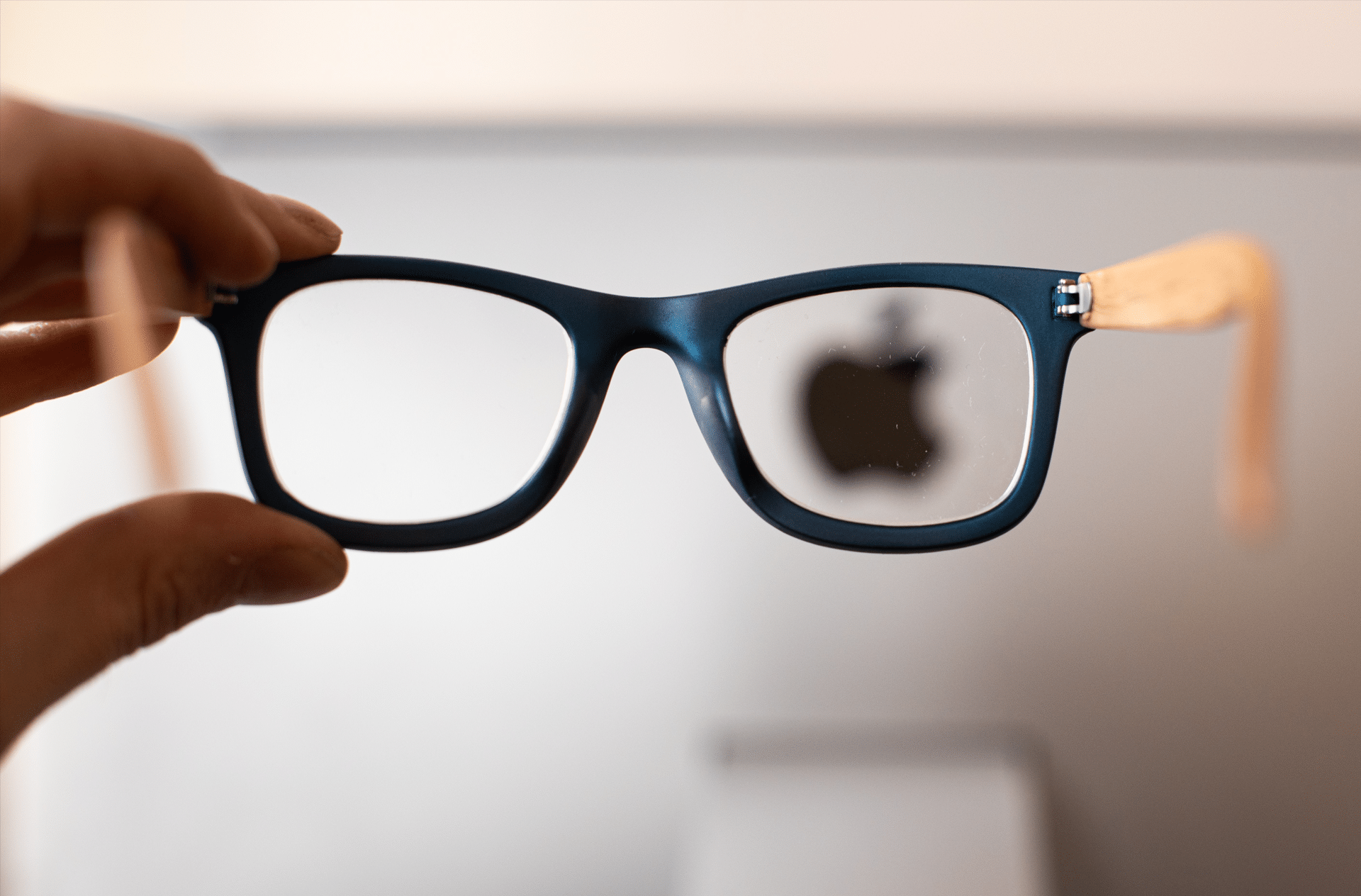
Smart glasses are more radical. Reuters reported last year that Apple planned smart glasses for the end of 2026 as part of an AI push, aiming to compete with Meta’s Ray-Ban smart glasses. The report said the move followed the lukewarm reception to Vision Pro and reflected Apple’s effort to diversify its product portfolio while driving interest in AI devices. That is a major signal. Glasses would place Apple closer to the face than the iPhone does, and much closer to the idea of ambient, always-available intelligence.
This is where Apple’s future starts to look less like a device lineup and more like a distributed system. A foldable phone could evolve the pocket computer. Smart glasses could move information into view without demanding a full headset. Home hardware could make Siri and Apple Intelligence present in the room. Robotics could turn that presence into physical interaction. The categories differ, but they all point toward the same direction: intelligence woven across spaces rather than trapped inside one screen.

AI Wearables Suggest Apple Wants More Context
The sixth category is the least settled in public reporting, but the broader direction is becoming easier to read. Gurman’s recent commentary, echoed in secondary coverage, has been linked to AI-focused wearables beyond glasses, including devices that would give Siri more visual or environmental context. Reuters separately reported in 2025 that Apple had canceled a camera-equipped Apple Watch project while continuing its smart glasses effort, a sign that Apple is actively exploring multiple wearable paths even if not all survive.
The logic behind AI wearables is strong. Apple already owns the wrist with Apple Watch and the ear with AirPods. The next step is not necessarily a completely new behavior from scratch. It may be better awareness. A wearable with cameras or environmental sensing could help Siri understand what the user is looking at, where they are, what object is nearby, or how to respond in context. That could make Apple Intelligence much more useful than a text-only assistant, especially if it remains tied to Apple’s privacy model.
That is also why the “after-smartphone” idea can be misunderstood. Apple is probably not trying to replace the iPhone in one move. It is trying to reduce how much the iPhone has to do alone. If glasses, AirPods, watches, robots, and home devices all become more capable, then the iPhone stops being the only screen or control point that matters. It remains central, but no longer solitary.
John Ternus Inherits the Broadest Apple Hardware Question in Years
The timing of these reports matters because John Ternus is about to become CEO. Reuters described him as taking over in the AI age, with the immediate challenge of strengthening Apple’s capabilities as rivals push harder into AI and new device categories. The same Reuters profile explicitly noted that Ternus’ promotion suggests a focus on hardware innovation, including folding phones and VR or AR devices. That makes the rumored six-category push feel less like a scattered rumor list and more like the environment he is stepping into.
Ternus is a hardware executive by background, and that may be exactly why this moment is so interesting. Apple’s next era is not likely to be won through one app or one cloud service. It will be won, if Apple succeeds, through new forms of hardware that make AI feel personal, ambient, and useful. The categories under development all fit that mission. Smart home products place intelligence in physical space. Glasses place it in front of the eyes. Foldables reshape the main screen. Robotics give it movement. AI wearables make it more context-aware.
That does not mean every reported category will ship on time, or at all. Apple cancels projects, changes priorities, and tests many concepts that never become products. The foldable iPhone is still facing engineering snags, according to Reuters. Smart glasses are still reported rather than announced. The robot remains the most speculative of the group. Even the home push could evolve into fewer products than current rumor lists suggest.
Still, the direction is what matters. Apple appears to be preparing for a world in which the smartphone remains important but stops being the only center of computing. The company’s next big move may not be one replacement for the iPhone. It may be six new ways of reducing the iPhone’s burden while extending Apple into the home, the face, the room, and the surrounding environment. If that is the real strategy, then Apple is not only preparing the after-smartphone era. It is preparing the era where computing becomes a network of Apple devices acting together.


