

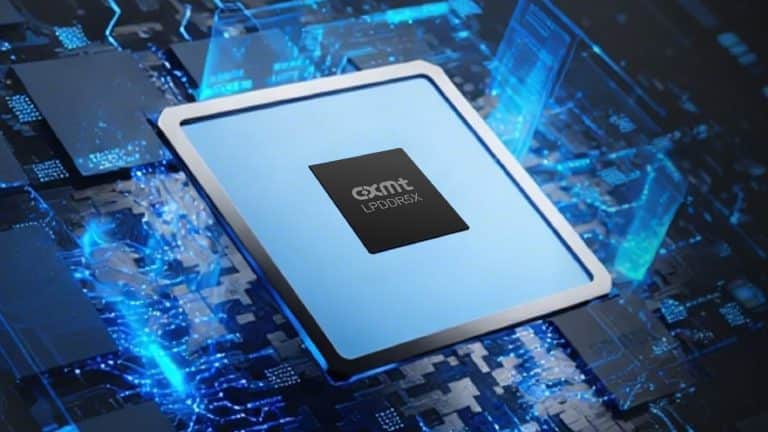
Apple’s reported interest in Chinese memory supplier CXMT is not only a supply-chain story. It is also a negotiation story.
A new analysis from Bank of America, reported in South Korea, suggests Apple’s talks around DRAM from ChangXin Memory Technologies may be less about replacing Samsung, SK hynix, or Micron at scale and more about increasing Apple’s leverage during price negotiations. That interpretation fits the moment. Memory prices have surged because AI data centers are consuming more DRAM, NAND, and high-bandwidth memory, giving major suppliers more power over buyers across phones, PCs, servers, and consumer electronics.
Apple has a simple problem: every iPhone, iPad, Mac, Vision Pro, Apple TV, and Apple Watch depends on memory. As AI features require more RAM and storage, the cost pressure grows. Suppliers know that. Apple knows that. Showing that it is willing to qualify Chinese alternatives gives Apple another card to play when negotiating with the established memory giants.
That does not mean CXMT is ready to become a major Apple supplier overnight. It means Apple may not want Samsung and SK hynix to believe they have no alternative.
Why Memory Prices Are Working Against Apple
The memory market has shifted quickly. AI servers are pulling supply toward high-margin components such as HBM and enterprise-focused DRAM. That leaves less flexibility for consumer-device memory, where companies like Apple need enormous volumes at predictable prices.
TrendForce reported that DRAM supply conditions are expected to remain extremely constrained in the third quarter of 2026, with contract prices projected to rise 13% to 18% quarter over quarter. Reuters also reported that Samsung is expected to post record profit as AI demand drives a global memory shortage, with DRAM and NAND prices sharply higher.
That is good for memory suppliers. It is bad for hardware makers.
Apple sells premium products, but it still manages margins carefully. A higher memory bill affects every part of the pricing ladder. Base models become harder to price aggressively. Higher storage tiers become more profitable but also more expensive for customers. Macs and iPads with more unified memory become more costly to configure. AI-focused devices need more local memory to run on-device models and background intelligence.
This is why Apple’s Chinese memory exploration should not be viewed only as a China strategy. It is a cost-control strategy.

CXMT as a Negotiation Card
CXMT is China’s most visible DRAM producer, while YMTC is known for NAND flash. If Apple can credibly evaluate these suppliers, even for limited products or China-market devices, it weakens the pricing power of the current supplier group.
That is the bargaining-chip logic. Apple does not need to move half of iPhone memory demand to CXMT for the talks to matter. It only needs to make the option credible enough that Samsung, SK hynix, and Micron factor it into negotiations.
This is a familiar Apple tactic. The company rarely wants to depend too heavily on one supplier for a strategic component. It has used dual-sourcing and supplier diversification across displays, modems, cameras, batteries, assembly partners, and storage components. The goal is not only supply security. It is price control, production flexibility, and negotiating power.
Memory is a harder category because quality, yield, capacity, power efficiency, thermal behavior, and volume reliability all matter. Apple cannot use a supplier only because it is cheaper. The memory has to meet device performance, battery, reliability, and regulatory requirements.
That is why Bank of America’s reported view is persuasive: large-scale CXMT adoption would be difficult, but the talks themselves can still be useful.
The Political Risk Is Real
Chinese memory sourcing comes with political complications. CXMT has been named on U.S. government lists tied to Chinese military companies, and YMTC has faced U.S. restrictions as well. That makes any Apple move toward Chinese memory more sensitive than a normal supplier qualification process.
Apple must manage U.S. regulation, export controls, national-security scrutiny, China-market exposure, supplier reliability, and public perception. Even if CXMT memory is technically capable, the geopolitical risk could limit where Apple uses it and how much volume it can commit.
A likely first step would be limited use in China-bound products or less sensitive configurations, if approvals and technical requirements align. That would reduce global regulatory exposure while still giving Apple a sourcing option in one of its most competitive markets.
But even that path is not simple. Apple’s supply chain is global. Components, assembly locations, software rules, and sales regions overlap. A supplier that is acceptable for one market may still complicate logistics, compliance, and messaging elsewhere.
That is why this is not a clean “Apple switches to Chinese memory” story. It is a pressure campaign inside a very tight market.
Samsung Has More Power Than Usual
Samsung’s position is unusually strong because the memory cycle now favors suppliers. The company benefits from DRAM, NAND, and AI-related memory demand at the same time smartphone makers are struggling with higher component costs. SK hynix is also in a strong position because of its role in high-bandwidth memory for AI accelerators.
When memory suppliers can sell more capacity to AI infrastructure customers at attractive prices, consumer-electronics buyers lose leverage. Apple remains one of the largest and most valuable customers in the world, but even Apple cannot ignore market shortages.
That changes supplier negotiations. In a weak memory market, Apple can push harder on price. In a tight market, suppliers can prioritize profitable products, longer commitments, and higher average selling prices.
Chinese memory gives Apple a counterweight. Even if CXMT cannot match Samsung or SK hynix across every specification, it can create uncertainty. Suppliers may prefer to offer Apple better terms rather than leave room for a new competitor to become qualified.
In procurement, a credible second option can matter before it ships at scale.
The AI Cost Problem Behind the Story
This issue is tied directly to Apple’s AI roadmap. Apple Intelligence, on-device models, local summarization, image tools, Siri upgrades, developer AI features, and future wearable or spatial devices all increase the need for memory capacity and bandwidth.
On iPhone, more RAM can support larger local models and smoother multitasking. On Mac, unified memory is central to Apple silicon performance. On Vision Pro and future spatial devices, memory must support sensors, graphics, apps, AI processing, and low-latency interaction. On servers, Private Cloud Compute still depends on advanced hardware and memory supply.
Memory is no longer a boring component behind the spec sheet. It is becoming one of the limits of consumer AI.
That makes Apple’s negotiating position more urgent. If memory costs remain high through the next iPhone and Mac cycles, Apple faces a difficult mix: absorb cost, raise prices, limit base specifications, or push harder on supplier terms. Chinese memory exploration gives the company at least one more lever.
What It Means for iPhone Buyers
For customers, the first impact may appear in pricing and configurations rather than supplier names. If memory costs keep rising, Apple may have less room to improve base RAM or storage without raising prices. Higher storage tiers could become even more expensive. Pro devices may receive stronger AI-ready configurations, while entry models remain more controlled.
Apple could also use supplier diversification to protect prices in specific markets. If Chinese memory is approved for certain China-market models, Apple may be able to defend margins or pricing there while using established suppliers elsewhere.
Buyers should not expect Apple to advertise CXMT memory. Apple rarely highlights component suppliers unless there is a strategic reason. The difference would be felt through availability, pricing, storage tiers, and product margins.
The risk is that memory inflation reaches the point where Apple’s usual pricing discipline becomes harder to maintain. A bargaining chip is useful only if the market believes Apple can actually use it.
Why This Story Matters Beyond China
Apple’s reported CXMT interest shows how the AI boom is reshaping consumer hardware economics. Data centers are not only competing with each other for chips. They are competing indirectly with phones, laptops, tablets, and wearables for memory supply.
That means decisions made by Nvidia customers, cloud providers, and AI infrastructure companies can affect the cost of an iPhone or MacBook. The same DRAM industry that powers AI servers also shapes the devices people carry every day.
Apple’s response is classic supply-chain strategy: qualify alternatives, create pricing tension, reduce dependency, and avoid letting suppliers believe there is only one path.
The most revealing detail will not be whether Apple signs a massive CXMT contract. It will be whether Samsung, SK hynix, and Micron adjust their pricing posture when Apple enters the next round of long-term memory agreements.
In that negotiation, CXMT may be most valuable before its chips ever appear inside an iPhone.