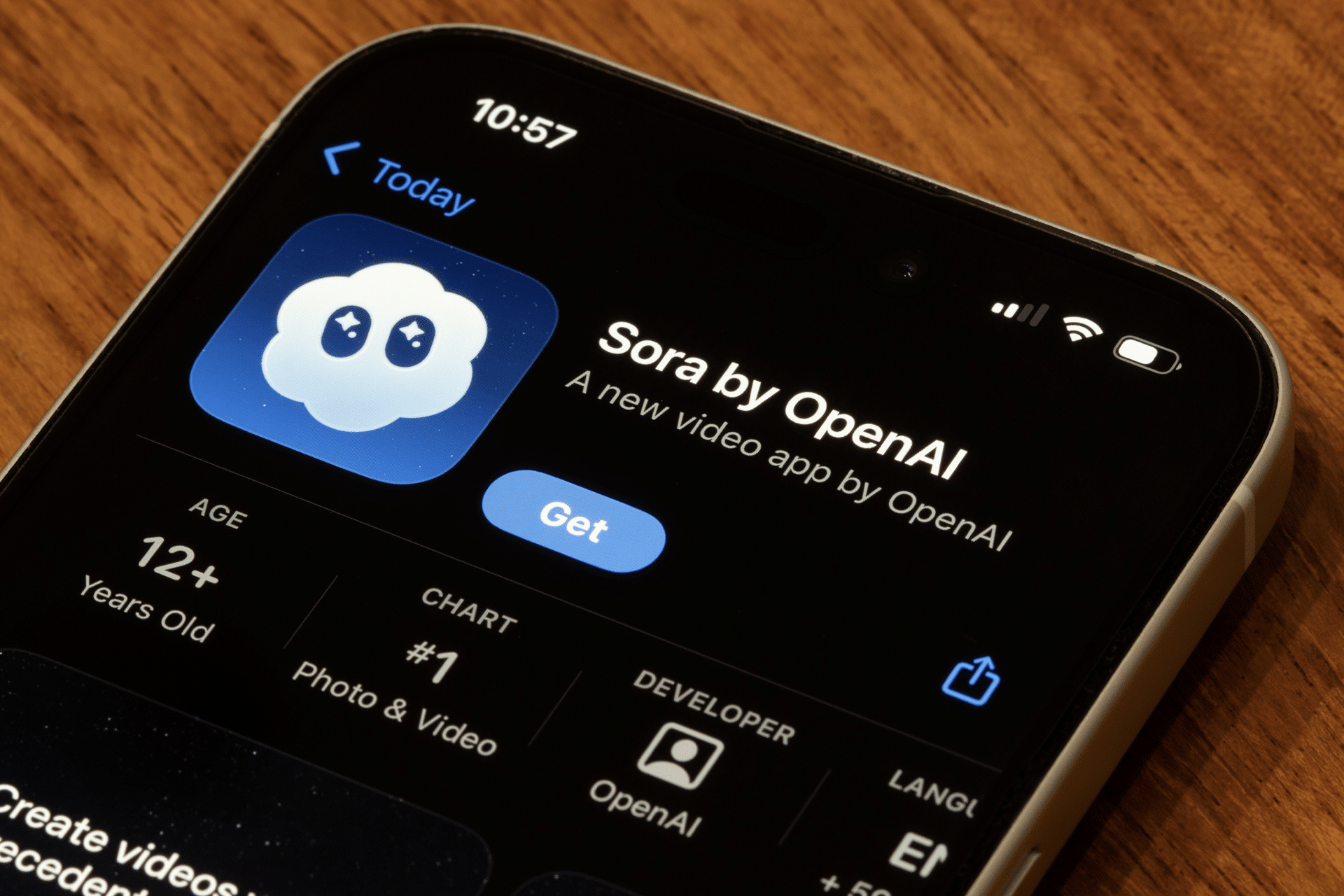
OpenAI’s Sora app for iOS has exploded onto the U.S. market, posting launch-week numbers nearly as strong as ChatGPT’s debut last year. The new text-to-video generator, which transforms written prompts into high-quality video clips within seconds, is rapidly becoming the next breakout hit in generative AI — and a sign that mobile video creation is entering a new phase.
Data from app analytics firm Appfigures shows that Sora’s first week in the App Store recorded downloads and engagement rates approaching those of ChatGPT’s launch in 2024. The figures reveal a fast-emerging appetite among users for visual AI tools that go beyond text and images, tapping into short-form creativity that fits seamlessly with mobile workflows.
A Massive Debut for OpenAI’s Newest Platform
Sora’s rollout on iOS marks OpenAI’s biggest mobile launch since ChatGPT, expanding the company’s presence in the consumer app ecosystem. Early data suggests that U.S. users alone accounted for more than 2.5 million downloadswithin the first week — a figure that places Sora among the most successful AI app debuts ever on the App Store.
While ChatGPT reached roughly 3 million installs during its first week, Sora’s numbers are particularly notable given its more advanced technical demands and creative niche. The app’s viral success on social media, where users shared cinematic AI-generated videos, helped accelerate adoption far beyond typical developer expectations.
Appfigures also reported high retention rates, with over 60% of users returning within 48 hours — an unusually strong metric for creative tools. Engagement time per session averaged around 10 minutes, showing how interactive and exploratory users have been with the app’s visual output capabilities.
The Rise of Generative Video
Sora’s popularity underscores a new frontier in generative AI: video synthesis. Where text and image models like ChatGPT and DALL·E democratized writing and design, Sora opens a similar path for visual storytelling.
Built on OpenAI’s latest multimodal foundation model, Sora allows users to create short clips from textual descriptions using simple natural language prompts. The app also integrates with iOS Photos and Files, making it easy to save or share AI-generated videos directly from an iPhone or iPad.
Early users praise Sora’s cinematic quality, noting smooth motion, realistic lighting, and scene coherence that surpass previous experimental video generators. The app supports clips up to 30 seconds, with adjustable camera angles and styles, and renders outputs optimized for social platforms like Instagram Reels and TikTok.
The App Store Effect
Apple’s App Store has proven critical in accelerating Sora’s visibility. The app quickly climbed into the top 5 free downloads across productivity and entertainment categories. Reviews emphasize ease of use and creative potential, positioning Sora as both a tool and a toy — a way to prototype storyboards, generate marketing content, or simply explore visual ideas.
Apple’s own hardware advantages have also amplified performance. On devices like the iPhone 17 Pro and iPad Pro M4, Sora leverages on-device neural engines to assist with local processing, reducing latency and minimizing upload times for rendering.
For OpenAI, these optimizations highlight a growing partnership between hardware and software ecosystems. The company continues to collaborate with Apple and other manufacturers to ensure its AI models perform efficiently on mobile chips, helping expand access to powerful generative features beyond the desktop.
Competition in the AI Video Space
Sora’s success adds pressure to competitors in the AI video field, including Runway, Pika Labs, and Stability AI, all of which have released video tools aimed at professionals and creators. However, OpenAI’s brand recognition, user-friendly design, and seamless mobile integration have given it a major head start.
Unlike many rivals, Sora uses a freemium model linked to OpenAI accounts. Free users can generate a limited number of clips per day, while premium subscribers — including those on ChatGPT Plus and enterprise plans — get access to faster rendering, longer video durations, and higher frame rates.
This approach mirrors ChatGPT’s successful monetization strategy, offering an accessible entry point while encouraging upgrades for heavier users.

The Broader Implications for OpenAI
The strong launch of Sora reinforces OpenAI’s rapid evolution from a research lab into a full-fledged consumer technology brand. Its ecosystem now spans text (ChatGPT), image (DALL·E), and video (Sora) — a multimodal strategy designed to keep users within the OpenAI environment across creative and professional use cases.
CEO Sam Altman has described Sora as a “natural progression” in the company’s mission to make generative AI accessible to everyone, calling video “the next major medium of creativity.” With its early success on iOS, the app seems poised to deliver on that vision.
What Comes Next
OpenAI has hinted that Android and desktop versions of Sora are in development, with additional editing tools and collaborative features on the way. The company is also experimenting with text-to-video-to-edit workflows, allowing users to adjust generated clips through conversational input — effectively merging the experience of ChatGPT with cinematic creation.
If early trends hold, Sora could become OpenAI’s second major breakout hit after ChatGPT, cementing the company’s dominance in the fast-expanding generative media landscape.