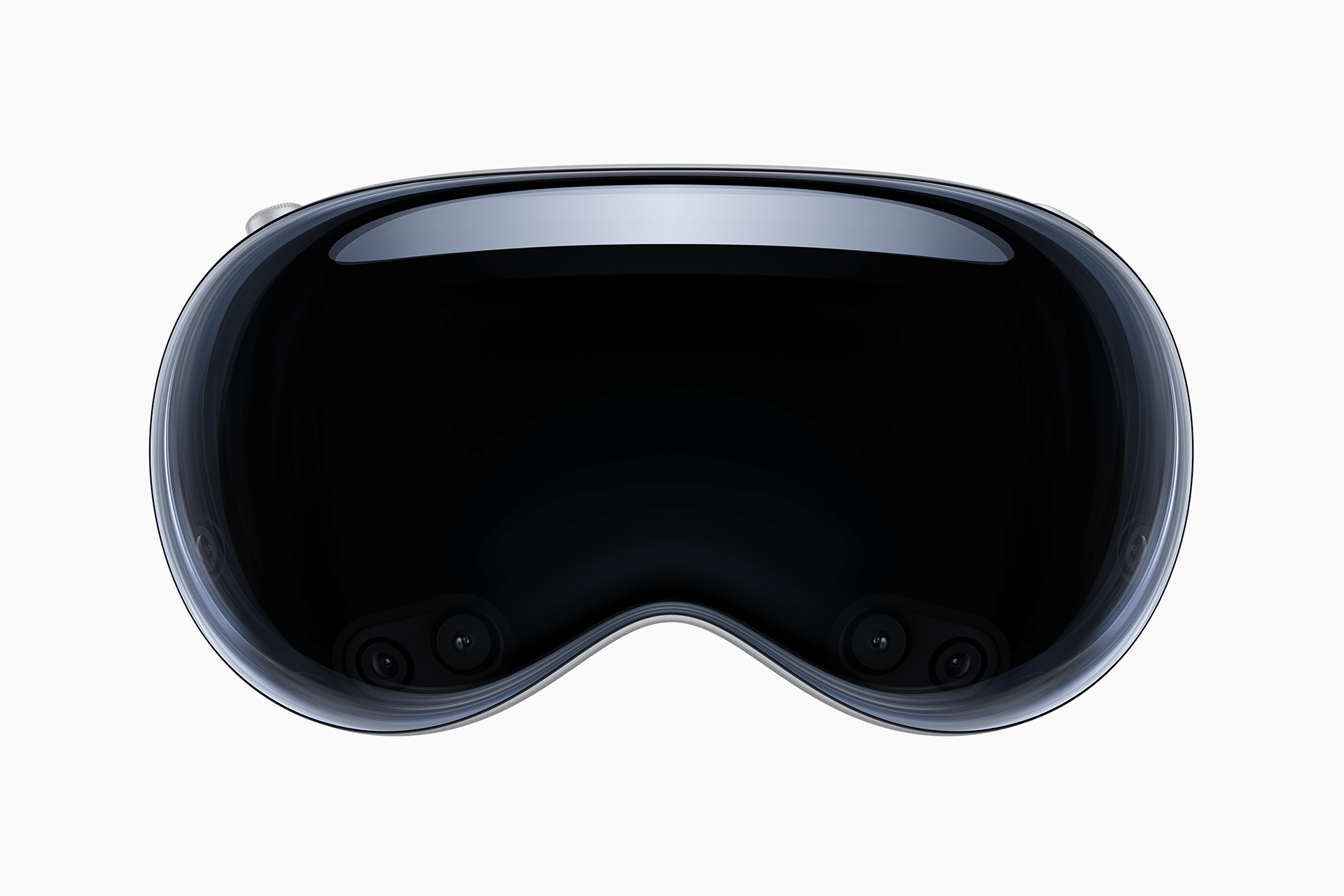
Apple quietly introduced a significant upgrade to Vision Pro performance with visionOS 26.4: foveated streaming, a rendering technique that prioritizes visual clarity exactly where the user is looking while reducing resolution in peripheral vision areas. The result is a smoother visual experience that maintains high detail where it matters most while lowering the overall data load required for immersive media playback.
Foveated rendering has been discussed for years in the virtual reality industry, but its arrival inside Apple’s spatial computing ecosystem signals a new stage for immersive content delivery.
Instead of transmitting the same full-resolution image across the entire display, Vision Pro dynamically adjusts video quality based on real-time eye-tracking data, ensuring that central viewing areas remain extremely sharp while outer regions use less processing power and bandwidth.
How Foveated Streaming Works
Vision Pro includes highly precise eye-tracking sensors capable of detecting exactly where the user’s gaze is focused within milliseconds.
When a spatial video stream begins, the system renders a high-resolution image in the focal zone — the exact region the user is looking at — while progressively lowering rendering intensity toward the edges of the visual field. Because human vision naturally prioritizes central detail and perceives peripheral areas with lower sharpness, the change remains almost imperceptible.
This approach significantly reduces the amount of visual data that needs to be processed in real time. Lower bandwidth requirements allow smoother streaming even in demanding immersive environments such as live sports feeds, large cinematic scenes, or interactive spatial experiences. It also lowers processing strain on the device, improving thermal performance and energy efficiency during extended viewing sessions.
Why This Matters for Spatial Video
Spatial computing places heavy demands on both local rendering hardware and streaming infrastructure. High-resolution immersive video, especially 180-degree and 3D spatial formats, requires massive data throughput. Without optimization, streaming immersive experiences can quickly reach bandwidth limits even on fast network connections.
Foveated streaming allows high-resolution spatial content to be delivered more efficiently without compromising the experience. Scenes remain detailed where the viewer is actively observing, while the rest of the frame consumes fewer resources.
Over time, this method enables longer immersive sessions, smoother playback in crowded network environments, and broader accessibility for spatial media distribution.
visionOS 26.4 Beta Deployment
The feature appears in visionOS 26.4 beta builds released in mid-February, indicating Apple is preparing broader deployment across future system updates.
Developers working on immersive applications can already begin testing adaptive streaming pipelines designed to take advantage of gaze-aware rendering systems. Streaming platforms preparing spatial video libraries can also optimize their encoding workflows to align with dynamic focal-zone delivery.
The timing is notable because similar technologies have been discussed in upcoming headset platforms expected to launch later in the year.
Apple’s early integration gives developers additional time to refine immersive content pipelines before broader industry adoption accelerates.

Content Creation and Future Streaming Platforms
Foveated streaming is not limited to entertainment playback. Live immersive broadcasting, interactive training environments, virtual collaboration platforms, and remote presence systems benefit equally from reduced rendering overhead.
Educational simulations, architectural walkthroughs, and virtual production environments can maintain high visual fidelity while lowering infrastructure requirements for large-scale deployments.
Spatial media producers also gain flexibility when designing scenes. Since focal rendering dynamically follows the viewer’s gaze, creators no longer need to rely solely on static rendering priorities.
Dynamic environments can shift detail intelligently as attention moves across the scene, allowing more cinematic control over visual storytelling inside immersive spaces.
Long-Term Impact on Spatial Computing Performance
The introduction of gaze-aware streaming forms part of a broader shift toward adaptive computing models where system resources are continuously optimized based on user behavior. Rather than delivering maximum processing across the entire visual field at all times, systems intelligently allocate power and bandwidth where attention is directed. This strategy extends battery life, reduces heat generation, and enables more complex spatial environments to run smoothly on wearable hardware.
As spatial computing platforms expand across entertainment, enterprise, and communication use cases, streaming efficiency becomes increasingly important. Techniques such as foveated streaming reduce the infrastructure cost required to distribute immersive media at scale while preserving visual quality standards expected from high-resolution displays.
For Vision Pro, the addition of foveated streaming in visionOS 26.4 represents an architectural improvement rather than a visible interface feature. Users may not immediately notice a dramatic visual difference, yet smoother playback, more stable immersive streaming, and improved performance during complex spatial scenes gradually become part of the everyday experience as the system dynamically optimizes each frame in real time.